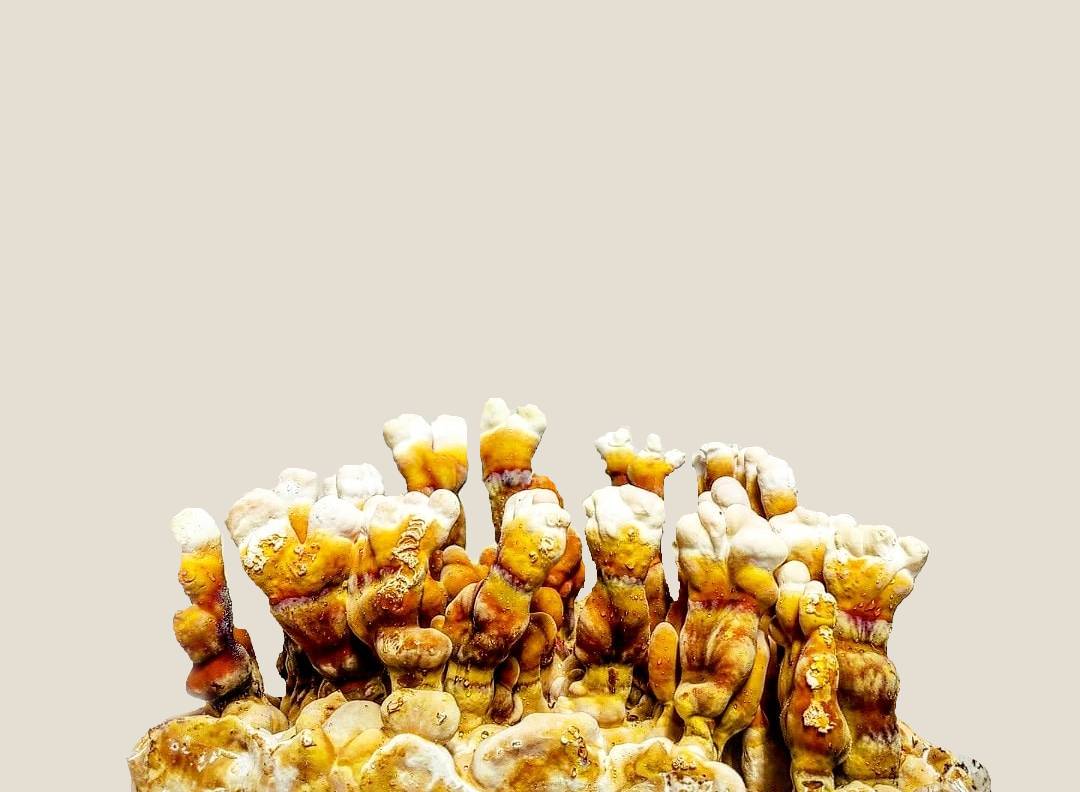
Growing Black Pearl Oyster Mushrooms: Spawn Incubation and Fruiting | Pheno Flicks 4
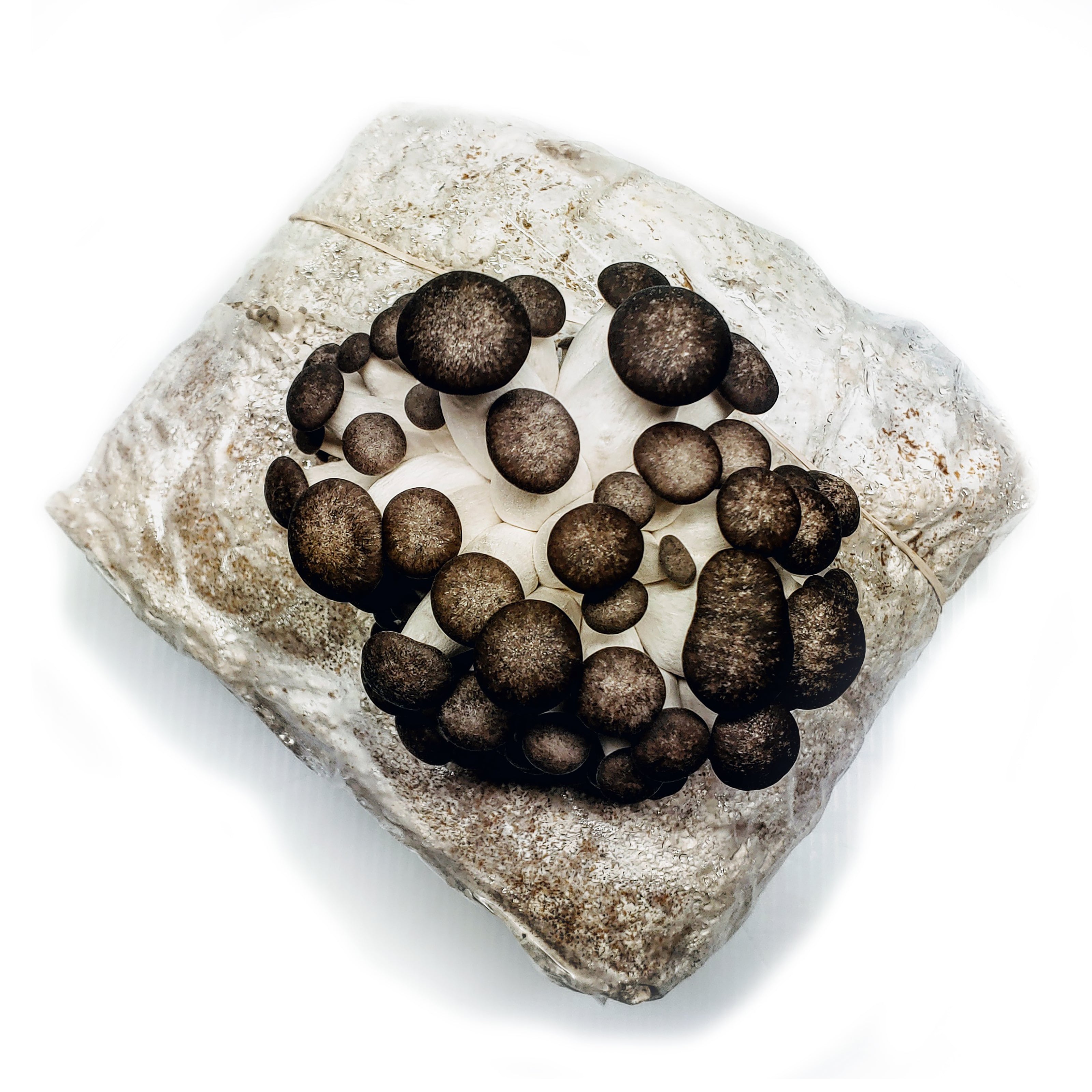
PO-BO
Black Pearl Oyster, like most Pleurotus varieties, can thrive on a wide variety of substrate recipes. It is highest-yielding on master's mix, hydrated to 60-63% total moisture content.
Incubation ranges from 14-21 days, depending on factors such as ambient incubation temp, spawn rate and substrate recipe. Unlike many other Pleurotus strains, Black Pearl Oyster does not pin immediately after colonization is complete, providing a grace period in which you can determine when to move your blocks into fruiting.
PO-BO prefers cool fruiting temps between 55-65° F, though can be fruited in warmer temps with mixed results. A standard x-cut or slit through the bag and into the substrate (no more than ½”) is the recommended initiation technique. If fruited in cold temps, Black Oysters manifest the morphology that most cultivators have come to expect- king oyster-like stems and dark, speckled caps. If fruited in warmer conditions, black pearl manifests in morphology a bit more similar to blue oyster, though with fleshier stems.
These are also a very popular sale at farmers markets and the like. They have a mild nutty and umami flavor similar to other oyster strains.
Top fruiting has become increasingly popular with PO-BO which increases the yield and shows off the P. eryngii genetics inherent in its hybridization.
Check out our MycoWizards PhenoFlick on Black Oyster HERE!

PO-CNS
This is our bestselling house strain of Blue Oyster. Like most Pleurotus varieties, it can thrive on a wide variety of substrate recipes. It is highest-yielding on our master's mix combo-pellets, hydrated to 61% total moisture content.
Incubation ranges from 7-14 days, depending on factors such as ambient incubation temp, spawn rate, and substrate recipe. To avoid stroma and other biological problems during incubation, ensure that the core temperature of your PO-CNS blocks do not exceed 80F at the core. This can be achieved by incubating at 65F.
Bring blocks into the cold storage or the fruit room immediately after incubation is complete, as this strain pins fast and furious. A standard x-cut or slit through the bag and into the substrate (no more than ½”) is the recommended initiation technique. This strain of blue oyster prefers fruiting temperatures between 60-65° F. It maintains a vivid blue color and produces denser fruits of higher quality and a longer shelf life if fruited in cold temperatures. Yield typically ranges from 2½ -3½ lb per 10lb master’s mix block. It is known for very large cap size and tender stems all the way to their base, rendering the whole cluster marketable to a gourmet clientele.
This is a very versatile mushroom that will go good in many dishes such as stir fry, pasta, curry or even simply pan fried by themselves. This mushroom makes a great meat replacement. This strain has also been known to sell well at farmers markets.
PO-CHO
The 'chocolate' oyster is a blue oyster strain from China, sent to us by way of friends in Australia. At this point, it's been cultivated extensively by our farm customer base. It is less aggressive to pin compared with PO-CNS after colonization is complete. It yields very well, produces fruits of high quality (those with caps a bit smaller than a strain like POCNS), but thrives in warmer temps than the average blue strain and demonstrates some resistance to blotch and other bacteria. Its exceptional texture and culinary quality, as well as its slight brown hue to the caps, has made it very popular with chef and home grower alike!
PO-3044
PO-3044 is one of the more popular Blue Oyster varieties we offer. It is known for slightly smaller cap sizes than our house strain, PO-CNS, but still produces clusters of similar size.
PO-3044, like most Pleurotus strains, can thrive on a wide variety of substrate recipes. It is highest-yielding on master's mix, hydrated to 60-63% total moisture content. Calcium carbonate supplementation can help to slightly increase yield and fruit quality. It is best to have a tight contact between the block and the cultivation bag, which helps to prevent premature pinning inside the bag.
Incubation timelines ranges from 7-14 days, depending on factors such as ambient incubation temp, spawn rate, and substrate recipe. To avoid stroma and other biological problems in incubation, ensure that the core temperatures of your blocks do not exceed the low 70s F.
Bring blocks into cold storage or the fruit room immediately after incubation is complete, as this strain pins fast. A standard x-cut or slit through the bag and into the substrate (no more than ½”) is the recommended initiation technique. This strain of blue oyster prefers fruiting temperatures between 55-65° F, but can be fruited in slightly warmer conditions if necessary. It maintains a vivid blue color and produces denser fruit of higher quality and shelf life if fruited in cold temperatures. Yield typically ranges from 2½ -3½ lb per 10 lb master’s mix block. Great shelf life if fruited in cold conditions, shorter shelf life when fruited in warm conditions. A very predictable, flexible, and reliable strain overall.
Just like the PO-CNS strain, this variety is a great addition to any fruiting room.
PO-3015
If you know, you know...some love it, some hate it. This Blue oyster strain is something that simply exists for the folks who have come to rely on it!
PO-KB
The PO-KB strain is a result of breeding carried out by Mossy Creek Mushrooms, this is a somewhat less predictable blue oyster strain, but an ideal choice for those with variable fruiting conditions and/or warm average fruiting temperatures.
Like most Pleurotus varieties, the PO-KB strain can thrive on a wide variety of substrate recipes. It is highest-yielding on master's mix, hydrated to 60-63% total moisture content.
Incubation ranges from 7-16 days, depending on factors such as ambient incubation temp, spawn rate, and substrate recipe. To avoid stroma and other biological problems in incubation, ensure that the core temperatures of your blocks do not exceed the lower 70s F
Bring blocks into the fruit room immediately after incubation is complete, as this strain pins readily. A standard x-cut or slit through the bag and into the substrate (no more than ½”) is the recommended initiation technique. This strain of blue oyster prefers fruiting temperatures between 60-70° F, but can be fruited in colder and semi warm conditions if necessary. It maintains a vivid blue color and produces denser fruit of higher quality and shelf life if fruited in cold temperatures. Yield typically ranges from 2 -3 lb per 10lb master’s mix block. It is known for average cap size but still produces very large clusters. Great shelf life if fruited in cold conditions, shorter shelf life when fruited in warm conditions.
Just like the PO-CNS strain, this variety is a great addition to all your favorite dishes; and any type of Blue Oyster tends to be in high demand if you're looking to sling the fungi!
PO-LOG
While this strain is not as high-yielding or high in quality, when compared to other blue oyster strains, it is still known for its overall ease in cultivation, resistance to bacterial blotch and other contaminants, and its exceptional shelf life. This phenotype certainly maintains the longest post-harvest shelf life of any blue oyster strain we carry, thus making it a great strain option for wholesaling to distributors.
Like most Pleurotus varieties, PO-LOG can thrive on a wide variety of substrate recipes. It is highest-yielding on master's mix, hydrated to 60-63% total moisture content.
Incubation ranges from 10-18 days, depending on factors such as ambient incubation temp, spawn rate, and substrate recipe.
A standard x-cut or slit through the bag and into the substrate (no more than ½”) is the recommended initiation technique. This strain of blue oyster prefers fruiting temperatures between 55-65° F, but can be fruited in warmer conditions if necessary. Yield typically ranges from 2-2½ lb per 10lb master’s mix block. A very predictable, flexible and reliable strain overall.
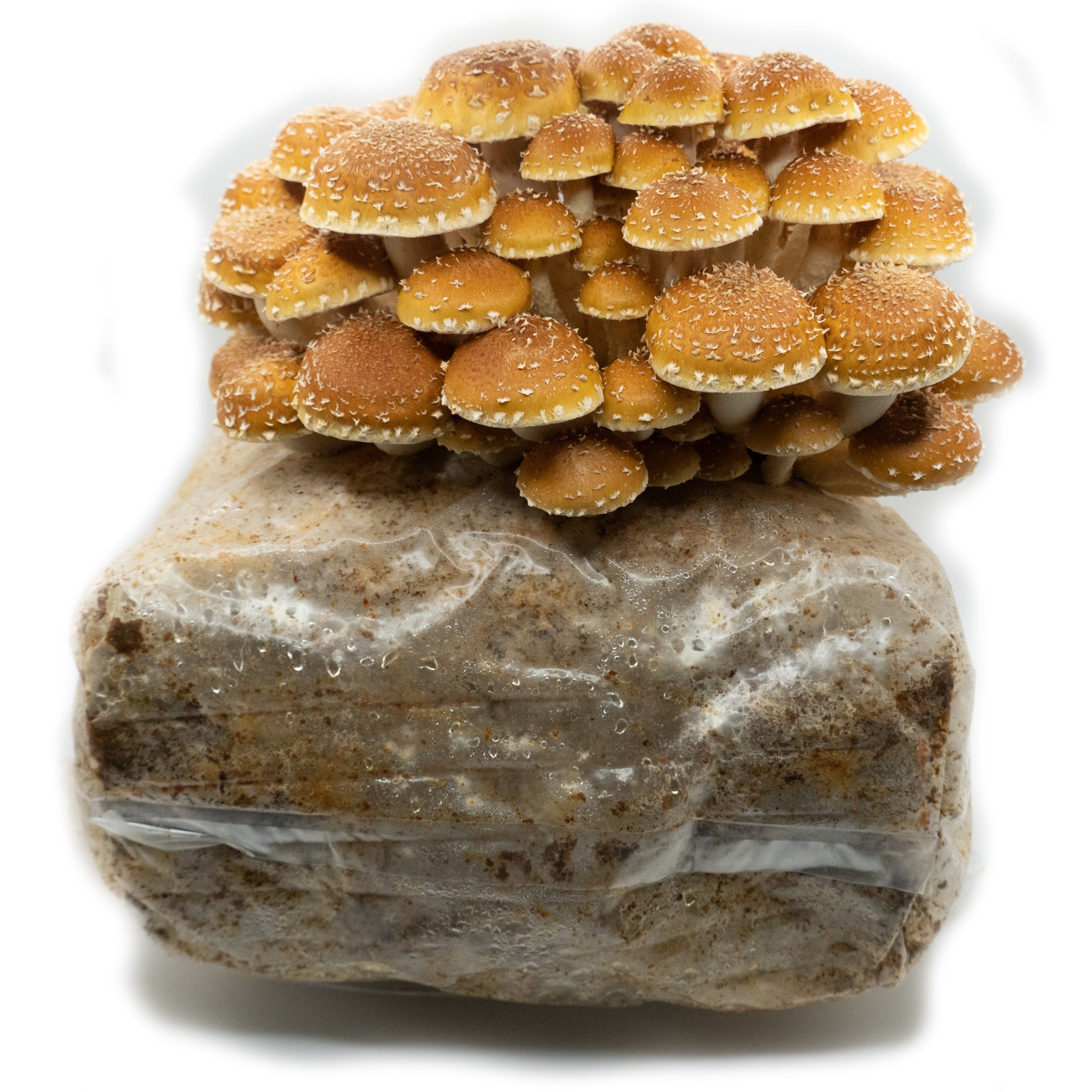
PA-CNS
The infamous and mighty Chestnut strain PA-CNS thrives on master’s mix, especially if pelletized (the pelletization process breaks down the oak, rendering it more bioavailable for a weak metabolizer like chestnut) hydrated to 61-63%.
Initial colonization takes 3 weeks on average, but we recommend that you let the blocks sit for 1 additional week to fully mature- the block will swell with caramel-colored secondary metabolites. This allows the mycelium time to more effectively digest its growing medium, which leads to a faster and larger pinset once introduced into fruiting. Similar to most varieties, avoid letting the internal temperature of your blocks exceed the upper 70s to avoid deleterious biological impacts. Be mindful that chestnut mycelium is more prone to mold contamination than most other common varieties.
Chestnut prefers fruiting temperatures between 55-65° F (12-18° C), if the temperature exceeds 65° it will likely not pin at all. High relative humidity (90-95% ) is recommended for fast and healthy pinning. This is a more intermediate species to work with, if the conditions are not just right you will have a hard time harvesting anything off of the block.
A deep cut into the block is highly recommended for a dense pinset and high yield. Pinset emergence takes longer with chestnut than most other common varieties- 14 to 21 days in most cases. Once pins emerge, it is a fairly rapidly growing mushroom. Harvest after veils break but before caps flatten. Though chestnut does not have a fantastic shelf life, it is a strikingly beautiful mushroom and often sells fast. Average yield ranges between 2 and 3lbs.
Chestnuts have a nutty and meaty flavor, great for many dishes like pasta, soup or as a pizza topping. They are also good for drying as this will improve shelf life.
Check out out MycoWizards PHenoFlick on PA-CNS HERE!
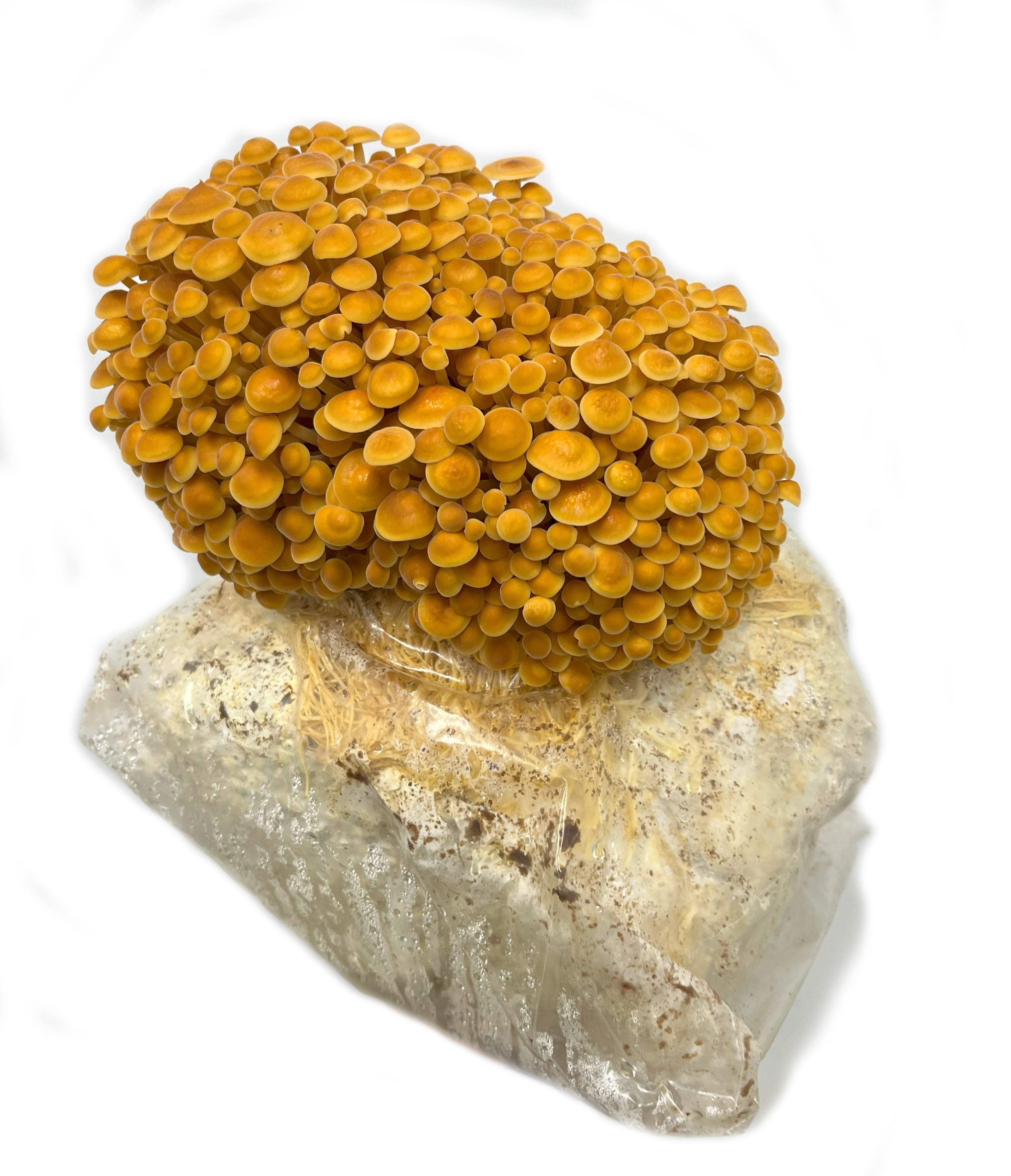
Golden Enoki FV-4600
Enoki is very tenacious and can grow on a variety of substrates, but we recommend master's mix for fastest growth and highest yields. Recommended moisture content is 60-63%, Calcium carbonate supplementation can help to slightly increase yield and fruit quality. It is best to have a tight contact between the block and the cultivation bag, which helps to prevent premature pinning inside the bag.
Enoki is fully colonized between 14-21 days in most circumstances. As with most varieties, enoki mycelium thrives with its interior temperature rests in the upper-70s Fahrenheit.
Enoki prefers cold fruiting temps, ideally 50-63° F. Some growers cold shock blocks for several days prior to inducing fruiting. Most growers top fruit enoki sometimes through scratching the top surface of the block. To encourage the most spindly spaghetti like form, let the pins form in vitro or fruit them in a high CO2 environment. If fruited in a regular fruiting environment with high oxygen levels, they will still be thin stemmed but with approximately dime-sized caps.
Enoki is sensitive to bacterial infection in the fruits, so avoid condensation settling on the fruits for a long period of time. Much like other common gourmet varieties, Enoki caps will flatten once they reach full maturity. So keep an eye on them to harvest before flattening for better storage life. FV 4600 can be quite high yielding and can be fruited multiple times with one block.
Enoki mushrooms are quite popular, they have a crunchy texture and umami flavor. They are good in a variety of dishes including soups, stir fry or even just by themselves.
White Enoki FV-1037
FV-1037 is a special order status strain. It is grown in the same conditions as Gold Enoki, however, your incubation and fruiting rooms need to be very on point as this is an overall weaker strain and needs exact conditions. The main appeal of the FV-1037 is the beautiful stark white color, as it was bred specifically for that purpose.
For substrate, we recommend master's mix for fastest growth and highest yields. Recommended moisture content is 60-63%, Calcium carbonate supplementation can help to slightly increase yield and fruit quality. It is best to have a tight contact between the block and the cultivation bag, which helps to prevent premature pinning inside the bag.
Enoki is typically fully colonized between 14-21 days in most circumstances. As with most varieties, enoki mycelium thrives with its interior temperature rests in the upper-70s Fahrenheit. Enoki prefers cold fruiting temps, ideally 50-63° F. Some growers cold shock blocks for several days prior to inducing fruiting. Most growers top fruit enoki sometimes through scratching the top surface of the block. To encourage the most spindly spaghetti like form, let the pins form in vitro or fruit them in a high CO2 environment.
Enoki is sensitive to bacterial infection in the fruits, so avoid condensation settling on the fruits for a long period of time. Much like other common gourmet varieties, Enoki caps will flatten once they reach full maturity. So keep an eye on them to harvest before flattening for better storage life.
If you would like to try this strain be sure to write *Special Order* at the bottom of your Spawn Form.
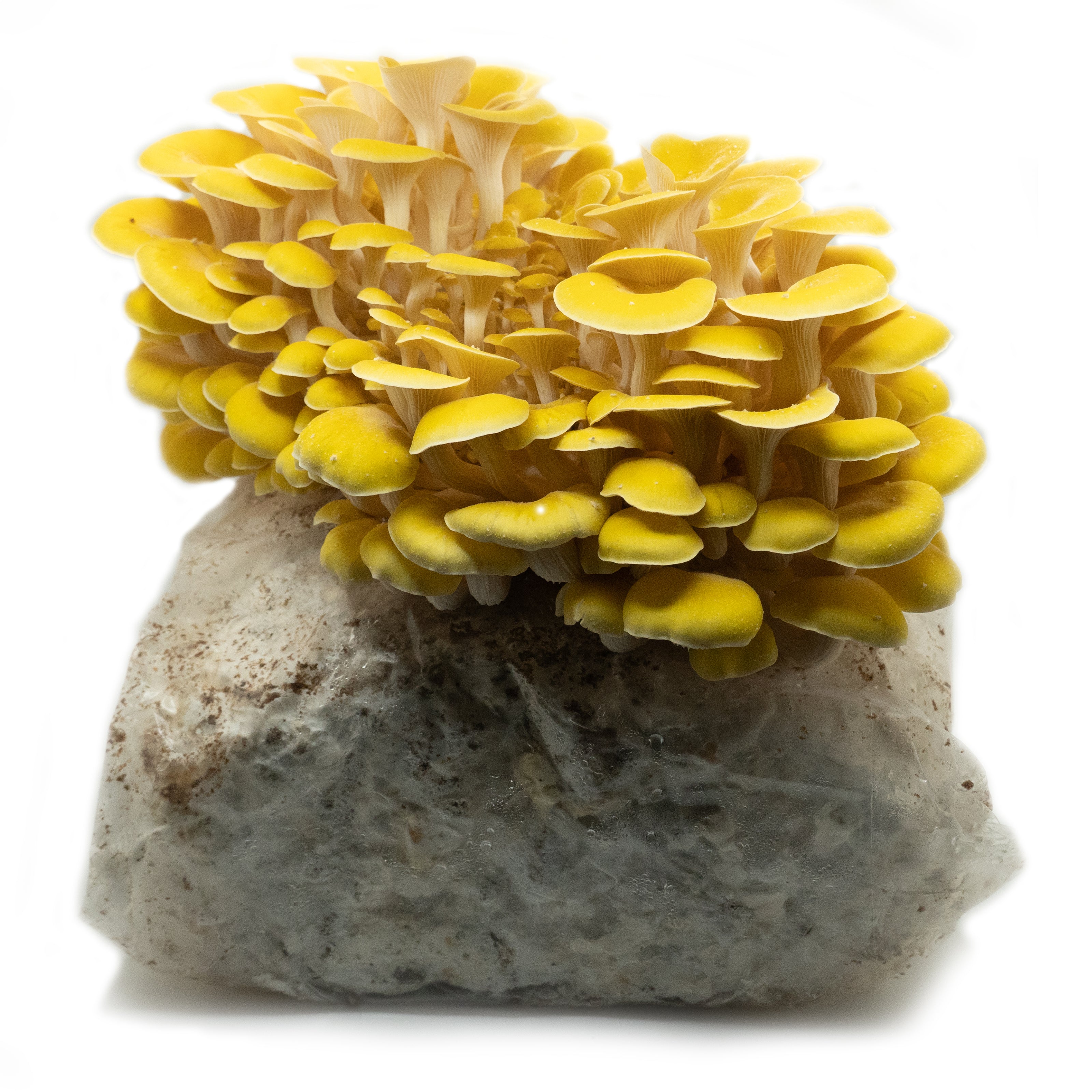
PC-MM
Gold Oyster, like most Pleurotus varieties, can thrive on a wide variety of substrate recipes. It is highest-yielding on master's mix, hydrated to 60-63% total moisture content.
Incubation ranges from 7-14 days, depending on factors such as ambient incubation temp, spawn rate, and substrate recipe. To avoid stroma and other biological problems in incubation, ensure that the core temperatures of your blocks do not exceed the low 70s.
Bring blocks into the fruit room immediately after incubation is complete, as this strain pins readily. A standard x-cut or slit through the bag and into the substrate (no more than ½”) is the recommended initiation technique. This strain of Gold Oyster prefers immense flood lighting with fruiting temperatures between 65-70° F, but can be fruited in cooler conditions if necessary. It maintains a vivid color and higher yields when fruited in those warmer conditions. This strain can easily be fruited several times, but still has a high first flush yield. Its fruits develop rapidly; yield typically ranges from 2½ -3½ lb per 10 lb master’s mix block.
Pleurotus citrinopileatus is known for smaller cap size than other oyster species and for very delicate fruit tissue that is easily damaged. This PC-MM strain demonstrates stronger fruit tissue than average, while still maintaining a nice texture for gourmet cuisine. Mediocre shelf life. Fungus gnats and other insect pests are attracted by remnants of p. citrinopileatus fruits, so be sure to cut clean against the block when harvesting, and move the blocks to compost as soon as you are done flushing. A very predictable, flexible, and reliable strain overall.
Gold Oysters are desirable mainly because of their beautiful bright yellow color and notably nutty flavor.
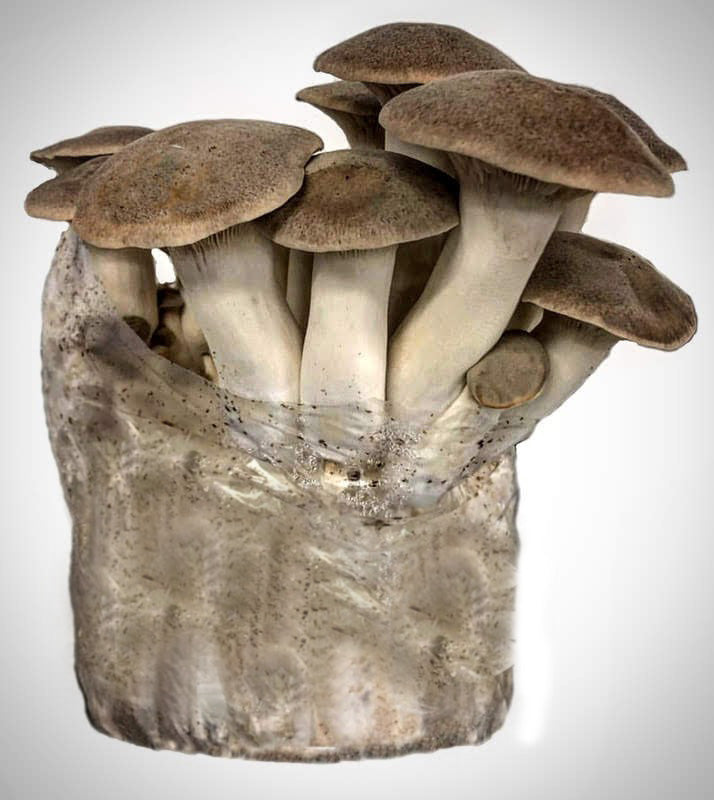
PE-KONG
King oyster, like most Pleurotus varieties, can thrive on a wide variety of substrate recipes. It is highest-yielding on master's mix, hydrated to 60-63% total moisture content. It is best to have a flat top surface of your block and tight contact between the block and the cultivation bag, which encourages growth across the entire surface rather than along the edges of the block.
Incubation ranges from 14-21 days, depending on factors such as ambient incubation temp, spawn rate, and substrate recipe.
Bring blocks into the fruit room immediately after incubation is complete, as king oyster pins readily. There are three typical pin initiation approaches- letting the pins form in vitro before cutting off the seal and/or top portion of the bag, immediately cutting off the seal and/or top portion of the bag and scratching the top surface of the block, or simply cutting off the seal and/or top portion of the bag. Some farms like to form a casing layer (such as with peat moss and hydrated lime) for the fruits to emerge from. All have their merits and depend on the fruiting environment and grower preference. King oyster prefers cold fruiting temperatures between 50-60° F. Rapid pin growth and ideal morphology are encouraged through exposure to blue lighting; full spectrum LED is fine, if not too strong. Its fruits develop rapidly; yield typically ranges from 2-2.5 lb per 10lb master’s mix block and boast an excellent shelf-life.
King Oysters are a delicious and meaty mushroom, a great option as a meat replacement.
Check out our King Oyster Cultivation Deep Dive on our MycoWizards page!
PE-2603
PE2603 tends toward more uniformly medium-sized fruits with a pale, beige hue to the caps, while PEKONG demonstrates much more variance in fruit size with a stronger granite hue to the caps.
King oyster, like most Pleurotus varieties, can thrive on a wide variety of substrate recipes. It is highest-yielding on master's mix, hydrated to 60-63% total moisture content. It is best to have a flat top surface of your block and tight contact between the block and the cultivation bag, which encourages growth across the entire surface rather than along the edges of the block.
Incubation ranges from 14-21 days, depending on factors such as ambient incubation temp, spawn rate, and substrate recipe.
Bring blocks into the fruit room immediately after incubation is complete, as King Oyster pins readily. There are three typical pin initiation approaches- letting the pins form in vitro before cutting off the seal and/or top portion of the bag, immediately cutting off the seal and/or top portion of the bag and scratching the top surface of the block, or simply cutting off the seal and/or top portion of the bag. Some farms like to form a casing layer (such as with peat moss and hydrated lime) for the fruits to emerge from. All have their merits and depend on the fruiting environment and grower preference. King oyster prefers cold fruiting temperatures between 50-60° F. Rapid pin growth and ideal morphology are encouraged through exposure to blue lighting; full spectrum LED is fine, if not too strong. Its fruits develop rapidly; yield typically ranges from 2-2.5 lb per 10lb master’s mix block and boast an excellent shelf-life.
King Oysters are a delicious and meaty mushroom, a great option as a meat replacement.
Check out our King Oyster Cultivation Deep Dive on our MycoWizards page!
PE-REX
- Demonstrates higher blotch resistance and overall vigor
- Smaller, more attractive caps
- Much softer texture than other strains, great in a gourmet context
- More even fruit body size, easier to grade
- Similar yield to other commercial strains such as KONG and 2603
- Slightly slower to pin and harvest than KONG, by approximately one week

HE-CNS
HE-CNS is our go to house strain of Lion's Mane. HE-CNS produces the highest yield on master’s mix. We strongly recommend a final block moisture content of 60%; a moisture content even slightly exceeding that tends to lead to problems during incubation and fruiting for lion’s mane. In turn, insufficient moisture content often leads to issues with mold contamination and overall poor colonization of the block. Lion’s mane does equally well with ultrapasteurization and sterilization.
Incubation ranges from 8 to 16 days, depending on factors such as ambient incubation temp, spawn rate, and substrate recipe. Similar to most varieties, avoid letting the internal temperature of your blocks exceed the low 70s internally. Be mindful that Lion’s Mane mycelium is prone to myriad problems if it overheats and that it is more prone to mold contamination than most other common varieties.
Lion’s Mane prefers standard fruiting temperatures between 55-65° F (12-18° C). A high air exchange rate (lots of oxygen-rich air) and consistent relative humidity are ideal for good fruit development. A standard x-cut or slit in the bag is the recommended pinset initiation technique; many farms make their cut on the top surface of the block, where lion’s mane readily fruits on its own accord. Lion’s mane fruits develop at a relatively slow rate but grow to incredibly large size and weight. Average yield is quite high- 2½ to 3½ lb, with potential for even more with subsequent flushes of the same block. This strain is known for dense, club-like fruits with small spines, providing greater resistance to bruising and damage during handling/cold storage thus making it an eminent wholesaling mushroom.
Lion's Mane is not only a great versatile ingredient, it is also said to have many medicinal properties.
Check out our MycoWizards PHenoFlick on HE-CNS Here!
HE-POW
The HE-POW strain is different than typical Lion's Mane as it has demonstrated higher heat tolerance than other strains and is often the preferred strain by farms in hot climates and/or hot seasons.
HE-POW, like most Lion's Mane strains, produces the highest yield on master’s mix, but is easier to grow without issue on a lower-supplementation recipe, such as 65-70% hardwood and 30-35% wheat middlings/soy hulls. Regardless, we strongly recommend a final block moisture content between 59-62%; a moisture content even slightly exceeding that tends to lead to problems during incubation and fruiting for lion’s mane. In turn, insufficient moisture content often leads to issues with mold contamination and overall poor colonization of the block. HE-POW does equally well with ultrapasteurization and sterilization.
Incubation ranges from 8 to 16 days, depending on factors such as ambient incubation temp, spawn rate, and substrate recipe. Similar to most varieties, avoid letting the internal temperature of your blocks exceed the low 70s to avoid deleterious biological impacts; be mindful that lion’s mane mycelium is prone to myriad problems if it overheats, such as mold and bacterial contamination.
A standard x-cut or slit in the bag is the recommended pinset initiation technique; many farms make their cut on the top surface of the block, where it readily fruits on its own accord. Lion’s mane fruits develop at a relatively slow rate (14-21 days) but grow to an incredibly large size and weight. Average yield is quite high- 2½ to 3lb or more per 10lb master’s mix block, with potential for even more if fruited multiple times per block.
This strain is known for flashier fruits with more exposed spines, with excellent visual appeal while still maintaining wholesale production standards.
HE-LP
The fruit quality of this strain is not quite as gourmet as other Hericium strains offered by Cap N’ Stem, but its flexible cultivation parameters makes it a worthwhile consideration for some farms.
Lion’s Mane produces the highest yield on master’s mix, but is easier to grow without issue on a lower-supplementation recipe, such as 65-70% hardwood and 30-35% wheat middlings/soy hulls. Regardless, we strongly recommend a final block moisture content between 59-62%; a moisture content exceeding that tends to lead to problems during incubation and fruiting for lion’s mane, especially bacterial infections and subsequent pooling of secondary metabolites. In turn, insufficient moisture content often leads to issues with mold contamination and overall poor myceliation of the block. Lion’s mane does equally well with ultrapasteurization and sterilization.
Incubation ranges from 8 to 16 days, depending on factors such as ambient incubation temp, spawn rate, and substrate recipe. This strain is slightly more tolerant than other Hericium strains of varying moisture content in the block as well as varying incubation temperatures, making it a safe choice for farms with an inconsistent incubation environment.
Lion’s Mane thrives with lots of fresh air exchange and abundant oxygen levels, also ensure that you maintain high relative humidity without allowing condensation settling too long on the fruits, as lion’s mane is prone to both desiccation and bacterial rot. A standard x-cut or slit in the bag is the recommended pinset initiation technique. Many farms make their cut on the top surface of the block, where lion’s mane readily fruits on its own accord. Lion’s Mane fruits develop at a relatively slow rate (14-21 days) but grow to incredibly large sizes and weight. Average yield is less than other Lion’s Mane strains- 2 to 2½ lb- with potential for more if fruited multiple times per block.
HE-A
HE-A is a special order status strain. It is a wild clone from Quebec. We have not done much production with this strain so a lot of variables are still unknown. The main reason HE-A is special is it has vigorous and dense mycelium, much stronger and flexible than most other Lions Mane strains; This makes it a good contender if you have unstable fruiting conditions.
As this is a wild clone, the fruits of the HE-A look wild and spiny compared to regularly cultivated Lions Mane; which typically appear as a more dense round shape.
We do not have any average yield data as we have not brought this strain into our regular rotation. If you would like to try this strain be sure to write *Special Order* at the bottom of your Spawn Form.
HE-9514
HC-FF
HC-FF, also known as Combtooth or Hericium Corraloides is a commercial phenotype that hails from Funga Farm. The main difference between the strains is morphology; While the typical Lions Mane forms in multiple ball like fruits, the Combtooth has fruits more akin to a coral mushroom, very spread out and textured.
HC-FF produces the highest yield on master’s mix, but is easier to grow without issue on a lower-supplementation recipe, such as 65-70% hardwood and 30-35% wheat middlings/soy hulls. Regardless, we strongly recommend a final block moisture content between 59-62%; a moisture content exceeding that tends to lead to problems during incubation and fruiting for Combtooth, especially bacterial infections and subsequent pooling of secondary metabolites. In turn, insufficient moisture content often leads to issues with mold contamination and overall poor myceliation of the block. Combtooth does equally well with ultrapasteurization and sterilization.
Incubation ranges from 8 to 16 days, depending on factors such as ambient incubation temp, spawn rate, and substrate recipe. When compared to Lions Mane, HC-FF has a much denser mycelium during its colonization of a substrate block as well as spawn. It is less likely to autofruit in the high CO2 environment of a sealed XLS-A bag.
HC-FF thrives with lots of fresh air exchange and abundant oxygen levels, also ensure that you maintain high relative humidity without allowing condensation settling too long on the fruits, as Combtooth is prone to both desiccation and bacterial contamination. A standard x-cut or slit in the bag is the recommended pinset initiation technique; many farms make their cut on the top surface of the block, where Combtooth readily fruits on its own accord.
Typical yield ranges from 2 to 3 lbs. Depending on usual fruiting room factors such as lighting, oxygen levels and moisture content.
Check out our Mycowizards PhenoFlick on HC-FF HERE!
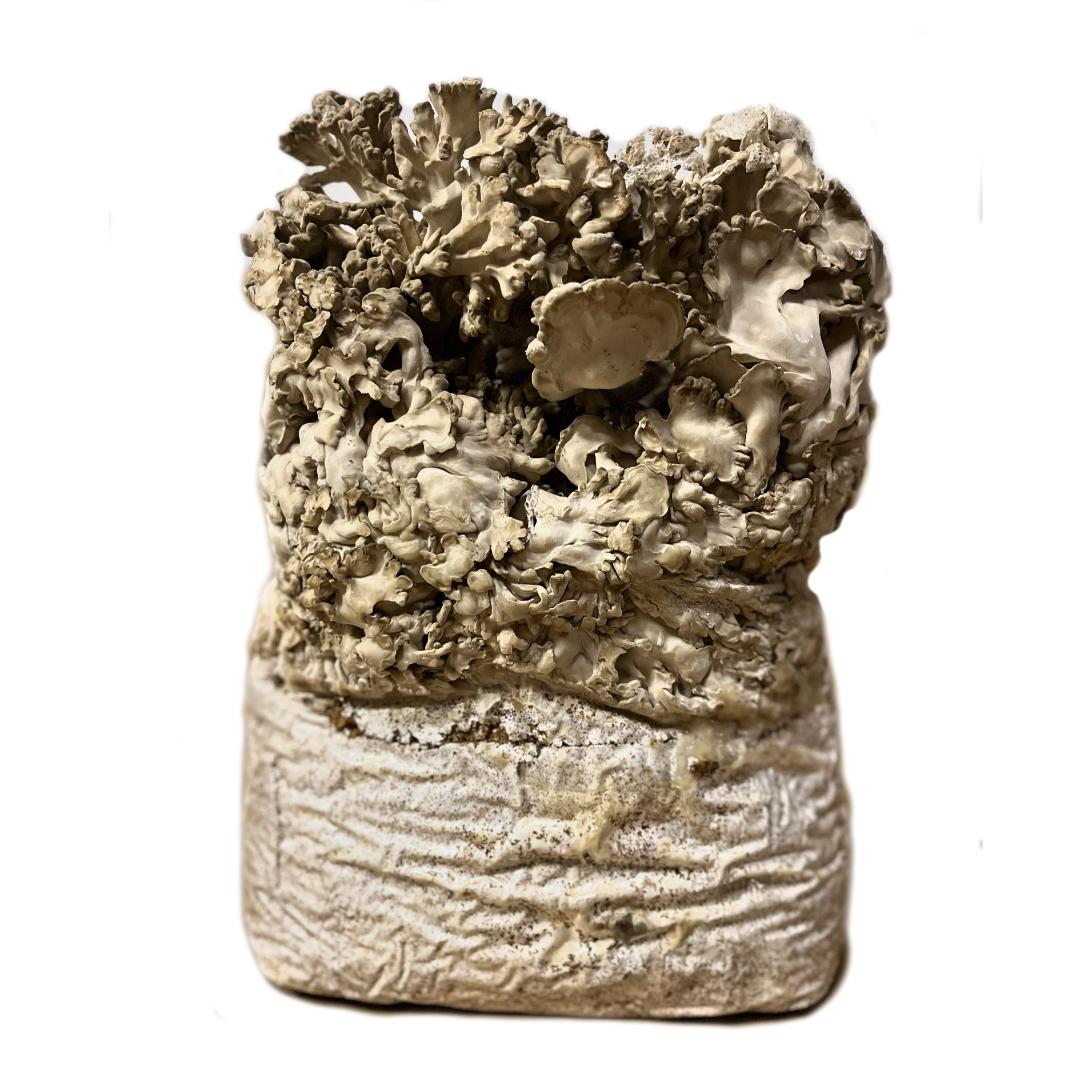
GF-494
GF-494 is a special order status strain. It has a slightly slower development rate when compared to other Maitake strains, however, It also has a slightly higher yield and tends to be more durable of a strain which makes it a great option for wholesale farmers.
As with the GF-9827, this is a particular strain when it comes to fruiting conditions; 65° F is recommended for incubation and fruiting. Be sure not to disturb the block as this will likely disrupt the growth of your mushrooms. The GF-494 is less flexible of a strain so all of your conditions should be on point.
If you would like to try this strain be sure to write *Special Order* at the bottom of your Spawn Form.
GF-9827
Maitake prefers a lower supplementation rate than standard masters mix. Something along the lines of 60-70% sawdust/hardwood pellets & 30-40% supplement. A moisture content between 60-63% is recommended to accommodate its longer timeframe in incubation. It is best to have a flat top surface of your block.
Initial colonization of the block will take about 3-4 weeks in most cases, but let the blocks remain in incubation as primordia develop in vitro. Let those primordia get as large as possible in incubation. Initial ‘blob-like’ primordia begin to develop ‘fingers’; this is a clear visual indication that the crop’s time in incubation is complete. Overall, incubation averages 3-4 weeks and primordia development averages 3-5 weeks. Extensive lighting over the top surface of the blocks is extremely helpful to encourage primordia to form along the entire top surface, rather than just along the sides of the top surface, which tends to occur in low-light conditions. Cool spectrum lighting is superior to warm spectrum for healthy primordial development. Maitake seems to have a very wide range in which it will grow, both in incubation and fruiting. As with most varieties, the speed is much greater in warm conditions, and the mushroom quality is greater in cool conditions. Temperature stability is extremely important for successful maitake cultivation. On average, growers tend to cultivate this strain at 65° F for incubation and fruiting.
Cut off the seal to leave a tall plastic collar around the developing fruits, and cut slits on the sides of the bottom of the collar to allow CO2 to flush out. Like any variety, Maitake requires fresh air exchange but is also prone to drying out, so it is best to position the blocks at a slight angle on your fruiting racks/shelves and have a collar that is as high as possible. In hot fruiting conditions, this is especially the case, whereas in cold fruiting conditions you will want to ensure that water doesn't pool inside the collar. For maximum storage life, harvest the fruits right when pores manifest on the undersides of the fronds. For maximum volume, wait to harvest until fruits have begun to produce spores.
As this species is more advanced than most, it is important to have extra consideration in fruiting conditions. Many growers have produced mediocre maitake (very short fronds, about halfway between 'blobtake' and healthy looking maitake) because they didn't have enough patience. Patience is key, especially in regard to letting primordia develop in vitro. If you allow the primordia as much time to develop as possible in vitro, you will see a higher yield, healthier mushrooms, better aroma.
Maitake will stop growing if disturbed too much. This is one of the main considerations for letting the blocks acclimate to the fruiting room before cutting off the seal. The principle of avoiding disturbance applies to other aspects of cultivation- avoid knocking the blocks, and avoid fruiting them in a fruit room with heavy spore load from other varieties (both may lead to growth stopping).
Maitake is said to have a rich earthy flavor with a hint of spice.

PP-LOG
PP-LOG has been our go to Phoenix oyster strain for a decade. Also referred to as Italian Oyster, Pleurotus Pulmonarius loves the heat and fruits best between the temp range of 60 and 70F.
When it comes down to producing substrate for this variety it is typical to all the other standards of oysters, Masters Mix with 60-63% moisture content. On a 10lb block of substrate keep your incubation temps down around 66F to prevent any bacterial contamination that can proliferate into blotch once introduced into fruiting.
PP-2204
PP-2204 comes from Mycelia BVBA and has been a runner up to our PP-LOG strain for a few years. Also referred to as Italian Oyster, Pleurotus Pulmonarius loves the heat and fruits best between the temp range of 60 and 70F.
When it comes down to producing substrate for this variety it is typical to all the other standards of oysters, Masters Mix with 60-63% moisture content. On a 10lb block of substrate keep your incubation temps down around 66F to prevent any bacterial contamination that can proliferate into blotch once introduced into fruiting.
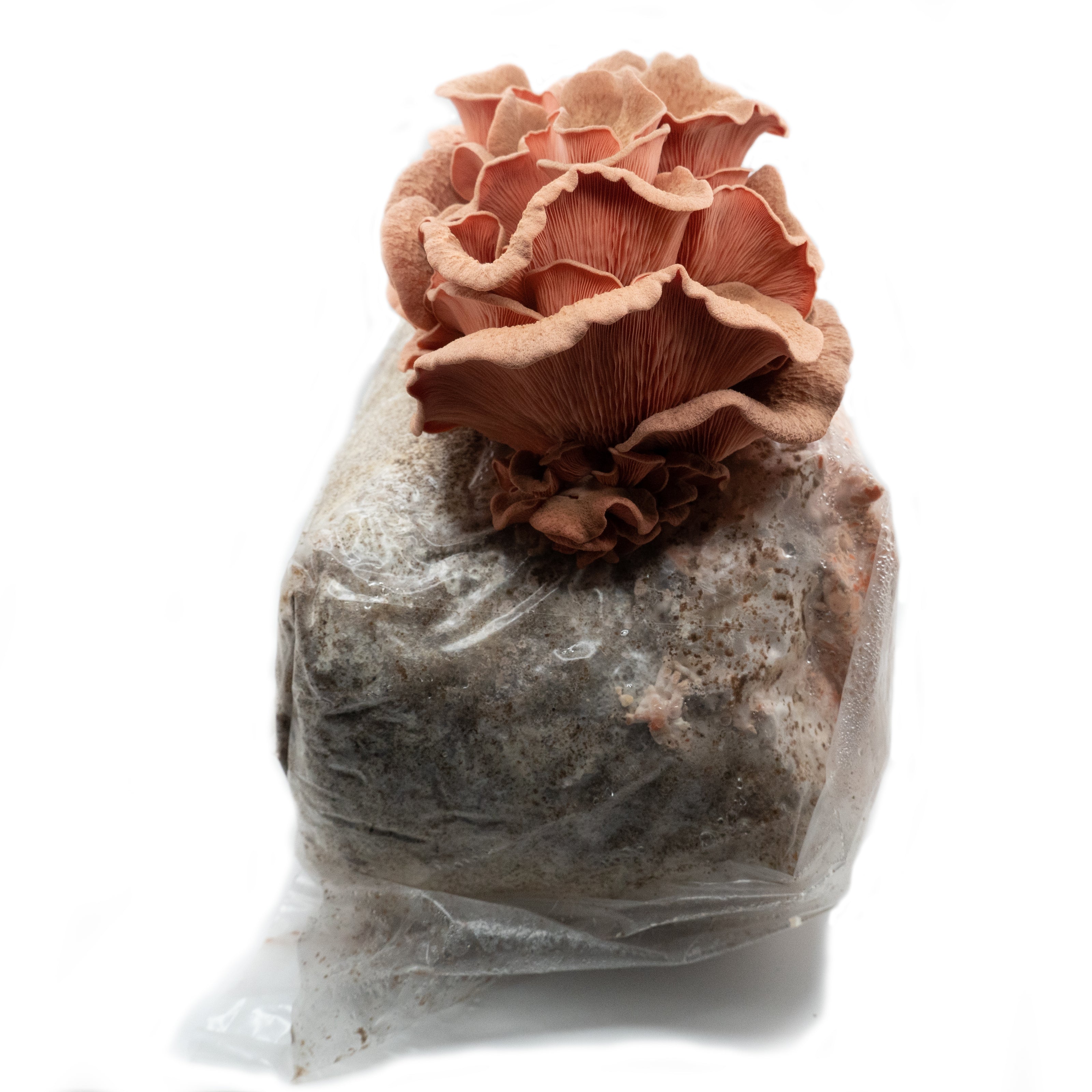
PD-1
Pink Oysters can thrive on a wide variety of substrate recipes. It is highest-yielding on master's mix, hydrated to 60-63% total moisture content. It is best to have a tight contact between the block and the cultivation bag, which helps to prevent premature pinning inside the bag.
Incubation ranges from 10-16 days, depending on factors such as ambient incubation temp, spawn rate, and substrate recipe.
Bring blocks into the fruit room immediately after incubation is complete, as this strain pins all over the block fast. A standard x-cut or slit through the bag and into the substrate (no more than ½”) is the recommended initiation technique. Pink oysters are a tropical strain that prefers fruiting temperatures between 70-80° F with humidity levels between 85-95%. It maintains a vivid pink color if grown with slight light exposure and in their preferred temp range, and can produce thick meaty fruits or thin delicate fruits depending on growing conditions. This strain can easily be fruited several times, but still has a high first flush yield. Its fruits develop rapidly; yield typically ranges from 2½ -3 lb per 10 lb master’s mix block. The nice part about PD-1 is it can be fruited through the winter months if the temps in your fruiting facility stay in the low to middle 60s.
Pink Oysters are known to have a very short life. They also have a meaty texture and a notably "seafood" flavor.
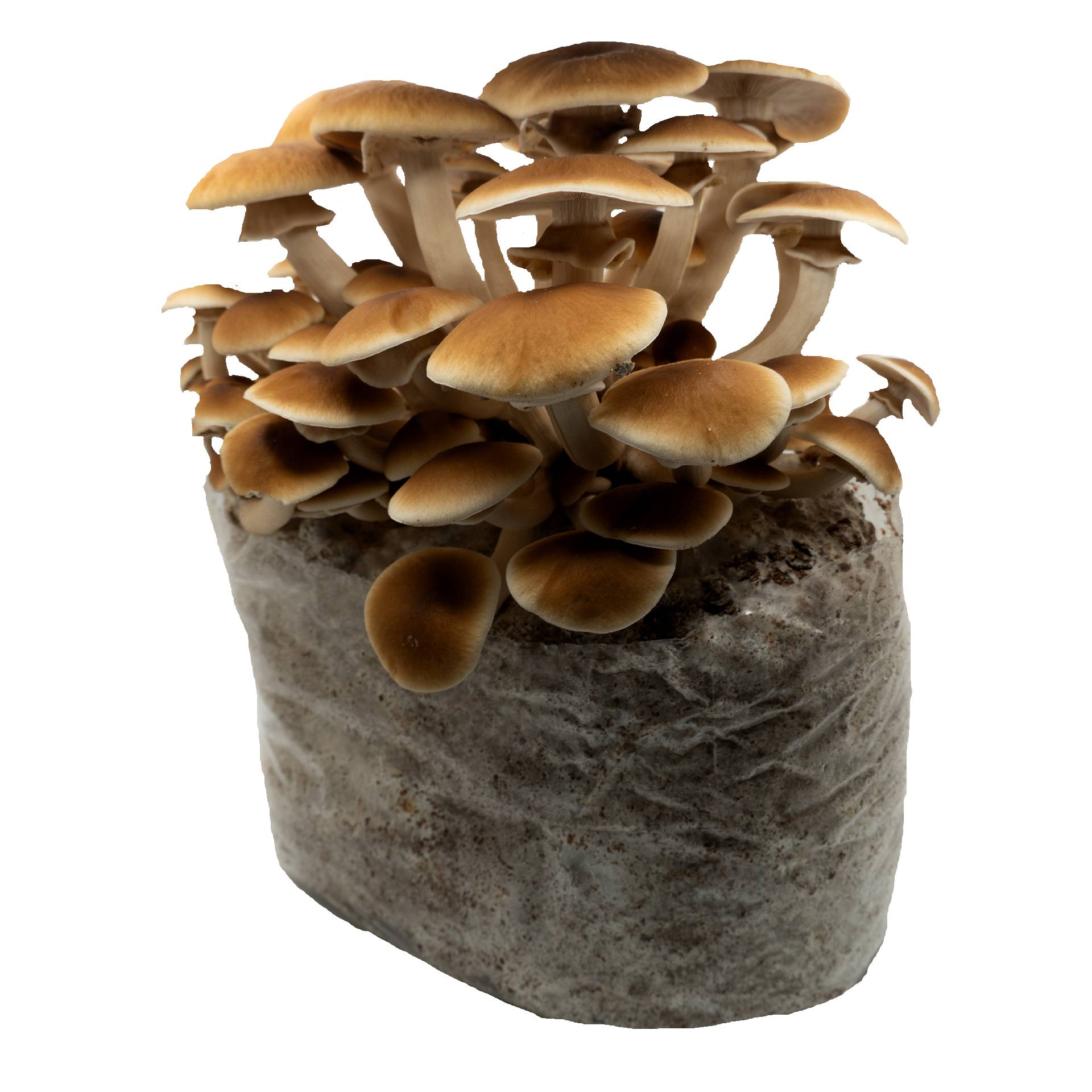
AA-CNS
Pioppino is a relatively delicate mycelium. It obtains its highest yields on masters mix, ideally with a hardwood as its substrate base. For the smoothest colonization and easiest success, some growers cultivate pioppino on recipes similar to shiitakes substrate. Much like other delicate varieties, if pioppino is grown on substrate with insufficient moisture content, its mycelial growth rate is drastically inhibited and its hyphae are less robust and defined. If grown with excessive moisture content bacterial contamination easily occurs. Standard 60-63% moisture content is recommended.
Pioppino takes 18-22 days to fully colonize and be ready to fruit on average. indirect light exposure in incubation encourages more vigorous colonization of the block. When pioppino is ready to fruit cloud like plumes of mycelium form on the top of the block giving way to microdots of a yellow metabolite that forms into primordia. These pins can form on the exterior of the block so its best to maintain tight contact between plastic and block to encourage top fruits. If you catch the block before pillowy mycelium forms but the block is full colonized you can remove the air from the plenum with a small cut at the top of the bag and refrigerate at 34F for several weeks. After refrigeration, a side cut similar to oysters or lions mane will provide a successful and robust flush.
Pioppino prefers warm fruiting temperatures between 65-75 degrees but will fruit in cooler temps as well, just more slowly. It is highest yeilding when fruited from the top of the block. Once pins are formed they grow at a fast rate and will be ready to harvest within 7-10 days on average.
For the best balance of storage life and yield, harvest just when the veils are beginning to show signs of cracking and separating from the stem. This strain of Pioppino is known for mostly even, medium sized fruits. Its yield, while not exceptional, still falls within the range of a commercially viable first flush and outperforms other Pioppino strains that Cap N’ Stem has worked with.
The Pioppinos have a nutty and slightly sweet flavor. It is a popular mushroom in the culinary world.
Check out our MycoWizards PhenoFlick on fascinating strain HERE!
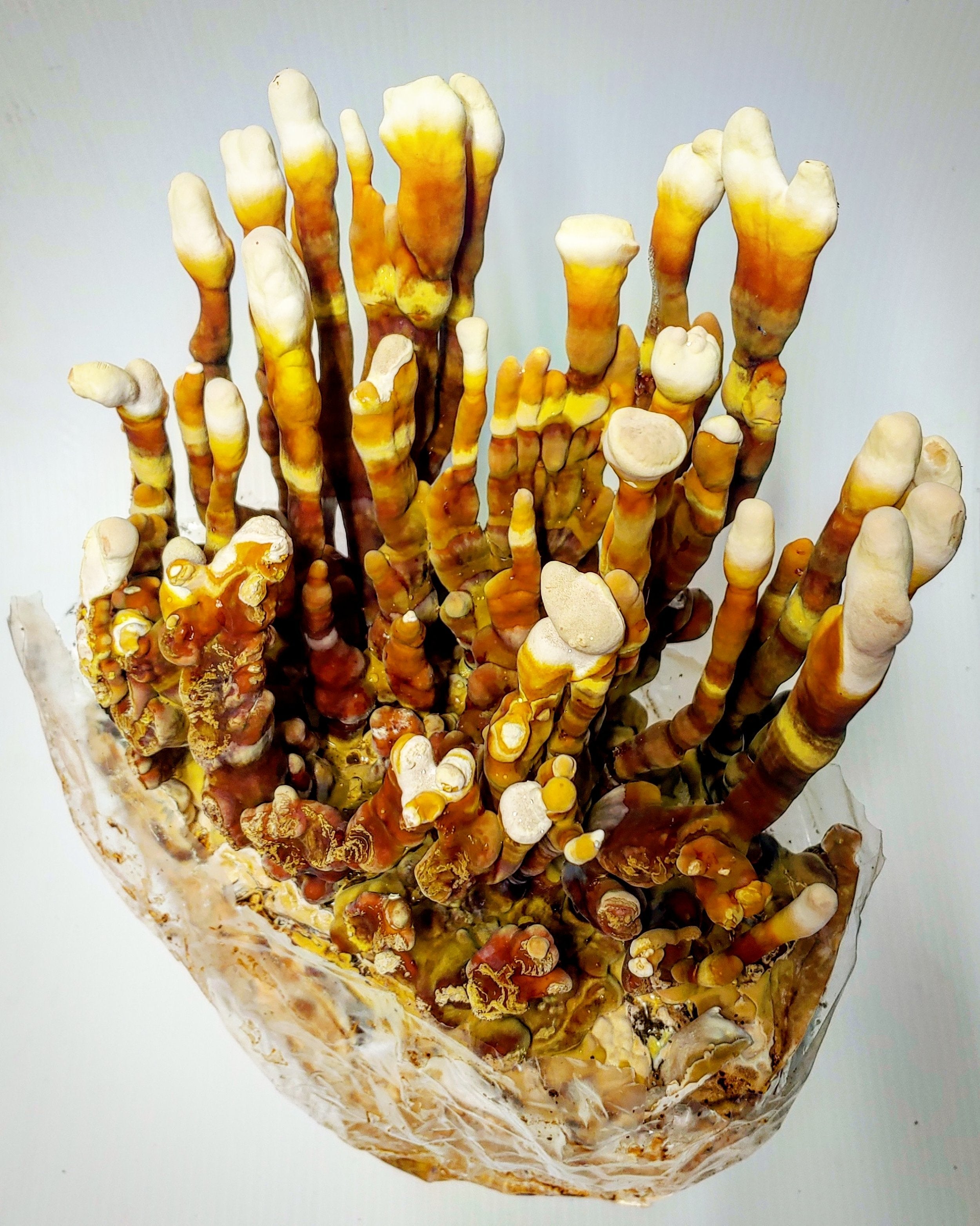
GLZ-9724
Reishi species are incredibly tenacious and will thrive on a wide variety of substrate recipes. Masters mix works quite well and allows for high yields. Standard moisture content of 60-63%. If you plan on fruiting antlers in vitro, be sure to have as large a plenum in the bag as possible to provide maximum amount of space for antlers to grow.
Reishi typically requires 10-16 days for full colonization. Reishi is a strong competitor and will outcompete most contaminants if they're not too prevalent. If you plan to fruit antlers in vitro, set them and forget them, ideally with good light exposure to stimulate faster fruit growth. If you plan to fruit conks, move them into your fruit room as soon as you see either a swelling of secondary metabolites and/or myelination along the exterior of the substrate.
While Reishi myceliates very fast, its fruits grow at a very slow, steady rate. Depending on context, reishi fruits reach maturity anywhere between 3-6 months; some cultivators extend their growth beyond that. Some strains are bred specifically for antler morphology, others for conk, and others are flexible. You can grow antlers in vitro or in a fruiting space with artificially elevated CO2 levels. If you want to grow conks, cut the bag in a similar fashion as you would oysters; primordia will quickly manifest. For conks, maintain a standard fruiting room environment- around 90% relative humidity and the usual 450-800 ppm CO2. This will encourage the organism to continue growing fruit body size rather than sporulating. Ideally, harvest before the mushrooms sporulate, as Reishi spores both contain medicinal potency and are very virulent and irritating to the respiratory system (and your equipment!).
Reishi is a great mushroom for tinctures as they are said to have many medicinal properties.
Check out our MycoWizards Deep Dive on the History Of Reishi HERE!
GM-CNS
GM-CNS is an incredibly tenacious species and will thrive on a wide variety of substrate recipes. Ganoderma Multipileum grows faster and antlers quicker than Ganoderma Lingzhi with less dense fruits in a pillowy zig zag fashion depending on the light spectrum. Masters mix works quite well and allows for high yields. Standard moisture content of 60-63%. If you plan on fruiting antlers in vitro, be sure to have as large a plenum in the bag as possible to provide maximum amount of space for antlers to grow.
Reishi typically requires 10-16 days for full colonization. Reishi is a strong competitor and will outcompete most contaminants if they're not too prevalent. If you plan to fruit antlers in vitro, set them and forget them, ideally with good light exposure to stimulate faster fruit growth. If you plan to fruit conks, move them into your fruit room as soon as you see either a swelling of secondary metabolites and/or myelination along the exterior of the substrate.
While Reishi myceliates very fast, its fruits grow at a very slow, steady rate. Depending on context, reishi fruits reach maturity anywhere between 3-6 months; some cultivators extend their growth beyond that. Some strains are bred specifically for antler morphology, others for conk, and others are flexible. You can grow antlers in vitro or in a fruiting space with artificially elevated CO2 levels. If you want to grow conks, cut the bag in a similar fashion as you would oysters; primordia will quickly manifest. For conks, maintain a standard fruiting room environment- around 90% relative humidity and the usual 450-800 ppm CO2. This will encourage the organism to continue growing fruit body size rather than sporulating. Ideally, harvest before the mushrooms sporulate, as reishi spores both contain medicinal potency and are very virulent and irritating to the respiratory system (and your equipment!).
Reishi is a great mushroom for tinctures as they are said to have many medicinal properties.
Check out our MycoWizards Deep Dive on the History Of Reishi HERE!
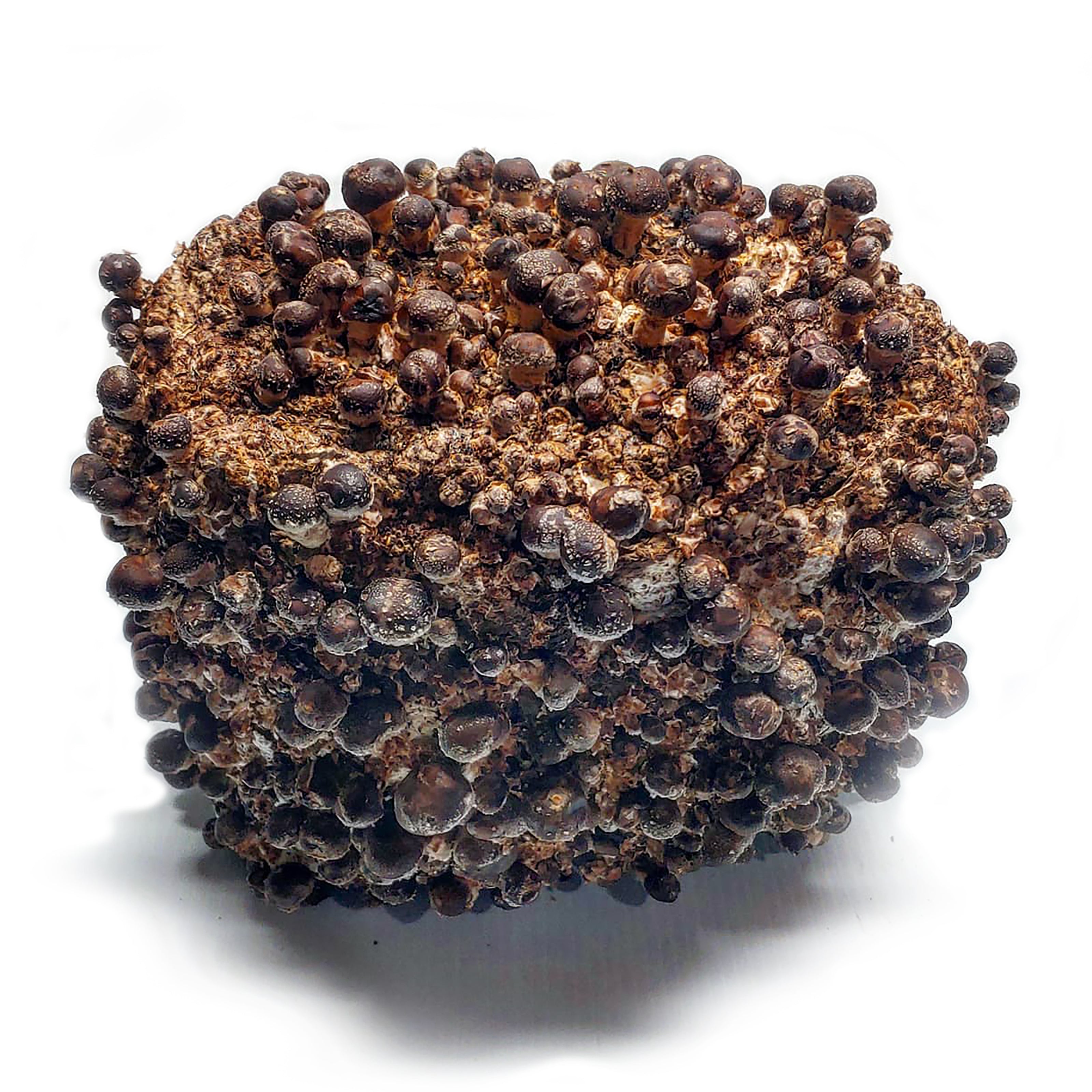
LE-KOM
LE-KOM is much like any other Shiitake strain except it has a faster incubation rate, this is a good strain for wholesale farmers. Shiitake in general requires a less-rich growing medium than other varieties; the standard recipe is 20-30% wheat bran/middlings, 70-80% oak/harwood, hydrated to 63-65%. It prefers sterilized growing media rather than pasteurized growing media, though both can be successful.
Initial colonization takes 2-3 weeks; total time to fully browned maturity ranges from 7-9 weeks- this strain is exceptionally fast, relative to other shiitake strains and extremely forgiving. To ensure healthy popcorning, rather than blistering, ensure that you maintain stable ambient temperatures during incubation. To ensure proper browning, allow for even all spectrum light exposure to the blocks, even if indirect. To avoid overheating and its cataclysmic associated issues, as well as premature pinning in vitro, ensure that the core temperatures of your blocks do not ever exceed the low 70s, even for short time intervals. This strain has proven to be reasonably tolerant of variable substrate moisture content, but it is best practice to stick within the recommended 63-65% MC range and to avoid any standing water inside the cultivation bag.
This strain performs reasonably well through a wide temperature range, though 55-70° F is recommended for highest quality fruits and shelf life. Cold shocking is helpful to initiate a fast and robust pinset but is optional. It mostly produces medium-size caps of good quality with a smaller amount of large-size caps and few petite caps. If cultivated on 10lb blocks, it tends to produce a higher amount of large caps than if cultivated on 5 lb blocks. Its fruits develop rapidly and are easy to cultivate, as with most shiitake strains. For the highest quality, harvest soon after the veils break. For highest yield, allow the caps to swell with water as they flatten (this results in poor quality and shorter shelf life). Its stems tend to be fairly fleshy and marketable. Average yield typically ranges between 2½-3lbs per 10lb block.
Shiitakes in general are great mushrooms for soups, sauces and stir fry. They are one of the most in demand mushrooms in the US right now.
LE-321
LE-321 is a special order status strain from northwest mycological consultants. It is a classic shiitake strain and requires all the same care. The standard substrate recipe for Shiitakes is 20-30% wheat bran/middlings, 70-80% oak/harwood, hydrated to 63-65%. It prefers sterilized growing media rather than pasteurized growing media, though both can be successful. Incubation and fruiting temp should be around 60° F. It is lower yielding than other commercial strains but produces very gourmet fruits.
If you would like to try this strain be sure to write *Special Order* at the bottom of your Spawn Form.
LE-3790
LE-3790 is our most common shiitake in substrate and spawn sales. Shiitake in general requires a less-rich growing medium than other varieties; the standard recipe is 20-30% wheat bran/middlings, 70-80% oak/harwood, hydrated to 63-65%. It prefers sterilized growing media rather than pasteurized growing media, though both can be successful.
Initial colonization takes 2-3 weeks; total time to fully browned maturity ranges from 11-14 weeks. To ensure healthy buckling, rather than popcorning, ensure that you maintain stable ambient temperatures during incubation. To ensure proper browning, allow for some light exposure to the blocks, even if indirect. To avoid overheating and its cataclysmic associated issues, as well as premature pinning in vitro, ensure that the core temperatures of your blocks do not ever exceed the low 70s, even for short time intervals.
This strain prefers fruiting temperatures between 55-66° F, in which it will produce its largest, highest quality caps, but can be fruited in warmer conditions as well, in which its yield will be comparable but its cap size will trend smaller. Cold shocking is helpful to initiate a fast and robust pinset but is optional. If cultivated on 10 lb blocks, it tends to produce a higher amount of large caps than if cultivated on 5 lb blocks. For highest quality and shelf life, harvest soon after the veils break. Its stems tend to be fairly fleshy and marketable. LE 3790 boasts the highest average yield of our shiitake strains, typically between 3-4 lbs.
For more info on 3790 check out ourMycoWizards PhenoFlick HERE!
LE-3782
The OG, The strain to get the small cultivators of the US started back when Aloha Medicinals brought it in from Mycelia BVBA.
While the caps are small the hotter it gets, the cooler weather during fruiting will produce quite nice sized medium cap with a relatively thin outer skin.
So long as incubation temps are kept around 66F for a 10lb block, your sub will run, buckle and brown in under 10 weeks unlike 3790 which can take a bit longer.
While most folks don't cultivate 3782 anymore, it still holds a solid spot in our hearts as being the shiitake strain that made profitability possible!
LE-JC
Shiitake in general requires a less-rich growing medium than other varieties; the standard recipe is 20-30% wheat bran/middlings, 70-80% oak/harwood, hydrated to 63-65%. It prefers sterilized growing media rather than pasteurized growing media, though both can be successful.
Initial colonization takes 2-3 weeks; total time to fully browned maturity ranges from 9-12 weeks. To ensure healthy bucking, rather than popcorning, ensure that you maintain stable ambient temperatures during incubation. To ensure proper browning, allow for some light exposure to the blocks, even if indirect. To avoid overheating and its cataclysmic associated issues, as well as premature pinning in vitro, ensure that the core temperatures of your blocks do not ever exceed the low 70s for even a short time intervals.
LE-JC performs reasonably well through a wide temperature range, though 55-65° F (12-18° C) is recommended for highest quality fruits and shelf life. Cold shocking is helpful to initiate a fast and robust pinset but is optional; smacking the blocks is also effective. It tends to produce mostly medium-to-large caps and few petite caps. Its fruits are of excellent quality with nice ornamentation, less water weight and more flesh weight than most strains, woody stems that allow for quick and easy harvesting, and good shelf life. For highest quality, harvest soon after the veils break. For highest yield, allow the caps to swell with water as they flatten (this results in poor quality and much shorter shelf life). Average yield ranges between 2-2½ lb per 10lb block.