Brooks Worden on Commercial Mushroom Growing | MycoWizards S1E7
Brooks Worden is an old soul survivor of the New England winter turned West Coast dweller. His fascination for mycology has brought him to the reaches of this weird planet since the early 2000's.

What is covered, by timestamp

Topics picked out of the transcript automatically. Times jump to that point in the video.

Time Topics
0:20 forest, cores, episode, england
10:21 location, clean, technique, place
20:21 forest, products, markets, cold
30:23 flat, large, cultures, email
40:23 aloha, kits, largest, mushrooms
50:26 aloha, products, transit, sold
1:00:26 spawn, labor, farm, schedule
1:10:28 spores, shop, markets, bagger
1:20:28 single, tight, scale, stem

Full transcript

Transcript generated automatically from the audio, so expect the odd wrong word. Timestamps jump to that point in the video.

0:20 welcome back fellow mico nerds from mainecap and stem this is the mica wizards podcast i'm eric lohmann and welcome to our seventh episode of this old school radio show it's a few months back i interviewed brooks warden many of you in this industry will know who i'm talking about when i say brooks he's the man he's been doing this a long time now infected with one of the most curious natures you can have for mushroom macelium this was like you know one of those individuals i knew i wanted to interview right away and i just had to make the time to to really like nail him down and do it brooks has done everything worked everywhere and uh i think you'll learn a fair amount about him in this episode he's been a serious ally to us as well as many other mushroom farms just getting in or who have been in it a while and he doesn't hold back from helping sharing and uh spreading that good word if you will so we hope you enjoy this episode hey just sitting down oh yeah yeah what is your life in california like on the weekends uh it varies yeah usually laundry's involved in grocery shopping but yeah uh yeah okay i hit the laundromat you know but um yeah it varies it varies depending on the season and the waves and the mushroom season for sure did you do much surfing out there oh yeah time to time time to time i'm you know posted up on the beach here so yeah yeah are you ready gotta get out there right on it get out there that's awesome is it as unaffordable as everybody says or uh oh yeah totally totally affordable i mean opportunity is is essential you know the more people there are in a place the more opportunity definitely it's a little more cutthroat for your living situation but you know i mean it's all speculative right it's definitely pricey but sometimes the opportunities come up and to make things work and scrape it together and yeah make the dream happen you know yeah i mean that's what you got to do all this stuff is just made up when you're thinking about it or just taking it one momentary step at a time yeah how it goes it is man what so what came first for you was it was it mushrooms or was it california or was it just travel uh uh well i mean i guess my mushroom journey uh goes way back you know i mean goes back to high school and uh dappling around and playing around with the fun fungus and realizing the potential of what we can grow and how that can alter your mind and alter your body and you know i used to live on a woodlot spend a lot of time in like uh in the state forest and uh we have quite a diversity back there so you mean a mess i had well yeah back in massachusetts back in new england yeah and uh the old things bro drink it little state forest i know well yeah so uh you know we had a little woodlot behind our house and uh it was a summer camp probably about my junior year in high school and uh had come across like i was taking this environmental summer camp and uh we had an independent study at the end and you know i was with a lot of bright kids and they're doing like some gene editing and whatnot or you know and i'm like i don't know what kind of project i want to do when i remember these purple mushrooms and you know it turns out you know be courteous and sure you know a toxic mushroom but very intrigued by the diversity and uh we had do you know bill nye the science guy oh like you wouldn't believe my man yeah not him but this guy good preface very inspiring uh doc rock the science jock called them dr barrett rock he's a professor at unh okay uh he kind of turned me on to he said well do you know anything about mycorrhizae and how they're integral to our forests and the life of these trees and virtually without them you know they they help allocate nutrients and water to trees

5:21 and other other plants and without them we essentially wouldn't have our forest and to me like our forest is like my mecca you know that was like my sanctuary a sanctuary to go into a place to reflect and to recreate and to learn you know really just a classroom so was he a professor of yours like in college or no no he was at a uh summer camp a summer program oh okay that's where you met him yeah and uh it's like a course for like college credits and you know kind of like an environmental uh stewardship class yeah of course and uh it was pretty cool so i started researching you know taking like soil cores and uh street cores and trying to come up with some kind of positive correlation between the presence of mycorrhizae and the growth rate of these trees you know which was uh very preliminary and more just like an observation of what's going on yeah uh nothing nothing conclusive just a little summer camp dappling around and looking under a microscope and just learning a little bit more that's kind of rad so that's like a super passive entrance into the world of mushrooms yeah totally huh that's right yeah so um so you took this how old were you when you were in this sort of stewardship camp it was like my junior year all right school uh and then going in my senior year you know there's a lot of pressure i kind of you know i had a very uh blessed childhood and uh i was able to afford to go on to uh to college with my my parents help you know and it's like a lot of pressure like what am i going to study what are you going to be when you grow up what are you going to do and i was like all i want to do is be outside all i want to do is just be in the woods that is all i want to do yeah so uh i i did a lot of landscaping you know through high school that was my job most of the time we had a lot of space and i was always doing landscaping at the house at mo um pretty much all my summer weekends were consumed by like mowing the lawn or picking weeds and you know and then the rest of the time i'd be fishing oh yeah man i mean there's some good fishing back in new england even if you're not going deep sea i spend so much of my time just like hanging out in brooks you ever finish uh fish out to you no no that was just a little uh little scum pond near muscovic yeah okay yeah yeah in that forest but uh these are my i just ride my bike out there and just go fishing that's very strong go fishing yeah it's a good spot man that's super rad is your family still back in mass most of them i feel like you said they were in a few different places but uh yeah they're in new hampshire maine okay cool cool yeah yeah up in my parts still up in your neck of the woods yeah still fighting that uh that brutal winter right now jesus dude it was i mean you know we got a first dose of snow and then we're trying to get down a bunch of like weird little excavation projects outside of the farm just for uh before it freezes totally because it's coming oh man it's wild though you go down to mass or new york what's happening there already had a nor'easter yeah yeah plenty any blow down while blow down you're getting some logs you guys selling plugs for that yet no not even close we're like the anti-plug company no our whole thing is just a little baggies what's that i love counting those things into little baggies oh my god is that what do you guys do a lot of that at firewest1j i won't say that's like our mainstay but i do we do a little bit of it okay all right not like a lot yeah a little bit of sarcasm in that but i do appreciate growing on blogs however sawdust spawn works just fine that's true man that's true i know it's uh it's one of those interesting things that when we were kicking into you know kicking spawn into high gear over the past you know year and uh preliminarily like a half a year before that when you started talking to us about um you know the um how you say water agar slurry madness yeah it was that was an intriguing moment for us man because we really like we didn't do the spawn thing at all when we really started like you know messing around with that for a while weren't you yeah yeah our sort of companies all came up at the same time between uh melson norsbor and

10:21 us and uh you know northsport went towards spawn and fresh mushrooms on like a local level and um classes and sort of everything they were trying to get their hands on everything yeah understandably so three partners who are dedicated to it sort of had three different you know ways to going about how to do this so they had a far reach and then we had to leave a place uh and find a new spot because our building was getting you know too ridiculous and uh next to the whoopie pie factory and now it is yeah before we were down in westbrook so the one you came up to is where we're still at now we've taken over the majority of this building up here oh man it's a good space man i know you're right next to the whoopee pie factory you guys you guys manufacture diabetes every day the smell wafts over it's like half of the day you're like ooh velvet and then the next day you're like oh man peanut butter and strawberry and then you're like chocolate it's bad they smell way better than they taste i will say that that's what happens when you start mass manufacturing food like that you know the man but yeah so norseport and uh massimo came up at the same time so we we were the ones doing the block and uh and we just kept going with it and nobody else is doing it at the time north sport was doing straw and spawn and balsam then started buying in blocks from us and we sort of just kind of kept working off one another for a long while so we bought spawning from norseport for for a long time you know five plus years are they still buying blocks uh mess them yeah yeah yeah they buy in a certain amount from us and they get them through other sources as well um and they really they sort of proved that model on a large scale which most it sort of was indicative to us to keep going with it because we were like oh like they're they're only doing that they're not doing their own production they might in the future you know who knows aaron and uh some small yeah i i've sold quite a few blocks at some different farms and some still buying some blocks and some of them are in that transition phase where they're starting to manufacture their own blocks yeah it's it's a funny transition man we've been spending a lot of time sort of hyper analyzing it because of covid and all the farms that are changing based upon where their sales outlets are and uh the small ones are getting pinched hard but can last longer than the medium-sized and then the semi-larger ones are a tip in one direction or the other they're either too far gone and too too large and they fail or they're too large to fail you know i just feel like it gets to a point you know if you're doing like you know a thousand pounds a week yeah if you're in la that's kind of like that high range where you can kind of make it work because the customer base is a lot higher but if you're doing a thousand pounds a week in both parts of the country i just feel like you're bound for failure but if you're doing like i think you know 500 or less yeah depending on the size of your farmers markets and what your restaurants are like and that kind of scene then and you only have like two employees or you know you can make that work yeah but if you're going for a thousand plus usually and you're not in like a metropolitan area where you can get away within you have you're not worried about maybe making rent as much yeah you have a way where it's grandfathered in yeah well you had another job before that and you had money and it's just owned and this is passive income yeah then you're okay yeah i was talking to you into this weird thing where you're like okay no we need to grow like ten thousand pounds a week to get into the wholesale market yeah you guys are you guys are getting to that point no you need at least five thousand at least it's crazy man the numbers and the scalability of business in this industry are all over the place like not too many um industries look like that you can't be like a small parts manufacturer and then get to be like a massive conglomerate manufacturer um and still exist in the same spectrum of sales and products and offerings whereas this industry it's essentially the same but everybody's making it on different levels and trying to supply their own little spots or global spots or whatever and they don't seem to touch one another very much like i was talking to amy from fox farm and forage down south and she was saying that you know she she can't sell you know for mushrooms like directly in her area but she just drives 30 minutes in one direction and it's a more metropolitan spot and she's got it on lock so it's a challenge depending upon where

15:21 you are but if you can own the property and you can pay for the travel and it makes more sense then you're golden you know yeah at least to a certain poundage percentage like you're saying yeah yeah yeah location location location yeah man i mean that's what i have location location location yeah it's true if you wake up where you survive far west and i was like if these guys understand the first part about business location location location be on the beach have been a place where the climate is actually perfect for growing mushrooms yeah all year you have like an old building you don't have to worry about like all your hvac because the pacific ocean is already taking care of that for you yeah and some guy figured that out you know in the 60s and when they put that farm in there and down the street in the 70s and you know they just knew like hey this is a good place to grow mushrooms campbell's soup was on it they had a huge farm here this place is pretty much like it's the second like largest concentration of mushroom farms yeah the country yeah and it's square oh yeah and yeah royal oaks that's wild man it's such a beautiful spot and i know mark came out there uh a while back and i think you and uh kyle spent time with him if i'm not mistaken yeah yeah and he learned a lot out there man we that was like sort of our early days of reaching out and trying to figure out what other farms were about what they're doing and how they were doing it and uh that was definitely it was a stretch for us to really like just figure out what other places we're doing because this is pre like i don't even know if far west fungi had a social media back then or like a you know or an instagram if they did it was minimal you know at most yeah we were uh more like the website and then just focus locally you know i will say that uh you know kyle's kyle's uh lady here aaron has definitely been on the forefront of pushing that social media that's cool racer yeah it's important dude get ahead now it's how it's going now people are getting out there and there's all this like michael glory um might know glory michael glory you know i you know i could care less about a lot of that honestly like you never like honestly i'm better off not you know you know i just want to be the guy in the behind and like the back scene just making throwing the mushrooms making it happen a lot of people are on that page dude it's a it's an understandably safe spot and it's uh and it's it's twice as happy there you know cool we don't all need to be paul's name it's like that guy he's got it he is he's out there and he's spreading the gospel yeah people are on it you know we need that guy like you know he was definitely a huge influence on me early in my you know after i went to school i picked up that mycelium running book i read that thing cover to cover and then i read all his other books and i was like all right after failed attempts of growing mushrooms and continued filled attempts are like i have to learn something somehow and there wasn't there was like a little bit there was like some things on shrimmery and some weird texts and this and that but not really a lot on like actually getting into sterile technique yeah you know if you didn't have a class in high school or a college class that focused on sterile technique yep it was just like this whole other world of not really understanding what clean is and what clean air is yeah yeah i cleaned my house it's clean i sprayed some alcohol it's clean everything's clean why is this still contaminating yeah oh it was so uh such an ambiguous concept to like uh push air across the surface because you you came if you if you came in from the shroomery world nobody was talking about laminar flow hoods if they were it was very like uh it was it wasn't even a term that like the layman even cons you know there's no concept there so it was just like you had the still air box or you had these like different you know ways of injecting uh spore syringes and but it's but it came so far so fast especially with that growing gourmet medicinal mushrooms book that gave some sort of knowledge to a lot of people all at once and i definitely don't give paul a hard time for that you know

20:21 yeah i mean that wasn't a thing i went out to israel at one point and even saw his books there at like this uh mcdonald research center you know you're wearing them but they are sure they do a lot of interesting projects with uh with mushrooms and their cultivation and getting away from different uh or looking at different pest controls or utilizing different waste products like they're using when i went there they were growing truffles they were growing up my taki on apple waste whoa um pretty cool yeah that's really cool and they had that look they had his books and it was a constant reference and it was like hey yeah this is what you need this is a booking i'm like i read that book that's a good book that's helpful that was helpful that's so red so wait how was you got to step back so what was the transition you were like you you had this sort of first exposure to mushrooms and then you you went to school college-wise yeah i went to school and uh you know i went for forestry okay uh you know sticking in the path of being outside yeah uh you know i was reading his books all going through school and you know we had all this like i went to paul smith's college up in the adirondacks yeah it's a great spot yeah oh my god beautiful endless lakes and streams you know just gorgeous great hiking just great to be outside great place to be outside great place to experience real winter oh yeah real winter brutal winter 40 below definitely put some hair in the chest yeah so we're looking at like uh you know every time i had a project it was like i would always try to gear towards mushrooms in some way whether it was like uh remediation or uh non-timber forest products and looking at chanterelle uh chanterelle collection or the when i did my capstone it was for like cultivating wine caps you know straferion on a waste lignocellulosic products so we had a bunch of sawdust we had a ton of sawdust but up there as you know up in that ball sams you got all this uh soft wood to deal with and you don't quite have the hardwoods that we do back down in uh southern new england and straight out to the mississippi you know but um yeah so it was just like looking on that and um and i graduated from from school and i had a girlfriend and i liked this i liked the area a lot and i wanted to stick around and uh i had a small project on like a bed and breakfast is like daisy meadow farm okay and um kind of uh yeah in that area anyway and uh we're gonna write a forest management plan and i was just like i had such a hard time like putting a trail in or like feeling this way because it went right over this chanterelle patch and i was like i can't i can't do this and the soils are really sensitive and i got really emotional about it and uh i really started valuing like all the non-timber forest crocs i'm like maybe i can make and at the time i couldn't rub two nickels together you know i was like struggling paying rent i was also working at like a deli just because it's a small town and there's not really a heck of a lot of jobs right and i was just like i'm still isn't that there man and i fall like this no it is still really rural did uh they're i mean they're you know it is what it is up there there is one company now that started up in tupper lake selling chaga and i did really i was like wow that's really cool because when it started out you know um i got working with a another small farm on another summer and uh branched out and like doing the farmers markets and uh i had picked you know i was getting chaga we had started up uh in the old parking lot our college we'd started up like a community garden so i got really heavily involved in the community garden and growing salad greens and uh i would take those to the farmers markets and then i go up to the amish country and i buy a whole bunch of produce off this guy moses i mean you can't get better produce them when you're buying it moses that's true i believe you what was his head moses knew what was going on and uh i get some chaga and i i had a spot on the regular with

25:23 some lobster mushrooms yeah it was just like every week the mushrooms would be there so i would do my thing and try to try to pedal these things at the farmer's markets but a lot of times there are more vendors than there were people that showed up at these things yeah so i had a real hard time making any loot i would scrape it together i'd be like okay i made 300 this week and i put in 65 hours and you can never count your hours when you're doing that i had so much fun and i loved it and i didn't care and i was like my rent was 500 bucks a month and uh you know i split that and uh that was enough for me yeah and uh but the winter came and i couldn't do that and i found myself back at the deli and uh you know cool people but it's definitely scraping yeah and uh i was like why am i doing it there's enough of this i found this other fun uh dana forest farm out in vermont okay and uh he grows on logs shitake and i was like cool i'm doing it i found this free rent on craigslist and uh it was off the grid it was like 100 acres uh it was like out in the middle of nowhere robert frost would have been a neighbor had it been back in the day yeah uh but beautiful town uh south lincoln and uh i worked at sugarbush it was just a lift operator i just needed to make it through the winter yeah and i had a summer i had my summer job lined up on a shiitake farm well it was a rough winter i got in in november didn't get all my firewood cut and uh working a full-time job getting out in the morning going out coming back in the evening relying on a wood stove my water the water pipes burst and the water heater and i came back to a frozen mess no propane left in the tape should add more propane didn't have the cash to get it i was struggling every weekend every night i would be out with a headlight pulling logs out of the snow and just trying to trying to make it work it's like the beginning of the shining dude you can only make it so long in these like wretched cold new england environments yeah so i went back to new york didn't girl and i split didn't work after a little while and uh i found myself again in in the adirondacks in the cabin with no electricity free rent couldn't afford it and i said well i got this jewish thing going on i'm gonna go to israel so i signed up for birthright and then i volunteered i did the wolf program volunteered on a farm in israel in israel damn i didn't realize yeah i guess wolf at that time because we did the same thing you know around 2009 or so my late wife and i did that it was phenomenal man but i never even thought about going overseas and doing it yeah that was where it was at i was like oh yeah cause you can go anywhere in the world yeah and i knew i didn't want to deal with another winner uh i know the feeling i'm sorry again no you know i've come full circle with it dude like i've definitely i've definitely had the winners where we we booked it we got the out you know and then past the point like i i spent time on california realized i was not gonna make it out there i hated it you know it's just a different climate and i'm far too dry and mean and uh and i need like the cold winner to really keep me going is my moral tempest i feel you man but yeah you can afford the fuel yeah you got a steady job and you're not living in the cabin without electricity dude i mean a lot of people do it and i bless the souls men tough bastards i know they're tough bastards yeah but uh yeah that tough relationship too there's something to it man like i went over there for a wedding this uh this covid as they put it and uh took the motorcycle like ripping across maine in vermont took a i was like oh my god i've take a ferry over to new york you know i'd never like gone that way yes get on a ferry get over there rip down the upper saranac and take a boat out to a little island where my buddy was getting married and uh yeah it was the coolest spot ever and some of those roads it was like towards the end of summer so i was getting cold and the sun is setting and i'm just tearing ass doing like a hundred trying to make it to like

30:23 this boat landing i i'm losing gps you realize when you're up there that that area hasn't changed in 20 odd years like oh yeah you stepped back in the 50s for sure yeah and you were so even back then you know it has not changed that much i'm sure even since you were there dude and it's it's still got friends up there i talk all the time yeah you know he tells me you know saranac lake's the next hot spot growing maybe yeah that's the party spot as the olympics you know and they got the one of two um ski jumps yeah you know those high ski jumps they got one or two in the country the only other ones in colorado that's epic they're lake blasted lake placid man that's a bizarre spot i didn't realize that's where i'd be going through two on the bike so it was like ripping through forest coming through that like you know vermont into new york area and then you're obviously in lake placid and you're like this is weird you know it's like a downtown area yeah it's nice it's cool so you booked it you were done you had enough of the winter you broke up with your girlfriends uh yeah yeah but it wasn't working so uh out booked it got some warm weather i got connected to another mycologist out there through eleanor shavit she does a lot of mushroom writing and research so were you just like seeking these mushroom people out like as a as a as just your normal course of world because you were that far into it i was obsessed i had the bug and i was obsessed yeah uh i had nothing but failure and aside from growing on a couple logs i think in college and back home like it was like real really never did it you know i never did it yeah so uh i was like i just wanna i wanna grow mushrooms i wanna learn more i need to do this i need experience i need job experience i'm just a kid you know yeah and uh i i got to tour a couple mushroom farms and research centers one day that was real insightful yeah and um and just see kind of like where big ag was and that was a while a while back about 10 years ago and they were doing bad culture with oysters and uh i i got to shadow fair dany for one day wow he does a lot of a lot of consulting with uh agaricus and with oyster mushrooms and both in israel and in poland and um which are both large mushroom areas very knowledgeable guy works on very large scales yeah and it was really cool to see that so they're doing like these huge technological advances with the garakis using like precision um because in israel they're all about the drip irrigation you know they invented jeff irrigation and they don't let you leave in that country without you knowing that very proud and it was very i mean they pretty much made they made the desert bloom something to be proud of yeah i mean without drip irrigation we wouldn't be sustaining ourselves right now honestly uh all that we need water you don't have crops you know crops you have you know severe hunger so without it our population for sure would be stifled yeah so they were doing that with a agaricus and using all these sensors like 10 years ago and they got they were way ahead of time it was just amazing seriously and i was at a farm out in arizona for a long time that i built my first version of a mushroom farm app based on all the shremery you know uh mark keith uh sort of knowledge yeah man i mean that was it besides like you're saying the the paul stamets entrance uh into the literary side of it if you're gonna buy a 50 book if not you're gonna buy that dvd which is like 10 bucks or something at the time by maybe aloha i don't even remember if i was you know selling it they weren't selling it at one point they were yeah i saw a couple copies still lingering around while i worked there no yeah and that that could have been like this weird time that i was buying in cultures you probably made them for me i don't remember man like but i i ordered i have to go back and check some emails yeah yeah but i remember ordering like you know a bunch of stuff and somebody emailed me and were like oh yeah the grifol has taken a while to jump off bro i didn't even know what the i didn't know how to grow hands didn't know anything i just knew that i set up that like double barrel boiler thing that mark had set up and we welded all the grates in and we just ran with it you know and uh but speaking of drip irrigation that whole thing that whole farm that was sort of like pulling in this mushroom side

35:23 it was like my first push into doing it for real um was all drip irrigation it was in the high desert dude they would have never made it without drip irrigation so you know satan blessed the israelis uh yeah yep yeah tubes trees are doing it they're kind of like the drip irrigation of the underground subterranean it's true they hold the water yep so you came back from israel uh after this sort of birthright trip and and woofing or did you sort of just like did you meander around there for a while uh i was still flat broke yeah the only thing i that was sustaining me was the fact that i had a free place to stay yes and that was really cool yeah that kept me on the doing the woof thing for way too long because you realize how little you need to survive i think i had like 200 yeah the whole time i was out there like and i needed it to last me for like months man yeah like it was like a miracle bro oh jesus this is great this is this is not being alone right here man so uh my brother's a really good businessman you know and i i uh he owns his own business an e-commerce platform but he had told me you know if you really want to know these things you got to know all the players out there you've got you want to build the mushrooms you have to know everybody out there so i got on google and i made my way all the way down to aloha medicinals alphabetically and we found ourselves uh they had to offer this internship so i applied i sent an email and i think like 30 minutes later is like an hour later i got an email back from from john holiday saying i was accepted to this program i was like oh my god i have something to do when i get back with mushrooms time to leave i was like i don't know how i'm gonna get there but i'm gonna yeah man that's cool so it's like stayed with a friend worked like a landscaping job in moab just the reason why everybody goes to moab is to set up drip irrigation know that's what i was doing and did that for a couple weeks and then i found myself in an internship uh just later uh asked holiday you know he got me on my feet man he did yeah i was screwed i was like so flat broke i didn't know what to do yeah and uh he had gotten he had bought a house and he needed help like painting and like just some landscaping stuff and he started paying me you know some some good cash to be able to just like get on my feet and pay for my food and give me a place to live what were you doing and like so you so you went into this internship you got accepted and then just started working with him right away so it was it was an interesting internship because it was like a mix of like uh classroom talk with with uh john holiday on um like steam engineering and um contamination and you know different uh aspects of uh really just working in a clean room in a sterile environment and then the rest of it was like a hands-on you know you were it was like a work trade yeah so uh a lot of time we were just cleaning bins and making grains spawn but on a large scale which was pretty much all the medicinal products so they focus on making all those um medicinal capsules and they have an enormous culture bank with like 4 000 different cultures yeah and uh we you know so we were just like making spawn really just making spawn letting it grow uh laying you know a lot of the species of fruit in the bag and then just breaking the bags up put them on trays drying them grinding them sending them out for samples making sure like the cfas are clean and then just kind of doing like the grunt work you know yeah mostly most of the time you're just a glorified janitor you know uh with with with some kind of uh goal at the end so that's pretty much pretty much how it went it was a lot of grunt work but i had a job yeah the rent out there was super cheap i had a two bedroom for 600 a month yeah it was like at some point you know i had a roommate too well now i work with

40:23 at far west but um yeah it was super cool like the first uh couple years i was there we had a different group of interns every month they came from all different backgrounds they were from like iraq south africa namibia croatia canada everywhere from the midwest down south northeast uh northwest you know every part of the world you know yeah and really just like brought all these different perspectives and and all of them came from different understandings of different um uh some of them were just were hobbyists that just wanted to kind of play around and learn a little bit more some people have established mushroom farms that are doing really well some of them were small farmers some of them were on a larger scale some were researchers some of them weren't working with like you know micro texture yeah you know and it was pretty cool it was really cool it was really cool and me not being from there had a great time being the non-native tour guide yeah you know like it was like down the street 20 minutes from lake tahoe we were like 20 minutes from reno so it was a fun place to fun place to be i bet yeah that's a whole area that so what year was that that you were there that you you landed there oh god that was um uh i just remember like it was after the end of the mayan calendar it's all going down yeah yeah like 2012 yeah yeah so 2013 2013 it was after that it's 2013 yeah uh i was there for about three years okay so i think i was ordering cultures from aloha in like 2010 before you could really like buy spawn from them i think they weren't like pushing that heavily it was like a culture bank and uh neurocentric nutraceutical and like they did some growing stuff like they had that on there but yeah that's and then that that was the last time i really interacted with aloha at all i didn't know about john holiday all i knew was shroomery and like the bootstrap world i didn't even know if i would have known at the time that you could go into this sort of thing which might have not been established yet when i was in arizona i would have bailed on everything and gone there you know because it was red yes it's pretty cool i mean they're still doing it i mean he sold the company but uh yep yep and it was on another path but um yeah they're still doing it they're still you know i mean supplements it's kind of it's great it's pretty wild how how they're like everywhere now you go any pretty much any supermarket and find like some kind of micro supplement it's insane man they mostly are like labelers yeah there's a lot of labelers so they don't really push their own product as much in this country as they do like in africa and uh i think they're looking something like 49 countries where they're productive yeah but their brand is not on probably 90 percent of their products i don't know how much but a lot of products you know so they're just making these mushroom powders yeah yeah other people are just putting their names on pretty much yeah i remember there was some talk like after john sold it that they were going to start getting into substrates and i remember a bunch of people are selling a there and sending us stuff that were like you know mixes and just all sorts of weird random stuff you know they were like are we going to make blocks and you spawn do a cultivation side it was like a very quasi-complicated thing after he sold it yeah um and i don't really know why i don't know the whole story behind it but well when i can tell you when i was there you know we were kind of doing like mushroom kits you can make a mushroom kit as you know part of the class yeah it wasn't like to sell it was just like oh we're gonna grow some shiitake and we're gonna grow some oyster mushrooms in a bag sure and this is how you prep substrate and do that and it was in like a separate facility and stuff so they had like another place across the street and they could do that because you know it's pretty regulated um stuff yeah yeah all the nutraceuticals um so all those raw materials sawdust and their straw and everything else had to go on at another facility um so while i was there he built like uh they built a little grow room you know and uh we were just trialing out a lot of our strains and working with this other guy joey schlegel yeah who had a small farm and uh we were he was growing a lot of the oyster mushrooms there and had kind of uh modeled this like cold pasteurization or cold water treatment methods with hydrated lime to grow oyster mushrooms but do this on a

45:25 larger scale where he could get like a wholesaler he had gotten a wholesale contract at one point with whole foods and all this and was just doing um you know fresh mushrooms yeah i remember joey man that was like the that's when i got into cmgn because he started that commercial mushroom growing network yeah and that was his whole thing and that was my first exposure to people doing anything like this at all like for through arizona all the way to to maine we were just we didn't we just did it ourselves we had no idea no reference point nothing you know and then i found that cmgn thing because my business partner's wife was like you know facebook and a smartphone and i was like no i like fought that forever because i was the same you know similar spirit to you i think just like rambling like finding stuff never nobody could ever find me get a hold of me i was in different countries and states constantly you know and then like yeah i found that book and started to like er that that group and started to settle down but i you know i realized that joey had what was the mana mushrooms right um mountain of mushrooms wasn't a what no wasn't his company mana mushrooms oh yeah joey's okay yeah so him and john holiday had yeah there's like the the cool design of the mana machine you know yeah he was an interesting cat man i know he's out of it now but uh that's interesting that your your time there sort of overlapped you know with uh with his and holidays yeah we got to uh take him out too you know i would take the students to his farm and then another guy a good friend is uh don simone yeah oh red mushroom adventures yeah he's like he makes all these uh agaricus kits you know and he kind of has like he's got an old small farm you know and just makes his own compost even though he's like right down the street from premier mushrooms yeah which is you know one of the largest growers in the u.s they got this insane operation that's growing like 500 000 pounds a week yeah you know and then he's got that farm where he's got like you know we're going uh you know maybe about a thousand but and then doing the farmers markets yeah is he still doing it yeah he's still doing it man i still talk to you guys cool guy that's awesome he's like my grandpa mushrooms man yeah yeah at some point like during the whole aloha thing i was like man if you're growing mushrooms you know you kind of have to grow a garrickus at some point just to be like yes i grew with garakis because like 90 of the jobs because i'm still after it like i could lose my job i don't even know yeah what am i going to do am i still going to do mushrooms i might as well have experience with the garakis yeah i need to know how to grow garagus because that's where the that's where the money is that's where the job jobs are that's where the research is hands down the largest employer by far are is in with the garrickus yeah especially in the us yeah hands down a single facility will have 250 employees you know you gotta have it so i was like this is really cool opportunity and uh we did shiitake kits low you know low pressure sterilization made compost i lived in this peach field in a tent for three months and uh i i just like just because uh i had we were making spawn at aloha so uh they gave them had to go we had negotiated this thing where i still kept health insurance for through aloha yeah and i would work as an hourly for dawn and uh you know i would just like do the grunt work me and uh no like one other guy for the most part and then we had juggie was there part-time too there are a couple other people doing farmers markets and uh me and nina we were just like rock it out you know we just rock it out so i spent my morning shoveling chicken you know my afternoon's picking mushrooms yeah dude i washed my hands it's dirty man but uh yeah you know just doing the thing doing the thing yeah that's i mean it's crazy man i don't think there's too many people to be honest dude who have worked through mushrooms kind of like you described how you've been doing it it really is something that i think a lot of people are even from my wave of people starting businesses to you doing it you know right before and after and sort of going through the whole transition

50:26 who did it that way like the obsession is there but not the global sort of outreach and falling into those avenues i do know people who did like the aloha classes and stuff but not a lot of them you know either made it or they kind of didn't do much with it or they don't talk about someone emotion that does that most of them had been to aloha too well yeah i know they had john holliday up here um and that was the beginning of my introduction to him uh they were super excited to have him up and then you know john and maya's history is like in not an intact sort of thing like we don't really have that history at all but uh yeah but i know that he came up to mausoleum and tried to like pitch him on some bleach product or something or another process and there yeah what the they were like no no there was a lot of interesting r d man uh and i mean he's a cowboy yeah and uh he's always on the forefront trying to think of like new creative ideas you know and like this is and he really comes from like a low-tech kind of background like he spent a lot of time in africa you know in the developing world he's a traveler he's a world traveler so you know he has like an obsession with cordyceps and low-tech cultivation and he's american so yeah all these businesses in america yeah but um yeah um no it's just interesting yeah the the the divide there is just it's wild because there wasn't this communication uh thing happening i think between a lot of mushroom um you know mico nerds and self-proclaimed mycologists and then there was like this like other side that was happening in the southwest in that area and it was all definitely driven by you know him i think and that sort of explosive stuff just on the outskirts of the california craze you know huh yeah it just seems like it from like looking like an advantage point you know the new england mushroom farm was irrelevant we were all asking ourselves the questions back in 2010 like why aren't there mushrooms at a farmer's market when i'm sure there were and i remember seeing the first farmers i had mushrooms yeah i didn't drive upper saranac where's the chaga dude but that's that was the question that we were all asking as we were developing these different mushroom farms we're like why isn't this stuff there and we were like there's got to be a reason but truthfully there wasn't a reason it was just that not enough people were doing it on like micro levels all over the country you know well i mean there was like yeah i mean you got phillips mushrooms i mean they were doing you know and they still are doing a good amount of you know the exotics and yeah yeah georgio too yeah it's kind of crazy where it's going you know with all the chinese blocks coming in and you know where is what is going to happen with the american mushroom industry you know it's at like a novel point where it is so developed in china and you know in japan and really all over asia yeah i mean it's it's a factoid that keeps coming up and every conversation i have for innovation on on the Cap N Stem side and it's like the the united states how are we going to compete with these blocks especially with all these mushrooms that are in our grocery stores that right probably they spent you know a majority of their life in transit overseas or in transit and they spend a week in a grow room and it's still labeled as a product of the usa yeah how is that is that something that far west fungi is like dealing with on different levels and trying to like work through it's been you know i talked to kyle about it a bit and uh you know it's been out here for a lot longer than it's been an issue on the east coast yeah yeah i mean maybe with the exceptions in like markets in new york city but it's that's new york city oh i remember before built that plant they were importing you know barges full of fresh mushrooms under nitrogen packaging and such you know i was like some of the first really nice clusters of maitake while uh mycopia couldn't figure it out right away and they had that major mitake sort of shortage and then hotel came flying in like a bat out of stranger hell you know yeah yeah wild it was like what's gonna happen you know are are all these mushroom farms gonna be chinese at some point you know i mean you look at like monterey marsh the biggest mushroom company in the us are they gonna like you know are they gonna tell at some point is it gonna be a chinese coin i don't know i don't know i don't know i don't know where it's going i don't know if it's a bad thing i don't know i don't

55:26 know but certainly uh a lot it's definitely produced you know outside the country yeah globalization is kind of just a reality and i think uh you know being able to do the full process yeah with such a vast supply of ag waste that could be utilized i mean and sustainably grown wood yeah i mean all these by all the waste by-products that could be utilized oh yeah are just turned into soil without a secondary product yeah you know and then just utilizing you know all these waste products from overseas or even if they're buying timber from the us well it's just a lot of it is going over to china for like manufacturing and then those products are sent back here and then those waste the waste products from our timber on our on this soil then it's turned into mushroom blocks over there and then the food is really sold back to us yeah yeah the circulation is huge it's a wild global cycle yeah if you look at how mushrooms in europe sort of move and meander about and get sold and grown and moved it's like it's continental changes you know and sales drives and moves it's just the cogs in that machine are enormous which it's something that the odd it's oddly oddly um it's just so dissociated from like the world that like i live in in terms of supplying these micro farms all around the country and the canada and stuff they have no relevance of it nor do i really i mean we have like an understanding of it but you know we're not in that market because we're supplying so many these small spots that can make it sustainable for right now because the availability of those gourmets is still trying to push through the microphobic nature of small towns in usa you know so they're like these micro farms are like the shock troops you know they're the dudes in the you know tent in the peach forest you know like they're trying to like just ride it out and see what becomes of it you know but it's very hard to see you know through that crazy crazy fog of like mass movement of of uh fresh products you know absolutely so yeah what did uh what brought you to far was fungi was there something in between that and aloha what was that transition for you oh uh yeah uh a fun one you want to tell the tale or no it was another tale of the wild west um so the company was sold aloha aloha was sold yeah and uh i i had the opportunity that uh holiday uh was part of a team that bought um a farm in wyoming yeah and myself and josh legal along with tr davis oh yeah went out to who went out to wyoming and try to make this thing which i was told turnkey uh grow mushrooms on a trial that i had on pellets uh which i gotta say the pellet trials i had were preliminary and uh they were small and they weren't as successful as what i was getting for like yields on straw yeah but uh we were had all these pellets or gung ho for it and uh we had to uh kind of make that operation work yeah and um you know uh so we were mostly dealing with uh when i got in there cleaning the place out uh it was like a nearest nightmare it was a huge mushroom farm okay uh and then yeah and i think our first grow ended up being a nurse for a nightmare yeah um you know we had cleaned the air ducts we had like done the mezzanine like we put our new filters in like pulled all these like air handlers out and you know got the fan calm up and back and going and just kind of like or we're polishing it polishing it up you know the other part of the team you know was working on the boilers and getting those all reconfigured and cleaned out getting all the scale um and uh yeah just like getting everything going yeah really because it was just defunct for quite a long time right this farm was just dead oh man yeah it was dead for a while um it was all in shoshone and that that

1:00:26 whole it was a mushroom farm that would pretty much run on prison labor as part of like a rural economic development plan right can i remember that i think from the story i was told was it was it was not a good idea to give prisoners a whole bunch of knives and relinquish them to go pick mushroom and then tell them go pick mushrooms at the end of their ship and you're just sitting with all these like all these compost so i was told like all these uh you know all these knives would just disappear a thing of compost it'd be like they wouldn't be able to collect them all people wouldn't have to go back to prison so i think it was just people just messing with each other and a difficult situation yeah you know i had nothing to do with it man dude i've seen a lot of that stuff you know yeah i know i know that was probably before you were out there but you know the the craziest thing is like you go into a safe way anywhere in arizona for the most part in its coming the the fresh tomatoes the like awesome cherry tomatoes that you know we were growing on a relatively small scale at this farm in china they were majority stocking the shelves at the safeways via this giant prison labor farm it was like a city under glass dude so i forget the name of this farm but uh but it was massive you drive by it and it was like you know at least a 10 10-minute drive down the road to get past the property of this like farm under glass and it was a massive prison endeavor you know of like you know just using prison labor essentially and that was my first interrupted brain fart of like whoa like so for-profit prisons this is an interesting thing you know yeah yeah it's a wild thing that only the us really like doesn't has no shame in you know yeah just total exploitation that's messed up yes so this that was that was the name of that farm that was like a windy river or something right yeah wind river one river yeah so you went up there and you tried to sort of like figure it all out because i remember getting a call from tr i was producing blocks i don't think he was producing blocks for sale yet if he was he just started and he sort of moved like building out another farm yeah yeah it was in the works yeah because he called me and was like hey i need 5 000 shitake logs every day or something and i was like dude i are you kidding me no you needed them for like three bucks a pop and i was like you're funny that's great you know yeah well yeah we were going to get them from um from another supplier yeah i think it was lambert i think we were going to get them from lambert or um yeah it's escaping me right kss or something yeah it's probably kss sure specialty yeah yeah uh yeah and we were going to get them from them and then just fruit them at the at first and just kind of get that going so i'm assuming this whole thing was just a nightmare from like the gecko it was a nightmare yeah it was a nightmare uh yeah uh so uh i got canned i ended up for probably for the better and uh all good and uh you know i don't want to talk too much about that farm but it was a wild ride yeah wow yeah and then i had uh i used to take students out to far west fungi also and we had the fungus fair from from aloha you used to take them out there yeah okay and then there was the santa cruz fungus bear so i used to take them to far west fungi and to the santa cruz from despair uh in the winter yeah um pretty much the first week of january come coming up if it wasn't coveted time yes sir that's the new times yeah and uh yeah so uh you know i reached out to him and uh i had also reached out to willie crosby back in massachusetts and was kind of contemplating uh where i may land that's when you came by here right so you came here yeah yeah i think i came by there uh after i was already working that far west you were okay yeah yeah you just had come back for the holidays i just talked to him on the phone i had been back for the holidays yep yeah before and i saw him one time and i saw you guys another time okay um

1:05:26 i hadn't heard the captain's down until like i worked at far west i don't think it uh had cry i hadn't found you i don't know wow we were still like developing basically i think windy river would have been your your only real exposure to us name wise just because of tr and joey yeah that must that what happened after it last i was only there for a few months yeah and um yeah and uh i ended up yeah so like you know uh i talked to kyle and his family and said pretty much if you guys can make it work for me then i'll try i'll make it work for you guys i'll i'll try i'll work hard for you yeah and uh you know it's kind of wild and you know uh first uh if i think like the first two weeks they were going to um they were going to a conference in the netherlands okay and uh the guy that had been making all their spawn doing all their tissue cultures and everything just like for the past like 13 years just like up and left he stopped coming to work he's just like all of a sudden no show uh nobody knew what happened to him nobody heard from him yeah and uh just like all right he just bailed so we need a guy and i'm like well i happen to be making spawn you know past like three years that's kind of like my bread and butter yes pretty much all i know i haven't really i've grown so i grew some mushrooms i did get to do a lot of uh mushroom culture at cultivation and fruiting at far at uh aloha yeah yeah we tried all their taki strains that was kind of like my big project oh man did you publish that that paper with him on like straw in 75 and all that no i didn't okay i didn't i didn't end up publishing anything okay you were just working with it i was just working with him on that yeah and we had presented at uh at some point in um at the medicinal mushroom international medicinal mushroom conference in in colombia sure it's just really cool but uh yeah so this guy just like up and bailed and uh i just started putting in some time and redoing the lab and then revamping the culture bank yeah you know kind of just reorganizing everything and then just coming up with like some kind of tracking system and for tissue cultures and just uh kind of tracking what we were doing yeah the lab and then what would what spawn was going to be used for the production cycle and then kind of led into like writing the writing our production schedule for the mushrooms yep with in coordination with how much spawn we're producing in them what we need to do for spawn for our own production plus spawn sales so you were bringing this like level of organization to them presumably they didn't have before yeah yeah yeah it was a it was pretty hands off for a while for a long time i believe yep things can get that way in this business man there's so many variables as an owner you forget one variable and 10 more kick you in the ass and you're like ah you know yeah you got to have the right people doing the right stuff as is yeah and i had one moment where like we lost this oyster strain and it just went to like the growth on the plate wasn't right you lost like a month of production and since then it's just like having a tracking system watching the growth like being really adamant about it you know and you know we had hired uh justin pierce to come in to be like our our uh our internal lab spawn specialist yeah he deals with all that now because we were kind of like in development of where we're going with this and i kind of took on like block sales and um fulfill order fulfillment and continuing with writing the schedule and just organizing what was going on and just keeping track of what we had in stock doing some customer service things and then yeah just kind of doing whatever you got to do you know sometimes you gotta clean some room sometimes you gotta fill some bags sometimes you're doing tribes doing some trials on some different strains play around with corsaps whatever you know uh and then the other doing construction you know we had a lot of construction doing some roofing and painting and blah blah blah whatever whatever it had to happen you know you do yeah you're jumping into it

1:10:28 yeah is that still what you're doing now there uh what do i do now they had bought uh another farm in san martin so uh about last year uh moved out to san martin and that farm uh kyle and uh jesus and a lot of the guys on the farm had been uh jacob had been in a part of uh playing together and rebuilding and they put this compression dagger in and you know just trying to improve efficiency to get everything done with less employees so you know trying to get to the point where we're pulling without uh you know like about four thousand pounds a week you know but with the four employees damn yeah so yeah this farm in particular all the spawn production over to san martin as well so myself justin and then hired on our good friend and co-worker from aloha ethan you know to uh to get it done can you get it done and ethan sounds so familiar was he working there for a while even after uh john sold it yeah he was i remember ethan okay yeah because him and cody he was sort of cody came right after him right cody had been there longer than anybody oh really okay they're from santa cruz no they used to be in santa cruz yeah yeah yeah all right that's interesting yeah because i remember working you know and i remember working with cody when we needed spawn before north sport really had it you know figured out so we got a lot more you know but it was mostly like buying a down to 37.82 in because that was like you know the the legal tr sh exploitation strain that was the golden boy yeah it's so funny is all this like was happening in in even now i kind of negated like uh the connection between um john uh holliday and john donahue in magna and casper from my cilia and those three sort of like had a high level of interplay for a long period of time and they go back a lot further you know oh yeah so like the innovations and such between those three companies spread pretty you know too closer in the states and the others in uh on the other side of uh the great wide open ocean are like they're just you forget that interplay was there and we're all feeding off of it the same strain development and the same sort of methodologies and movement and such and it's from low tech to high tech to everything you know to how john donahue's baggers and shakers and spawners and all that worked you know oh man yeah now we're just tackling with you know taking on what they have in japan which is like yeah man miles this new the bagger the new bagger that we got that kind of bought a couple years ago it's just like wow i mean oh the automatic sort of one right yeah yeah i mean it picks up the bag opens it up dumps it dumps this material in compresses it to like the right compression puts two holes in it spits it out they got machines for folding bags putting bags onto the on a trays and then all the trays go into like uh you know into your carts all that can be 100 automated yeah all you need one employee right you can do 4 000 bags of you know in a day yeah and the right equipment that's crazy that's so wild so did kyle just go over there and sort of start finding that stuff i remember like him documenting a trip i think i was following on instagram or something you know it was just him in different farms and and uh spots yeah he worked with a lot of growers and you should talk to him more about this for sure i will yeah i'm super excited to have their contacts because you know one of the first mushroom videos i saw that i was like what the was uh was john um and uh and him sort of giving that initial tour it was part of some like food company program or some you know and it was like a terrible interview but he was like the coolest dude he was just giving a tour of the farm you know yeah yeah that was a pretty cool thing about like about par west you know it's a family business but they definitely like take in my family you know yeah they had like these huge potlucks and we'd give tours and the public you know all the people at the farmers markets that we had served at all these farmers markets they were doing like you know 20 some odd farmers markets a week yeah they were doing are you guys still doing that man yeah still damn holy plus two stores you know like two mushroom stores mushroom stores how many mushroom stores do you know

1:15:28 you guys i think i know yeah one or two more yeah yeah there's one more in santa cruz and they got the the flagship up in uh up in san francisco yeah yeah which is a cool ass building in general man you know yeah the cold spot it's really red i think you're gonna see more and more mushroom stores as time goes on especially as the cubensis thing picks up and people see this thing as more of like a whatever you know it's it's like going to a nursery basically but it's going to be you know head shop nursery combination like you go into a weed shop now and you can buy plants you can buy weed you can buy brownies you can buy things to grow weed yeah you're right you have to go to a separate shop which is the shop that i initially thought would be selling the weed in the first place all right guys glass yeah i thought they were going to sell weed no no we gotta go to a different store yeah well maybe the yeah yeah the paraphernalia for uh cubensis growing is just too bizarre for people to like be like we can't sell syringes where you're selling spores you know yeah amen it's a radical explosion i i really didn't anticipate any of the like decriminalization pushes or you know legalization pushes and it's it's funny to just see happening now walk in the fine line man walking the fine line right now in the legal system for sure it's wild yeah california is just a weird place in general because it's like one of the only places you know spores are outlawed what so spores are illegal i'm just like because michael butte uh you know he gave a talk on this you know for the fungus bed at one point and he was saying like uh how the spores were outlawed you know but mycelium is not outlawed right the intent to grow is outlawed uh but and and psilocybin is outlawed yeah but mycelium does not contain any psilocybin right nor are they spores right so it's like this weird kind of like is that gray area does that mean like it's okay to sell uh mycelium for microscopy and uh right like in california is that what i don't know i don't i don't really wanna get my head chopped up so yeah it's an intriguing part of the industry dude and i i don't know where it's going or you know we've we've always been at arm's length with it because we're already suspect all of us you know who are involved in this industry so like i don't even even mean suspect like we've all you know done psychedelics and had those weird experiences that the connection is too close that when somebody sees a mushroom farm pop up and like there's already a suspicion around it that you're not just growing gourmet mushrooms you know so it's yeah it's so hard that that is a very like difficult line to walk i got in a fight in a bar over once in carson city i figured you know a place crossing the casino you know having a beer he's like what do you do i'm like i grow mushrooms he's like i'm a cop and i'm like oh my god and the guy was drunk and he tackled me to the ground and this guy you know he's not a real cop he was just going to school cop i found out later because he's my neighbor jesus christ dude you're my neighbor bro like what are you doing i would look out for you you know yeah he's tackling in my barn i'm like trying to produce like nutraceuticals to improve people's health like relieve them from cancer and whatnot he's here to incriminate me i'm like oh what happened what happened in this country man like wow i really hope that dude didn't become a cop did he i hope i don't think he passed this test i don't know well let's just pretend he didn't pass his test god i hope not holy dude i would lose it where are you coming from bro i know you don't hear that every day because we live in the desert but right yeah whatever man and that's the that's the portion where people the you learn really quick like to not be honest and read people and people are like what do you do and you're like which is a super american thing to ask what do you do nobody else in the world asks that question you've been in other parts of the world nobody it's so rude you know on any other language level but yeah they ask what they do yeah man i just yeah i've said everything from

1:20:28 like yeah i'm just a farmer you know i'm a farmer yeah farmer a mycological uh purveyor i don't know like anything it's even funny when you can say things like philosophy cubensis in like a loud room you know and nobody knows what you're talking about unless you say it different you know and so yeah it's just a it's an awkward thing yeah hey well so so you still like you like living out there you like working there i'm not trying to drag you back to the the east coast just curious you know no only money does that only money will drive you back east huh oh man well you're in the spot with the money dude so i'd stay there yeah no it's working so far so i'm not homeless and i'm not in a in a shack without electricity in the midst of winter it takes a lot to get me to move i'm a stubborn bastard oh man well kid you're better off staying there dude i think you know a lot of people who don't own businesses in this industry or they're not like they're not uh integral in their own minds like they don't they haven't offered as much as you know some people who've just been in the industry like you man and i i really gotta say i'm appreciative for everything you've shared with us just from yeah that the culture slurry to the strains to the concepts ideas and bags and whatever you know that that's a rare thing to sort of just reach out and have all those contacts and not be like the owner of a company you know you're you're doing something above and beyond oh thanks man i really appreciate that yeah i would say like you know i love what uh john garone says and he always goes you know we're always here to help people because we think anybody that's as crazy as we are to grow mushrooms could use a little help because like it is a crazy freaking industry man the margins are super tight it's not really a forgiving industry it's super labor intensive yeah you know you really have to know about pretty much every aspect of like you know you got no hvac you got no business you got no sales you have to know like lab techniques cereal culture work you have to know how to do like efficient be efficient and have a a solid production model uh you have to know all this like really specialized equipment um or it really helps to know all these things of course most people stumble in and don't know jack and then they realized like they're on a like a crazy uphill battle yeah or they are just are imitating another farm you know but it really is very unforgiving industry it is really tight margins and you have to be really creative and really dedicated you do it so uh yeah god bless anybody out there trying to do this uh there's nothing more in that the more i've learned about it i always thought i wanted my own mushroom farm less i less i want my own mushroom farm dude it's a valid thing to work through and most people won't figure that out until they figured it out by starting their own mushroom farm you know it's a valiant effort it's a it's a barren effort it's like the more you know the more like oh damn yeah wow yeah i i mean there's almost every single week you know there's i was just talking to kyle there's like almost every single week you know there's always something that breaks or somebody that you gotta deal with or like some like issue or logistical nightmare and it's like always always something you know so it's never like perfect and smooth you on a large scale or a small scale or any scale really it's just there's always it's always a new science project every single row it's what keeps the crazy people into it dude you know oh yeah yeah i i really just takes one thing to go wrong and then the whole thing is like it's all or none it's all or none you're making big or you're going you're gonna lose big i'd be online if i said i didn't have fantasies constantly about like making one product over and over that's shelf stable and uh uninterrupted by all the variables like i like i'll wake up from a dream where i'm like manufacturing like one bushing for like one company over and over and i'm so excited it's like a wet dream for people who are in an industry full of these many variables and changes yeah yeah that's crazy man well what's your future man are you just going to stick out there you're going to stay at far with spongebob for quite a bit uh we'll find out you'll find that cross bridges hasn't even crossed there you go

1:25:28 man so far entertained yeah uh although i'll see it's been a pretty weak wild mushroom season but all these forest fires you know that is the other passion of california yeah it's pretty much the only place only state where you can hunt mushrooms all year shady florida maybe also florida and maybe parts of texas but uh for the most part california is where it's at i never found more morels in a single day than out here it's true and i mean like days there you can just walk around and pick like you know i've pulled out 125 pounds of chanterelles in a day it's true man the biodiversity is huge out there and it makes me wonder primarily because california is so like under attack technically speaking on a um on like a you know a global level globalization level ecological level it's like it's a volatile place to live which makes sense why there's so much mycological activity when you think about it you know it's a it's a dynamic yeah it's a dynamic landscape that's for damn sure yeah yeah it's true well hey dude thanks for doing this i appreciate it man and i really appreciate you and what you're doing out there wait that was it i don't know do you want it to be over you're the man all right thank you thank you so much appreciate it absolutely man i hope you come back at east sometime come visit hang out and if i'm ever out there post covet dude i'm going to uh i'm going to hit you up awesome i love it hey take it easy man dude i really love brooks i think he's uh he's one of the most genuine dudes in this whole microcentric world who doesn't need to own a mushroom farm to be a self-proclaimed expert and uh you know people like i can back it up and say he knows this and he's always willing to experiment and you know chase down new ways to do cool things so thanks again brooks if you guys are ever out at uh farwestfungi seek him out he's the tall dude with the uh you know cool beard at least for now thanks so much for listening to the show this week you can follow or subscribe to michael wizards wherever you go for your podcasts and while you're at it subscribe by writing us a letter i love that snail mail the best part is you mail something you're never going to see that again anyways so you can put your heart and soul into a piece of scrappy snow and send it our way po box 897 in gardner maine because i sure love that snail mail if you want to follow us head on over to instagram and find us at michael wizards podcast this episode was produced and sponsored by Maine Cap N Stem mushroom company with music composed by damon hicks head on over to Cap N Stem.com for certified organic substrate and spawn for all of your mycological needs and a quick note all of the music that was used in this episode was produced and recorded by damon hicks damon hicks is an employee main Cap N Stem and roundabouts one of the coolest cats out there when it comes to ingenious ways of recording strange things he just walked around the farm with a mic and a recorder someday a couple weeks back just getting like tidbits of like walk-in cooler sounds and uh sawdust trommels and water escaping through the sterilizers different pipe work and you know just general atmosphere sounds so if you're freaked out by it the music well get gone if you're into it reach out to the dude i think his instagram is like fluid mech music if i can remember this correctly it's uh f l u i d c on the instagram get adam for making some weird beats for you and your podcast ken until next time later you

What this episode covers, on the site

What we make that this touches

About Cap N Stem, or browse the rest of the library on MycoWizards.

Cap N Stem, Lewiston, Maine. sales@capnstem.com, 207-317-9852.

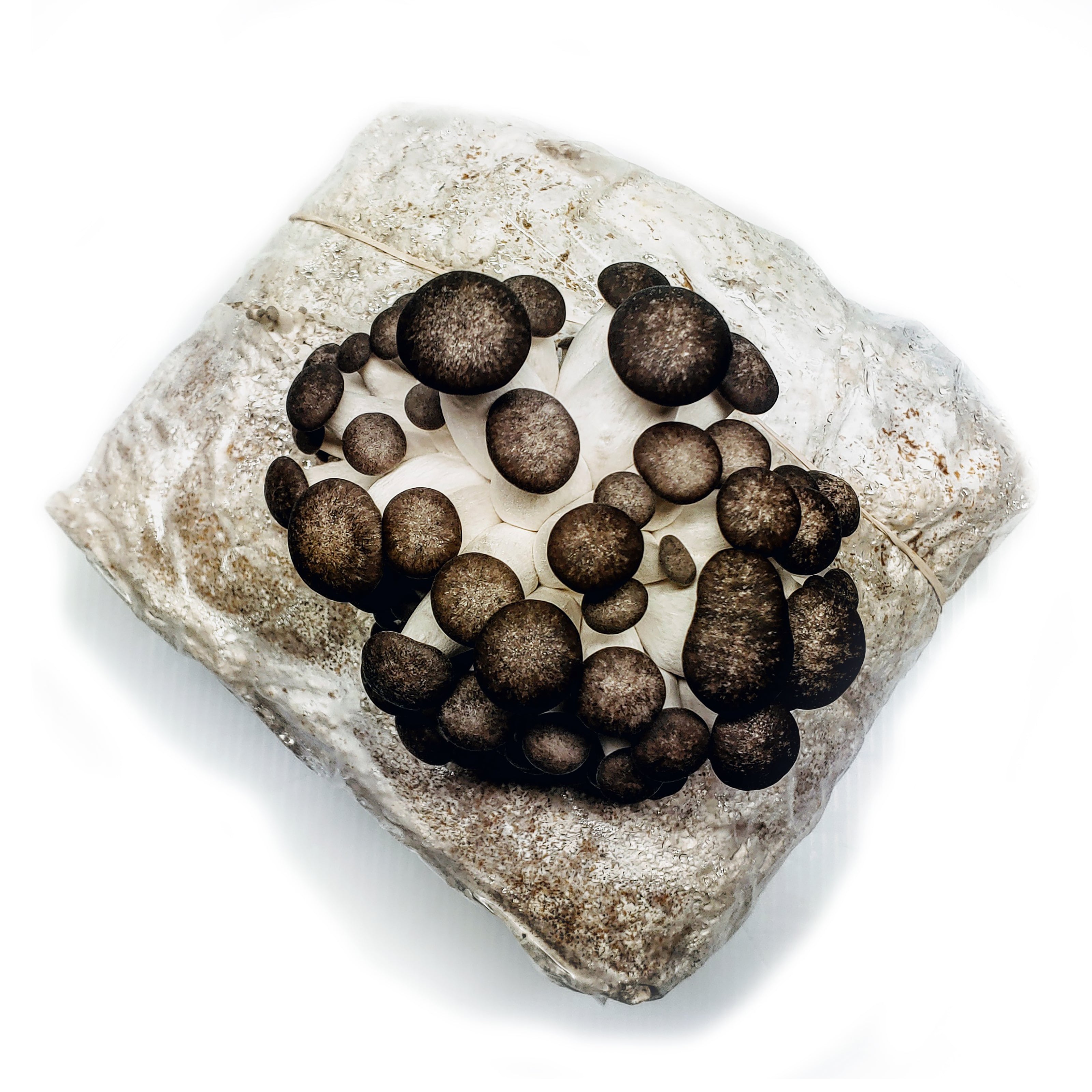
Black Pearl Oyster Strains

PO-BO

Black Pearl Oyster, like most Pleurotus varieties, can thrive on a wide variety of substrate recipes. It is highest-yielding on master's mix, hydrated to 60-63% total moisture content.

Incubation ranges from 14-21 days, depending on factors such as ambient incubation temp, spawn rate and substrate recipe. Unlike many other Pleurotus strains, Black Pearl Oyster does not pin immediately after colonization is complete, providing a grace period in which you can determine when to move your blocks into fruiting.

PO-BO prefers cool fruiting temps between 55-65° F, though can be fruited in warmer temps with mixed results. A standard x-cut or slit through the bag and into the substrate (no more than ½”) is the recommended initiation technique. If fruited in cold temps, Black Oysters manifest the morphology that most cultivators have come to expect- king oyster-like stems and dark, speckled caps. If fruited in warmer conditions, black pearl manifests in morphology a bit more similar to blue oyster, though with fleshier stems.

These are also a very popular sale at farmers markets and the like. They have a mild nutty and umami flavor similar to other oyster strains.

Top fruiting has become increasingly popular with PO-BO which increases the yield and shows off the P. eryngii genetics inherent in its hybridization.

Check out our MycoWizards PhenoFlick on Black Oyster HERE!

All Strains Explained

Blue Oyster Strains

PO-CNS

This is our bestselling house strain of Blue Oyster. Like most Pleurotus varieties, it can thrive on a wide variety of substrate recipes. It is highest-yielding on our master's mix combo-pellets, hydrated to 61% total moisture content.

Incubation ranges from 7-14 days, depending on factors such as ambient incubation temp, spawn rate, and substrate recipe. To avoid stroma and other biological problems during incubation, ensure that the core temperature of your PO-CNS blocks do not exceed 80F at the core. This can be achieved by incubating at 65F.

Bring blocks into the cold storage or the fruit room immediately after incubation is complete, as this strain pins fast and furious. A standard x-cut or slit through the bag and into the substrate (no more than ½”) is the recommended initiation technique. This strain of blue oyster prefers fruiting temperatures between 60-65° F. It maintains a vivid blue color and produces denser fruits of higher quality and a longer shelf life if fruited in cold temperatures. Yield typically ranges from 2½ -3½ lb per 10lb master’s mix block. It is known for very large cap size and tender stems all the way to their base, rendering the whole cluster marketable to a gourmet clientele.

This is a very versatile mushroom that will go good in many dishes such as stir fry, pasta, curry or even simply pan fried by themselves. This mushroom makes a great meat replacement. This strain has also been known to sell well at farmers markets.

PO-CHO

The 'chocolate' oyster is a blue oyster strain from China, sent to us by way of friends in Australia. At this point, it's been cultivated extensively by our farm customer base. It is less aggressive to pin compared with PO-CNS after colonization is complete. It yields very well, produces fruits of high quality (those with caps a bit smaller than a strain like POCNS), but thrives in warmer temps than the average blue strain and demonstrates some resistance to blotch and other bacteria. Its exceptional texture and culinary quality, as well as its slight brown hue to the caps, has made it very popular with chef and home grower alike!

PO-3044

PO-3044 is one of the more popular Blue Oyster varieties we offer. It is known for slightly smaller cap sizes than our house strain, PO-CNS, but still produces clusters of similar size.

PO-3044, like most Pleurotus strains, can thrive on a wide variety of substrate recipes. It is highest-yielding on master's mix, hydrated to 60-63% total moisture content. Calcium carbonate supplementation can help to slightly increase yield and fruit quality. It is best to have a tight contact between the block and the cultivation bag, which helps to prevent premature pinning inside the bag.

Incubation timelines ranges from 7-14 days, depending on factors such as ambient incubation temp, spawn rate, and substrate recipe. To avoid stroma and other biological problems in incubation, ensure that the core temperatures of your blocks do not exceed the low 70s F.

Bring blocks into cold storage or the fruit room immediately after incubation is complete, as this strain pins fast. A standard x-cut or slit through the bag and into the substrate (no more than ½”) is the recommended initiation technique. This strain of blue oyster prefers fruiting temperatures between 55-65° F, but can be fruited in slightly warmer conditions if necessary. It maintains a vivid blue color and produces denser fruit of higher quality and shelf life if fruited in cold temperatures. Yield typically ranges from 2½ -3½ lb per 10 lb master’s mix block. Great shelf life if fruited in cold conditions, shorter shelf life when fruited in warm conditions. A very predictable, flexible, and reliable strain overall. 

Just like the PO-CNS strain, this variety is a great addition to any fruiting room.

PO-3015

If you know, you know...some love it, some hate it. This Blue oyster strain is something that simply exists for the folks who have come to rely on it!

PO-KB

The PO-KB strain is a result of breeding carried out by Mossy Creek Mushrooms, this is a somewhat less predictable blue oyster strain, but an ideal choice for those with variable fruiting conditions and/or warm average fruiting temperatures.

Like most Pleurotus varieties, the PO-KB strain can thrive on a wide variety of substrate recipes. It is highest-yielding on master's mix, hydrated to 60-63% total moisture content.

Incubation ranges from 7-16 days, depending on factors such as ambient incubation temp, spawn rate, and substrate recipe. To avoid stroma and other biological problems in incubation, ensure that the core temperatures of your blocks do not exceed the lower 70s F

Bring blocks into the fruit room immediately after incubation is complete, as this strain pins readily. A standard x-cut or slit through the bag and into the substrate (no more than ½”) is the recommended initiation technique. This strain of blue oyster prefers fruiting temperatures between 60-70° F, but can be fruited in colder and semi warm conditions if necessary. It maintains a vivid blue color and produces denser fruit of higher quality and shelf life if fruited in cold temperatures. Yield typically ranges from 2 -3 lb per 10lb master’s mix block. It is known for average cap size but still produces very large clusters. Great shelf life if fruited in cold conditions, shorter shelf life when fruited in warm conditions.

Just like the PO-CNS strain, this variety is a great addition to all your favorite dishes; and any type of Blue Oyster tends to be in high demand if you're looking to sling the fungi!

PO-LOG

While this strain is not as high-yielding or high in quality, when compared to other blue oyster strains, it is still known for its overall ease in cultivation, resistance to bacterial blotch and other contaminants, and its exceptional shelf life. This phenotype certainly maintains the longest post-harvest shelf life of any blue oyster strain we carry, thus making it a great strain option for wholesaling to distributors.

Like most Pleurotus varieties, PO-LOG can thrive on a wide variety of substrate recipes. It is highest-yielding on master's mix, hydrated to 60-63% total moisture content.

Incubation ranges from 10-18 days, depending on factors such as ambient incubation temp, spawn rate, and substrate recipe.

A standard x-cut or slit through the bag and into the substrate (no more than ½”) is the recommended initiation technique. This strain of blue oyster prefers fruiting temperatures between 55-65° F, but can be fruited in warmer conditions if necessary. Yield typically ranges from 2-2½ lb per 10lb master’s mix block. A very predictable, flexible and reliable strain overall.
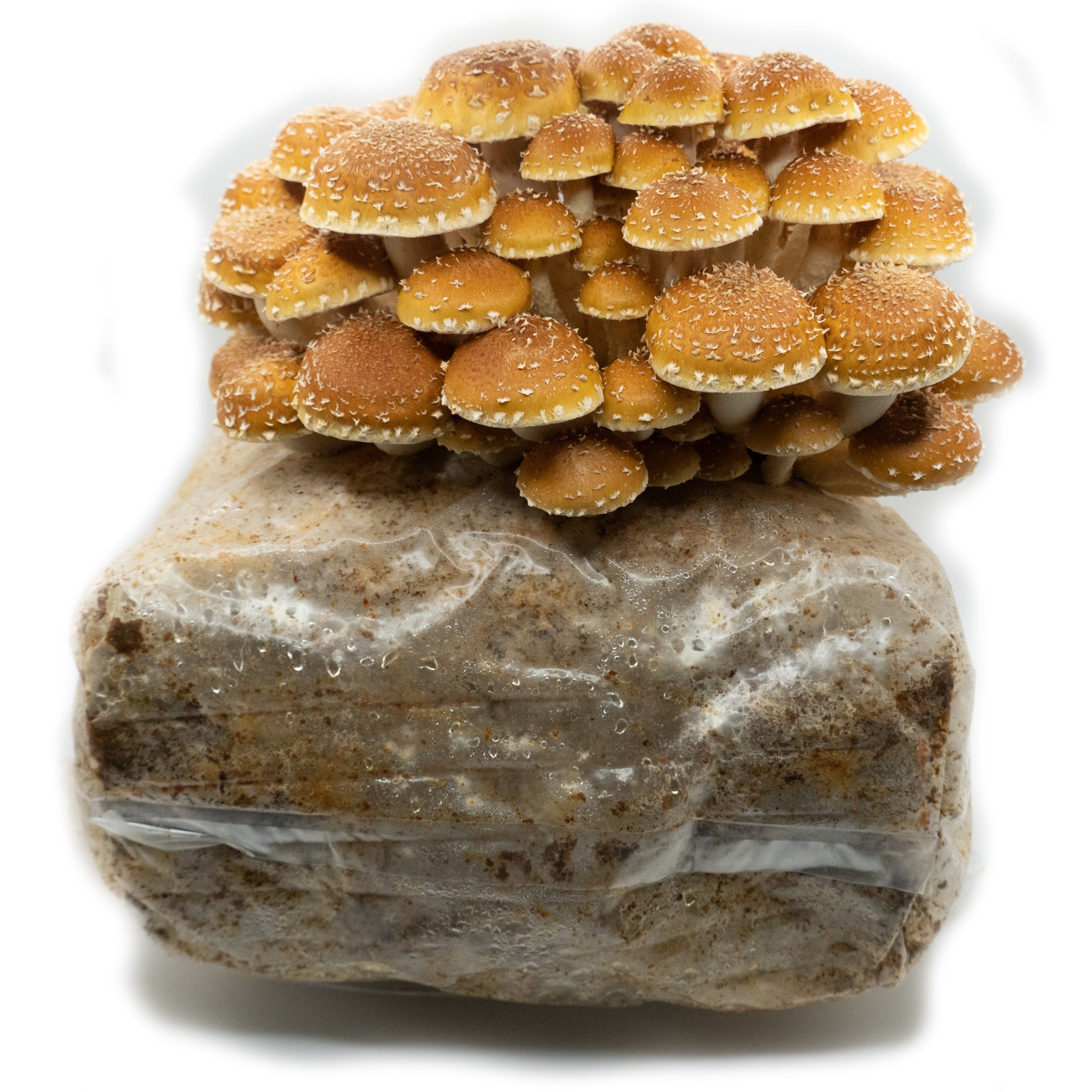
Chestnut Strains

PA-CNS

The infamous and mighty Chestnut strain PA-CNS thrives on master’s mix, especially if pelletized (the pelletization process breaks down the oak, rendering it more bioavailable for a weak metabolizer like chestnut) hydrated to 61-63%.

Initial colonization takes 3 weeks on average, but we recommend that you let the blocks sit for 1 additional week to fully mature- the block will swell with caramel-colored secondary metabolites. This allows the mycelium time to more effectively digest its growing medium, which leads to a faster and larger pinset once introduced into fruiting. Similar to most varieties, avoid letting the internal temperature of your blocks exceed the upper 70s to avoid deleterious biological impacts. Be mindful that chestnut mycelium is more prone to mold contamination than most other common varieties.

Chestnut prefers fruiting temperatures between 55-65° F (12-18° C), if the temperature exceeds 65° it will likely not pin at all. High relative humidity (90-95% ) is recommended for fast and healthy pinning. This is a more intermediate species to work with, if the conditions are not just right you will have a hard time harvesting anything off of the block.

A deep cut into the block is highly recommended for a dense pinset and high yield. Pinset emergence takes longer with chestnut than most other common varieties- 14 to 21 days in most cases. Once pins emerge, it is a fairly rapidly growing mushroom. Harvest after veils break but before caps flatten. Though chestnut does not have a fantastic shelf life, it is a strikingly beautiful mushroom and often sells fast. Average yield ranges between 2 and 3lbs.

Chestnuts have a nutty and meaty flavor, great for many dishes like pasta, soup or as a pizza topping. They are also good for drying as this will improve shelf life.

Check out out MycoWizards PHenoFlick on PA-CNS HERE!
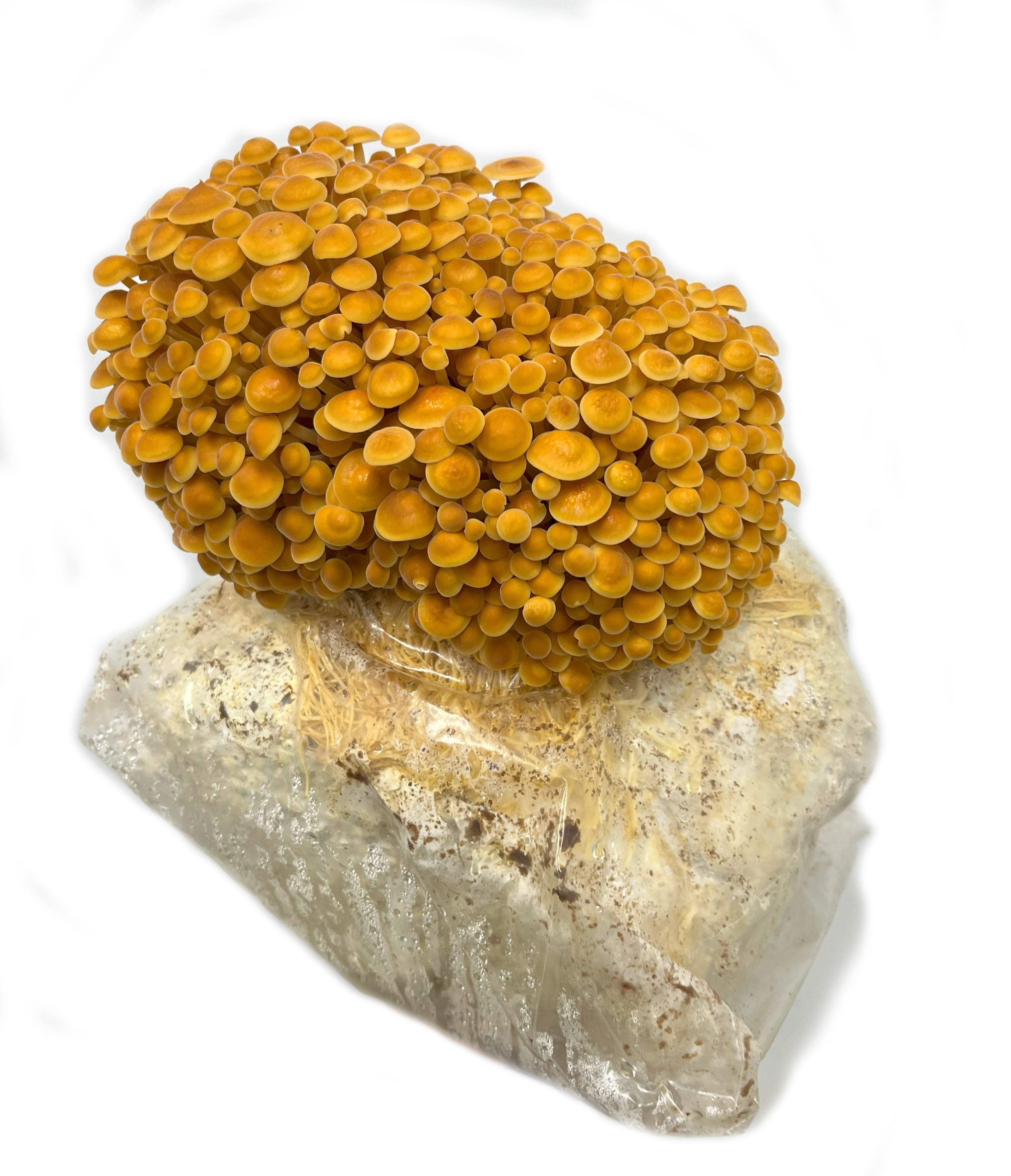
Enoki Strains

Golden Enoki FV-4600

Enoki is very tenacious and can grow on a variety of substrates, but we recommend master's mix for fastest growth and highest yields. Recommended moisture content is 60-63%, Calcium carbonate supplementation can help to slightly increase yield and fruit quality. It is best to have a tight contact between the block and the cultivation bag, which helps to prevent premature pinning inside the bag.

Enoki is fully colonized between 14-21 days in most circumstances. As with most varieties, enoki mycelium thrives with its interior temperature rests in the upper-70s Fahrenheit.

Enoki prefers cold fruiting temps, ideally 50-63° F. Some growers cold shock blocks for several days prior to inducing fruiting. Most growers top fruit enoki sometimes through scratching the top surface of the block. To encourage the most spindly spaghetti like form, let the pins form in vitro or fruit them in a high CO2 environment. If fruited in a regular fruiting environment with high oxygen levels, they will still be thin stemmed but with approximately dime-sized caps.

Enoki is sensitive to bacterial infection in the fruits, so avoid condensation settling on the fruits for a long period of time. Much like other common gourmet varieties, Enoki caps will flatten once they reach full maturity. So keep an eye on them to harvest before flattening for better storage life. FV 4600 can be quite high yielding and can be fruited multiple times with one block.

Enoki mushrooms are quite popular, they have a crunchy texture and umami flavor. They are good in a variety of dishes including soups, stir fry or even just by themselves.

White Enoki FV-1037

FV-1037 is a special order status strain. It is grown in the same conditions as Gold Enoki, however, your incubation and fruiting rooms need to be very on point as this is an overall weaker strain and needs exact conditions. The main appeal of the FV-1037 is the beautiful stark white color, as it was bred specifically for that purpose.

For substrate, we recommend master's mix for fastest growth and highest yields. Recommended moisture content is 60-63%, Calcium carbonate supplementation can help to slightly increase yield and fruit quality. It is best to have a tight contact between the block and the cultivation bag, which helps to prevent premature pinning inside the bag.

Enoki is typically fully colonized between 14-21 days in most circumstances. As with most varieties, enoki mycelium thrives with its interior temperature rests in the upper-70s Fahrenheit. Enoki prefers cold fruiting temps, ideally 50-63° F. Some growers cold shock blocks for several days prior to inducing fruiting. Most growers top fruit enoki sometimes through scratching the top surface of the block. To encourage the most spindly spaghetti like form, let the pins form in vitro or fruit them in a high CO2 environment.

Enoki is sensitive to bacterial infection in the fruits, so avoid condensation settling on the fruits for a long period of time. Much like other common gourmet varieties, Enoki caps will flatten once they reach full maturity. So keep an eye on them to harvest before flattening for better storage life.

If you would like to try this strain be sure to write *Special Order* at the bottom of your Spawn Form.
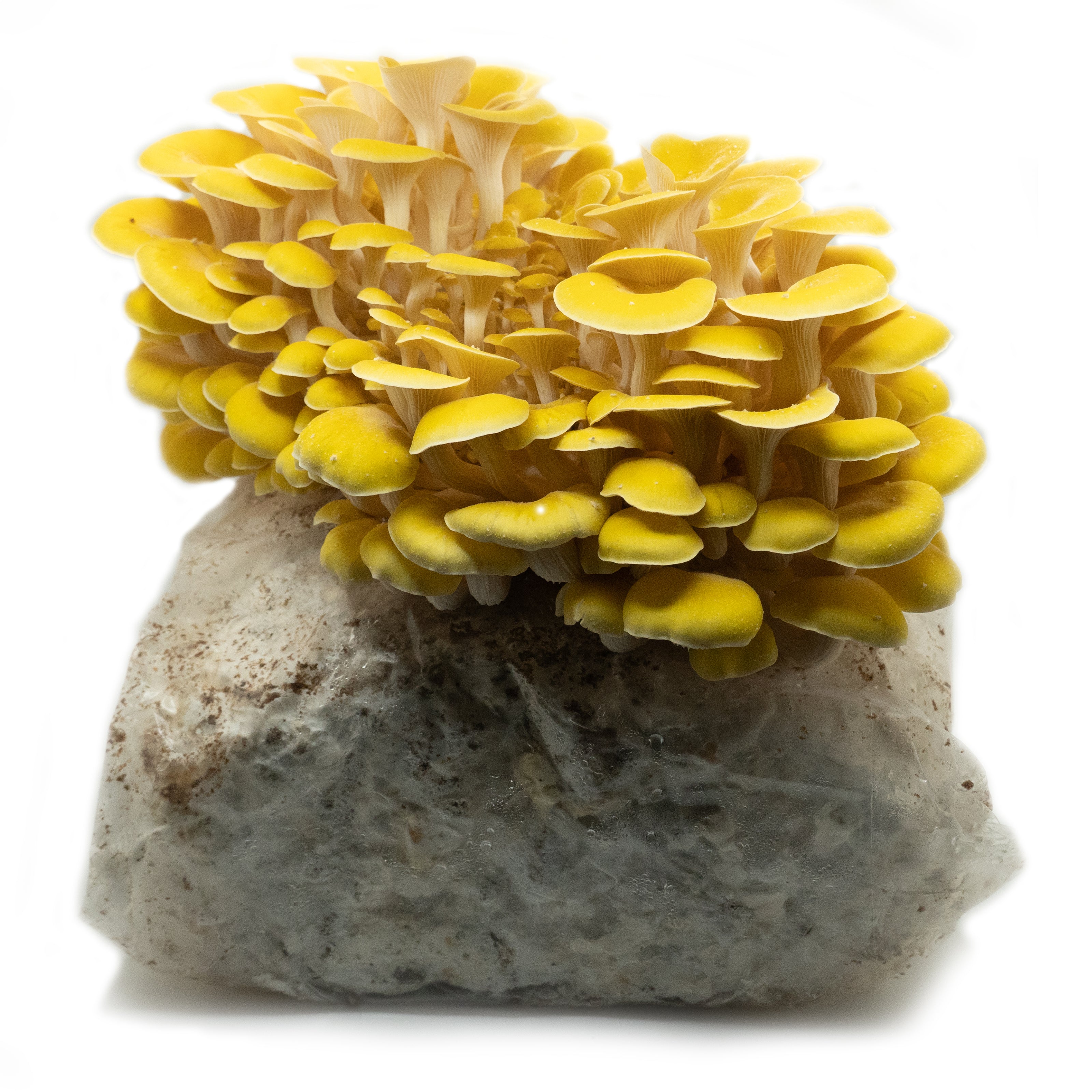
Gold Oyster Strains

PC-MM

Gold Oyster, like most Pleurotus varieties, can thrive on a wide variety of substrate recipes. It is highest-yielding on master's mix, hydrated to 60-63% total moisture content.

Incubation ranges from 7-14 days, depending on factors such as ambient incubation temp, spawn rate, and substrate recipe. To avoid stroma and other biological problems in incubation, ensure that the core temperatures of your blocks do not exceed the low 70s.

Bring blocks into the fruit room immediately after incubation is complete, as this strain pins readily. A standard x-cut or slit through the bag and into the substrate (no more than ½”) is the recommended initiation technique. This strain of Gold Oyster prefers immense flood lighting with fruiting temperatures between 65-70° F, but can be fruited in cooler conditions if necessary. It maintains a vivid color and higher yields when fruited in those warmer conditions. This strain can easily be fruited several times, but still has a high first flush yield. Its fruits develop rapidly; yield typically ranges from 2½ -3½ lb per 10 lb master’s mix block.

Pleurotus citrinopileatus is known for smaller cap size than other oyster species and for very delicate fruit tissue that is easily damaged. This PC-MM strain demonstrates stronger fruit tissue than average, while still maintaining a nice texture for gourmet cuisine. Mediocre shelf life. Fungus gnats and other insect pests are attracted by remnants of p. citrinopileatus fruits, so be sure to cut clean against the block when harvesting, and move the blocks to compost as soon as you are done flushing. A very predictable, flexible, and reliable strain overall.

Gold Oysters are desirable mainly because of their beautiful bright yellow color and notably nutty flavor.
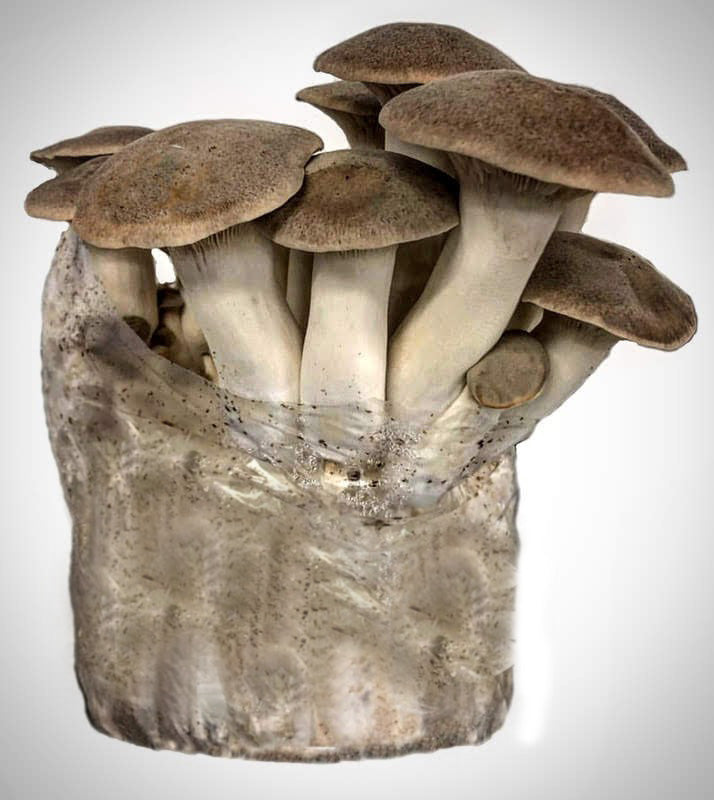
King Oyster Strains

PE-KONG

King oyster, like most Pleurotus varieties, can thrive on a wide variety of substrate recipes. It is highest-yielding on master's mix, hydrated to 60-63% total moisture content. It is best to have a flat top surface of your block and tight contact between the block and the cultivation bag, which encourages growth across the entire surface rather than along the edges of the block.

Incubation ranges from 14-21 days, depending on factors such as ambient incubation temp, spawn rate, and substrate recipe.

Bring blocks into the fruit room immediately after incubation is complete, as king oyster pins readily. There are three typical pin initiation approaches- letting the pins form in vitro before cutting off the seal and/or top portion of the bag, immediately cutting off the seal and/or top portion of the bag and scratching the top surface of the block, or simply cutting off the seal and/or top portion of the bag. Some farms like to form a casing layer (such as with peat moss and hydrated lime) for the fruits to emerge from. All have their merits and depend on the fruiting environment and grower preference. King oyster prefers cold fruiting temperatures between 50-60° F. Rapid pin growth and ideal morphology are encouraged through exposure to blue lighting; full spectrum LED is fine, if not too strong. Its fruits develop rapidly; yield typically ranges from 2-2.5 lb per 10lb master’s mix block and boast an excellent shelf-life.

King Oysters are a delicious and meaty mushroom, a great option as a meat replacement.

Check out our King Oyster Cultivation Deep Dive on our MycoWizards page!

PE-2603

PE2603 tends toward more uniformly medium-sized fruits with a pale, beige hue to the caps, while PEKONG demonstrates much more variance in fruit size with a stronger granite hue to the caps.

King oyster, like most Pleurotus varieties, can thrive on a wide variety of substrate recipes. It is highest-yielding on master's mix, hydrated to 60-63% total moisture content. It is best to have a flat top surface of your block and tight contact between the block and the cultivation bag, which encourages growth across the entire surface rather than along the edges of the block.

Incubation ranges from 14-21 days, depending on factors such as ambient incubation temp, spawn rate, and substrate recipe.

Bring blocks into the fruit room immediately after incubation is complete, as King Oyster pins readily. There are three typical pin initiation approaches- letting the pins form in vitro before cutting off the seal and/or top portion of the bag, immediately cutting off the seal and/or top portion of the bag and scratching the top surface of the block, or simply cutting off the seal and/or top portion of the bag. Some farms like to form a casing layer (such as with peat moss and hydrated lime) for the fruits to emerge from. All have their merits and depend on the fruiting environment and grower preference. King oyster prefers cold fruiting temperatures between 50-60° F. Rapid pin growth and ideal morphology are encouraged through exposure to blue lighting; full spectrum LED is fine, if not too strong. Its fruits develop rapidly; yield typically ranges from 2-2.5 lb per 10lb master’s mix block and boast an excellent shelf-life.

King Oysters are a delicious and meaty mushroom, a great option as a meat replacement.

Check out our King Oyster Cultivation Deep Dive on our MycoWizards page!

PE-REX

  • Demonstrates higher blotch resistance and overall vigor
  • Smaller, more attractive caps
  • Much softer texture than other strains, great in a gourmet context
  • More even fruit body size, easier to grade
  • Similar yield to other commercial strains such as KONG and 2603
  • Slightly slower to pin and harvest than KONG, by approximately one week

Lions Mane Strains

HE-CNS

HE-CNS is our go to house strain of Lion's Mane. HE-CNS produces the highest yield on master’s mix. We strongly recommend a final block moisture content of 60%; a moisture content even slightly exceeding that tends to lead to problems during incubation and fruiting for lion’s mane. In turn, insufficient moisture content often leads to issues with mold contamination and overall poor colonization of the block. Lion’s mane does equally well with ultrapasteurization and sterilization.

Incubation ranges from 8 to 16 days, depending on factors such as ambient incubation temp, spawn rate, and substrate recipe. Similar to most varieties, avoid letting the internal temperature of your blocks exceed the low 70s internally. Be mindful that Lion’s Mane mycelium is prone to myriad problems if it overheats and that it is more prone to mold contamination than most other common varieties.

Lion’s Mane prefers standard fruiting temperatures between 55-65° F (12-18° C). A high air exchange rate (lots of oxygen-rich air) and consistent relative humidity are ideal for good fruit development. A standard x-cut or slit in the bag is the recommended pinset initiation technique; many farms make their cut on the top surface of the block, where lion’s mane readily fruits on its own accord. Lion’s mane fruits develop at a relatively slow rate but grow to incredibly large size and weight. Average yield is quite high- 2½ to 3½ lb, with potential for even more with subsequent flushes of the same block. This strain is known for dense, club-like fruits with small spines, providing greater resistance to bruising and damage during handling/cold storage thus making it an eminent wholesaling mushroom.

Lion's Mane is not only a great versatile ingredient, it is also said to have many medicinal properties.

Check out our MycoWizards PHenoFlick on HE-CNS Here!

HE-POW

The HE-POW strain is different than typical Lion's Mane as it has demonstrated higher heat tolerance than other strains and is often the preferred strain by farms in hot climates and/or hot seasons.

HE-POW, like most Lion's Mane strains, produces the highest yield on master’s mix, but is easier to grow without issue on a lower-supplementation recipe, such as 65-70% hardwood and 30-35% wheat middlings/soy hulls. Regardless, we strongly recommend a final block moisture content between 59-62%; a moisture content even slightly exceeding that tends to lead to problems during incubation and fruiting for lion’s mane. In turn, insufficient moisture content often leads to issues with mold contamination and overall poor colonization of the block. HE-POW does equally well with ultrapasteurization and sterilization.

Incubation ranges from 8 to 16 days, depending on factors such as ambient incubation temp, spawn rate, and substrate recipe. Similar to most varieties, avoid letting the internal temperature of your blocks exceed the low 70s to avoid deleterious biological impacts; be mindful that lion’s mane mycelium is prone to myriad problems if it overheats, such as mold and bacterial contamination.

A standard x-cut or slit in the bag is the recommended pinset initiation technique; many farms make their cut on the top surface of the block, where it readily fruits on its own accord. Lion’s mane fruits develop at a relatively slow rate (14-21 days) but grow to an incredibly large size and weight. Average yield is quite high- 2½ to 3lb or more per 10lb master’s mix block, with potential for even more if fruited multiple times per block.

This strain is known for flashier fruits with more exposed spines, with excellent visual appeal while still maintaining wholesale production standards.

HE-LP

The fruit quality of this strain is not quite as gourmet as other Hericium strains offered by Cap N’ Stem, but its flexible cultivation parameters makes it a worthwhile consideration for some farms.

Lion’s Mane produces the highest yield on master’s mix, but is easier to grow without issue on a lower-supplementation recipe, such as 65-70% hardwood and 30-35% wheat middlings/soy hulls. Regardless, we strongly recommend a final block moisture content between 59-62%; a moisture content exceeding that tends to lead to problems during incubation and fruiting for lion’s mane, especially bacterial infections and subsequent pooling of secondary metabolites. In turn, insufficient moisture content often leads to issues with mold contamination and overall poor myceliation of the block. Lion’s mane does equally well with ultrapasteurization and sterilization.

Incubation ranges from 8 to 16 days, depending on factors such as ambient incubation temp, spawn rate, and substrate recipe. This strain is slightly more tolerant than other Hericium strains of varying moisture content in the block as well as varying incubation temperatures, making it a safe choice for farms with an inconsistent incubation environment.

Lion’s Mane thrives with lots of fresh air exchange and abundant oxygen levels, also ensure that you maintain high relative humidity without allowing condensation settling too long on the fruits, as lion’s mane is prone to both desiccation and bacterial rot. A standard x-cut or slit in the bag is the recommended pinset initiation technique. Many farms make their cut on the top surface of the block, where lion’s mane readily fruits on its own accord. Lion’s Mane fruits develop at a relatively slow rate (14-21 days) but grow to incredibly large sizes and weight. Average yield is less than other Lion’s Mane strains- 2 to 2½  lb- with potential for more if fruited multiple times per block.

HE-A

HE-A is a special order status strain. It is a wild clone from Quebec. We have not done much production with this strain so a lot of variables are still unknown. The main reason HE-A is special is it has vigorous and dense mycelium, much stronger and flexible than most other Lions Mane strains; This makes it a good contender if you have unstable fruiting conditions.

As this is a wild clone, the fruits of the HE-A look wild and spiny compared to regularly cultivated Lions Mane; which typically appear as a more dense round shape.

We do not have any average yield data as we have not brought this strain into our regular rotation. If you would like to try this strain be sure to write *Special Order* at the bottom of your Spawn Form.

HE-9514

HC-FF

HC-FF, also known as Combtooth or Hericium Corraloides is a commercial phenotype that hails from Funga Farm. The main difference between the strains is morphology; While the typical Lions Mane forms in multiple ball like fruits, the Combtooth has fruits more akin to a coral mushroom, very spread out and textured.

HC-FF produces the highest yield on master’s mix, but is easier to grow without issue on a lower-supplementation recipe, such as 65-70% hardwood and 30-35% wheat middlings/soy hulls. Regardless, we strongly recommend a final block moisture content between 59-62%; a moisture content exceeding that tends to lead to problems during incubation and fruiting for Combtooth, especially bacterial infections and subsequent pooling of secondary metabolites. In turn, insufficient moisture content often leads to issues with mold contamination and overall poor myceliation of the block. Combtooth does equally well with ultrapasteurization and sterilization.

Incubation ranges from 8 to 16 days, depending on factors such as ambient incubation temp, spawn rate, and substrate recipe. When compared to Lions Mane, HC-FF has a much denser mycelium during its colonization of a substrate block as well as spawn. It is less likely to autofruit in the high CO2 environment of a sealed XLS-A bag.

HC-FF thrives with lots of fresh air exchange and abundant oxygen levels, also ensure that you maintain high relative humidity without allowing condensation settling too long on the fruits, as Combtooth is prone to both desiccation and bacterial contamination. A standard x-cut or slit in the bag is the recommended pinset initiation technique; many farms make their cut on the top surface of the block, where Combtooth readily fruits on its own accord.

Typical yield ranges from 2 to 3 lbs. Depending on usual fruiting room factors such as lighting, oxygen levels and moisture content.

Check out our Mycowizards PhenoFlick on HC-FF HERE!
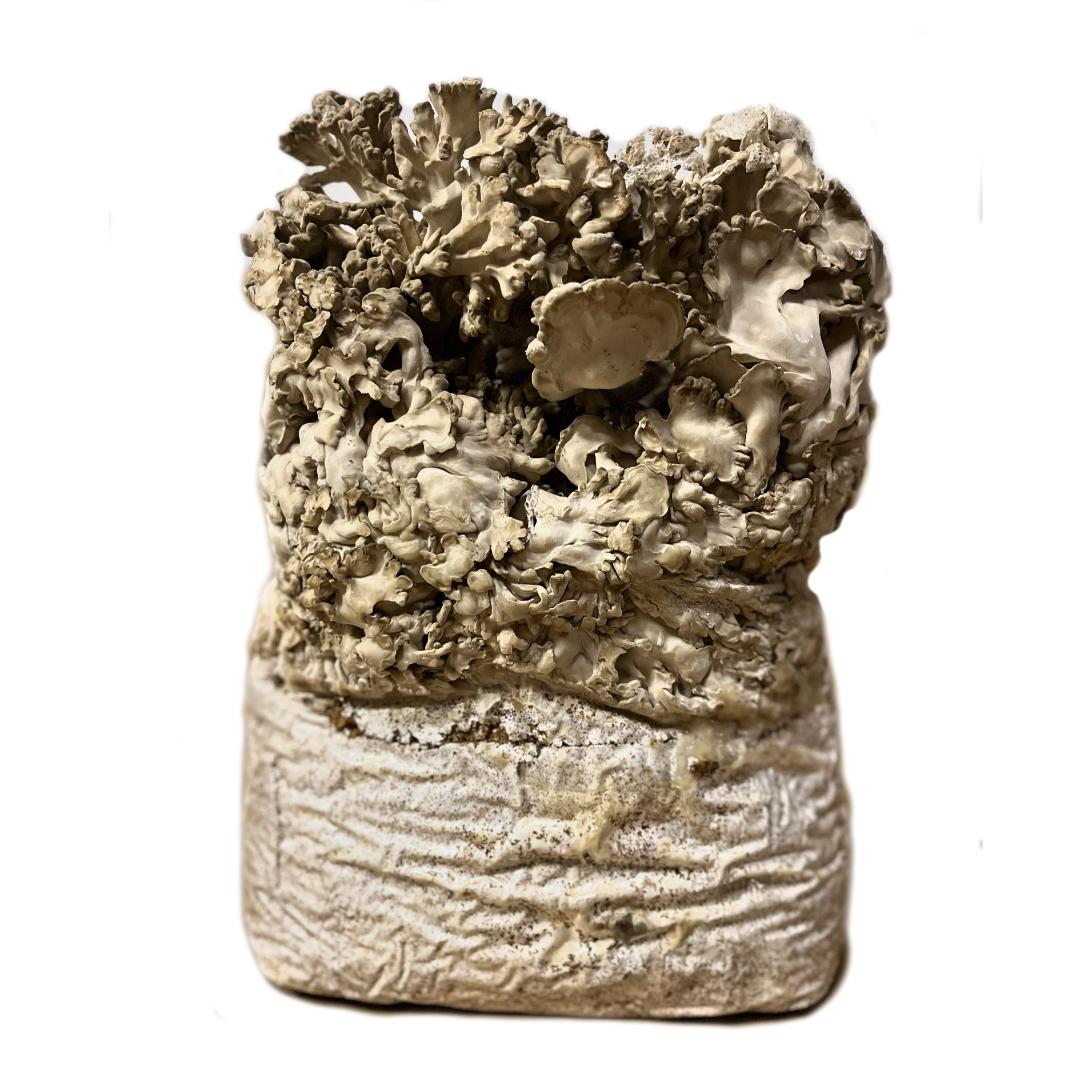
Maitake Strains

GF-494

GF-494 is a special order status strain. It has a slightly slower development rate when compared to other Maitake strains, however, It also has a slightly higher yield and tends to be more durable of a strain which makes it a great option for wholesale farmers.

As with the GF-9827, this is a particular strain when it comes to fruiting conditions; 65° F is recommended for incubation and fruiting. Be sure not to disturb the block as this will likely disrupt the growth of your mushrooms. The GF-494 is less flexible of a strain so all of your conditions should be on point.

If you would like to try this strain be sure to write *Special Order* at the bottom of your Spawn Form.

GF-9827

Maitake prefers a lower supplementation rate than standard masters mix. Something along the lines of 60-70% sawdust/hardwood pellets & 30-40% supplement. A moisture content between 60-63% is recommended to accommodate its longer timeframe in incubation. It is best to have a flat top surface of your block.

Initial colonization of the block will take about 3-4 weeks in most cases, but let the blocks remain in incubation as primordia develop in vitro. Let those primordia get as large as possible in incubation. Initial ‘blob-like’ primordia begin to develop ‘fingers’; this is a clear visual indication that the crop’s time in incubation is complete. Overall, incubation averages 3-4 weeks and primordia development averages 3-5 weeks. Extensive lighting over the top surface of the blocks is extremely helpful to encourage primordia to form along the entire top surface, rather than just along the sides of the top surface, which tends to occur in low-light conditions. Cool spectrum lighting is superior to warm spectrum for healthy primordial development. Maitake seems to have a very wide range in which it will grow, both in incubation and fruiting. As with most varieties, the speed is much greater in warm conditions, and the mushroom quality is greater in cool conditions. Temperature stability is extremely important for successful maitake cultivation. On average, growers tend to cultivate this strain at 65° F for incubation and fruiting.

Cut off the seal to leave a tall plastic collar around the developing fruits, and cut slits on the sides of the bottom of the collar to allow CO2 to flush out. Like any variety, Maitake requires fresh air exchange but is also prone to drying out, so it is best to position the blocks at a slight angle on your fruiting racks/shelves and have a collar that is as high as possible. In hot fruiting conditions, this is especially the case, whereas in cold fruiting conditions you will want to ensure that water doesn't pool inside the collar. For maximum storage life, harvest the fruits right when pores manifest on the undersides of the fronds. For maximum volume, wait to harvest until fruits have begun to produce spores.

As this species is more advanced than most, it is important to have extra consideration in fruiting conditions. Many growers have produced mediocre maitake (very short fronds, about halfway between 'blobtake' and healthy looking maitake) because they didn't have enough patience. Patience is key, especially in regard to letting primordia develop in vitro. If you allow the primordia as much time to develop as possible in vitro, you will see a higher yield, healthier mushrooms, better aroma.

Maitake will stop growing if disturbed too much. This is one of the main considerations for letting the blocks acclimate to the fruiting room before cutting off the seal. The principle of avoiding disturbance applies to other aspects of cultivation- avoid knocking the blocks, and avoid fruiting them in a fruit room with heavy spore load from other varieties (both may lead to growth stopping).

Maitake is said to have a rich earthy flavor with a hint of spice.

Phoenix Oyster Strains

PP-LOG

PP-LOG has been our go to Phoenix oyster strain for a decade. Also referred to as Italian Oyster, Pleurotus Pulmonarius loves the heat and fruits best between the temp range of 60 and 70F.

When it comes down to producing substrate for this variety it is typical to all the other standards of oysters, Masters Mix with 60-63% moisture content. On a 10lb block of substrate keep your incubation temps down around 66F to prevent any bacterial contamination that can proliferate into blotch once introduced into fruiting.
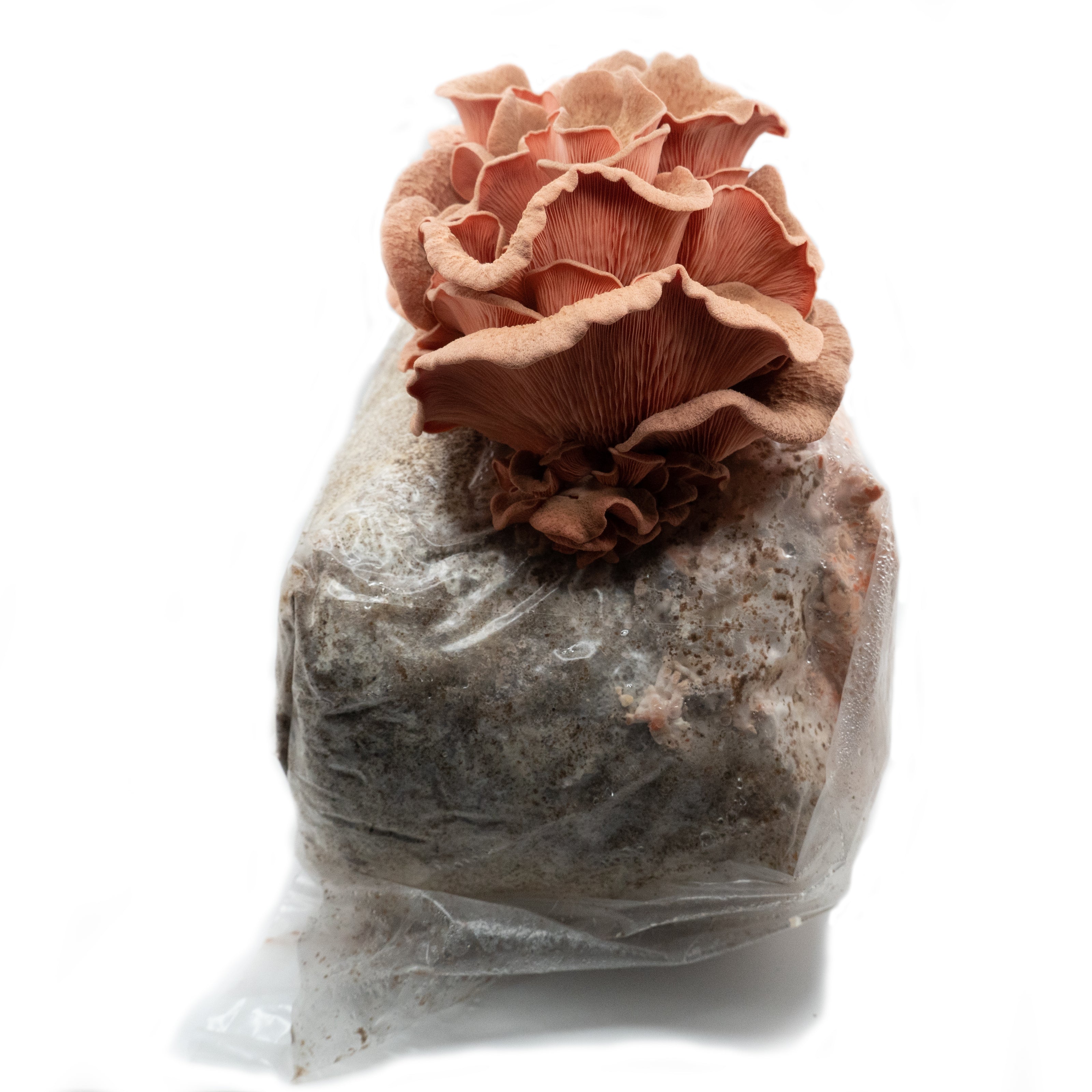
PP-2204

PP-2204 comes from Mycelia BVBA and has been a runner up to our PP-LOG strain for a few years. Also referred to as Italian Oyster, Pleurotus Pulmonarius loves the heat and fruits best between the temp range of 60 and 70F.

When it comes down to producing substrate for this variety it is typical to all the other standards of oysters, Masters Mix with 60-63% moisture content. On a 10lb block of substrate keep your incubation temps down around 66F to prevent any bacterial contamination that can proliferate into blotch once introduced into fruiting.

Pink Oyster Strains

PD-1

Pink Oysters can thrive on a wide variety of substrate recipes. It is highest-yielding on master's mix, hydrated to 60-63% total moisture content. It is best to have a tight contact between the block and the cultivation bag, which helps to prevent premature pinning inside the bag.

Incubation ranges from 10-16 days, depending on factors such as ambient incubation temp, spawn rate, and substrate recipe.

Bring blocks into the fruit room immediately after incubation is complete, as this strain pins all over the block fast. A standard x-cut or slit through the bag and into the substrate (no more than ½”) is the recommended initiation technique. Pink oysters are a tropical strain that prefers fruiting temperatures between 70-80° F with humidity levels between 85-95%. It maintains a vivid pink color if grown with slight light exposure and in their preferred temp range, and can produce thick meaty fruits or thin delicate fruits depending on growing conditions. This strain can easily be fruited several times, but still has a high first flush yield. Its fruits develop rapidly; yield typically ranges from 2½ -3 lb per 10 lb master’s mix block. The nice part about PD-1 is it can be fruited through the winter months if the temps in your fruiting facility stay in the low to middle 60s.

Pink Oysters are known to have a very short life. They also have a meaty texture and a notably "seafood" flavor.
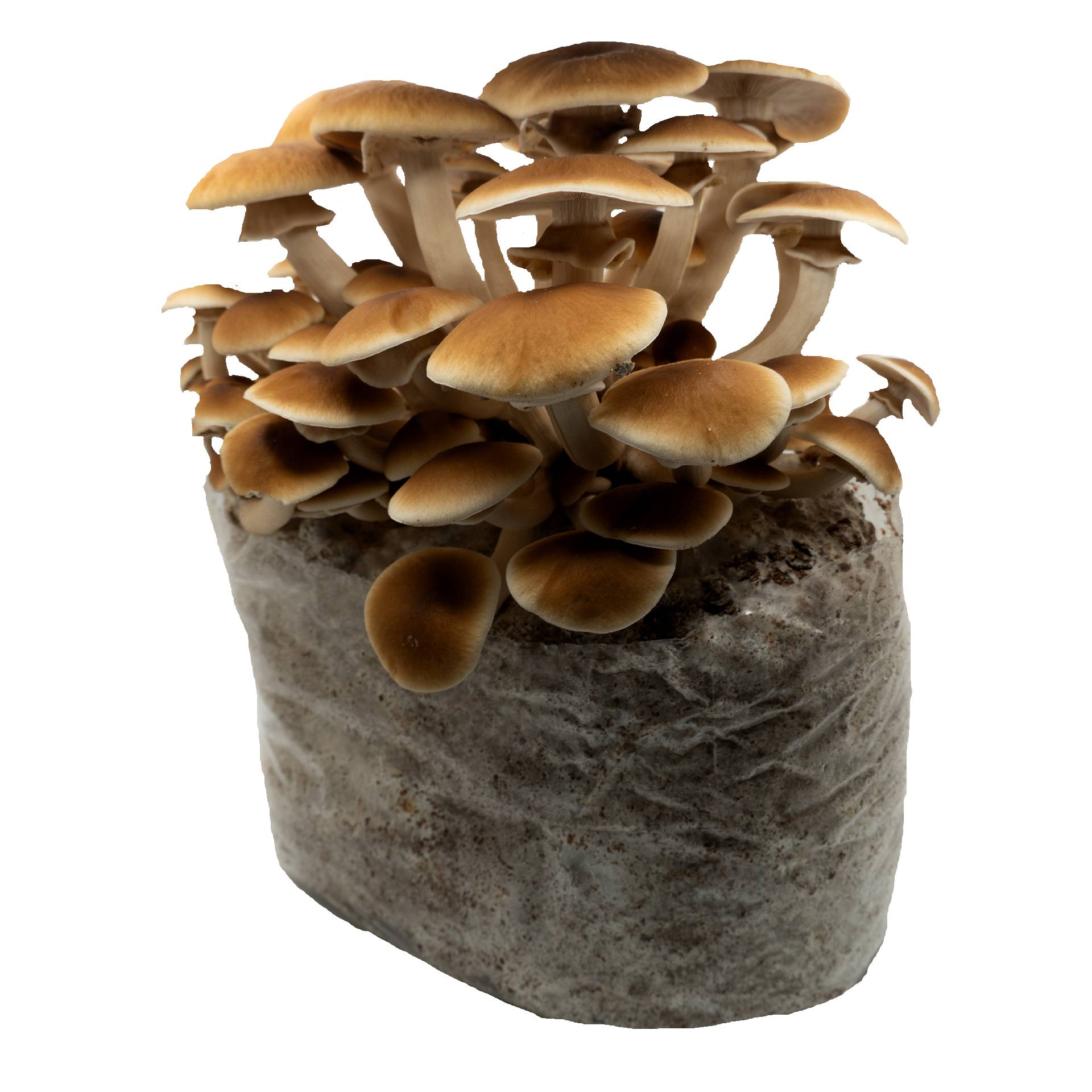
Pioppino Strains

AA-CNS

Pioppino is a relatively delicate mycelium. It obtains its highest yields on masters mix, ideally with a hardwood as its substrate base. For the smoothest colonization and easiest success, some growers cultivate pioppino on recipes similar to shiitakes substrate. Much like other delicate varieties, if pioppino is grown on substrate with insufficient moisture content, its mycelial growth rate is drastically inhibited and its hyphae are less robust and defined. If grown with excessive moisture content bacterial contamination easily occurs. Standard 60-63% moisture content is recommended.

Pioppino takes 18-22 days to fully colonize and be ready to fruit on average. indirect light exposure in incubation encourages more vigorous colonization of the block. When pioppino is ready to fruit cloud like plumes of mycelium form on the top of the block giving way to microdots of a yellow metabolite that forms into primordia. These pins can form on the exterior of the block so its best to maintain tight contact between plastic and block to encourage top fruits. If you catch the block before pillowy mycelium forms but the block is full colonized you can remove the air from the plenum with a small cut at the top of the bag and refrigerate at 34F for several weeks. After refrigeration, a side cut similar to oysters or lions mane will provide a successful and robust flush.

Pioppino prefers warm fruiting temperatures between 65-75 degrees but will fruit in cooler temps as well, just more slowly. It is highest yeilding when fruited from the top of the block. Once pins are formed they grow at a fast rate and will be ready to harvest within 7-10 days on average.

For the best balance of storage life and yield, harvest just when the veils are beginning to show signs of cracking and separating from the stem. This strain of Pioppino is known for mostly even, medium sized fruits. Its yield, while not exceptional, still falls within the range of a commercially viable first flush and outperforms other Pioppino strains that Cap N’ Stem has worked with.

The Pioppinos have a nutty and slightly sweet flavor. It is a popular mushroom in the culinary world.

Check out our MycoWizards PhenoFlick on fascinating strain HERE!
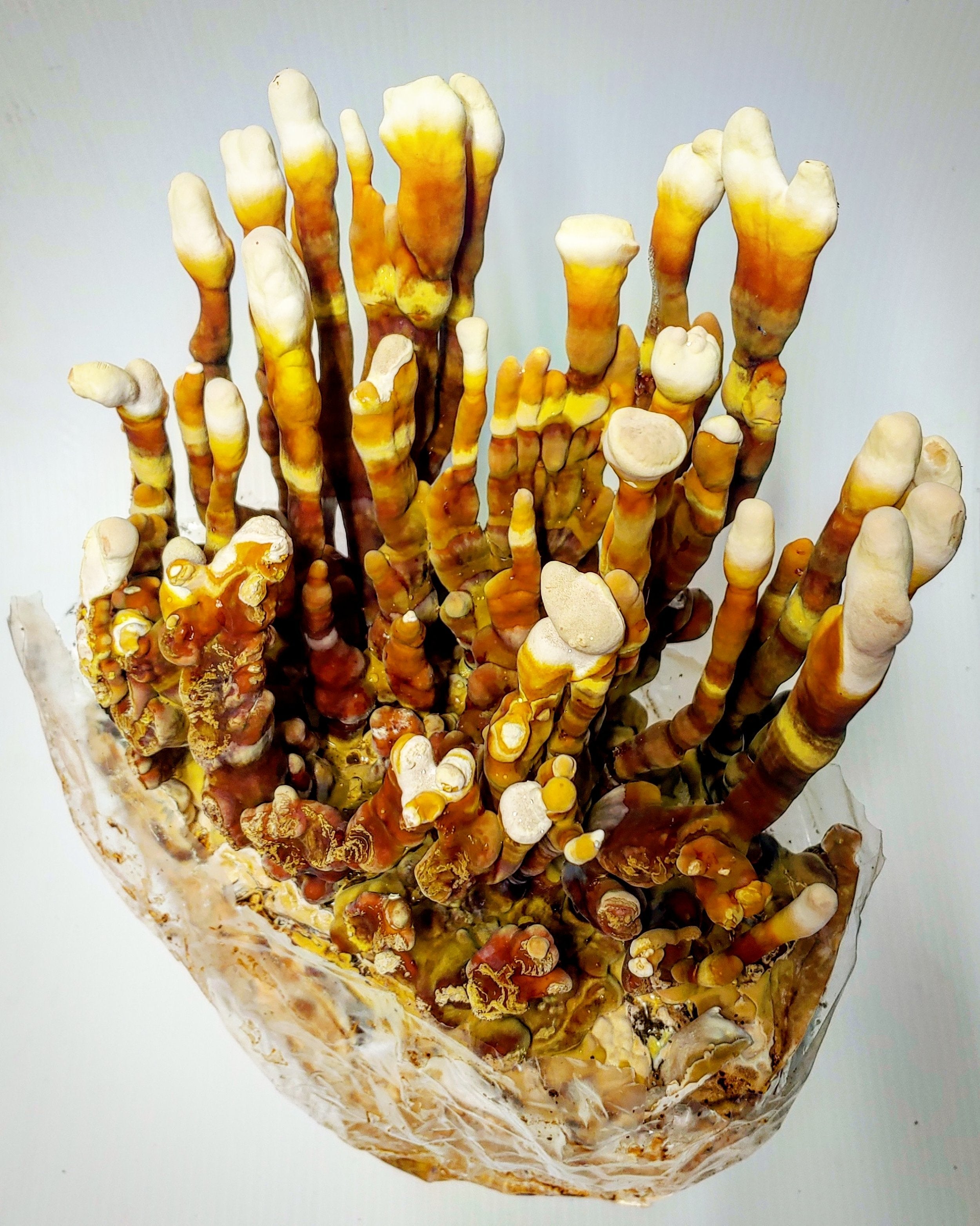
Reishi Strains

GLZ-9724

Reishi species are incredibly tenacious and will thrive on a wide variety of substrate recipes. Masters mix works quite well and allows for high yields. Standard moisture content of 60-63%. If you plan on fruiting antlers in vitro, be sure to have as large a plenum in the bag as possible to provide maximum amount of space for antlers to grow. 

Reishi typically requires 10-16 days for full colonization. Reishi is a strong competitor and will outcompete most contaminants if they're not too prevalent. If you plan to fruit antlers in vitro, set them and forget them, ideally with good light exposure to stimulate faster fruit growth. If you plan to fruit conks, move them into your fruit room as soon as you see either a swelling of secondary metabolites and/or myelination along the exterior of the substrate.

While Reishi myceliates very fast, its fruits grow at a very slow, steady rate. Depending on context, reishi fruits reach maturity anywhere between 3-6 months; some cultivators extend their growth beyond that. Some strains are bred specifically for antler morphology, others for conk, and others are flexible. You can grow antlers in vitro or in a fruiting space with artificially elevated CO2 levels. If you want to grow conks, cut the bag in a similar fashion as you would oysters; primordia will quickly manifest. For conks, maintain a standard fruiting room environment- around 90% relative humidity and the usual 450-800 ppm CO2. This will encourage the organism to continue growing fruit body size rather than sporulating. Ideally, harvest before the mushrooms sporulate, as Reishi spores both contain medicinal potency and are very virulent and irritating to the respiratory system (and your equipment!).

Reishi is a great mushroom for tinctures as they are said to have many medicinal properties.

Check out our MycoWizards Deep Dive on the History Of Reishi HERE!
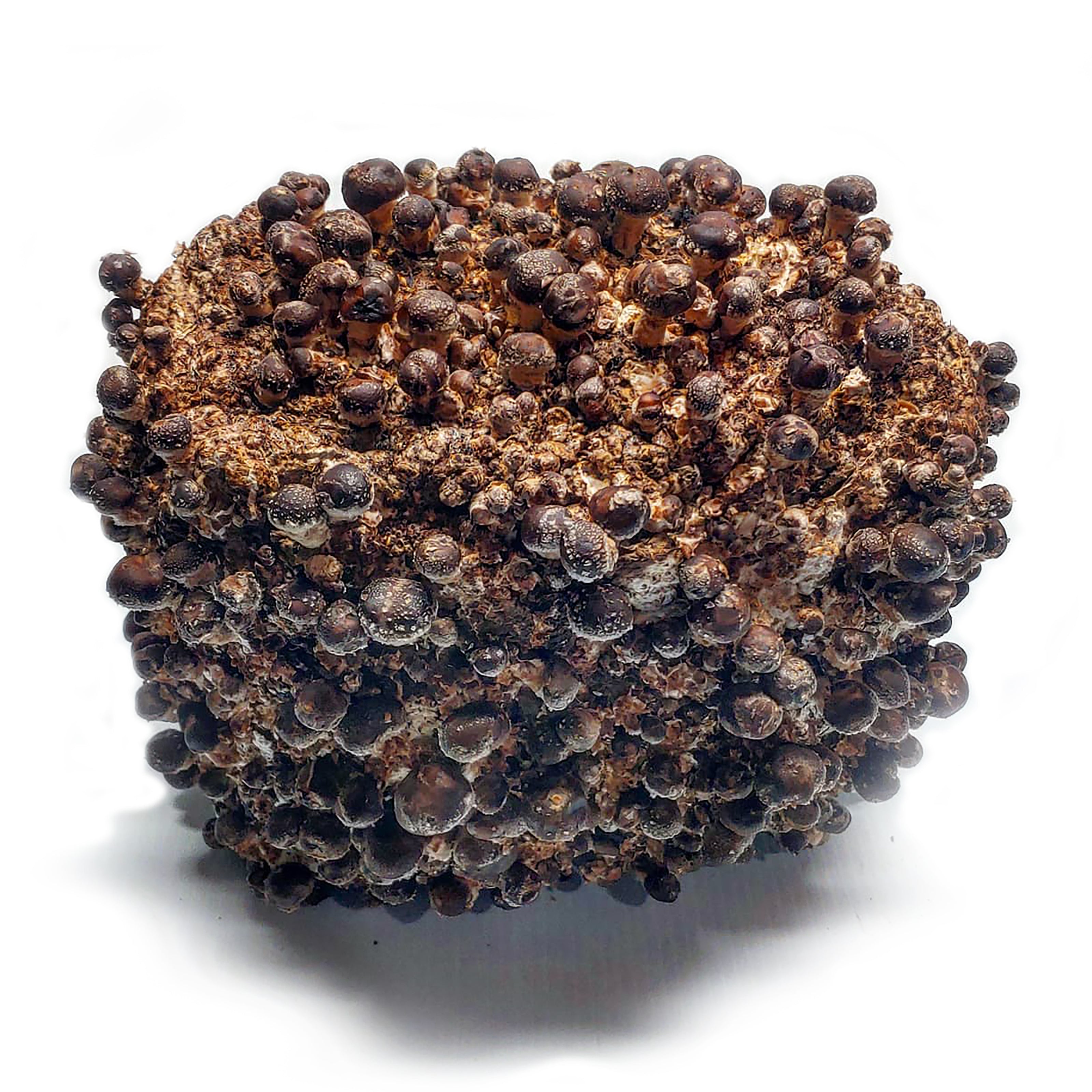
GM-CNS

GM-CNS is an incredibly tenacious species and will thrive on a wide variety of substrate recipes. Ganoderma Multipileum grows faster and antlers quicker than Ganoderma Lingzhi with less dense fruits in a pillowy zig zag fashion depending on the light spectrum. Masters mix works quite well and allows for high yields. Standard moisture content of 60-63%. If you plan on fruiting antlers in vitro, be sure to have as large a plenum in the bag as possible to provide maximum amount of space for antlers to grow. 

Reishi typically requires 10-16 days for full colonization. Reishi is a strong competitor and will outcompete most contaminants if they're not too prevalent. If you plan to fruit antlers in vitro, set them and forget them, ideally with good light exposure to stimulate faster fruit growth. If you plan to fruit conks, move them into your fruit room as soon as you see either a swelling of secondary metabolites and/or myelination along the exterior of the substrate.

While Reishi myceliates very fast, its fruits grow at a very slow, steady rate. Depending on context, reishi fruits reach maturity anywhere between 3-6 months; some cultivators extend their growth beyond that. Some strains are bred specifically for antler morphology, others for conk, and others are flexible. You can grow antlers in vitro or in a fruiting space with artificially elevated CO2 levels. If you want to grow conks, cut the bag in a similar fashion as you would oysters; primordia will quickly manifest. For conks, maintain a standard fruiting room environment- around 90% relative humidity and the usual 450-800 ppm CO2. This will encourage the organism to continue growing fruit body size rather than sporulating. Ideally, harvest before the mushrooms sporulate, as reishi spores both contain medicinal potency and are very virulent and irritating to the respiratory system (and your equipment!).

Reishi is a great mushroom for tinctures as they are said to have many medicinal properties.

Check out our MycoWizards Deep Dive on the History Of Reishi HERE!

Shiitake Strains

LE-KOM

LE-KOM is much like any other Shiitake strain except it has a faster incubation rate, this is a good strain for wholesale farmers. Shiitake in general requires a less-rich growing medium than other varieties; the standard recipe is 20-30% wheat bran/middlings, 70-80% oak/harwood, hydrated to 63-65%. It prefers sterilized growing media rather than pasteurized growing media, though both can be successful.

Initial colonization takes 2-3 weeks; total time to fully browned maturity ranges from 7-9 weeks- this strain is exceptionally fast, relative to other shiitake strains and extremely forgiving. To ensure healthy popcorning, rather than blistering, ensure that you maintain stable ambient temperatures during incubation. To ensure proper browning, allow for even all spectrum light exposure to the blocks, even if indirect. To avoid overheating and its cataclysmic associated issues, as well as premature pinning in vitro, ensure that the core temperatures of your blocks do not ever exceed the low 70s, even for short time intervals. This strain has proven to be reasonably tolerant of variable substrate moisture content, but it is best practice to stick within the recommended 63-65% MC range and to avoid any standing water inside the cultivation bag.

This strain performs reasonably well through a wide temperature range, though 55-70° F is recommended for highest quality fruits and shelf life. Cold shocking is helpful to initiate a fast and robust pinset but is optional. It mostly produces medium-size caps of good quality with a smaller amount of large-size caps and few petite caps. If cultivated on 10lb blocks, it tends to produce a higher amount of large caps than if cultivated on 5 lb blocks. Its fruits develop rapidly and are easy to cultivate, as with most shiitake strains. For the highest quality, harvest soon after the veils break. For highest yield, allow the caps to swell with water as they flatten (this results in poor quality and shorter shelf life). Its stems tend to be fairly fleshy and marketable. Average yield typically ranges between 2½-3lbs per 10lb block.

Shiitakes in general are great mushrooms for soups, sauces and stir fry. They are one of the most in demand mushrooms in the US right now.

LE-321

LE-321 is a special order status strain from northwest mycological consultants. It is a classic shiitake strain and requires all the same care. The standard substrate recipe for Shiitakes is 20-30% wheat bran/middlings, 70-80% oak/harwood, hydrated to 63-65%. It prefers sterilized growing media rather than pasteurized growing media, though both can be successful. Incubation and fruiting temp should be around 60° F. It is lower yielding than other commercial strains but produces very gourmet fruits.

If you would like to try this strain be sure to write *Special Order* at the bottom of your Spawn Form.

LE-3790

LE-3790 is our most common shiitake in substrate and spawn sales. Shiitake in general requires a less-rich growing medium than other varieties; the standard recipe is 20-30% wheat bran/middlings, 70-80% oak/harwood, hydrated to 63-65%. It prefers sterilized growing media rather than pasteurized growing media, though both can be successful.

Initial colonization takes 2-3 weeks; total time to fully browned maturity ranges from 11-14 weeks. To ensure healthy buckling, rather than popcorning, ensure that you maintain stable ambient temperatures during incubation. To ensure proper browning, allow for some light exposure to the blocks, even if indirect. To avoid overheating and its cataclysmic associated issues, as well as premature pinning in vitro, ensure that the core temperatures of your blocks do not ever exceed the low 70s, even for short time intervals.

This strain prefers fruiting temperatures between 55-66° F, in which it will produce its largest, highest quality caps, but can be fruited in warmer conditions as well, in which its yield will be comparable but its cap size will trend smaller. Cold shocking is helpful to initiate a fast and robust pinset but is optional. If cultivated on 10 lb blocks, it tends to produce a higher amount of large caps than if cultivated on 5 lb blocks. For highest quality and shelf life, harvest soon after the veils break. Its stems tend to be fairly fleshy and marketable. LE 3790 boasts the highest average yield of our shiitake strains, typically between 3-4  lbs. 

For more info on 3790 check out ourMycoWizards PhenoFlick HERE!

LE-3782

The OG, The strain to get the small cultivators of the US started back when Aloha Medicinals brought it in from Mycelia BVBA.

While the caps are small the hotter it gets, the cooler weather during fruiting will produce quite nice sized medium cap with a relatively thin outer skin.

So long as incubation temps are kept around 66F for a 10lb block, your sub will run, buckle and brown in under 10 weeks unlike 3790 which can take a bit longer.

While most folks don't cultivate 3782 anymore, it still holds a solid spot in our hearts as being the shiitake strain that made profitability possible!

LE-JC

Shiitake in general requires a less-rich growing medium than other varieties; the standard recipe is 20-30% wheat bran/middlings, 70-80% oak/harwood, hydrated to 63-65%. It prefers sterilized growing media rather than pasteurized growing media, though both can be successful.

Initial colonization takes 2-3 weeks; total time to fully browned maturity ranges from 9-12 weeks. To ensure healthy bucking, rather than popcorning, ensure that you maintain stable ambient temperatures during incubation. To ensure proper browning, allow for some light exposure to the blocks, even if indirect. To avoid overheating and its cataclysmic associated issues, as well as premature pinning in vitro, ensure that the core temperatures of your blocks do not ever exceed the low 70s for even a short time intervals.

LE-JC performs reasonably well through a wide temperature range, though 55-65° F (12-18° C) is recommended for highest quality fruits and shelf life. Cold shocking is helpful to initiate a fast and robust pinset but is optional; smacking the blocks is also effective. It tends to produce mostly medium-to-large caps and few petite caps. Its fruits are of excellent quality with nice ornamentation, less water weight and more flesh weight than most strains, woody stems that allow for quick and easy harvesting, and good shelf life. For highest quality, harvest soon after the veils break. For highest yield, allow the caps to swell with water as they flatten (this results in poor quality and much shorter shelf life). Average yield ranges between 2-2½ lb per 10lb block.
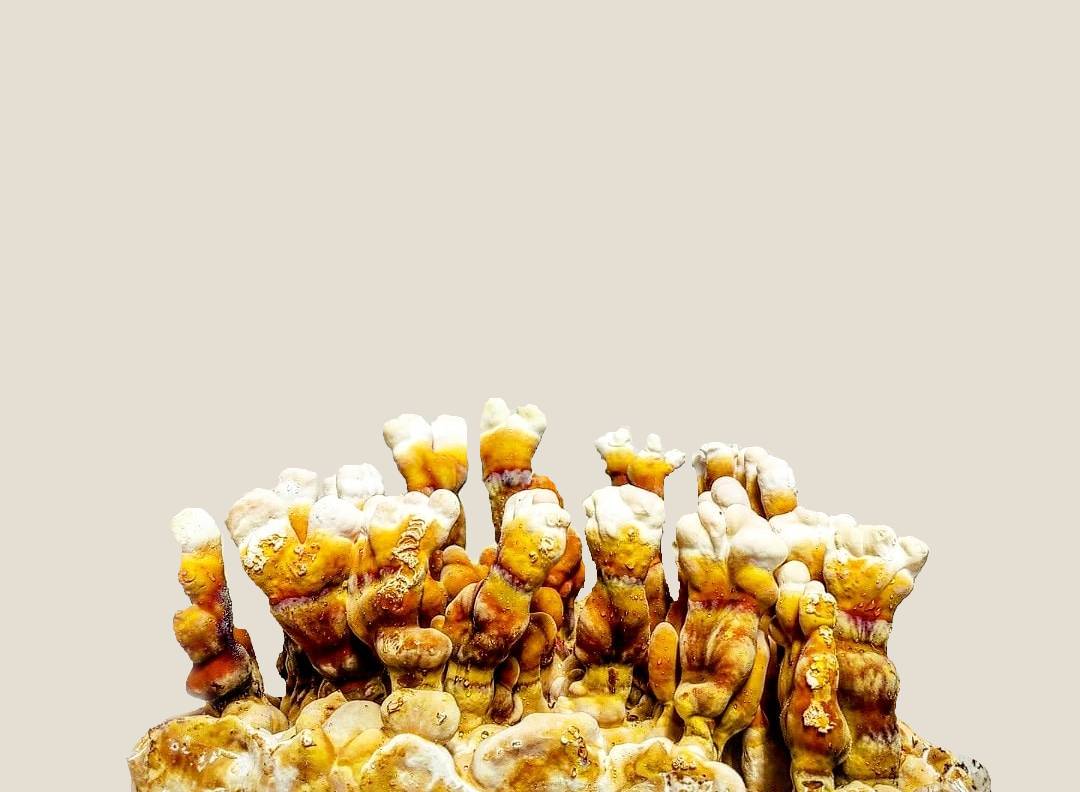
Beech Mushroom Strains

HT-1

Brown Beech belongs to a small genus known as Hypsizygus. It produces the highest yield on master’s mix, hydrated to 60-63% total moisture content.

Brown Beech is typically fully colonized at 3-4 weeks, however incubation ranges from 4-5 weeks as you should let them sit for a while after fully colonized. Brown Beech does not like disturbances once the mycelium is connecting, this may result in poor fruiting; so make sure once it is in incubation it stays there until pins form in bag before bringing to fruit room. This strain produces best when cold shocked, either overnight or up to a week in 34 F-40 F. This stresses the mycelium into production of fruit.

Brown Beech prefers a temperature of 60 F, relative humidity 85-92% with a dry fogging system to keep water droplets from setting on the mushroom pins or heads. Brown Beech is highly susceptible to rose comb so take care to not let water settle on the caps. A standard x-cut or slit in the bag, across the top just above the filter patch, is the recommended pinset initiation technique; alternatively, slit the sides down to the substrate to release more Co2.

Brown Beech has a a lightly sweet, savory and nutty flavor, and subtly crunchy texture. A typical yield for this strain is about 2 pounds.

HT-4780

White Beech HT-4786

Cauliflower Strains

SA-ET

SA-ET is a special order status strain. It is a wild clone from Texas and is purely experimental and can only be ordered as a culture at the moment.

SC-9641

SC-9641 is a special order status strain. It is a Mycelia clone from Europe and is purely experimental and can only be ordered as a culture at the moment.

Chicken of the Woods Strains

LS-FF

LS-FF is a special order status strain. It is a wild clone from Denmark and is purely experimental and can only be ordered as a culture at the moment.

Cordyceps Strains

CM-666

CM-777

Nameko Strains

PN-CNS

PN-CNS is a special order status strain. We have not done much production with this strain so a lot of variables are still unknown, here is what we do know: The Nameko has a slow growth rate, it is of the family Pholiota, same as the Chestnut, and therefor grows in a similar fashion.

This strain prefers cool temps and high humidity for pinning. We do not have any average yield data as we have not brought this strain into our regular rotation.

Nameko has a very viscous outer layer which makes it a great mushroom for thickening sauces and soups with that umami flavor.

If you would like to try this strain be sure to write *Special Order* at the bottom of your Spawn Form.

Purple Mukitake Strains

PS-MU

PS-MU is a special order status strain. It is purely experimental and is only available as a culture for the moment.

Turkey Tail Strains

TV-442

White Oyster Strains

PO-SNOW

PO-SNOW produces stark-white, beautiful clusters with average quality in a gourmet context. It is known for a tendency toward small cap size.

White Oysters, like most Pleurotus varieties, can thrive on a wide variety of substrate recipes. It is highest-yielding on master's mix, hydrated to 60-63% total moisture content. Calcium carbonate supplementation can help to slightly increase yield and fruit quality. It is best to have a tight contact between the block and the cultivation bag, which helps to prevent premature pinning inside the bag.

Incubation ranges from 8-14 days, depending on factors such as ambient incubation temp, spawn rate and substrate recipe.

Prefers cool fruiting temps between 50-60° F, though can be fruited in colder and warmer temps with mixed results. A standard x-cut or slit through the bag and into the substrate (no more than ½”) is the recommended initiation technique. A typical yield ranges between 2-2½ lbs over two flushes. 

PO-SS

PO-SS is a special order status strain. We do not have a lot of data on this strain as we have not brought it into our regular rotation. From the few tests we have done, we know that this strain can be unpredictable and displays variability in growth patterns. This strain prefers cool fruiting temps between 50-60° F, though can be fruited in colder and warmer temps with mixed results. 

PO-SS, if you can successfully fruit it, produces beautiful cream colored fruits with scalloped edges.

If you would like to try this strain be sure to write *Special Order* at the bottom of your Spawn Form.

PO-MOP

special order status

PO-ELM-A

more yellow caps