Inside Columbia Mushroom Company with Neil Brent | MycoWizards S1E3
What can I say about Neil Brent, king-myco-mad-man of the west coast?

What is covered, by timestamp

Topics picked out of the transcript automatically. Times jump to that point in the video.

Time Topics
0:10 feet, wants, hand, running
10:10 hood, alive, built, equipment
20:13 liquid, black, cold, hood
30:14 shipping, foot, square, house
40:15 pound, blocks, aloha, strain
50:15 spawn, bags, questions, email
1:00:17 market, leave, store, oysters
1:10:17 maine, company, keep, mushroom

Full transcript

Transcript generated automatically from the audio, so expect the odd wrong word. Timestamps jump to that point in the video.

0:10 hello hello hello from main Cap N Stem this is the mica wizards podcast i'm eric loman and today for our third episode we've got the one and only neil brent of columbia mushroom company located in the deep dark woods of the pacific northwest kid so i'm not very sure if it's all the lightning strikes out there the alien abductions or flying saucer sightings or perhaps it's the serial killer soaked history but it washes such a lovely sense of calm over my man neal but i assure you he's got a wild side and i've got the voicemails to prove it in fact i was certain neil was from the east coast because of his dry wit and dark humor but in fact he's a west coast in mycological force so sit back and enjoy our conversation from a few weeks back and press record and see what the happens you know worst case scenario is none of this works and then we gotta record another conversation which i keep finding isn't the worst thing in the world people are like oh we should keep talking like okay sure why not all right well it we're uh we're recording man so thanks for joining me yeah thanks for having me yeah absolutely so the the earliest um the earliest i recall anything to do with columbia mushrooms was you calling me i think i was sitting in my exterior and as cold as outside and there was some organ number calling me and i was trying to like click click ignore and i clicked accept or some and then talk to you for like 20 minutes and i can't remember exactly what we talked about but i think it was like steam boxes and john donahue i think it was everything i think all right to be perfectly honest i got your phone number from your old blog about your mushroom farm in arizona because i was looking at air systems through fungi perspective and i searched it and google saw the image ended up on your blog and i called you and was like i'm looking at this for this build out and you're like don't do it man it's not worth it yeah it's essentially ducting with a really overblown humidistat yeah and you're like the hepa filter never work like you're like the whole thing is like just so expensive don't do it and we started by talking about that because i was trying to build out a 20-foot shipping container all in one unit just for fruiting like okay just for fruiting it wasn't a sport a sport of fruit thing no no it was um we were we were doing buckets at the time i try and forget about that part it's just straw buckets oh yeah oh good god ooh a cat yeah i got a cat i got a dog here they all want my attention now that it's somewhere else yeah oh yeah yeah that's how it works man my favorite is like when a cat sits on you and you're just trying to take a you're like what are you are you what are you doing well they want to make sure that you're comfortable and that you're safe it's totally understandable and so let's start like needing your naked thighs with their two long claws and you're like get the off of me yeah or when the bathroom door is closed and they start scratching only to come in and stare yeah they just they're perverts basically yeah past a certain age all cats are just perverted aliens yeah it's understandable i mean we do feed them kibble so that they can get ready for their uh their launch just days yeah dude that's space cat food oh yeah well i think cats and mushroom farmers seem to go hand in hand i you know i don't have my two anymore and uh i kind of miss him all the time but uh you know wooder and all his cat posts i used to post my cats and my incubation all the time we'd like drive them over to the farm and like let them around and they'd kill a little mice and it was kind of cool to have them around yeah they love it i mean we um we found some barn cat kittens um over in our goat and pig stalls earlier this fall they've actually yeah they've moved into under the house i actually have to trap them now but like you know we've got like my cat i've had for like 10 years and then all these barn cat kittens around and we used to have like there's like this one rat that was in our barn that like i'm talking like for years i would try and trap it and like it just knew it was smarter than me it was bigger than me like there's just like there's like times where it'd be like mid-winter i'm like out in the barn by myself and you know i'd look over at the stairs upstairs and there'd be this gigantic

5:10 rat i swear it's like two feet tall and it'd just be sitting there staring at me they don't give a it just yeah i didn't it did not care they look at that ever since yeah through your soul yeah they they'll eat you yeah the norway rats up here are terrifying like they're uh they're like small animals they're like cats they're like it's it's not fair and they don't i thought it was a possum at first yeah we have the same ones they're horrible i don't know where they came from they're invasive as a it seems like you know i mean they'll like they'll eat chickens man you know like they're they're no joke you get them in a barn and they'll just like harass the out of your giant livestock and if you ever seen a 300 pound pig jump from a rat that big you're like that's no rat yes it's not a rat that's radioactive so i know this is a mushroom related but your your male goat that you posted a picture of is not a female that is a a fully male it's a weather um yeah whoa so my first three goats that i got are all mini nubians um one of them is a half brother of the other two that are like littermate brothers and the one that i posted that that video of it's named dollar mindy after the indian pop star uh i love it yeah well the first three was uh charlie murphy dollar mindy and todd because i didn't tell my girlfriend at the time we're getting a third goat and when we showed up i was like oh yeah i paid for a third one is this girl still with you uh no i mean i think i think it's the curse of mushroom farming yeah it could be man it killed my wife i don't want to say that and sound like ridiculous but it's scary you know yeah i mean like every i'm pretty sure you can talk to almost every mushroom farmer and yeah uh whoever you started it with yeah but uh yeah so it's not a female i mean literally i was looking at it and i was like i know exactly what's in that and so did uh so did scott i think right yeah everybody thinks that that goat is pregnant he's just fat he's always been fat even like mid-summer when he's like running around he's got an acre and a half you know and like running around and he runs stupid too like you know most of the goats like when they run they do like the prance you know move their feet in unison this one it's the two front feet move at the same rate and the two back feet it's like he wants to die he's just like crush his face into a boulder yeah i i've yeah i've saved him from many uh many times being stuck in the fence oh my god well give me a layer of your land so you your mushroom farm is where you live and there's other farm stuff happening yeah so we're on two and a half acres in hood river oregon um who's wearing like a well the royal me okay the royal week me the crew um yeah my girlfriend kiara and i live here we've got got my dog brio my cat taj are like seven barn cats apparently uh some norway rats yeah some i don't think so anymore but we had some um yeah um ten goats now got ten all right so mushroom compost is like this great and terrible thing we sell a ton of it people love it oh yeah um i can't tell you how many people i talk to who are like we just throw our blocks out i'm like what are you talking about dude you need money through the back door dude people don't yeah it saved our ass um back in like march april i mean i sold probably six thousand dollars yeah in compost at like 25 bucks a yard it takes 10 seconds to just like load up some pickup truck yeah i mean i was i was loading out excuse me like 10 to 40 yards i had people who are trucking it out i mean i work with like an excavation crew and i'm just like call this dude they'll do like all of the trucking you pay them separately and i i'll charge you really cheap if you just buy a lot of it just get it yeah dude we make a lot of it um yeah but yeah so we most of the goats we've gotten honestly my neighbor like they've got a you pick like beautiful apple orchard she keeps cooney cooney pigs and nigerian dwarfs there for like you know when people bring their kids and whatnot that's cool and uh yeah every year she wants to get rid of them so i just trade her compost and she just gives me goats so it's pretty good it's like a win-win that's like uh so oregon doesn't seem that far off i think oregon and washington and maine are pretty similar when it comes to uh like bartering and

10:10 trading and and that whole like dickering sort of thing is very alive in the northwest and the in the northeast it's like a lifestyle thing i mean like my neighbors it's like we might not agree with each other on like certain things but yeah you know if i needed help and something was going on they'd be the first ones there to help no questions asked yeah yep i noticed that in the west coast you know a lot of like if there were in the time that i was out there and traveling around if there was like a forest fire or if something was happening no matter how you had uh sort of a relationship with your neighbors they would come wake you up in the middle of the night if there's a fire whatever you know there was one of your animals being eaten by a bobcat whatever it was they were there yeah i mean my neighbor i had to put down one of my goats about like a year and a half ago got these um like urine crystals so i couldn't pee yeah and it's like a really terrible like horrible way to die and i didn't have like a means of putting it down my neighbor came over like helped me with the whole thing like was there while i buried it yep this was like the pet go like the one you put in the backyard with your friends kids like yeah like it laid down with like with kids and just like let them pet it so it was pretty traumatizing but it's one of those weird things it's like you know we don't hang out we don't talk that often but like i called and was like hey i got this problem they're there right then yeah well i find that most people who have animals whether it's farm animals or they're just animal people in general they're they're not there for you there's some like like uh very clear calling that they understand like what it is and they are family members to you know people who have animals and who are animal people and uh yeah if they've got the gun and they got the time or they've got the hands to help you know they're going to be there yeah so yeah we've got we got good neighbors here but good man all right the uh the property so we're on two and a half acres used to be a goat farm um came with a giant barn on it which was uh so when they built the bonneville dam which is like a huge dam on the columbia river as far like the wpa projects yep the owner of this house his father was on the four he was the foreman of part of the the bonneville dam like the concrete project oh okay so all the floors in and a bunch of like the joists in the barn are some of is like all the lumber from pouring concrete for the bonneville dam the building itself the the structure that they built it's the last standing metal building in north bonneville before they flooded that town and moved it and it was a gas station oh so that's pretty so like yeah we've got some crazy timber in there like to the point where when we were like working with the barn to you know fix some floors and move stuff around it was like honestly a 24 foot true you know uh 18 by three inch board as much as i want to move it yeah no i think i'm just gonna leave it there holy that's like a score and a half for half of the scrap barn people up here who take all that barn board and then you know open uh stores like barn boards and more you know oh yeah we thought about selling it but like it was just like it's too cool man yeah it's part of the story it makes it pretty it's pretty fun when you know people look up at the the floors and you can see the big holes where they ran the bolts for putting uh the concrete up and all that stuff and people always ask and uh it's pretty fun to talk about yeah i mean those pieces of equipment and those just structural sort of anomalies especially if they're that old or i don't know even if they're harder to work with and they're you have to work around them structurally or whatever it's so worth having them you know it's all character yeah yeah my buddy cisco and i picked up a uh a 1920s lathe from this mechanic uh you know a couple exits down going towards portland from uh where we are in gardner and uh and they knew the whole story of it and the dude who basically had the lathe it's a big mother too man it's like an eight-foot bed uh full metal lathe and comes with all the gearing all the everything multiple giant ass chucks and needs some work but the dude who owned it that was the lathe that kept the brunswick mill alive basically you know fixing everything in that space and when you think about it like that was the last dude who was like the last machinist and the last person to really take care of like a whole mill building so that was that's insane oh dude it's so

15:12 fun to own equipment like that you're just you got to get it running again and you're like this has heart and soul it's like an old motorcycle an old tractor or you know an old ass barn it's just riddled with stories well and the best part about those pieces of equipment and whatnot is that they were built in a fashion where like once you get it going again it's never gonna break they barely break right and if it does in the case of like a lathe the most beautiful machine in the world it's the only machine in the world that can rebuild itself it's awesome yeah yeah that's nuts yeah yeah it's unreal dude so what what uh you're you're like you're from new england right you what the no no i'm just an you're an you're not from new england okay no no i i i've been telling lies my whole life dude at least my whole my whole time knowing you which i feel like it's been my whole life to be honest it's been a long time it is definitely it's been a long time i think it's been like six years or something like that five years maybe yeah i mean time is irrelevant to me i could have talked to you for the first time yesterday or 10 years ago and it's still i don't really like i don't maintain timelines like oh i got to know him doing this and then we did that and i don't care i just kind of know who you are and i get along with you or i don't you know it's one or the other i'm with you there so you're okay you're like from oregon you're from that area so i don't tell many people this but i was born in california oh god and we moved up my like my family and i to portland in 96 because my dad went to ohsu for uh specialty school he was an endodontist so he did root canals yep um and the intention was always to move back because a lot of my family at least my dad's side is in california san diego san diego um some in l.a some around san francisco same with my mom's family most of them are san diego and then there's some uh on the east coast like they used to live in new york city and now they live in new jersey and i think they live in long island now oh no yeah um yeah we moved up in 96 and then i basically have lived in oregon the entire time i had a one-year stint living in tucson which was probably the worst time in your life uh worst and best i mean tucson is a pretty crazy place but coming from oregon going to tucson is uh it's jarring yeah very very different yeah man i spent a lot of time in mount hood when i was younger and um snowboarding and like going to that old shining hotel you know where they filmed the outside and wait wait what you went yeah i've been here dude i've i am 45 minutes from being on the slopes at mount hood no yeah so that area is unparalleled beauty and if you've never been out there you don't know what wild is it's like the last wild united states you know as far as mountainous like crazy ass like you know truck runaway ramps giant trees older than you you know oh yeah uh it's it's beautiful out there mount hood's gorgeous too like just the fact that you can snowboard in the middle of the summer is why i went but uh it was just kind of a cool cool concept when my knees could take it you know when i was yeah but yeah you know yeah it's pretty nuts i mean part part of the reason that i live in hood river is the fact that it's like it's an hour from the city it's an hour from the mountain yeah some of the best mountain biking in like the world oh yeah it's like 15 minutes from my house there's all the weird wind and water sports not a winter water person but i mean yeah and then like you know the coast is like two to three hours away i mean you got everything you want you wanna go to the desert you know drive 30 minutes east and an hour south you're in the desert yeah that was blowing my mind out there because i was with a bunch of skateboarders and surfers and stuff and you know besides san diego where you could you know ski and then ride your bike and then surf and then do it all over again every day it's the same thing up there just a little colder you know and pretty a lot a bit colder yeah a lot of bit colder compared to back here not so bad but you know yeah small it's prettier i'm weak with the cold now i used to love it did you i'm like give me more layers man yeah yeah i i'm definitely like thickening up again i did two years of the keto diet with uh my wife there as part of like her treatment and uh dude i didn't i didn't even know you dropped weight on that i was doing it to try and keep her alive and i went from like you know 230 like husky biker man down to like a buck 60

20:13 somewhere in there i was like shivering all winter long i was like yeah that's called drink more beard head yeah it's more better yeah i had to husky up but you can't do that on the keto so but yeah i i feel you the cold gets to you after a while especially because the winners just seem to get longer and they're just more drawn out they're not as severe they're just like cold and gray yeah it's just cold forever yeah but luckily like like where we are we're like right along the center of the cascade mountains so like you drive anywhere from my house you've got a double mountain view of like mount hood mount adams like the whole town it's just yeah it's pretty it's pretty unreal like you know even if you don't live in a house with a view you walk five feet from your house like you got you know award-winning views everywhere yeah you can't beat it man i mean every day coming down the to like you know the top of mount hood and it's not like a long run that glacier but like i said you can you can totally ride it in the middle of summer and and just in a t-shirt it's unreal and then you get to that volcanic rock side and you come down to that hotel and then i remember walk packing past that like i don't know like 30 times and then i was like a month later or something i was driving around with my parents or something and i was like you know that hotel was from the shining wasn't it i like had some photos and i was like man like this before you know everybody had a smartphone and and you could look this up but for some reason we must like watch the shining or something you know my dad was a huge fan of that horror and uh and so am i but he uh we were watching it and i was like dude i i can't believe i was walking past that like every day and i didn't realize it yeah it's not it's not creepy until you realize it yeah like when you're in there you're like oh this is this is beautiful look at that giant fireplace like this is great right but yeah the second that you realize that the shining was shot there it's like walking through those halls you're like where are those two little girls it's creepy as where are those two little girls take me to room 237 please i think uh i think they purposely don't have that room number oh really there because because of the movie oh i'm sure man it everything up i'm sure for tourism there what are you talking dude that place is like it is rented out day and night all winter oh no i meant yeah i it up in a good way probably but yeah in a bad way where it's like you know everybody but me i guess realized what the they were looking at every day dude i can only imagine people make it a mecca you know there's like uh well i was just talking to my friend mike about the um what do they call it like the black metal tours where you go around and like see where all the black metal musicians murdered themselves and other people and i was like this is a thing and there and he was like yeah dude they call it black packing and i was like we should go backpacking are we too old to go black packing man we should go i'm suspect for the same dude it's a it's a bad name but it does sound kind of fun it is right it's a terrible name but it'll stick you know it sticks in your head yeah so did you uh did you do any mushroom stuff like at all when you were in california or you came up and you're kind of younger so i was i was definitely younger um honestly like no and when we moved up to portland um like i was super young and like my first experience with wild mushrooms was like we'd have these like nasty you know poisonous whatever things grow under whatever trees we had in the backyard like pears and apples and plums or whatever and i always remember my parents telling me not to eat it because obviously that's what you're gonna do as a kid it's gonna show down your gullet yeah um but i always found them you know coming from california and then like you know deserty beach dry california and then now having like mushrooms around was like kind of a weird thing but honestly like my family my family wasn't like you know to go out to the woods and go mushroom hunting or anything like that um i actually just i kind of got into it in college like um i like i studied microbiology and where when uh at oregon state okay so did micro uh dual minor spanish and chemistry don't speak to me in spanish it's horrendous that's the extent of my spanglish hey you're doing good

25:13 you gotta yeah don't do a style of cerveza oh yeah yeah i don't know oh it's right in front of me it's a bullet bourbon bottle that's what it is i'm proud of you drinking coors of course banquet yeah oh there you go man see i'm all about the cheap beer but the fine whiskey you know yeah yeah yeah pay for pay for the whiskey but dude i've worked in the beer industry for 10 years i only drink drink cheap beer and lagers at this point i can't handle uh any pas of any kind i a whatever e-i-o-w-z-y i just can't do it they taste like to me and they make me completely just have to piss every 30 seconds and the flavor just sucks cheap beer tastes good it's like rice in a bottle yeah it's perfect yeah when i was when i was a brewer my my beer that i brewed at all the places that i brewed at was always uh 30 rice lager nice everybody always hated me for it too they're like nobody wants to drink this like this is craft beer they want hops i'm like that dude i want something i could drink i'm definitely i'm a lot more out of that now i've been like mushrooming full-time probably for like two years and yeah let the uh brewing industry fame and dreams kind of fade with time what was your transition to going from whatever you were doing right before mushroom land to researching and then actually committing to something full time so when i was working at y east um you know growing yeast and growing mushrooms are like pretty they're all fungus it's the same it's actually a lot of the process is very similar um what we did there is we were growing uh liquid yeast and then you know uh settling out the solids and selling the liquid yeast and then you know dumping uh all the liquid that has nothing in it just a little bit of alcohol and some residual sugar very similar to making um liquid culture and in mushrooms um but you know when you're like making hundreds of thousands of gallons of liquid yeast every day and you've kind of like done everything somewhere you start to get bored and i'd always yeah i mean it was so as mushroom farming so i started the podcast keep me in this man keep me in it what are you talking about you're always innovating man i can't help it i'm a gear yeah that dude it's the tinkering thing it's what keeps me around too um yeah so i started like culturing mushrooms you know from i bought at the store like i didn't know jack back then about different strains and like viability and you know dealing with like great i cloned this but like how good is this as a culture you know for vitality or viability and whatever right um so i started growing some like gray oysters on straw for fun and it was like out of like a simple martha set up um and honestly a lot of it had to do with like you know i tried in college and whatever to do the same thing you know bought in some spawn from fungi perfect i or whatever and was like i'm going to do this contract that you wouldn't sell their spawn yeah yeah because yeah of course i would sell that spawn but uh yeah i mean yeah failed epically so it was like a like i mean i failed my college the first time i took it in college like absolutely failed it to the point where the teacher asked me he's like if you leave the class now and retake it next year maybe you'll be better prepared yeah what was so hard about mycology like in general just as a subject so okay so you're smoking too much of that pine stink weren't you dude i was high every day all day that's how some of us function man yeah i mean you know it's like when you get into it like that's kind of where you're it's where you're at i mean if you don't like i couldn't remember anything if i was like sober so right like now i got to go to the test high but this is a really long test i'm kind of tired and hungry yeah so i took it the second year and i got an a minus but you know you man yeah i mean it was actually a really hard hard class i mean it was um not only like life cycle cellular structure like all that crazy like sciencey side but also like because we're in a mushroom region you know we were required to uh harvest identify and dehydrate samples correctly to be put into organ states got a whole like bank of of like mushroom cultures yeah so you had to do 10 different genuses

30:14 of mushrooms in a semester um it was the first half was 10 the second half was ten so twenty gene genus jean i i don't know yeah but it's always primarily like this course was based on the city mercedes it wasn't just based on mycology in general yeah it's the city uh yeah wow yeah the city yeah so you know you had to go out and identify and correctly identify so like somebody had planted like prince and carricus under a tree and my my ta i like showed him this i was like dude this is what it is i don't want to like incorrectly identify this because like your whole grade was basically based off of like being able to identify mushrooms correctly but also understand the science sure so i took him to the tree and i was like this is like the wrong season and he looked at it he looked at me he's like you're 100 right and this is 100 not supposed to be here i was like that's when i was like maybe i'm doing something right oh man that's pretty cool yeah so that was your first inkling that you were like huh i always liked it i thought it was super cool but i thought i was going to be a beer guy and i got into the beer industry like i really liked culturing and growing yeast did that whole thing um and just realized that unless i was gonna start a yeast company like you know it wasn't really what i was gonna do so when my time at the yeast lab ended i took a job as the head brewer like a small brew pub where you know i could kind of make my own schedule and then started the mushroom farm at the same time um and then what was that hustle like just trying to like figure out how to do both well with that hustle add in you know trying to find a house because like for us to be able to do this correctly like i don't know you know for anybody else out there like you know the price per square foot on a warehouse space or you know if you're renting um or to buy it like you you have a lot more requirements in like more of an industrial setting as to what you can do what you can dump down the drain and how much it costs well here it's about a dollar fifty a square foot is like fair it's upwards of two dollars a square foot yep so and mushroom farms take up space so we had to had to get a had to get a place look for a place with a barn which was not easy and then that whole thing and then you know with that kind of added pressure and it was like all right now i need to make this actually work um and we were doing oysters on straw to start heat pasteurization then that took too much time so we moved to lime pasteurization that fails like 70 of the time and then you called me and we're like hey this cool ducting unit i want to get the cool ducting unit was actually before we got this house we um we were gonna put a 20-foot container on the house i was renting oh the landlords are cool yeah they're cool with it and all that stuff um and then it just kind of came out west dude they were sick they let me start a mushroom farm in a room that they had built into their garage to grow wheat in oh well that makes sense if you didn't say weed yeah i'd be like uh well well they never told me that but like the light timers in that room i looked at it as like it's a heated and cooled insulated room with light timers like i've been in rooms like this i know what this is right you're not bleed breeding baby clones in here like that's my favorite thing is like you know it was before the legalization of weed worldwide citywide countrywide everywhere why it became a such a huge thing it was so fun to just see like box fans and windows or like co2 canisters and heat pumps you're like oh my god the one spot on somebody's roof where the snow didn't settle because it was too hot from all the lights yeah yeah right yeah exactly you can see it too if you live on a hill oh yeah oh man i missed that sort of concept of gorilla everything you know oh yeah so you found this spot and then uh you just kept going with it yeah moved in went from straw buckets because i was like all pro bucket i was like yeah dude we're gonna save the world by putting way more plastic into a reusable thing that smells like rotten garlic we got all these minced garlic buckets dude yeah it was so bad it's it smelt bad oh man it's just like rancid straws nasty i remember there being a i realized there was a distinct difference between what we were doing and everybody else when mausom um bountiful and norsport all had these like trampolines over ibc's draining out of straw and

35:15 we were just hooking sawdust blocks left and right i was like what are these doing with their crazy ass straw shenanigans i didn't get it at the time you know i just like most of us didn't because you're broke and trying to do something with i mean there's no information back then there was nothing yeah there's like one page on atmospheric steaming uh in that growing gourmet medicinal mushrooms and before that all i had was roger rabbit and shrimpery i should that was that's where i started is it so i asked uh i'm sitting across from sam and sarai they came up here and and recorded an interview which is really cool they're a podcast whatever you call it and um and i i said something like tongue-in-cheek about roger rabbit in the shroomery and they were like yeah i don't know who roger rabbit is and i was like what what that's like og yeah so i you know it made me understand that there's a um there's a large percentage of people who are getting into this who have no concept of like pre smartphone instagram facebook uh shroomery you know and and trying to disseminate the difference between where you want to go and where you came from and then the psychedelic rose versus the you know block versus straw versus log versus everything it was so muddled and confusing you know yeah i mean well and then when you're trying to search for stuff too it's like yeah there's a thousand different things you had to you had to see who the admin on it was yeah yep yeah man that was that was some fantastic times of spending too much time looking at that black background blue lettering just like oh god my eyes are are trash from that but there is a lot of information in there and that was my first window into anything like that because before that the internet to me was just like you just googled directions and printed map quests you know i'm trying to find a new skate park let's map quest it bro yeah shroomy shroomery was a weird time um yeah it was a super weird time and then roger rabbit i think he fell off because he and pot went legal he went down that route but i think he's back i like checked in on the shrimmery like eight months ago really he'd been on there commenting yeah it's like a totally different time now and everybody's in the uh oh facebook groups and whatever i didn't even think about that i would love to have his phone number somehow and just give him a call just on our like you know i don't think he's very aware of like the impact that he had on that first wave of mushroom growers that uh like andrew collier pointed out like 2008 and up that first wave was a hundred percent like soaked into you know those like double barrel boiler situations with the you know gravity racks that were welded in and such oh do you know how many people that i've talked to that have sent me pictures of something that they built similar to that where i'm just like yeah you do not have the safety mechanisms from this thing the way you want to you're going to blow up your neighbor oh yeah yeah for sure no i like when when we got into atmospheric i was like i was like this is the only way to do it and then yeah i mean it's not what we ended up doing because i was really afraid of you know pressurizing a 55 gallon drum with steam even though you kind of realize that you're not but yeah yeah yeah i mean very hard to build pressure in anything like that you know but when you don't know you don't know you're like oh you know like what what will happen if this builds pressure yeah and his word was like law back then it's like yeah some of the information now you're like all right it's like outdated or like not completely correct but um yeah but his whole story you know like in how he he dug that shipping container into the side of his hill and god knows where you know and like didn't protect it from the like elements at all i think it's like rainier washington or something was that where he was no i think so somewhere up there he was definitely like posting some cool pictures for a long time of like you know giant reishi and just all sorts of weird you know northwest mushrooms well i know that i was buying azure standard which by the way they are like an hour from me really um yeah they're up in duper which is up in between hood river and the dalles if you go up 44 on our side or you go like take from the dowels and go down i think it's like 86 or something or 85 to go down to bend it's just in between the two of them but uh i bought rye berries literally because like that's what he was saying to use he's like i used these rye berries and i was like all right if this dude's using it i'm gonna use it yeah you're right he was law dude and you look at like what he did in terms of shipping container builds and everybody's like oh it's a new thing that you're shipping

40:15 containers you're like this in the side of his mountain you know like uh and like he was he was the first one to do that early shitake stuff too i don't remember what strains he was using or anything like that i'm trying to remember now i think straw like straw from aloha was one of the first ones that i remember having a name and i was like wow cause there's this dude from he's from italy and his name's like fabio something or other on instagram and uh he had all of the original roger rabbit strains and he sent them to me and i still have him and he had made trades with him over the years and he was like dude i have to get out of this for a while but i just want somebody to preserve them and i'm like man it's hilarious i don't know what these strains are they were like super dehydrated i brought some back and stored them but you know it's it's a different time now it'd be very interesting to grow them out because like even back then it was like i think straw in 75 like you know i correct me if i'm wrong but they're pretty similar i'm pretty sure it's the same string but it could have been yeah it might i don't remember now because i don't remember where 75 really came from i do remember like seeing that first article of people cultivating shiitakes on straw you know and aloha reposted it or something and uh and then after that we got that strain along with a couple other ones from aloha and at that time we just didn't understand the balance between incubation and fruiting and shitakes take such such a heavy amount of like concentrated cooling and light control and everything when it comes to incubation that if you don't do it right you're never going to get you know equal yields block to block so we just like couldn't figure it out in the beginning whatsoever but then as soon as 3782 popped on the market and that became the strain from aloha coming from my celia it was like that was it you know yeah i mean i hate that strain but everybody does now but you know we've come a long way and a lot of people still remember when like that was the strain and uh and it was the only one it was the only one that yielded anything you know yeah i mean i i used it for a long time since the only one that i could grow well yeah yeah but it's super easy man it was very good if i had to if i had to pay people to you know harvest that now i think they would all kill me especially yeah on a ten pound block all right so what is your what is your setup now that you've gotten away from this crazy straw shenanigans uh we're yeah i mean we're on all five pound blocks now so we did like you know we did the same thing that everybody did it's like all right we switched from straw went to to blocks the blocks god there's uh there's like some police sirens outside i don't know what's going on it's the christmas tree it's here it's pretty exciting yeah oh yeah it's the christmas parade guys don't miss it christmas parades out there santa satan is that you so yeah we went from straw five pound blocks uh i actually was taking the spent grain from the brewery nice and mixing it with um pellets because it's all we could get at the time yeah and then like topping it up with water mixing it in a freaking trough all by myself that sucks way out 200 of them by hand and 55 gallon drop god it sucks yeah and then we like you know went from that to like six pound blocks that we were dry bagging then it was like all right let's double this because like you know everybody was on like the big block train at that time yeah um did 12s realize that i'm pretty sure everybody was getting carpal tunnel like carrying and moving those around went to tens and then there's just like a certain point where we're producing enough shiitake blocks and like the people working at my farm just did not like the 10 pound blocks like it was it was just not a thing for them so we do yeah so we went down to five pound shiitake blocks but you know then needing to keep like two different sizes of bags around or like make special five pound blocks for kids right it just got to the point where it's like too annoying so um we just standardized the five pound blocks and honestly like you know the way that we have everything set up we don't have like the cooling and airflow to like really do 10 pound blocks of everything like effectively and well sure so five pounders work out great you know

45:15 it's annoying to carry around so many more of them but yeah i don't know at the same time like one thing that we noticed man that's huge well we get like a standardized size of uh like mushroom cluster too which like the 10 sometimes you get these just like massive whoppers where it's just like it doesn't fit in the box or my chefs didn't like it so yeah you guys kind of got to yeah and it got to a point where it's like you know i'd rather yeah it's annoying to fill inoculate and empty double the bags yeah but you know it it was a lot on our people to move around 10 pound blocks so it's also just different when you're doing it in-house and if your goal is not like ours to sell blocks and sell spawn and grow micro mushroom farms all over the country you don't have to look at it homogeneously like that and oftentimes you're not making as many as like a block producer a spawn specific producer so it doesn't matter you know like you you're just worried about your production and what you're doing and uh and the outlets for them yeah and you know it's like like 10 pounders are great but yeah um you know when we we switched our racking systems like for our fruiting rooms um at you know when when we had to shut down an entire fruiting room at the beginning of uh lockdown we just decided to switch our shelves because you know we're using we're just uh top fruiting or whatever um and the shelves are two feet deep and it was just annoying and we could never clean well yeah so we switched to a different style of shelving but the way we built it it couldn't take 10 pound blocks even if we wanted to and you'd have to weld everything into place yeah it's just you know five is nice five is easy and it also makes sense like with the way that we're doing things yeah i like ten down blocks but if we're just buying in blocks oh yeah i take ten pounders all day but the fact that we're like making them moving them incubating and moving them more it's like yeah yeah well i think you know kovid sort of allowed everybody to slow down for a second and realize like if they're going to be in this for the long haul and there's still an industry at the end of the year or four or five that uh they can sort of you know shake out what's what's most comfortable for their setup yeah i mean i like i like the ten pound blocks i mean it's pretty nice to like get a pretty pretty rocking yield and just toss it but yeah you can do the same with the five and we just want to make sure that like no matter who we hire like somebody can move you know a couple hundred couple thousand five pound blocks pretty easily but you're gonna if you're gonna like carry or like whatever a bunch of ten pound blogs starts to get into this weird place of like you know not everybody can do that for extended periods of time yeah you gotta hire a particular uh he-man that's true i think most of my staff is a bunch of like jacked motorcycle crazy people not everybody you know but at the same time there's this uh there's this thing when you just adapt to a thing and you're just like that's what we do now and i'm realizing that some of the employees we have never even saw five pound blocks you know they never even it wasn't a thing you know we just have always been doing 10 in their heads so well ted makes sense i mean if you're going to be shipping out a bunch of substrate to somebody yeah like do you really want to box up double the five pound box no yeah we box up we box up our five founders and sell some of it and store some of it rainy day funds and it's a pain in the ass are you so is that sort of fitting into your uh concept of where you're gonna go from here like uh covet aside all that aside do you see like trying to support some other growers in your area by supplying blocks or spawn or or what what's what's the future for you guys yeah i mean we um we've been selling spawn for i don't know two years three years uh i'm gonna say two the first year we weren't so good at it we're like our stuff is pretty uniform and really good now but yeah um i mean when we started here there were no there's like no resources i mean what you call fungi perfect i and they basically tell you to eff off but in a really polite way it's like donahue best yeah but john donahue is expensive and you're broke and yeah um like yeah i mean you know me and john now like we've got a pretty good good before but i've also worked with him a bunch yeah um but when you're nobody trying to buy

50:15 like a couple seven pound bags of spawn from them kim's not letting you through the door no no that's true i have to appreciate like their level of uh like uh yeah it's like strong-armed at the door you know they're they're not even gonna respond to your email they're just like and i understand entirely you know i was impressed that they even wanted to work with us from from day one and there was a time where like john didn't ever charge you for consultations if you're buying spawning bags from him but when his bag started getting weird and his spawn just kept getting blown out in the mail i was just sort of done you know yeah i'd pull him into a conversation or a grant or whatever using his species and strains and then it just got to that point where it didn't didn't work so totally get it yeah dude what's that we used his bags for years but yeah i mean we had the same same thing you know one box is one size another's another yeah yeah and like i like them i almost like them more um it was the first time that we saw him was at new hampshire mushroom company and we sort of immediately went to them because they were cheaper and it made sense for quite a long time and then eric would call and be like dude my bags aren't working do you have some and we've we slowly like configured that you know or just co-conspired i guess to realize that there was like micro holes in those like little gusset areas and they would cause all sorts of issues you know and that's sort of the bummer of it but i still see people pop in and use them specifically in that area like farms will crop up now and i'm like oh those are john's bags i keep forgetting they're a thing now since working with a unicorn in sacko too for quite a while now yeah i mean i know we made we made a shift when we were still on the puff style bags over to tough pack um oh right because it's tough back jesus you know great bags did not like how slippery they were yeah um and god were they expensive yeah yeah especially to get out your way yeah yeah and yeah i know yeah when we started like yeah i mean there there were no resources and if you want to talk to any of the old school growers around here like i mean you wouldn't even get a call back no email back which totally i mean i get it now at this point but i mean is there a level of hostility there still to like new up and coming growers even like calling you guys or you know reaching out through similar avenues as you did um i'm not really sure like the old school people are a little bit more closed off a little bit more like you know worried about the slices of the pie not realizing that the pie has also gotten larger in the last 20 years yeah um i mean like myself coming from a position of like there is nobody to call there's nobody to ask questions to there is no like resources as to like is this the right decision to make has anybody else tried this yeah um i mean we find ourselves in a position where it's like you've got small people calling all the time it's like all right cool yeah i'm happy to help like if you need some spawn like you something up like sure you need some blocks you something up sure you got a question like i'm happy to help because like you know the industry it's really weird because you've got like two very distinct sides to have people look at it like my perspective is like we're all in this together and we should be working together to make it better and stronger and have people putting out a better higher quality product together and setting standards for ourselves and then you've got the other people who look at it like i'm a gunner and i want to like out compete my competition and that's just like not really my belief system no man i'm on the same page as you which is why you know we've perpetually from day one answered all phone calls and given all truthful answers you know and just really tried to push the growth of small mushroom farms in general like people just don't really grasp the simple fact that the united states eats one percent of the world's mushroom consumption you know on a gourmet level that isn't yeah that's you know that's ridiculous the growth is is enormous i mean look at it now i you like i feel like stupid in terms of even the technological side of getting into different things like you know alternatives to facebook and um and instagram but every day there's a new mushroom farm or five or ten or even more that just pop up and you're like what in the you know like and some that will just they automatically know who we are by spawn by blocks and i'm like how the you know yeah you're like where the did you come from yeah it's not neil calling me while i'm sitting in my exterior cold as not looking for a conversation it's like it's literal people who just know who we

55:15 are now and that is a very strange thing you know and people probably know who you guys are and a bunch of other farms that have been around for a hot second now but this like next wave of micro farms that are exploding are really interesting because i'm wondering like at what level do they stop production or do they stop buying in blocks or do they maintain do they want to keep going did they want to like you know push forward and forward integrate you know into their own block production or spawn production it's really hard to say you know having like that missouri farm just like try and sell overnight is an interesting facet that most of the mushroom world won't see you know or understand or like yeah yeah get the story right i mean we see the i mean we see that a lot here i mean i keep up on who's popping up like not so much farther south of us but like just around like the portland vancouver area and i see people pop up all the time or like we get people who like want to come tour so they can learn and whatever and it's yeah it is kind of weird because you know i had a guy out last saturday super small farm out in tri-cities you know just getting off the ground putting out some really beautiful mushrooms um and it's just it's kind of funny because it's like you know yeah we have all this equipment now and like you know a production schedule and all this stuff it's like the stuff he's talking about i was totally there and not that long ago but it was different back then like you know there weren't places like you guys to call to like get blocks or to buy spawn other than like aloha and fungi perfect guy like norsport didn't exist back in the day either like half of us didn't know about anisel or didn't know what the hell to do with the 20 pound bag of spawn yeah you didn't even know what the yeah we couldn't you couldn't even buy it there was a phone number and they would hang up if you said anything that sounded remotely novice you know oh yeah they'd be like this i still get a kick out of like when you'd go to order from lambert and she'd be like i forget her name there she should be like yellow blue or brown and you were like uh what which one do you want yellow blue or brown and you're like oh my god i'm gonna hang up now dude i tried to call them i wanted some lambert one two three like so badly like a week or two ago because i was dealing with some blotch issues okay two weeks ago two weeks i called six times and the last time and this is like six times over different days yeah like the last time that i talked to her she goes oh i've got your number we'll get to you when like we're ready and i was like well that i guess i'm not buying this now you're never calling me back no no i like i yeah what was her name is it dawn i don't remember but it's like i'm just trying to give you money right they don't care man like we were a pain in the ass to them to order it's just like the john donahue thing you know like kim's not gonna sell you one bag she will if she knows who you are and you explain yourself quickly and efficiently by an email only or say really really nice things to her when you catch her on the phone that's true i've had some great conversations with kim like in in same thing with john um it's not as if those conversations don't go somewhere it's just uh the the amount of people asking the same questions for as long as they've been in the industry has to be exhausting and they yeah it's like being at the farmer's market yeah every day yeah it's crazy yeah i mean i feel very fortunate to have a crew and an office that sort of really um they sort of like insulate me from the amount of incoming questions and uh really work hard to answer those things you know tyler can answer anything about spawn and kelsey can answer anything about blocks and i don't have to think about the majority of it unless it gets into the infrastructure side or you know well i mean you you also insulate yourself i tried calling you like 20 times over the summer oh really oh i'm sorry yeah well you know this is like uh this last uh summer was like heartache summer dude you know dead wife hit the motorcycle hard and just didn't get off of it for you know many many months and thousands of miles so i do not blame you i just remember i talked to tyler one time he's like calling me about an order yeah i was like i was like does eric hate me he's like no no no he's even hard for me to get a hold of and i was like okay oh dude it's a lot the bigger a company gets and the more people you employ and the more like divisions of things that you really try to like create a self-containment for and a self sort of perpetuation for the more questions just come at you and

1:00:17 man i am the luckiest person in the world to have tyler and kelsey on my side because they're the ones who like grabbed me the other day and had a meeting with me and they were like they're like we have a list of things that we would like you to okay so that like not okay but just like just tell us we can do these things so we don't have to ask you because it's ridiculous to try and like pull you into things that really don't concern you and i was like you guys are lovely i almost cried it was crazy that's a beautiful beautiful thing dude it's un unreal i feel so i'm like a literal hashtag blessed moment in the most stupid way but uh but it's true the minute you have employees who have your back like that they become way more than just like you know an employee you're like these people are on my side man they understand how difficult this industry is and when you grow as fast as some companies do it it's everything is in turmoil ninety percent of the time you know yeah that's what makes it fun it totally does i love it keeps you coming back and growing gray hair yeah man yeah are you full of grays now no not yet but uh i'll tell you that the last two years it went from like a couple cute ones here and there to like my god i look like aged 10 years yeah dude you're like the author that has their 20 year old picture on the back of their 50th book and they look like a decrepit skeleton now yeah go in that direction cormac mccarthy was a handsome man yeah i feel you dude i feel you well i think it's cool that you guys are sort of holding down that area because i definitely like that spot and uh and there there's a lot that sort of has happened in oregon over the years and i think uh the west coast is huge on mushrooms but the northwest is more huge on cult they're more on you know forging than cultivation so there's just a handful of you guys up there really killing it you know well thank you uh yeah i mean when we started the first farmers markets that i did you know we brought our cultivated stuff down and people would come up and all they'd ask for is chanterelles porcini and lobsters and like i'm a pretty good forager but like i didn't realize back then how important it was when we got started to have those things so like our first couple years at the market like i forged a ton of chanterelles i'm talking like you know 50 pounds a week just to bring to the market it's like where we are nobody really wanted cultivated mushrooms but you know it started with like the restaurants who really wanted it and what's funny is like they've all had shiitake out here for so long yeah you know i i thought that's what they'd want but they all wanted oysters which was the weirdest thing because i always wanted to grow shiitake because personally i like them better yeah i really don't like oysters at all every time i cook them i regret it yeah i don't i don't get it but all of my chefs love the oysters i'm like really i'm just like they're they're fine it proves i'm not a big cook then because you know i clearly every time i cook them i'm like why did i put these chewy alien fingers in my food i don't understand well they do a way better job it's like any time i cook mushrooms and like these are nasty but when i go out and eat the eat the mushrooms that i sold them i'm just like what the you guys doing like what'd you put in here like lard because this is great i leave the uh i leave the cooking to the chefs my man i really i could never figure it out i've never been much of a cook but i try to bake stuff and that's as far as i go yeah baking's great i love bacon it is yeah man the the cooking thing is always funny like doing the farmer's market people are always like you have any like recipe recommendations i'm like just tell them all the same thing yeah for every part of it like they just cook them like a mushroom dude when i was just cooking like a mushroom past the point you don't know what to say i remember getting i think mark forcibly removed me from a farmer's market when we were in portland because he like walked away for a second to like fill some trays and and uh and restock and he's like you know he's the dude who interacts with people he might not like it all the time but he's good at it and a lady came up and said what are these and i said broccoli and she just looked at me like clearly like pissed and i was like get the out of here like under my breath i was like i'm done mark was like okay okay go back to the farm with you and i was like yeah i'm gone oh it's because he knew that you knew that she knew that all she was gonna do was pick it up touch it tell you how beautiful it is ask your 30 questions and leave exactly she was the creator of kovid that bastard asian zero

1:05:17 holding the broccoli is that broccoli no it's not oh god i've just never been one for like that like uh quick sale stuff i can't do it at all it's not within my nature to be like kind to everybody i was at that farm out in arizona where we were you got that sandshrooms blog i'm sure what's really funny is before i made that blog the first person i ever contacted about anything to do with like gourmet cultivation was uh james shoop he had really yeah dude he had a blog way back in the day he's been doing it longer than joey schlegel in the whole nine yards he might and he's only been like he's just ever he's only done the same thing he never really like expanded too much or contracted to be too small he just he's always done the same it seems like and and he's uh he's really consistent so i i reached out to him and uh and he never got back to me he might have said something like oh yeah cool or whatever and i had like very specific questions but i was like what a dick but then uh we we sort of just went on the roger rabbit thing all together and sort of you know built some stuff out there but we would go to farmers markets and uh you know this is made really like just a tomato farm and uh and vegetables and the whole nine yards for cash crops and uh i went to the farmer's market with this dude lee who is like a walking iggy pop he was the coolest cat dude same like psychotic movements and stuff the dude just wanted to smoke weed and get like a tan like nobody's business look like a grandma's leather bag and uh this dude ate steak and eggs every day and nothing else and he would sell squash like you wouldn't believe if you'd like you sliced that badly bad boy in half you just slather it down in some all natural butter salted butter now and you put a little bit just a little bit of honey on it and then you just slap that on the grill and like all the old ladies would be like and they'd like buy 10 squash and he was just like you know he was good that's a sexy squash dude he was so good at it and he never ate a squash in his life you know he just knew how silly they're gross we all know they're gross that's true i'll eat some i'll eat some spaghetti squash here and there also grass if i'm feeling like i get that feeling and then i try and do do it and i uh then you get a doughnut yeah if you just regret it go down to the corner store get a corn dog yeah yeah a corner store for a corn dog in oregon i like it dude they uh the corner store down the road they got the best corn dogs jalapeno poppers they got fried gizzards yeah all fresh like you just take it to go deli style yeah it's sick you go in at like 11 you know that it all just came out of the fryer all the same friar he's gonna be great yes uh they're like what allergies i don't care they don't they don't give a you walk in there and they're like what do you want you know like all of it none of it you want a heart attack please make me ill i need to go home feeling better or worse yeah that's awesome man i mean that's a similarity to here for sure there's just you know old school general stores and gas stations pizza for breakfast pizza for lunch cookie for dinner you have a people who work there too you're like you're just like you smell like the butt end of like an old pack of wet cigarettes i see you here every day you look healthy and i just don't get it but i'm happy to see you it's the fresh air man it's the it's the glacial air of mount hood what keeps us all alive it must dude it definitely is just a nicer spot in general than you know most of the world so yeah but we don't tell people that we tell everybody that it's shitty and expensive yeah that's what i tell people about me and all the time i'm like you can't find work it's a terrible place people are racist it's bad like please don't count yeah don't don't don't come here no there's a reason why man has covered numbers like alaska and it's because of me and telling people to stay awake like stay away hide your kids hide your wife yeah yeah yeah outlaws and sadness and farmers up here man you don't want to you don't want none of this yeah jesus well thanks for taking the time man i appreciate this i'm glad we finally got it to uh happen because i really am very technologically challenged i think your computer was conspiring against us you know i was like working in the shop most of the night and uh i'm just trying to rebuild out shells you know i like i was saying we got this lathe i got a

1:10:17 mill i got like a bunch of stuff just to do some fabrication and motorcycle work which i i'm getting more and more uh bogged down and obsessed with and uh i realized it was like 10 of and i'm like trying to start it up i had it all set up and it just didn't want to happen sometimes the computer's just like take a drink sit down calm down yeah it's like it's like you haven't even had a sip of this of this whiskey yet man right well i could just chill out it's not freezing it's 30 percent you can't argue with the computer that's the one thing i figured out so i just leave them alone yeah keep it keep it unplugged don't charge it until you need it and when you need it just don't charge it anyways yeah man just like i didn't actually record this conversation i hope you know that oh man that would be a trip i hope it records we'll see if not we'll talk again i'm sure we will man well until next time dude it's uh it's great catching up and spending some time and uh we'll be in touch i'm sure yeah man thank you i'll talk to you soon that was neil brent of columbia mushroom company one of the most laid back and hilarious humans on the entirety of the west coast of the united states head on over to columbia mushroom.com and check out what neil and his band of mycological maniacs are up to thanks so much for listening to the show this week you can follow or subscribe to michael wizards wherever you go for your podcasts and hey while you're at it write to us at p.o box 897 and gardener maine because i sure as do love old school snail mail and if you want to follow us head on over to the instagram and find us at michael wizards podcast this episode was produced and sponsored by maine cap'n stem mushroom company with music composed by damon hicks head on over to captainstem.com for certified organic substrate and spawn for all your mycological needs and until next time later so do you

What this episode covers, on the site

What we make that this touches

Starting a mushroom farm, or browse the rest of the library on MycoWizards.

Cap N Stem, Lewiston, Maine. sales@capnstem.com, 207-317-9852.

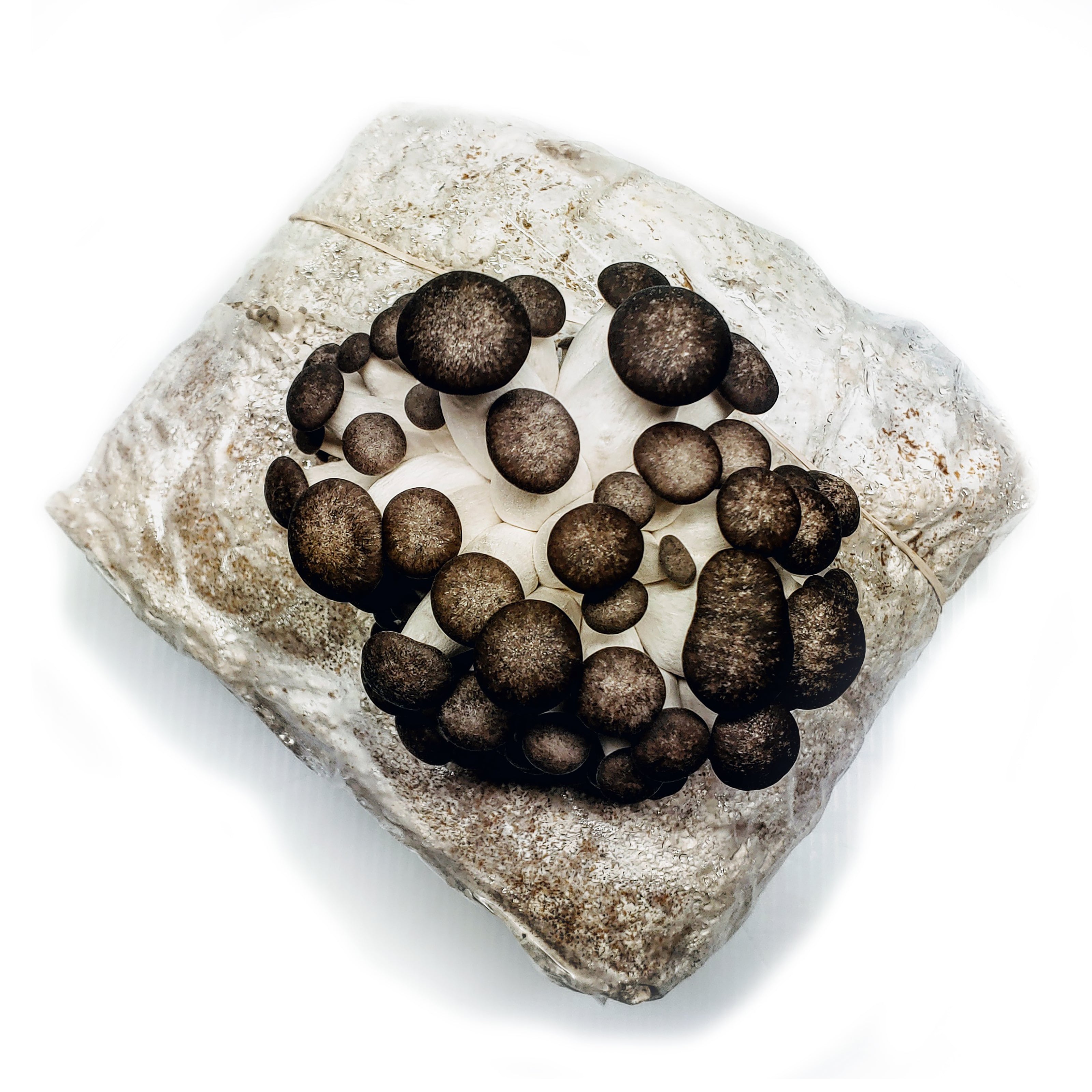
Black Pearl Oyster Strains

PO-BO

Black Pearl Oyster, like most Pleurotus varieties, can thrive on a wide variety of substrate recipes. It is highest-yielding on master's mix, hydrated to 60-63% total moisture content.

Incubation ranges from 14-21 days, depending on factors such as ambient incubation temp, spawn rate and substrate recipe. Unlike many other Pleurotus strains, Black Pearl Oyster does not pin immediately after colonization is complete, providing a grace period in which you can determine when to move your blocks into fruiting.

PO-BO prefers cool fruiting temps between 55-65° F, though can be fruited in warmer temps with mixed results. A standard x-cut or slit through the bag and into the substrate (no more than ½”) is the recommended initiation technique. If fruited in cold temps, Black Oysters manifest the morphology that most cultivators have come to expect- king oyster-like stems and dark, speckled caps. If fruited in warmer conditions, black pearl manifests in morphology a bit more similar to blue oyster, though with fleshier stems.

These are also a very popular sale at farmers markets and the like. They have a mild nutty and umami flavor similar to other oyster strains.

Top fruiting has become increasingly popular with PO-BO which increases the yield and shows off the P. eryngii genetics inherent in its hybridization.

Check out our MycoWizards PhenoFlick on Black Oyster HERE!

All Strains Explained

Blue Oyster Strains

PO-CNS

This is our bestselling house strain of Blue Oyster. Like most Pleurotus varieties, it can thrive on a wide variety of substrate recipes. It is highest-yielding on our master's mix combo-pellets, hydrated to 61% total moisture content.

Incubation ranges from 7-14 days, depending on factors such as ambient incubation temp, spawn rate, and substrate recipe. To avoid stroma and other biological problems during incubation, ensure that the core temperature of your PO-CNS blocks do not exceed 80F at the core. This can be achieved by incubating at 65F.

Bring blocks into the cold storage or the fruit room immediately after incubation is complete, as this strain pins fast and furious. A standard x-cut or slit through the bag and into the substrate (no more than ½”) is the recommended initiation technique. This strain of blue oyster prefers fruiting temperatures between 60-65° F. It maintains a vivid blue color and produces denser fruits of higher quality and a longer shelf life if fruited in cold temperatures. Yield typically ranges from 2½ -3½ lb per 10lb master’s mix block. It is known for very large cap size and tender stems all the way to their base, rendering the whole cluster marketable to a gourmet clientele.

This is a very versatile mushroom that will go good in many dishes such as stir fry, pasta, curry or even simply pan fried by themselves. This mushroom makes a great meat replacement. This strain has also been known to sell well at farmers markets.

PO-CHO

The 'chocolate' oyster is a blue oyster strain from China, sent to us by way of friends in Australia. At this point, it's been cultivated extensively by our farm customer base. It is less aggressive to pin compared with PO-CNS after colonization is complete. It yields very well, produces fruits of high quality (those with caps a bit smaller than a strain like POCNS), but thrives in warmer temps than the average blue strain and demonstrates some resistance to blotch and other bacteria. Its exceptional texture and culinary quality, as well as its slight brown hue to the caps, has made it very popular with chef and home grower alike!

PO-3044

PO-3044 is one of the more popular Blue Oyster varieties we offer. It is known for slightly smaller cap sizes than our house strain, PO-CNS, but still produces clusters of similar size.

PO-3044, like most Pleurotus strains, can thrive on a wide variety of substrate recipes. It is highest-yielding on master's mix, hydrated to 60-63% total moisture content. Calcium carbonate supplementation can help to slightly increase yield and fruit quality. It is best to have a tight contact between the block and the cultivation bag, which helps to prevent premature pinning inside the bag.

Incubation timelines ranges from 7-14 days, depending on factors such as ambient incubation temp, spawn rate, and substrate recipe. To avoid stroma and other biological problems in incubation, ensure that the core temperatures of your blocks do not exceed the low 70s F.

Bring blocks into cold storage or the fruit room immediately after incubation is complete, as this strain pins fast. A standard x-cut or slit through the bag and into the substrate (no more than ½”) is the recommended initiation technique. This strain of blue oyster prefers fruiting temperatures between 55-65° F, but can be fruited in slightly warmer conditions if necessary. It maintains a vivid blue color and produces denser fruit of higher quality and shelf life if fruited in cold temperatures. Yield typically ranges from 2½ -3½ lb per 10 lb master’s mix block. Great shelf life if fruited in cold conditions, shorter shelf life when fruited in warm conditions. A very predictable, flexible, and reliable strain overall. 

Just like the PO-CNS strain, this variety is a great addition to any fruiting room.

PO-3015

If you know, you know...some love it, some hate it. This Blue oyster strain is something that simply exists for the folks who have come to rely on it!

PO-KB

The PO-KB strain is a result of breeding carried out by Mossy Creek Mushrooms, this is a somewhat less predictable blue oyster strain, but an ideal choice for those with variable fruiting conditions and/or warm average fruiting temperatures.

Like most Pleurotus varieties, the PO-KB strain can thrive on a wide variety of substrate recipes. It is highest-yielding on master's mix, hydrated to 60-63% total moisture content.

Incubation ranges from 7-16 days, depending on factors such as ambient incubation temp, spawn rate, and substrate recipe. To avoid stroma and other biological problems in incubation, ensure that the core temperatures of your blocks do not exceed the lower 70s F

Bring blocks into the fruit room immediately after incubation is complete, as this strain pins readily. A standard x-cut or slit through the bag and into the substrate (no more than ½”) is the recommended initiation technique. This strain of blue oyster prefers fruiting temperatures between 60-70° F, but can be fruited in colder and semi warm conditions if necessary. It maintains a vivid blue color and produces denser fruit of higher quality and shelf life if fruited in cold temperatures. Yield typically ranges from 2 -3 lb per 10lb master’s mix block. It is known for average cap size but still produces very large clusters. Great shelf life if fruited in cold conditions, shorter shelf life when fruited in warm conditions.

Just like the PO-CNS strain, this variety is a great addition to all your favorite dishes; and any type of Blue Oyster tends to be in high demand if you're looking to sling the fungi!

PO-LOG

While this strain is not as high-yielding or high in quality, when compared to other blue oyster strains, it is still known for its overall ease in cultivation, resistance to bacterial blotch and other contaminants, and its exceptional shelf life. This phenotype certainly maintains the longest post-harvest shelf life of any blue oyster strain we carry, thus making it a great strain option for wholesaling to distributors.

Like most Pleurotus varieties, PO-LOG can thrive on a wide variety of substrate recipes. It is highest-yielding on master's mix, hydrated to 60-63% total moisture content.

Incubation ranges from 10-18 days, depending on factors such as ambient incubation temp, spawn rate, and substrate recipe.

A standard x-cut or slit through the bag and into the substrate (no more than ½”) is the recommended initiation technique. This strain of blue oyster prefers fruiting temperatures between 55-65° F, but can be fruited in warmer conditions if necessary. Yield typically ranges from 2-2½ lb per 10lb master’s mix block. A very predictable, flexible and reliable strain overall.
Chestnut Strains

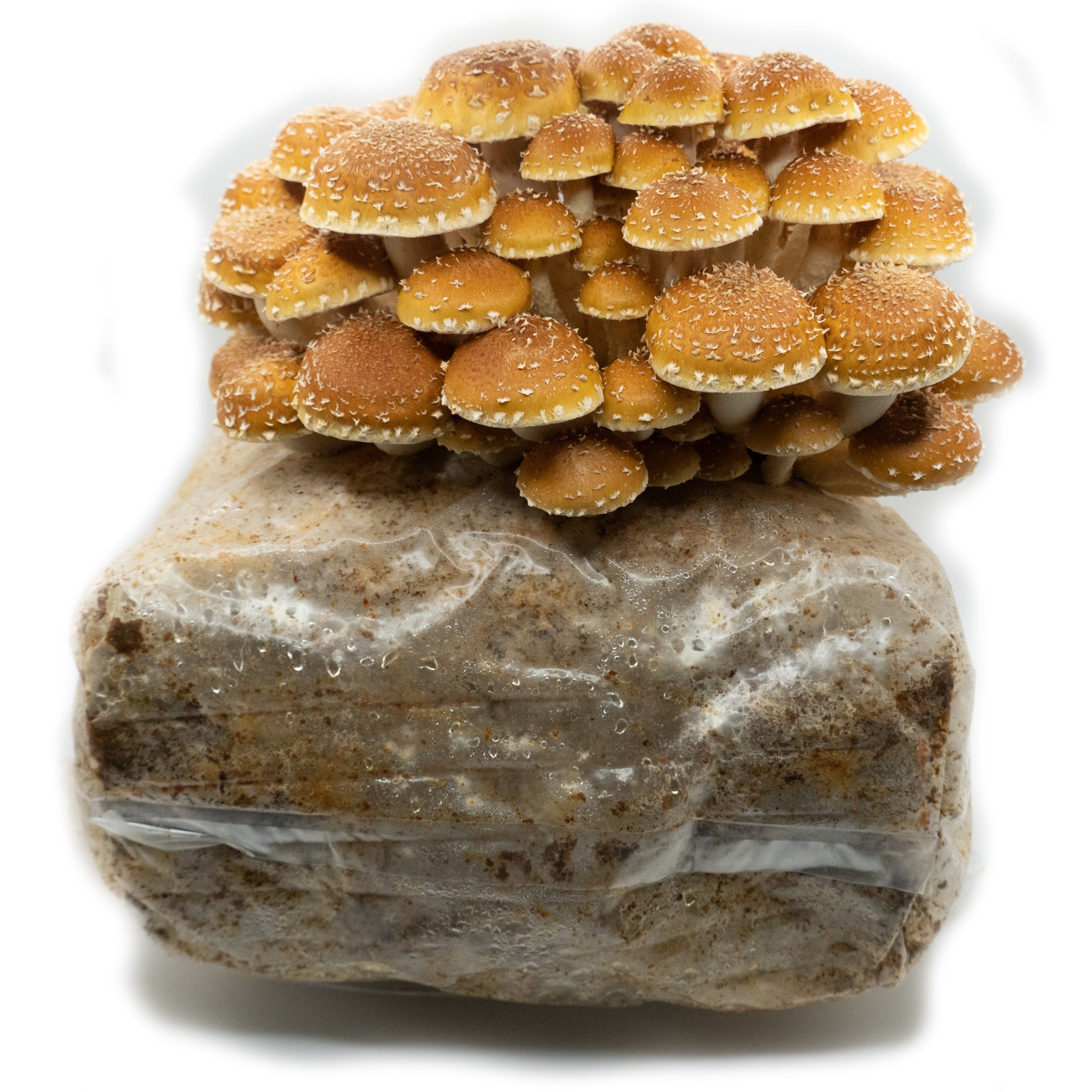
PA-CNS

The infamous and mighty Chestnut strain PA-CNS thrives on master’s mix, especially if pelletized (the pelletization process breaks down the oak, rendering it more bioavailable for a weak metabolizer like chestnut) hydrated to 61-63%.

Initial colonization takes 3 weeks on average, but we recommend that you let the blocks sit for 1 additional week to fully mature- the block will swell with caramel-colored secondary metabolites. This allows the mycelium time to more effectively digest its growing medium, which leads to a faster and larger pinset once introduced into fruiting. Similar to most varieties, avoid letting the internal temperature of your blocks exceed the upper 70s to avoid deleterious biological impacts. Be mindful that chestnut mycelium is more prone to mold contamination than most other common varieties.

Chestnut prefers fruiting temperatures between 55-65° F (12-18° C), if the temperature exceeds 65° it will likely not pin at all. High relative humidity (90-95% ) is recommended for fast and healthy pinning. This is a more intermediate species to work with, if the conditions are not just right you will have a hard time harvesting anything off of the block.

A deep cut into the block is highly recommended for a dense pinset and high yield. Pinset emergence takes longer with chestnut than most other common varieties- 14 to 21 days in most cases. Once pins emerge, it is a fairly rapidly growing mushroom. Harvest after veils break but before caps flatten. Though chestnut does not have a fantastic shelf life, it is a strikingly beautiful mushroom and often sells fast. Average yield ranges between 2 and 3lbs.

Chestnuts have a nutty and meaty flavor, great for many dishes like pasta, soup or as a pizza topping. They are also good for drying as this will improve shelf life.

Check out out MycoWizards PHenoFlick on PA-CNS HERE!
Enoki Strains

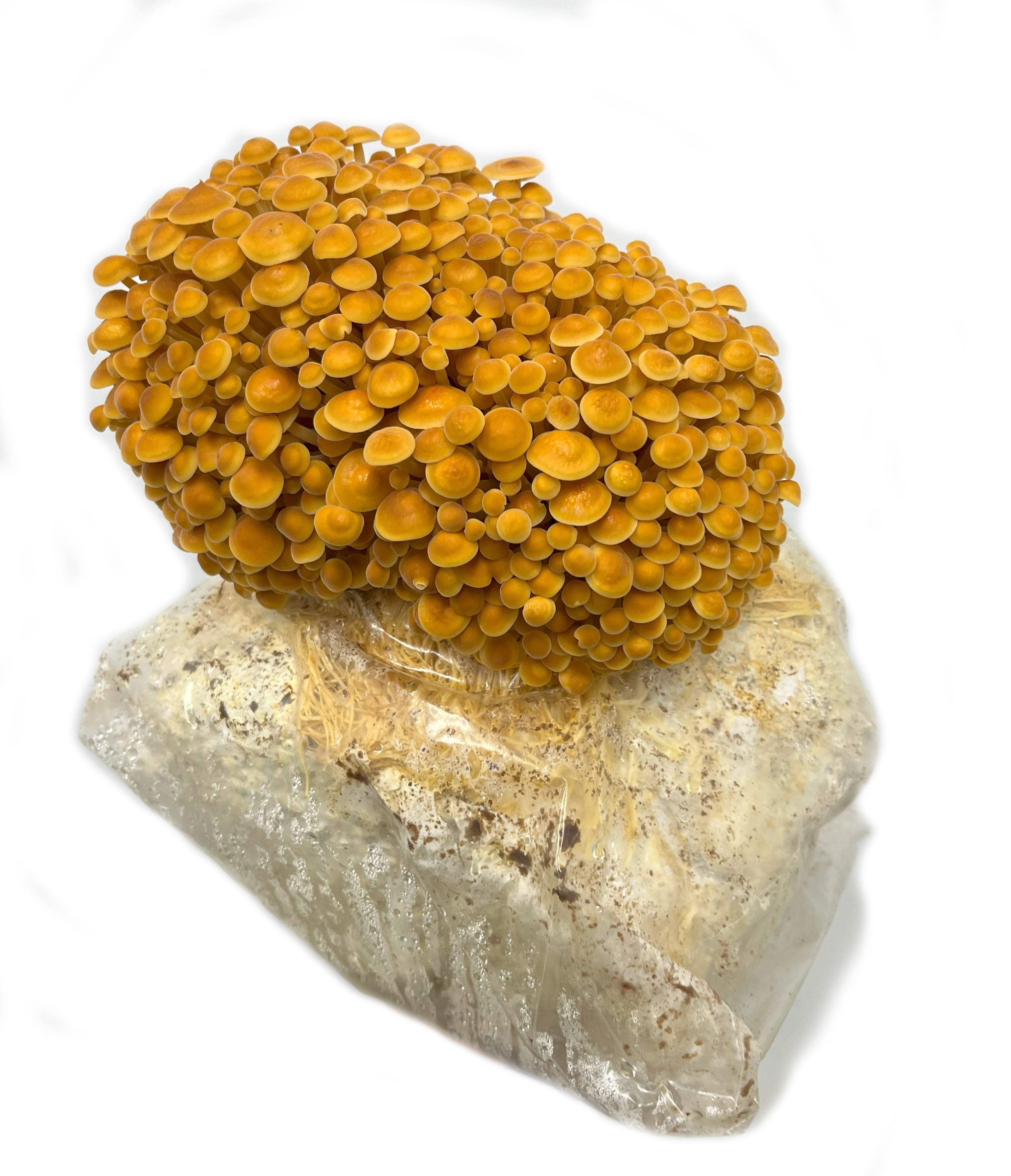
Golden Enoki FV-4600

Enoki is very tenacious and can grow on a variety of substrates, but we recommend master's mix for fastest growth and highest yields. Recommended moisture content is 60-63%, Calcium carbonate supplementation can help to slightly increase yield and fruit quality. It is best to have a tight contact between the block and the cultivation bag, which helps to prevent premature pinning inside the bag.

Enoki is fully colonized between 14-21 days in most circumstances. As with most varieties, enoki mycelium thrives with its interior temperature rests in the upper-70s Fahrenheit.

Enoki prefers cold fruiting temps, ideally 50-63° F. Some growers cold shock blocks for several days prior to inducing fruiting. Most growers top fruit enoki sometimes through scratching the top surface of the block. To encourage the most spindly spaghetti like form, let the pins form in vitro or fruit them in a high CO2 environment. If fruited in a regular fruiting environment with high oxygen levels, they will still be thin stemmed but with approximately dime-sized caps.

Enoki is sensitive to bacterial infection in the fruits, so avoid condensation settling on the fruits for a long period of time. Much like other common gourmet varieties, Enoki caps will flatten once they reach full maturity. So keep an eye on them to harvest before flattening for better storage life. FV 4600 can be quite high yielding and can be fruited multiple times with one block.

Enoki mushrooms are quite popular, they have a crunchy texture and umami flavor. They are good in a variety of dishes including soups, stir fry or even just by themselves.

White Enoki FV-1037

FV-1037 is a special order status strain. It is grown in the same conditions as Gold Enoki, however, your incubation and fruiting rooms need to be very on point as this is an overall weaker strain and needs exact conditions. The main appeal of the FV-1037 is the beautiful stark white color, as it was bred specifically for that purpose.

For substrate, we recommend master's mix for fastest growth and highest yields. Recommended moisture content is 60-63%, Calcium carbonate supplementation can help to slightly increase yield and fruit quality. It is best to have a tight contact between the block and the cultivation bag, which helps to prevent premature pinning inside the bag.

Enoki is typically fully colonized between 14-21 days in most circumstances. As with most varieties, enoki mycelium thrives with its interior temperature rests in the upper-70s Fahrenheit. Enoki prefers cold fruiting temps, ideally 50-63° F. Some growers cold shock blocks for several days prior to inducing fruiting. Most growers top fruit enoki sometimes through scratching the top surface of the block. To encourage the most spindly spaghetti like form, let the pins form in vitro or fruit them in a high CO2 environment.

Enoki is sensitive to bacterial infection in the fruits, so avoid condensation settling on the fruits for a long period of time. Much like other common gourmet varieties, Enoki caps will flatten once they reach full maturity. So keep an eye on them to harvest before flattening for better storage life.

If you would like to try this strain be sure to write *Special Order* at the bottom of your Spawn Form.
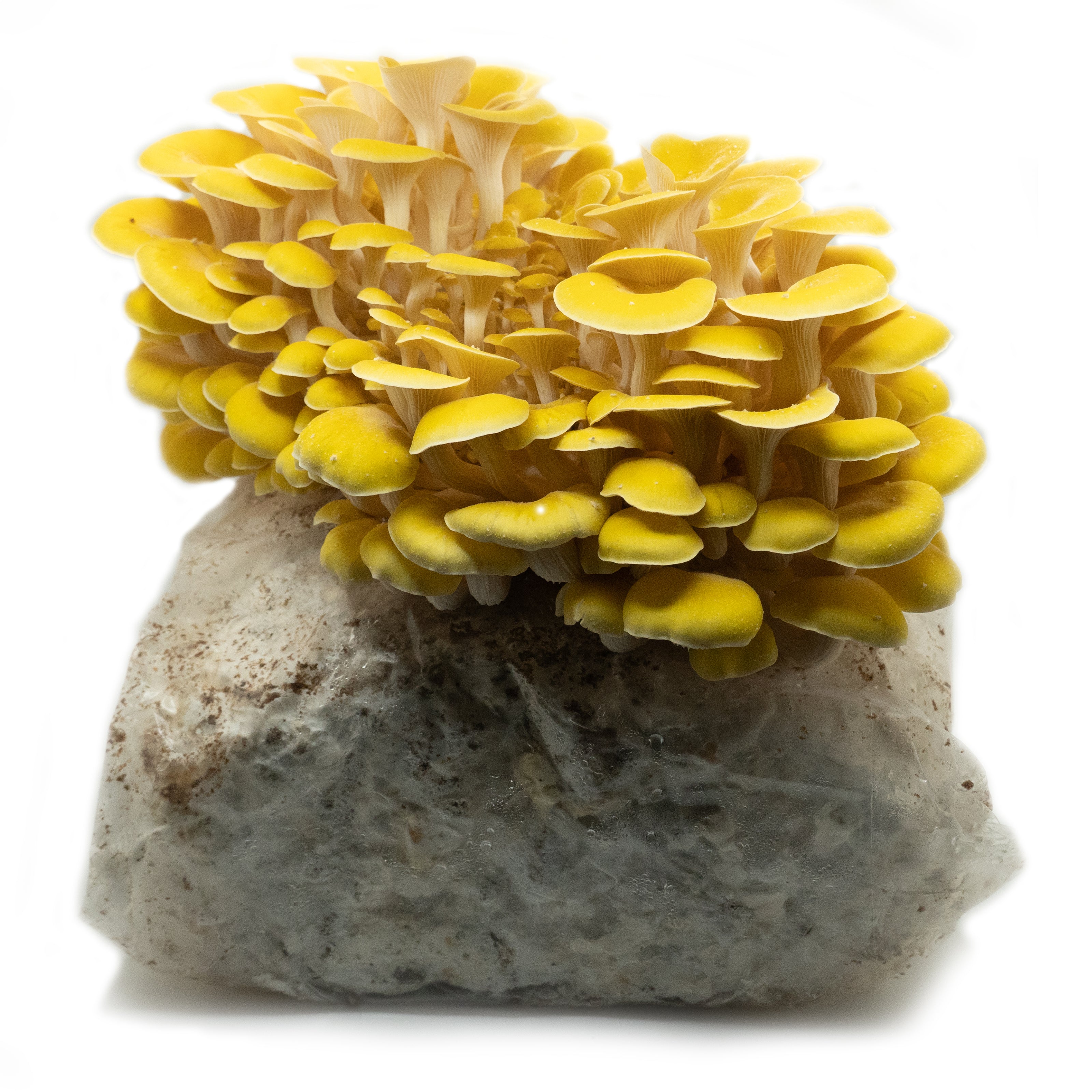
Gold Oyster Strains

PC-MM

Gold Oyster, like most Pleurotus varieties, can thrive on a wide variety of substrate recipes. It is highest-yielding on master's mix, hydrated to 60-63% total moisture content.

Incubation ranges from 7-14 days, depending on factors such as ambient incubation temp, spawn rate, and substrate recipe. To avoid stroma and other biological problems in incubation, ensure that the core temperatures of your blocks do not exceed the low 70s.

Bring blocks into the fruit room immediately after incubation is complete, as this strain pins readily. A standard x-cut or slit through the bag and into the substrate (no more than ½”) is the recommended initiation technique. This strain of Gold Oyster prefers immense flood lighting with fruiting temperatures between 65-70° F, but can be fruited in cooler conditions if necessary. It maintains a vivid color and higher yields when fruited in those warmer conditions. This strain can easily be fruited several times, but still has a high first flush yield. Its fruits develop rapidly; yield typically ranges from 2½ -3½ lb per 10 lb master’s mix block.

Pleurotus citrinopileatus is known for smaller cap size than other oyster species and for very delicate fruit tissue that is easily damaged. This PC-MM strain demonstrates stronger fruit tissue than average, while still maintaining a nice texture for gourmet cuisine. Mediocre shelf life. Fungus gnats and other insect pests are attracted by remnants of p. citrinopileatus fruits, so be sure to cut clean against the block when harvesting, and move the blocks to compost as soon as you are done flushing. A very predictable, flexible, and reliable strain overall.

Gold Oysters are desirable mainly because of their beautiful bright yellow color and notably nutty flavor.
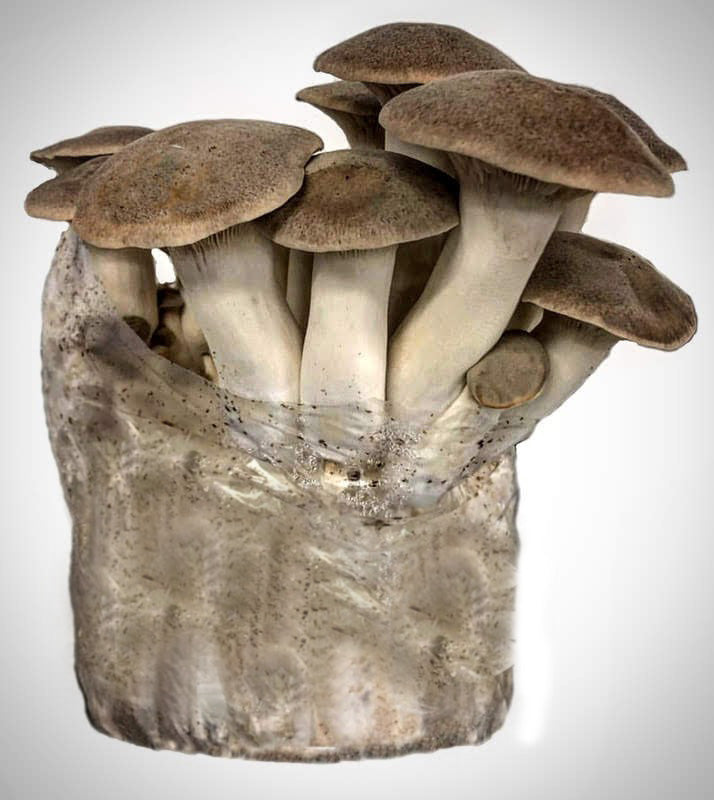
King Oyster Strains

PE-KONG

King oyster, like most Pleurotus varieties, can thrive on a wide variety of substrate recipes. It is highest-yielding on master's mix, hydrated to 60-63% total moisture content. It is best to have a flat top surface of your block and tight contact between the block and the cultivation bag, which encourages growth across the entire surface rather than along the edges of the block.

Incubation ranges from 14-21 days, depending on factors such as ambient incubation temp, spawn rate, and substrate recipe.

Bring blocks into the fruit room immediately after incubation is complete, as king oyster pins readily. There are three typical pin initiation approaches- letting the pins form in vitro before cutting off the seal and/or top portion of the bag, immediately cutting off the seal and/or top portion of the bag and scratching the top surface of the block, or simply cutting off the seal and/or top portion of the bag. Some farms like to form a casing layer (such as with peat moss and hydrated lime) for the fruits to emerge from. All have their merits and depend on the fruiting environment and grower preference. King oyster prefers cold fruiting temperatures between 50-60° F. Rapid pin growth and ideal morphology are encouraged through exposure to blue lighting; full spectrum LED is fine, if not too strong. Its fruits develop rapidly; yield typically ranges from 2-2.5 lb per 10lb master’s mix block and boast an excellent shelf-life.

King Oysters are a delicious and meaty mushroom, a great option as a meat replacement.

Check out our King Oyster Cultivation Deep Dive on our MycoWizards page!

PE-2603

PE2603 tends toward more uniformly medium-sized fruits with a pale, beige hue to the caps, while PEKONG demonstrates much more variance in fruit size with a stronger granite hue to the caps.

King oyster, like most Pleurotus varieties, can thrive on a wide variety of substrate recipes. It is highest-yielding on master's mix, hydrated to 60-63% total moisture content. It is best to have a flat top surface of your block and tight contact between the block and the cultivation bag, which encourages growth across the entire surface rather than along the edges of the block.

Incubation ranges from 14-21 days, depending on factors such as ambient incubation temp, spawn rate, and substrate recipe.

Bring blocks into the fruit room immediately after incubation is complete, as King Oyster pins readily. There are three typical pin initiation approaches- letting the pins form in vitro before cutting off the seal and/or top portion of the bag, immediately cutting off the seal and/or top portion of the bag and scratching the top surface of the block, or simply cutting off the seal and/or top portion of the bag. Some farms like to form a casing layer (such as with peat moss and hydrated lime) for the fruits to emerge from. All have their merits and depend on the fruiting environment and grower preference. King oyster prefers cold fruiting temperatures between 50-60° F. Rapid pin growth and ideal morphology are encouraged through exposure to blue lighting; full spectrum LED is fine, if not too strong. Its fruits develop rapidly; yield typically ranges from 2-2.5 lb per 10lb master’s mix block and boast an excellent shelf-life.

King Oysters are a delicious and meaty mushroom, a great option as a meat replacement.

Check out our King Oyster Cultivation Deep Dive on our MycoWizards page!

PE-REX

  • Demonstrates higher blotch resistance and overall vigor
  • Smaller, more attractive caps
  • Much softer texture than other strains, great in a gourmet context
  • More even fruit body size, easier to grade
  • Similar yield to other commercial strains such as KONG and 2603
  • Slightly slower to pin and harvest than KONG, by approximately one week

Lions Mane Strains

HE-CNS

HE-CNS is our go to house strain of Lion's Mane. HE-CNS produces the highest yield on master’s mix. We strongly recommend a final block moisture content of 60%; a moisture content even slightly exceeding that tends to lead to problems during incubation and fruiting for lion’s mane. In turn, insufficient moisture content often leads to issues with mold contamination and overall poor colonization of the block. Lion’s mane does equally well with ultrapasteurization and sterilization.

Incubation ranges from 8 to 16 days, depending on factors such as ambient incubation temp, spawn rate, and substrate recipe. Similar to most varieties, avoid letting the internal temperature of your blocks exceed the low 70s internally. Be mindful that Lion’s Mane mycelium is prone to myriad problems if it overheats and that it is more prone to mold contamination than most other common varieties.

Lion’s Mane prefers standard fruiting temperatures between 55-65° F (12-18° C). A high air exchange rate (lots of oxygen-rich air) and consistent relative humidity are ideal for good fruit development. A standard x-cut or slit in the bag is the recommended pinset initiation technique; many farms make their cut on the top surface of the block, where lion’s mane readily fruits on its own accord. Lion’s mane fruits develop at a relatively slow rate but grow to incredibly large size and weight. Average yield is quite high- 2½ to 3½ lb, with potential for even more with subsequent flushes of the same block. This strain is known for dense, club-like fruits with small spines, providing greater resistance to bruising and damage during handling/cold storage thus making it an eminent wholesaling mushroom.

Lion's Mane is not only a great versatile ingredient, it is also said to have many medicinal properties.

Check out our MycoWizards PHenoFlick on HE-CNS Here!

HE-POW

The HE-POW strain is different than typical Lion's Mane as it has demonstrated higher heat tolerance than other strains and is often the preferred strain by farms in hot climates and/or hot seasons.

HE-POW, like most Lion's Mane strains, produces the highest yield on master’s mix, but is easier to grow without issue on a lower-supplementation recipe, such as 65-70% hardwood and 30-35% wheat middlings/soy hulls. Regardless, we strongly recommend a final block moisture content between 59-62%; a moisture content even slightly exceeding that tends to lead to problems during incubation and fruiting for lion’s mane. In turn, insufficient moisture content often leads to issues with mold contamination and overall poor colonization of the block. HE-POW does equally well with ultrapasteurization and sterilization.

Incubation ranges from 8 to 16 days, depending on factors such as ambient incubation temp, spawn rate, and substrate recipe. Similar to most varieties, avoid letting the internal temperature of your blocks exceed the low 70s to avoid deleterious biological impacts; be mindful that lion’s mane mycelium is prone to myriad problems if it overheats, such as mold and bacterial contamination.

A standard x-cut or slit in the bag is the recommended pinset initiation technique; many farms make their cut on the top surface of the block, where it readily fruits on its own accord. Lion’s mane fruits develop at a relatively slow rate (14-21 days) but grow to an incredibly large size and weight. Average yield is quite high- 2½ to 3lb or more per 10lb master’s mix block, with potential for even more if fruited multiple times per block.

This strain is known for flashier fruits with more exposed spines, with excellent visual appeal while still maintaining wholesale production standards.

HE-LP

The fruit quality of this strain is not quite as gourmet as other Hericium strains offered by Cap N’ Stem, but its flexible cultivation parameters makes it a worthwhile consideration for some farms.

Lion’s Mane produces the highest yield on master’s mix, but is easier to grow without issue on a lower-supplementation recipe, such as 65-70% hardwood and 30-35% wheat middlings/soy hulls. Regardless, we strongly recommend a final block moisture content between 59-62%; a moisture content exceeding that tends to lead to problems during incubation and fruiting for lion’s mane, especially bacterial infections and subsequent pooling of secondary metabolites. In turn, insufficient moisture content often leads to issues with mold contamination and overall poor myceliation of the block. Lion’s mane does equally well with ultrapasteurization and sterilization.

Incubation ranges from 8 to 16 days, depending on factors such as ambient incubation temp, spawn rate, and substrate recipe. This strain is slightly more tolerant than other Hericium strains of varying moisture content in the block as well as varying incubation temperatures, making it a safe choice for farms with an inconsistent incubation environment.

Lion’s Mane thrives with lots of fresh air exchange and abundant oxygen levels, also ensure that you maintain high relative humidity without allowing condensation settling too long on the fruits, as lion’s mane is prone to both desiccation and bacterial rot. A standard x-cut or slit in the bag is the recommended pinset initiation technique. Many farms make their cut on the top surface of the block, where lion’s mane readily fruits on its own accord. Lion’s Mane fruits develop at a relatively slow rate (14-21 days) but grow to incredibly large sizes and weight. Average yield is less than other Lion’s Mane strains- 2 to 2½  lb- with potential for more if fruited multiple times per block.

HE-A

HE-A is a special order status strain. It is a wild clone from Quebec. We have not done much production with this strain so a lot of variables are still unknown. The main reason HE-A is special is it has vigorous and dense mycelium, much stronger and flexible than most other Lions Mane strains; This makes it a good contender if you have unstable fruiting conditions.

As this is a wild clone, the fruits of the HE-A look wild and spiny compared to regularly cultivated Lions Mane; which typically appear as a more dense round shape.

We do not have any average yield data as we have not brought this strain into our regular rotation. If you would like to try this strain be sure to write *Special Order* at the bottom of your Spawn Form.

HE-9514

HC-FF

HC-FF, also known as Combtooth or Hericium Corraloides is a commercial phenotype that hails from Funga Farm. The main difference between the strains is morphology; While the typical Lions Mane forms in multiple ball like fruits, the Combtooth has fruits more akin to a coral mushroom, very spread out and textured.

HC-FF produces the highest yield on master’s mix, but is easier to grow without issue on a lower-supplementation recipe, such as 65-70% hardwood and 30-35% wheat middlings/soy hulls. Regardless, we strongly recommend a final block moisture content between 59-62%; a moisture content exceeding that tends to lead to problems during incubation and fruiting for Combtooth, especially bacterial infections and subsequent pooling of secondary metabolites. In turn, insufficient moisture content often leads to issues with mold contamination and overall poor myceliation of the block. Combtooth does equally well with ultrapasteurization and sterilization.

Incubation ranges from 8 to 16 days, depending on factors such as ambient incubation temp, spawn rate, and substrate recipe. When compared to Lions Mane, HC-FF has a much denser mycelium during its colonization of a substrate block as well as spawn. It is less likely to autofruit in the high CO2 environment of a sealed XLS-A bag.

HC-FF thrives with lots of fresh air exchange and abundant oxygen levels, also ensure that you maintain high relative humidity without allowing condensation settling too long on the fruits, as Combtooth is prone to both desiccation and bacterial contamination. A standard x-cut or slit in the bag is the recommended pinset initiation technique; many farms make their cut on the top surface of the block, where Combtooth readily fruits on its own accord.

Typical yield ranges from 2 to 3 lbs. Depending on usual fruiting room factors such as lighting, oxygen levels and moisture content.

Check out our Mycowizards PhenoFlick on HC-FF HERE!
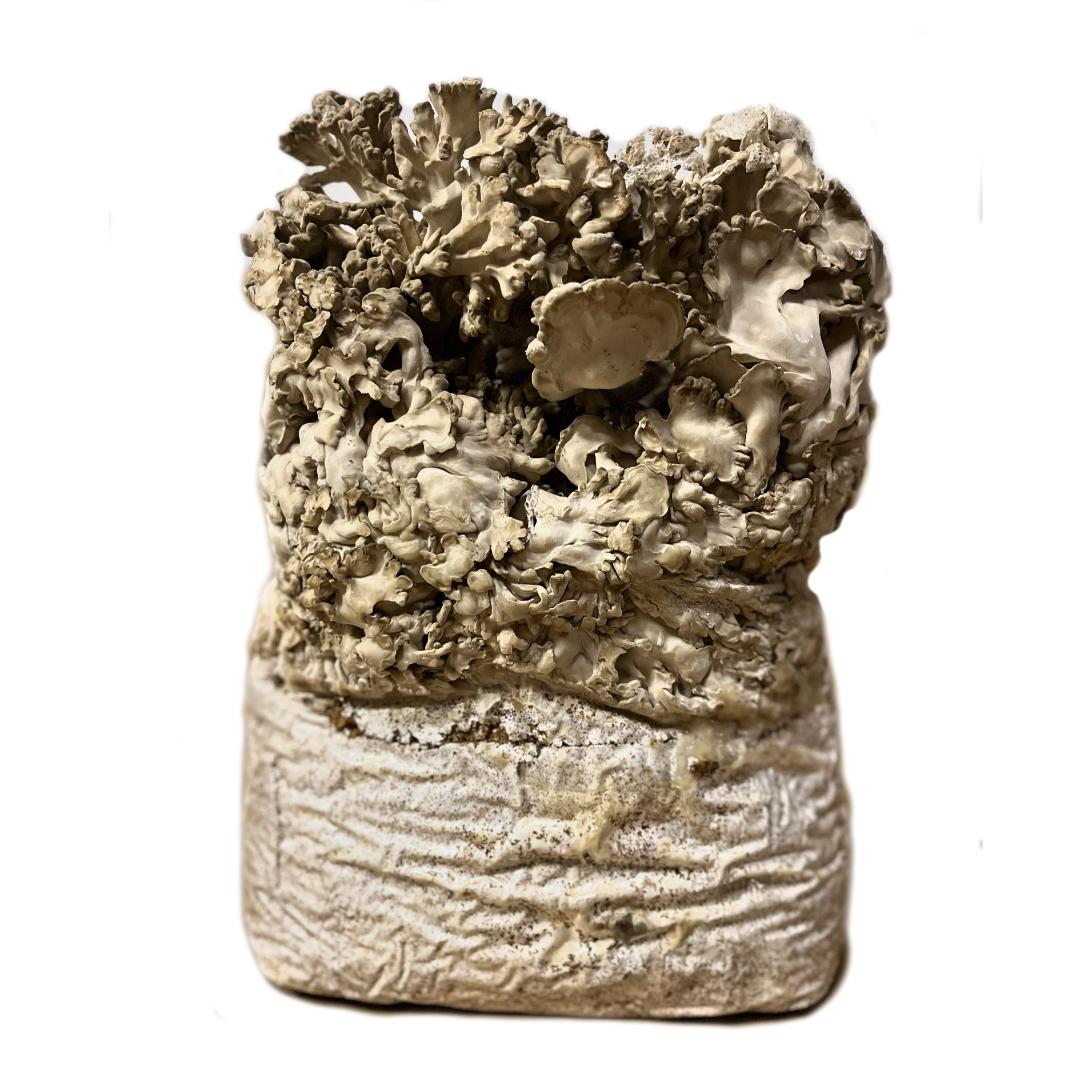
Maitake Strains

GF-494

GF-494 is a special order status strain. It has a slightly slower development rate when compared to other Maitake strains, however, It also has a slightly higher yield and tends to be more durable of a strain which makes it a great option for wholesale farmers.

As with the GF-9827, this is a particular strain when it comes to fruiting conditions; 65° F is recommended for incubation and fruiting. Be sure not to disturb the block as this will likely disrupt the growth of your mushrooms. The GF-494 is less flexible of a strain so all of your conditions should be on point.

If you would like to try this strain be sure to write *Special Order* at the bottom of your Spawn Form.

GF-9827

Maitake prefers a lower supplementation rate than standard masters mix. Something along the lines of 60-70% sawdust/hardwood pellets & 30-40% supplement. A moisture content between 60-63% is recommended to accommodate its longer timeframe in incubation. It is best to have a flat top surface of your block.

Initial colonization of the block will take about 3-4 weeks in most cases, but let the blocks remain in incubation as primordia develop in vitro. Let those primordia get as large as possible in incubation. Initial ‘blob-like’ primordia begin to develop ‘fingers’; this is a clear visual indication that the crop’s time in incubation is complete. Overall, incubation averages 3-4 weeks and primordia development averages 3-5 weeks. Extensive lighting over the top surface of the blocks is extremely helpful to encourage primordia to form along the entire top surface, rather than just along the sides of the top surface, which tends to occur in low-light conditions. Cool spectrum lighting is superior to warm spectrum for healthy primordial development. Maitake seems to have a very wide range in which it will grow, both in incubation and fruiting. As with most varieties, the speed is much greater in warm conditions, and the mushroom quality is greater in cool conditions. Temperature stability is extremely important for successful maitake cultivation. On average, growers tend to cultivate this strain at 65° F for incubation and fruiting.

Cut off the seal to leave a tall plastic collar around the developing fruits, and cut slits on the sides of the bottom of the collar to allow CO2 to flush out. Like any variety, Maitake requires fresh air exchange but is also prone to drying out, so it is best to position the blocks at a slight angle on your fruiting racks/shelves and have a collar that is as high as possible. In hot fruiting conditions, this is especially the case, whereas in cold fruiting conditions you will want to ensure that water doesn't pool inside the collar. For maximum storage life, harvest the fruits right when pores manifest on the undersides of the fronds. For maximum volume, wait to harvest until fruits have begun to produce spores.

As this species is more advanced than most, it is important to have extra consideration in fruiting conditions. Many growers have produced mediocre maitake (very short fronds, about halfway between 'blobtake' and healthy looking maitake) because they didn't have enough patience. Patience is key, especially in regard to letting primordia develop in vitro. If you allow the primordia as much time to develop as possible in vitro, you will see a higher yield, healthier mushrooms, better aroma.

Maitake will stop growing if disturbed too much. This is one of the main considerations for letting the blocks acclimate to the fruiting room before cutting off the seal. The principle of avoiding disturbance applies to other aspects of cultivation- avoid knocking the blocks, and avoid fruiting them in a fruit room with heavy spore load from other varieties (both may lead to growth stopping).

Maitake is said to have a rich earthy flavor with a hint of spice.

Phoenix Oyster Strains

PP-LOG

PP-LOG has been our go to Phoenix oyster strain for a decade. Also referred to as Italian Oyster, Pleurotus Pulmonarius loves the heat and fruits best between the temp range of 60 and 70F.

When it comes down to producing substrate for this variety it is typical to all the other standards of oysters, Masters Mix with 60-63% moisture content. On a 10lb block of substrate keep your incubation temps down around 66F to prevent any bacterial contamination that can proliferate into blotch once introduced into fruiting.
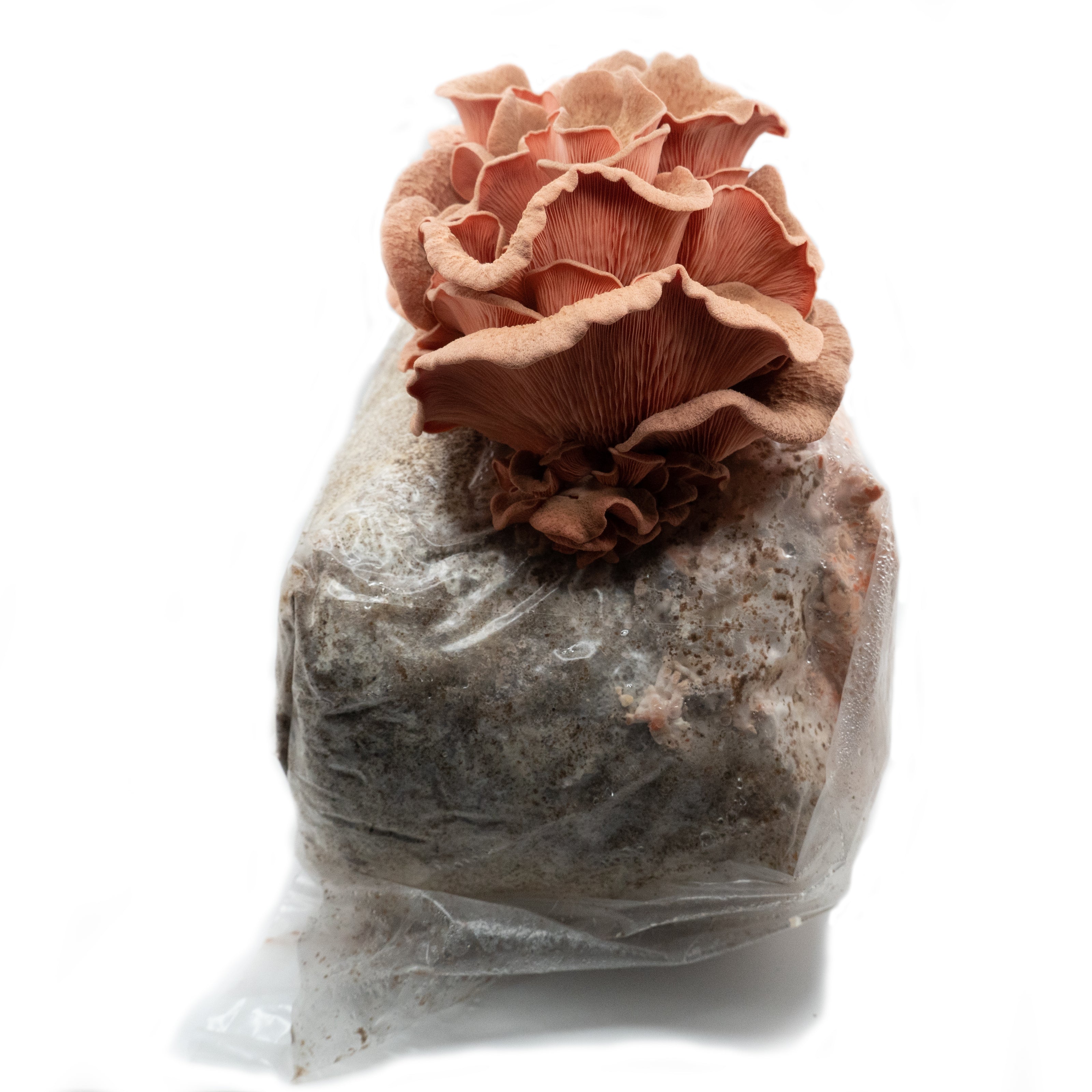
PP-2204

PP-2204 comes from Mycelia BVBA and has been a runner up to our PP-LOG strain for a few years. Also referred to as Italian Oyster, Pleurotus Pulmonarius loves the heat and fruits best between the temp range of 60 and 70F.

When it comes down to producing substrate for this variety it is typical to all the other standards of oysters, Masters Mix with 60-63% moisture content. On a 10lb block of substrate keep your incubation temps down around 66F to prevent any bacterial contamination that can proliferate into blotch once introduced into fruiting.

Pink Oyster Strains

PD-1

Pink Oysters can thrive on a wide variety of substrate recipes. It is highest-yielding on master's mix, hydrated to 60-63% total moisture content. It is best to have a tight contact between the block and the cultivation bag, which helps to prevent premature pinning inside the bag.

Incubation ranges from 10-16 days, depending on factors such as ambient incubation temp, spawn rate, and substrate recipe.

Bring blocks into the fruit room immediately after incubation is complete, as this strain pins all over the block fast. A standard x-cut or slit through the bag and into the substrate (no more than ½”) is the recommended initiation technique. Pink oysters are a tropical strain that prefers fruiting temperatures between 70-80° F with humidity levels between 85-95%. It maintains a vivid pink color if grown with slight light exposure and in their preferred temp range, and can produce thick meaty fruits or thin delicate fruits depending on growing conditions. This strain can easily be fruited several times, but still has a high first flush yield. Its fruits develop rapidly; yield typically ranges from 2½ -3 lb per 10 lb master’s mix block. The nice part about PD-1 is it can be fruited through the winter months if the temps in your fruiting facility stay in the low to middle 60s.

Pink Oysters are known to have a very short life. They also have a meaty texture and a notably "seafood" flavor.
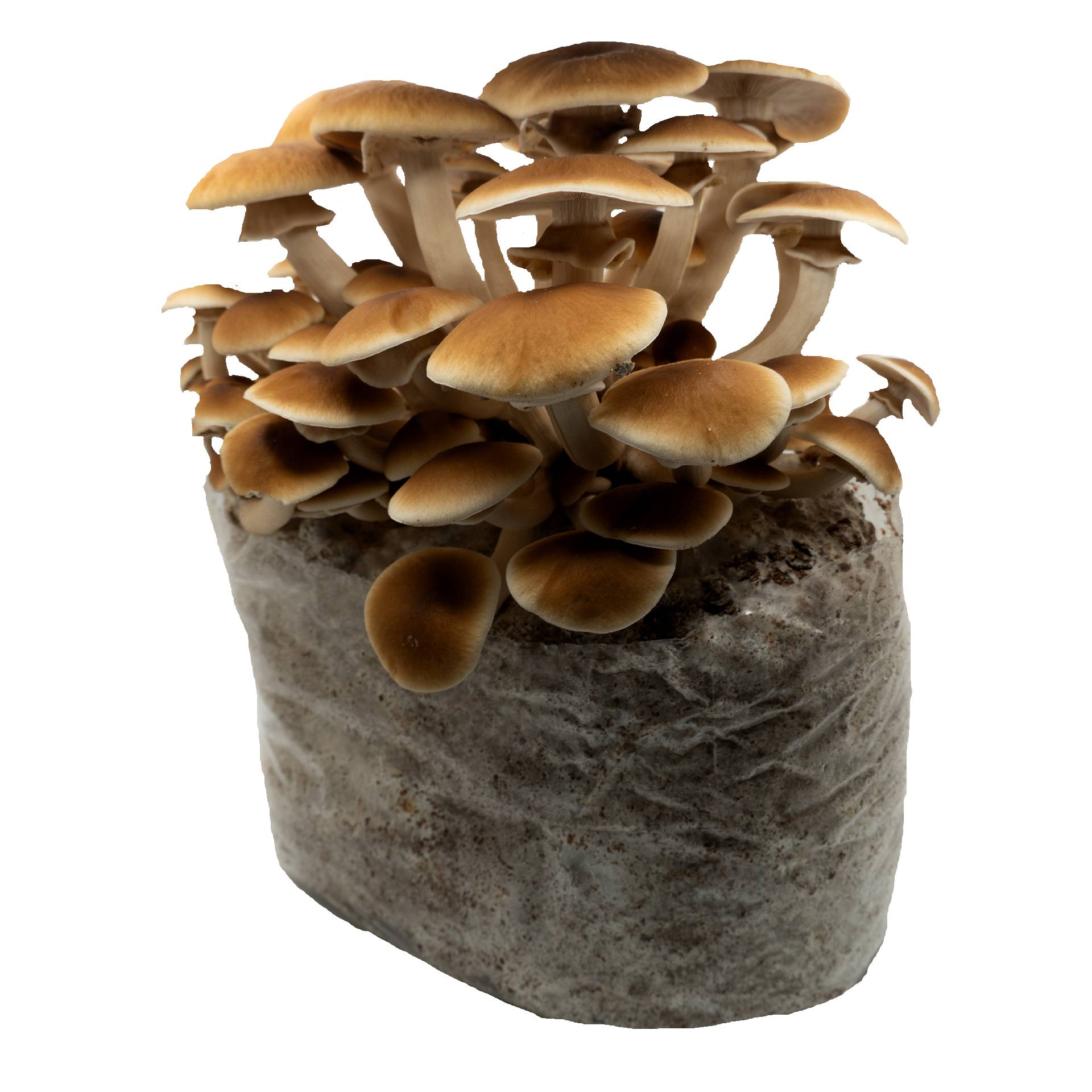
Pioppino Strains

AA-CNS

Pioppino is a relatively delicate mycelium. It obtains its highest yields on masters mix, ideally with a hardwood as its substrate base. For the smoothest colonization and easiest success, some growers cultivate pioppino on recipes similar to shiitakes substrate. Much like other delicate varieties, if pioppino is grown on substrate with insufficient moisture content, its mycelial growth rate is drastically inhibited and its hyphae are less robust and defined. If grown with excessive moisture content bacterial contamination easily occurs. Standard 60-63% moisture content is recommended.

Pioppino takes 18-22 days to fully colonize and be ready to fruit on average. indirect light exposure in incubation encourages more vigorous colonization of the block. When pioppino is ready to fruit cloud like plumes of mycelium form on the top of the block giving way to microdots of a yellow metabolite that forms into primordia. These pins can form on the exterior of the block so its best to maintain tight contact between plastic and block to encourage top fruits. If you catch the block before pillowy mycelium forms but the block is full colonized you can remove the air from the plenum with a small cut at the top of the bag and refrigerate at 34F for several weeks. After refrigeration, a side cut similar to oysters or lions mane will provide a successful and robust flush.

Pioppino prefers warm fruiting temperatures between 65-75 degrees but will fruit in cooler temps as well, just more slowly. It is highest yeilding when fruited from the top of the block. Once pins are formed they grow at a fast rate and will be ready to harvest within 7-10 days on average.

For the best balance of storage life and yield, harvest just when the veils are beginning to show signs of cracking and separating from the stem. This strain of Pioppino is known for mostly even, medium sized fruits. Its yield, while not exceptional, still falls within the range of a commercially viable first flush and outperforms other Pioppino strains that Cap N’ Stem has worked with.

The Pioppinos have a nutty and slightly sweet flavor. It is a popular mushroom in the culinary world.

Check out our MycoWizards PhenoFlick on fascinating strain HERE!
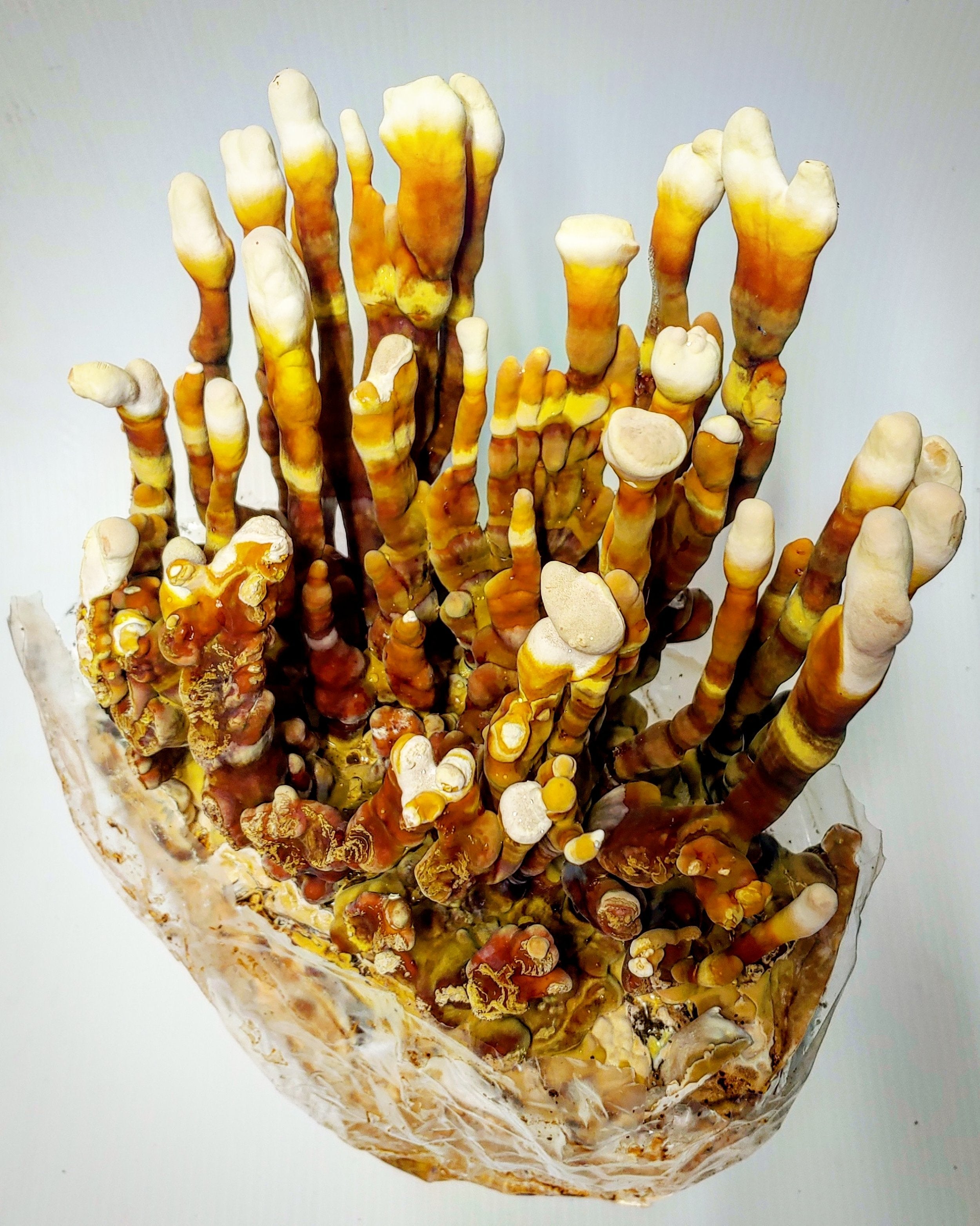
Reishi Strains

GLZ-9724

Reishi species are incredibly tenacious and will thrive on a wide variety of substrate recipes. Masters mix works quite well and allows for high yields. Standard moisture content of 60-63%. If you plan on fruiting antlers in vitro, be sure to have as large a plenum in the bag as possible to provide maximum amount of space for antlers to grow. 

Reishi typically requires 10-16 days for full colonization. Reishi is a strong competitor and will outcompete most contaminants if they're not too prevalent. If you plan to fruit antlers in vitro, set them and forget them, ideally with good light exposure to stimulate faster fruit growth. If you plan to fruit conks, move them into your fruit room as soon as you see either a swelling of secondary metabolites and/or myelination along the exterior of the substrate.

While Reishi myceliates very fast, its fruits grow at a very slow, steady rate. Depending on context, reishi fruits reach maturity anywhere between 3-6 months; some cultivators extend their growth beyond that. Some strains are bred specifically for antler morphology, others for conk, and others are flexible. You can grow antlers in vitro or in a fruiting space with artificially elevated CO2 levels. If you want to grow conks, cut the bag in a similar fashion as you would oysters; primordia will quickly manifest. For conks, maintain a standard fruiting room environment- around 90% relative humidity and the usual 450-800 ppm CO2. This will encourage the organism to continue growing fruit body size rather than sporulating. Ideally, harvest before the mushrooms sporulate, as Reishi spores both contain medicinal potency and are very virulent and irritating to the respiratory system (and your equipment!).

Reishi is a great mushroom for tinctures as they are said to have many medicinal properties.

Check out our MycoWizards Deep Dive on the History Of Reishi HERE!
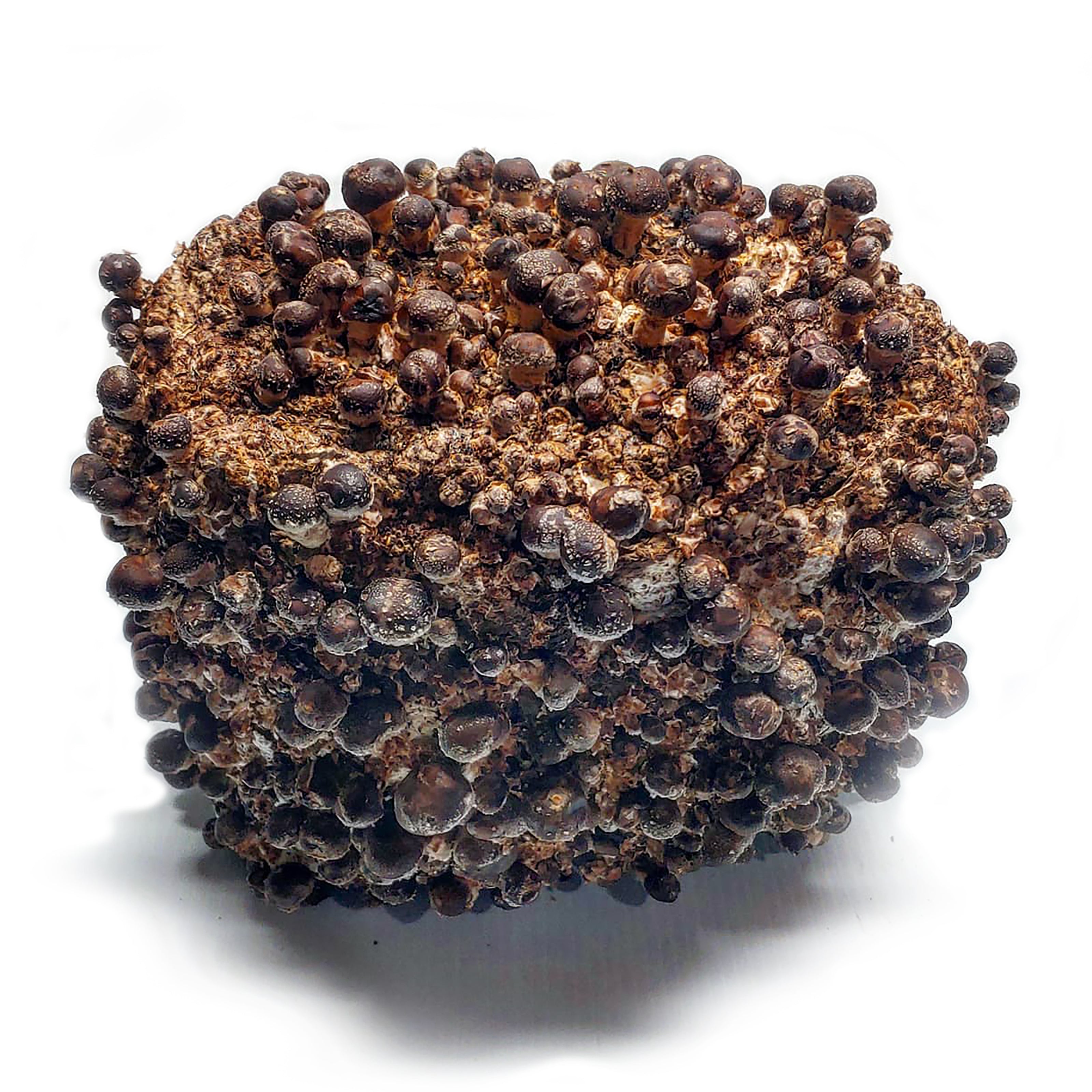
GM-CNS

GM-CNS is an incredibly tenacious species and will thrive on a wide variety of substrate recipes. Ganoderma Multipileum grows faster and antlers quicker than Ganoderma Lingzhi with less dense fruits in a pillowy zig zag fashion depending on the light spectrum. Masters mix works quite well and allows for high yields. Standard moisture content of 60-63%. If you plan on fruiting antlers in vitro, be sure to have as large a plenum in the bag as possible to provide maximum amount of space for antlers to grow. 

Reishi typically requires 10-16 days for full colonization. Reishi is a strong competitor and will outcompete most contaminants if they're not too prevalent. If you plan to fruit antlers in vitro, set them and forget them, ideally with good light exposure to stimulate faster fruit growth. If you plan to fruit conks, move them into your fruit room as soon as you see either a swelling of secondary metabolites and/or myelination along the exterior of the substrate.

While Reishi myceliates very fast, its fruits grow at a very slow, steady rate. Depending on context, reishi fruits reach maturity anywhere between 3-6 months; some cultivators extend their growth beyond that. Some strains are bred specifically for antler morphology, others for conk, and others are flexible. You can grow antlers in vitro or in a fruiting space with artificially elevated CO2 levels. If you want to grow conks, cut the bag in a similar fashion as you would oysters; primordia will quickly manifest. For conks, maintain a standard fruiting room environment- around 90% relative humidity and the usual 450-800 ppm CO2. This will encourage the organism to continue growing fruit body size rather than sporulating. Ideally, harvest before the mushrooms sporulate, as reishi spores both contain medicinal potency and are very virulent and irritating to the respiratory system (and your equipment!).

Reishi is a great mushroom for tinctures as they are said to have many medicinal properties.

Check out our MycoWizards Deep Dive on the History Of Reishi HERE!

Shiitake Strains

LE-KOM

LE-KOM is much like any other Shiitake strain except it has a faster incubation rate, this is a good strain for wholesale farmers. Shiitake in general requires a less-rich growing medium than other varieties; the standard recipe is 20-30% wheat bran/middlings, 70-80% oak/harwood, hydrated to 63-65%. It prefers sterilized growing media rather than pasteurized growing media, though both can be successful.

Initial colonization takes 2-3 weeks; total time to fully browned maturity ranges from 7-9 weeks- this strain is exceptionally fast, relative to other shiitake strains and extremely forgiving. To ensure healthy popcorning, rather than blistering, ensure that you maintain stable ambient temperatures during incubation. To ensure proper browning, allow for even all spectrum light exposure to the blocks, even if indirect. To avoid overheating and its cataclysmic associated issues, as well as premature pinning in vitro, ensure that the core temperatures of your blocks do not ever exceed the low 70s, even for short time intervals. This strain has proven to be reasonably tolerant of variable substrate moisture content, but it is best practice to stick within the recommended 63-65% MC range and to avoid any standing water inside the cultivation bag.

This strain performs reasonably well through a wide temperature range, though 55-70° F is recommended for highest quality fruits and shelf life. Cold shocking is helpful to initiate a fast and robust pinset but is optional. It mostly produces medium-size caps of good quality with a smaller amount of large-size caps and few petite caps. If cultivated on 10lb blocks, it tends to produce a higher amount of large caps than if cultivated on 5 lb blocks. Its fruits develop rapidly and are easy to cultivate, as with most shiitake strains. For the highest quality, harvest soon after the veils break. For highest yield, allow the caps to swell with water as they flatten (this results in poor quality and shorter shelf life). Its stems tend to be fairly fleshy and marketable. Average yield typically ranges between 2½-3lbs per 10lb block.

Shiitakes in general are great mushrooms for soups, sauces and stir fry. They are one of the most in demand mushrooms in the US right now.

LE-321

LE-321 is a special order status strain from northwest mycological consultants. It is a classic shiitake strain and requires all the same care. The standard substrate recipe for Shiitakes is 20-30% wheat bran/middlings, 70-80% oak/harwood, hydrated to 63-65%. It prefers sterilized growing media rather than pasteurized growing media, though both can be successful. Incubation and fruiting temp should be around 60° F. It is lower yielding than other commercial strains but produces very gourmet fruits.

If you would like to try this strain be sure to write *Special Order* at the bottom of your Spawn Form.

LE-3790

LE-3790 is our most common shiitake in substrate and spawn sales. Shiitake in general requires a less-rich growing medium than other varieties; the standard recipe is 20-30% wheat bran/middlings, 70-80% oak/harwood, hydrated to 63-65%. It prefers sterilized growing media rather than pasteurized growing media, though both can be successful.

Initial colonization takes 2-3 weeks; total time to fully browned maturity ranges from 11-14 weeks. To ensure healthy buckling, rather than popcorning, ensure that you maintain stable ambient temperatures during incubation. To ensure proper browning, allow for some light exposure to the blocks, even if indirect. To avoid overheating and its cataclysmic associated issues, as well as premature pinning in vitro, ensure that the core temperatures of your blocks do not ever exceed the low 70s, even for short time intervals.

This strain prefers fruiting temperatures between 55-66° F, in which it will produce its largest, highest quality caps, but can be fruited in warmer conditions as well, in which its yield will be comparable but its cap size will trend smaller. Cold shocking is helpful to initiate a fast and robust pinset but is optional. If cultivated on 10 lb blocks, it tends to produce a higher amount of large caps than if cultivated on 5 lb blocks. For highest quality and shelf life, harvest soon after the veils break. Its stems tend to be fairly fleshy and marketable. LE 3790 boasts the highest average yield of our shiitake strains, typically between 3-4  lbs. 

For more info on 3790 check out ourMycoWizards PhenoFlick HERE!

LE-3782

The OG, The strain to get the small cultivators of the US started back when Aloha Medicinals brought it in from Mycelia BVBA.

While the caps are small the hotter it gets, the cooler weather during fruiting will produce quite nice sized medium cap with a relatively thin outer skin.

So long as incubation temps are kept around 66F for a 10lb block, your sub will run, buckle and brown in under 10 weeks unlike 3790 which can take a bit longer.

While most folks don't cultivate 3782 anymore, it still holds a solid spot in our hearts as being the shiitake strain that made profitability possible!

LE-JC

Shiitake in general requires a less-rich growing medium than other varieties; the standard recipe is 20-30% wheat bran/middlings, 70-80% oak/harwood, hydrated to 63-65%. It prefers sterilized growing media rather than pasteurized growing media, though both can be successful.

Initial colonization takes 2-3 weeks; total time to fully browned maturity ranges from 9-12 weeks. To ensure healthy bucking, rather than popcorning, ensure that you maintain stable ambient temperatures during incubation. To ensure proper browning, allow for some light exposure to the blocks, even if indirect. To avoid overheating and its cataclysmic associated issues, as well as premature pinning in vitro, ensure that the core temperatures of your blocks do not ever exceed the low 70s for even a short time intervals.

LE-JC performs reasonably well through a wide temperature range, though 55-65° F (12-18° C) is recommended for highest quality fruits and shelf life. Cold shocking is helpful to initiate a fast and robust pinset but is optional; smacking the blocks is also effective. It tends to produce mostly medium-to-large caps and few petite caps. Its fruits are of excellent quality with nice ornamentation, less water weight and more flesh weight than most strains, woody stems that allow for quick and easy harvesting, and good shelf life. For highest quality, harvest soon after the veils break. For highest yield, allow the caps to swell with water as they flatten (this results in poor quality and much shorter shelf life). Average yield ranges between 2-2½ lb per 10lb block.
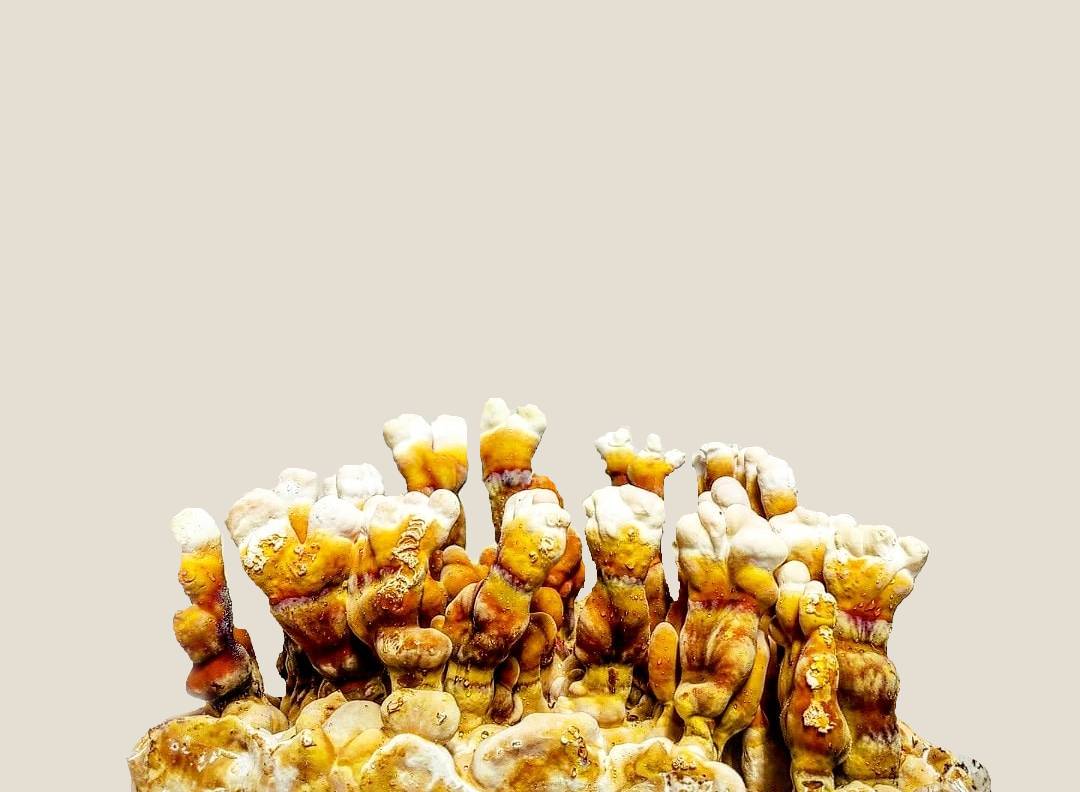
Beech Mushroom Strains

HT-1

Brown Beech belongs to a small genus known as Hypsizygus. It produces the highest yield on master’s mix, hydrated to 60-63% total moisture content.

Brown Beech is typically fully colonized at 3-4 weeks, however incubation ranges from 4-5 weeks as you should let them sit for a while after fully colonized. Brown Beech does not like disturbances once the mycelium is connecting, this may result in poor fruiting; so make sure once it is in incubation it stays there until pins form in bag before bringing to fruit room. This strain produces best when cold shocked, either overnight or up to a week in 34 F-40 F. This stresses the mycelium into production of fruit.

Brown Beech prefers a temperature of 60 F, relative humidity 85-92% with a dry fogging system to keep water droplets from setting on the mushroom pins or heads. Brown Beech is highly susceptible to rose comb so take care to not let water settle on the caps. A standard x-cut or slit in the bag, across the top just above the filter patch, is the recommended pinset initiation technique; alternatively, slit the sides down to the substrate to release more Co2.

Brown Beech has a a lightly sweet, savory and nutty flavor, and subtly crunchy texture. A typical yield for this strain is about 2 pounds.

HT-4780

White Beech HT-4786

Cauliflower Strains

SA-ET

SA-ET is a special order status strain. It is a wild clone from Texas and is purely experimental and can only be ordered as a culture at the moment.

SC-9641

SC-9641 is a special order status strain. It is a Mycelia clone from Europe and is purely experimental and can only be ordered as a culture at the moment.

Chicken of the Woods Strains

LS-FF

LS-FF is a special order status strain. It is a wild clone from Denmark and is purely experimental and can only be ordered as a culture at the moment.

Cordyceps Strains

CM-666

CM-777

Nameko Strains

PN-CNS

PN-CNS is a special order status strain. We have not done much production with this strain so a lot of variables are still unknown, here is what we do know: The Nameko has a slow growth rate, it is of the family Pholiota, same as the Chestnut, and therefor grows in a similar fashion.

This strain prefers cool temps and high humidity for pinning. We do not have any average yield data as we have not brought this strain into our regular rotation.

Nameko has a very viscous outer layer which makes it a great mushroom for thickening sauces and soups with that umami flavor.

If you would like to try this strain be sure to write *Special Order* at the bottom of your Spawn Form.

Purple Mukitake Strains

PS-MU

PS-MU is a special order status strain. It is purely experimental and is only available as a culture for the moment.

Turkey Tail Strains

TV-442

White Oyster Strains

PO-SNOW

PO-SNOW produces stark-white, beautiful clusters with average quality in a gourmet context. It is known for a tendency toward small cap size.

White Oysters, like most Pleurotus varieties, can thrive on a wide variety of substrate recipes. It is highest-yielding on master's mix, hydrated to 60-63% total moisture content. Calcium carbonate supplementation can help to slightly increase yield and fruit quality. It is best to have a tight contact between the block and the cultivation bag, which helps to prevent premature pinning inside the bag.

Incubation ranges from 8-14 days, depending on factors such as ambient incubation temp, spawn rate and substrate recipe.

Prefers cool fruiting temps between 50-60° F, though can be fruited in colder and warmer temps with mixed results. A standard x-cut or slit through the bag and into the substrate (no more than ½”) is the recommended initiation technique. A typical yield ranges between 2-2½ lbs over two flushes. 

PO-SS

PO-SS is a special order status strain. We do not have a lot of data on this strain as we have not brought it into our regular rotation. From the few tests we have done, we know that this strain can be unpredictable and displays variability in growth patterns. This strain prefers cool fruiting temps between 50-60° F, though can be fruited in colder and warmer temps with mixed results. 

PO-SS, if you can successfully fruit it, produces beautiful cream colored fruits with scalloped edges.

If you would like to try this strain be sure to write *Special Order* at the bottom of your Spawn Form.

PO-MOP

special order status

PO-ELM-A

more yellow caps