
How to Design a Mushroom Lab: Air Flow Clean Room and Layout
It has been over two years since we started this weird and wonderful mycelial broadcast! We thought it was time to pull up a couple of our golden oldies from those not-so-distant early days and offer them up here, free of charge.
What is covered, by timestamp
Topics picked out of the transcript automatically. Times jump to that point in the video.
| Time | Topics |
|---|---|
| 0:01 | clean, room, pressure, rooms |
| 10:04 | room, clean, rooms, plenum |
| 20:08 | room, rooms, pressure, flow |
| 30:12 | room, space, temp, body |
| 40:13 | clean, typically, room, facility |
| 50:16 | flow, table, sealed, clean |
| 1:00:18 | room, table, bags, spawn |
| 1:10:20 | clean, liquid, contamination, spawn |
| 1:20:21 | technique, keeping, easier, pressure |
Full transcript
Transcript generated automatically from the audio, so expect the odd wrong word. Timestamps jump to that point in the video.
0:01 all right MycoWizards of the world we have successfully made over 50 videos let's say in a marathon like no other and this is our second YouTube release from the archive what we have today for you and basically its original form maybe a little bit refined is our how to design a lab episode which is the second episode ever that we filmed Tyler and I sat in the back of the old Cap N Stem location and just went through all the ins and outs of airf flow and HEPA filter placement and corridors and you name it so if you're trying to design your lab today check out this video and if you like it head on over to MycoWizards.com and check out all the other content that we've got take a look right here I am R corupt inoculator spread all consuming sacri again D good evening everyone I'm Tyler Crawford I'm Eric lman welcome to the mro Wizards Deep dive episode two oh two we're on number two What's the title of this episode what are we going to talk about today when you say lab Tyler says clean room clean room so we're going to talk about clean rooms how to design a lab how to design a knock room what are the fundamental principles how do you go about laying out the facility what do you have to keep in mind um how many how many clean rooms have you ever built one how many clean rooms have you ever worked in two two wow Jesus but you got spawn you got our substr a substr is kind of a clean room yeah yeah well and spawns like a million rooms and then Alex is one Shady spot one room with this giant 5 foot tall HEPA filter mhm I apologize they do not sponsor this all right well that makes sense I drank before we went to work I drank during work Alex's a hep filter funny story there where uh the second he got it all in place and had that whole Lab design yeah his cat got into the lab and saw this giant HEPA filter and thought it was one of those uh like scratch uh scratchboard things that cats using cat sees the cat just like hanging on the HEPA filter just tearing it part oh oh that sucks man was that when you were there no that was that was uh oh that's brutal 2005 or something when he got whatever year 2010 whatever year he uh built that that farm I think Charlie needs some of the sacrament yeah all right I'm just yeah you've seen the light oh he needs disinfection for all of his corruption right right immorality hell Satan Okay so all right so first off what's the most important component to a uh to when I say clean room you say lab most important thing that it it it just has to be a super clean room you know the the actual definition of a clean room uh you know a super clean room it's just a room where the air is filtered to be as much as possible free of particulates in the air and that it's just disinfected and cleaned all the
5:02 time it's as simple as that and then it gets more specified depending on what kind of industry you're in so there's clean rooms in hospitals there's clean rooms in Research Laboratories there's clean rooms in uh you know uh computer part manufacturing and you know all this kind of stuff um it's just different levels of filtration measuring particles and microns yeah and there's different degrees of strictness depending on dog how you know critical your work really is you know so someone uh designing you know parts for an airplane um right if they up it's a much bigger deal than if we have a contaminated bag spawn yeah plane crashes so that's where these Concepts get incredibly strict a plane crashes here if a bag bag of spawn gets through yeah well by the sound of some of our customers freaking out you know it's uh it's existential it's existential at best okay so when we're talking about like cleaning rooms we're talking about not only like chemically disinfecting rooms and keeping them uh minimal as we'll talk about later but the most important version of this is positive pressure say it with us now positive pressure positive pressure or over pressure if you eat a lot of mayonnaise and you're from Belgium mhm um yeah honestly we're going to get into the weeds with all this and uh that's going to be the bulk of this episode cuz that really like sets the foundation for designing a room like this in the proper fashion or a facility like this in the proper fashion um so we talked about this in the first episode but just to kind of briefly recap when we talk about positive pressure we're just talking about inside a room the air pressure in that room is greater than the air pressure outside Baseline atmospheric pressure reason why that's important is that clean air from this room is always pushing its way out rather than dirty air coming in hopefully pushing its way out where you want it to push exactly and we'll get into how to design the room to accomplish that one moment while I take care of my stupid I didn't call you a stupid pit I love you oh get over here okay we're good we're good so um if we'll get into how um if you're just designing for one room to inoculate blocks inoculate spawn and it's as simple as that then uh you can get a lot less nuanced um when you're designing a multi-room facility you have to get pretty careful about how you set pressure levels and design air flow throughout a facility um but one thing to know is there are units of measure for relative air pressure the most common one used is called Pascal from the guy who well whoever Pascal was didn't he like cure rabies Ries is still here found a cure for preventative vaccination what's the yeah vaccine okay yeah I was gonna say you don't really prevent ravies that guy was awesome um I don't know it's the same Pascal it could be Pascal versus Pascal okay anyways um we digress the standard unit of measure for air pressure is Pascal um PSI is still used obviously in a lot of context especially when it comes to uh sterilization and pasteurization but in terms of low levels of air pressure typically Pascal is used um you can look up that um and use your notes don't be shy I got they're they're just out of sight rectangular sheets of snow are them out bring it bring it out bring it out let's get these people what they want all right so um you're going to want to be able to measure in some fashion or another um if you have positive pressure and perhaps how much if you're just designing one room it's as simple as going towards the spots where it's leaking out or the spot where you've designed the room to be blowing air out feeling for a strong Rush of air right um that's by definition what you're after right that's the fundamental thing when you're getting into multi- room facilities even as simple as a cool down and a knock room if you have those divided um you're going to want to make sure that these are pretty well calibrated um that for that purpose um one one instrument that is possible um to purchase online pretty
10:04 easily is called a monometer which um it's a pretty simple handheld electronic device where you can basically feed in two tubes one into one room one into another room and then it's just going to measure the relative air pressure differential from one room to the next um and how does this work it's like it's one of those cool it's like almost like a light bulb but it basically has a meter yeah there's like digital ones now that are just like a like a little handheld monitor that's like what we have in the lab old school ones like that for sure do you have at05 uh Pascal how do you what's Pascal PA p a s oh yeah pa pa pa yeah yeah PA yeah right so that that's basically measuring like the resistance between the two rooms exactly got yeah just the differential air pressure gotta gotta got um all so anyways I didn't know there you go um so circling back again with a clean room what you're trying to attain is basically you're trying to create like the moon on Earth it's just dead of all life as long as it has air for you to breathe that's kind of the ideal standard you want nothing living this also how you hire for clean rooms you go do you like Z Moon do you like dead planets do you want to go out of space do you listen to dead Moon dead Moon night Z great band all right so that's the fundamental goal that's attained through designing the right uh design having the right design with HEPA filtration with the right materials which we'll get into and orienting orienting these in the proper fashion um so just as we talked about with Fring rooms when you're trying to positively pressurize a room you need a plenum to pull from that can be as simple just as we talked about as the larger building that this particular lab or room is in or it can be a dedicated room that's acting as a plenum um whatever it is that room needs to be conditioned to the temperatures that you want your clean room to be at so if we're talking about just a knock room you want to make sure it's comfortable for working in there cuz you're hustling and bustling and shaking bags um if it's an incubation space um then of course you want to make sure that that plenum is feeding in air at the proper ambient temp that you want your mycelium to be growing at I'm gonna give a brief drawing because drawings are fun laminar FL laminar FL is a relative term here but you're basically taking a temp controlled dirti air environment as your plenum and you're pulling it through a fan into the back of a HEPA filter and out into a lab right right and then from there of course that positive pressured air has to go somewhere and if you're lazy about it it can just leak out of Every Which Mish happen uh you know piece of coroplast in your room or piece of wood in your room um if you're doing it right you want to direct that air um in a strict fashion um hopefully for the purpose of temperature control which is most important in labs and in facilities in general to recirculate back to the original um origin of the temperature control yes exactly um we'll get into this in detail but temp control in positive pressure environments is a little bit more difficult than in a lot of other context in a mushroom farm uh cuz by definition it's always pushing out air so you're putting a lot more stress on your HVAC you know so you do want to have like a whole principle of conservation of course the same iic applies if this was an incubation space rather than an inoculation space um you'd want to make sure that you have a independent Evac for CO2 um yeah uh as far as the placement of this stuff so um the typical standard in clean rooms is that HEPA filters your inbound sterile air is going to be placed in the farthest possible uh distance diagonally from where your air is exiting from so in a typical clean
15:06 room You' have if you have your HEPA filter up here or ideally in this corner right here your exit would be your exit would be somewhere over here the reason for that is just like with a laminar flow workstation um even though it's not important that you have Pure laminar Flow throughout an entire room you do want to ensure that the air is moving in a steady current and not causing turbulence inside the room the more turbulence there is any organic matter and thereby contaminants that are lurking in the room will have a chance to kick up and mess up your grow mess up your workstation Etc one of the good ways to actually work through this concept is to uh I'm gonna kick your ass andna she just wants the do under the table I'm G to take you and put you somewhere where there's lots of cookies and puppies then you'll be very happy I don't want to but before I take Edna somewhere you calm your yodeling singing the sounds of your people this is where a hallway can come in great sort of like benefit if you actually have positive pressurized air coming through a filter and come into a hallway and black black back out outbound air okay let's do this a little bit differently this sort of speaks for like how we design our lab a bit but let's just call this kind of what it is so General description right fan pulls from the plum goes through the room Finds Its current exits got a nice long hallway here skinny hallway is also how you deal with pressure drops but then it go back out to the plum only to be brought back in idea being here that you're creating just a circular air current that's very straight without any uh any of the preconditions to cause a bunch of turbulence inside any of these spaces as far as how the rooms designed because you have to remember that anytime you're moving through you're causing turbulence the whole way so if you're starting from a baseline where the room itself in its airf flow plan is very very linear and you're setting yourself up for success and going to have a very clean space yeah a huge example of like things to not do in a room is say you were like oh man this AC went down let's just throw a AC that recirculates inside of this room this is something we have to kind of argue with people all the time about is the fact that you're recirculating air when you recirculate air inside of a room you have a collection of coils on the B of an AC on the B of an AC see I got some weird beer accent going there jeez I'm C so somebody's coming in and out of this room and say they're scum that forgot to like change their booties or they ripped a bunch of weed joints on lunch their beards just hanging out beard just like it's terrible it's like Aaron gon gonal beard I can say your name uh I just like point an Aaron out so that maybe he watches this one day and goes oh I mentioned my name you dick anyways the great can solve this is missed so you're go in and out of this room you're dirty air is being recirculated through this which means on the inside of this unit you're basically collecting any fragments like what Tyler's talking about and then you're dispersing those fragments that are collected from the vector human gloveless beardless open air and over time that's going to get dirtier and dirtier right so the solution take this stupid thing fix your AC and keep your Airway moving just like that yeah any temp control should be done outside of the HEPA filtered space that's what it comes down to you know there's all sorts of like ways to get around this stuff for a period of time but at the end of the day when you're talking about a clean room or a uh how you calls it a lab a lab oh jeez you want to prevent contamination and I think that contamination will flourish eventually we seen circulating fans and cool down rooms I've seen all
20:08 these other like weird things but eventually you got there's always a grace period when someone sets up their space for for incubating spawn and blocks but what happens is microbial buildup right if the room's not designed right that that rate at which microbes are building up and calling your room a home will be a lot steeper than if you design the room the right way calling your room a home all right I'm into this all right so um we went over having a plenum we went in uh went over how when you're setting up the room to get a linear air flow in that room and minimize turbulence turbulence leading to contamination you want your inbound air through those HEPA filters to be as far away from wherever that air is leaving the room as possible typically again that's diagonally where you have your HEPA filters either very up high on your wall or on the ceiling itself that's also typical and then you have your exit for the air down low in the opposite corner of the whole Space the minimal minimized version of this is like the he filter cabinet right so there's multiple types of cabinets but essentially it's a work surface that goes back a certain degree and your hipa is either hiding in here or it's hiding up here yeah and if it's hiding up here it means this is graded and the air goes through the table it's this way basically bounces off whoever's working hopefully doesn't deflect back in yep yep exactly and I think at a future date we'll get into like aseptic technique and how to work properly in the context of l in our flow it's worth pointing out there that if you have vertical HEPA filtration you the actual movements you need to do when you're making plates or what have you those movements are very different than in what is more typical a horizontal laminar flow that's what most people are used to yeah um all right um so one thing to just mention briefly again this is the kind of thing that matters a lot more if you're designing a multi-room facility you're just designing a knock room you can honestly get by pretty fine if you just know that oh yeah I feel a ton of air coming out of that room it's definitely positively pressured right um but if you want to actually calculate the air exchange rate in that room um pretty simple standard Concept in HVAC hands and clean rooms um you just want to divide the uh cfms coming out of your fans from those HEPA units by the uh volume of that room so measuring the length width and height height um and from there you know you can deduce how many air exchanges you're getting per hour or per minute what have you um so if we have a four but for but for you're saying a cubic room M so that means this volume equals what at 4 * 4 64 164 so 4 * 4 16 16 * 4 64 oh my God he was right so say you had 800 cfms in there divided by 64 equals God I don't know all right all wait this is how you're determining what though your air exchange rate out of the room so if you actually divide this you have 12.5 air exchanges per minute per minute in this case holy so that's how many your exchanges you have this also applies to like uh I mean it's a super easy thing but a lot of people don't really get that it's a it's easy to apply to um fruit room design as well so if you have like a 12 by 24 by 10 foot room and you divide it by the number of inputs you can see how fast an a room will turn over right because essentially a lab or a clean room is the same as a fruit room except that you're trying to like prevent backf flow of CO2 and spores in a fruit room and you're trying to proliferate just filtration in linear air flow inside of a laboratory exactly so that calculation is really nice yes it's like a lot of this stuff this stuff can this can apply to a lot of different contexts in designing your
25:09 farm um all right so now let's get into um multi-room facility and how you want to design airflow and positive pressure differentials true that so um the fundamental thing you want to keep in mind huh what's going on there technical error you know what's really cool these days is you just get an app on your phone and you go hey man we really want some light man and then you just turn it back on all right all right so um so we'll get into like a multi- room airflow plan okay um this is important uh to to ensure the continuation of good process and all those rooms meeting the standards that you want you need a good airf flow plan and you need to you need to actually keep track of it um so the fundamental principle to keep in mind here is you want the rooms that are of the utmost importance to be at the highest pressure air pressure levels and you want them to subsequently drop down room by room in rooms that are progressively less important typically the way that that manifests is the rims that are the most important are being directly fed by hea filters those rooms are actively overpressured and then from there that air goes out of that room into rooms that are passively overpressured from all of those rooms and one thing you want to keep in mind is you want a pretty good gradient of higher air pressure in that more important room versus that next room you want that to be pretty steep the reason is is the second you open up a door to get in that room all that pressure just starts to drop quickly unless you have that room at some insane level of over pressure where you have to be just pushing that door closed which is totally unnecessary and a massive waste of energy um the second you open up that door or that air pressure is dropping real fast that's true so you want to give yourself a buffer basically uh and the typical rule of thumb is you want 20 pascals be from room to room as a minimum or more more is just going to give you a bigger buffer um and again like this is something you could measure if you had these these instruments to measure air pressure second you open up a door you'll be astonished at how quickly that air pressure just drops back down to Baseline um so yeah most important rooms highest air pressure and then they move passively throughout the rest of the facility in and out and here you're getting a sneak peek of what may or may not be main Captain stem spawn laboratory it's totally not it's totally different actually I mean all these things are going to look like pretty similar to some degree so you see a series of rectangles these rectangles are rooms these are doors um and yeah so to to put it in context with our lab um you know the rooms that we consider the most important in order of importance are um what we call the flood room that's where our flood is that's where our cryogenic freezer is that's where we do all of the most delicate work to preserve and continue the genetics all of you Farms rely upon that room's at a very high level of pressure this mildly condescending and next up would be um the cool down room we have a room where its only purpose is just a big empty room that we keep insanely clean and pretty positively pressured that's just where when we take out our uh grain bags after they've been autoclaved they cool down in there overnight independent room from the inocular room in our context that's important because we have runs going in the autoclave all the time all day long at the same time that we have people inside the inoculation roomle driver knocking up bags under supervision Sweating Bullets my one way mirror you got your One Mir and uh so of course you don't want those people to be hot as hell um Sweating Bullets when those bags are coming out of the autoclave at whatever degree 250 150 whatever um if if you're in a context where you're just doing one run a day um
30:12 you could pretty easily get away with just cooling down your your bags of Spawn your blocks of substrate in the same room that you knock in so that depends on context I mean it's it's from a simple standpoint and this isn't very like uh this isn't exactly how we're set up really but here you have like three major rooms that get positive pressurized air from HEPA filters and HEPA filter is the last thing in the room everything else is preconditioned air flow goes linear from each of these rooms coming from the plum to the hallway which doesn't have a HEPA filter it's just lower in pressure because all these things feed into it and then they go through the path of leas resistance so what's interesting about a lot of Laboratories that you'll see including ours is you'll see a door sort of way you know let's say this is a wall here's the little doorway right there it opens up that way have these little things called dog doors and essentially you can put pieces of core plast or different plastic to allow x amount of air to escape to sort of play with the pressure inside of each room so in here in here in here here and here and here and here and here are little dog doors those things basically allow you to control and regulate the pressure as well as controlling the reats for the fans so you have two versions of control you have ex you have your cfms and you have your outbound and yeah um you know this can get as fancy as people have crazy computer systems where this stuff's all automated yeah what we do um is we just have these holes cut in the wall and like Eric said we just have pieces of C blast um that we can just move them up move them down and thereby encourage more air out of that room or less give me like a really quick reason why you'd want to increase or decrease the air flow in a room is nothing to do with sterility per se right right so temp control that's one thing so um if you're having a hard time maintaining uh warm enough temps for example in a room if you can rest dri the air exchange rate out of that room you can start to slowly build up higher ambient temps um for example if you're in an incubation setting where you're incubating in a clean room um of course all of that mycelium is producing heat as it grows and you can harness that by just restricting the air flow out of that room by making that over pressure exit smaller uh conversely if it's too hot lift it up Crank that air out of the out of the space I should say it's not hotter or colder necessarily but let's say this is um H how do how do we put this I this is kind of hard to explain but like let's say you're you're heating a space and your predominant issue is that it's cold outside it's Mane in the winter you're heating the space you're pulling it through the HEPA filters but this is outside so if you decrease your uh fan speed this will help but simultaneously if you can't you know do that with risking your uh pascals or your pressure dropping you just restrict the amount of air that's actually leaving that space so the heat as it goes into this building kind of builds up a little bit higher of a pressure um before it actually exits whereas if you were like oh man it's getting too hot in this space it would go through number two which would be a bigger space yeah um so you know say it's super hot outside and you want to cool in here it's the same metrics cool versus independently controlling how big the space is that you're actually exiting yeah yeah you're just giving more time for that conditioned air to yeah uh to stay in that room yeah because if it goes too fast this heat is just going to blast the in here and just that up y why is that important in spawn well um let's see uh so the obvious thing would be incubation so all of our spawn is incubated inside the laboratory um it's not in outside dirty air um so in that context of course we need good temp control to have Healthy Growth um and also have the incubation growth rates that we're looking for so we keep things on a schedule um in the context of just people working at there you want them to be comfortable of course so you want to ensure that you can keep that at some kind of semblance of room temp um especially in like our context people are wearing TYC suits and those just
35:12 trap in all the heat coming out of your body so your temp inside a TYC suit is I don't know what something like 10 degrees higher than whatever the ambient temp is in in that room this guy has a massive head but I fig maybe we didn't really intend in talking about it but be kind of important to bring up something here and that's uh you know what are people wearing inside of these rooms um for something of utter sterility right right so you know an important maximum to keep in mind and this is especially the case when you're talking about sterilized uh substrat or spawn is humans are the biggest contaminant in the mushroom industry um um this is still important when you're pasteurizing but once you're sterilizing you know you're you're in that highrisk high reward situation where sterilization renders something completely dead of all organisms that could have been in there even bacterial endospores but it's far more easily contaminated um so with that in mind uh you know if the need is that great that you really want to ensure that you're absolutely minimizing the chance of contamination of anything you do PPE is where it's at um so in our lab it's full body so everyone who works inside our lab is wearing a full body tyx suit you got a hood on on that tyvec suit tyvec is nonwoven it's basically has the same permeability as a hipa filter it's down to3 microns I think um and if you make it too hot for these and that's and that's why it's that's why it gets hot because because nothing gets out of that you know yeah um yeah and they're wearing wearing face masks you know if you wanted to be super thorough just like with Co you wear a n95 but it's a bit Overkill um this is really funny everybody probably knows the pp I know right this stuff would have been so the is PP not one person doesn't know the that wearing gloves wearing booties uh the booty part is important um like I recommend having dedicated lab shoes Crocs man wear Crocs they're easy because you can clean them they're good for your back despite what your mom says and they can be personalized yeah it's true um Eric has some camo Crocs for example oh yeah you know gotta be worth trash right and uh yeah yeah your feet you know like in a lot of labs people will have a foot bath even uh it's just like your feet are going to track in more than yeah anything else on your body you know there's a gra that I didn't know until like I don't even know this how you spell it how you spell SL SL yeah you got it right is that right oh man I went to school yeah so all right so in that little drawing that Eric made of a whole facility let's let's do that again yeah yeah oh the whole thing godamn okay the cut off so we'll kind of have like the hallway anding here yeah doorway and then we have like we's say this right here middle boxes of sunshine yeah man all right so a slle people call it a pass through an entry room an exit room antichamber anti chamber um those are essentially the rooms that either you or items are moving into the clean room facility or out they're sort of acting as an airlock in a sense they're providing a the final buffer between the Baseline unpressurized super dirty contaminant rid in air on the outside and your wonderful clean Godly air on the inside um really so in a typical context these are also one way um ideally um people are entering the room the whole facility through these entry rooms these sloes um oh turn Yeah in our context that that first room is the room at which someone strips down any outer layers you know their hat their shoes uh you know sweaters jackets and move into the next room that's where we have all of our PP and they'll put on their uh TYC suit Crocs booties gloves masks All That Jazz um and then they move into the facility so you're again minimizing anything that could be a contaminant from getting into that space that you really want super clean you know your your clothes um are a contaminant so if
40:13 you take them off in this room that's sort of half clean half dirty you're already cutting down a lot of the risk um in a similar fashion uh there are typically sloes or exit Cham ambers for everything that's leaving the facility um so once you go back that exit let's say this is the opposite this the exit Lo once you go into here you don't go back into there right so oneway movement in general um yeah so that's that's a good point is ideally you structure your work when you're inside a clean room facility so you're moving from the tasks of most importance that you really need to keep clean progressively down towards less clean things so for example if you're trying to just do a knock inside a clean room and you also need to mix if you can make it work it's preferable to knock first mix second cuz you're going to be covered in sawdust and what have you um so it just makes sense um and in a similar fashion uh your actual product your your grain spawn bag substrate blocks move from cleanest rooms all the way down until they go out of the facility and as I was talking about before um an exit slle is just where you're anything that needs to leave the facility whether it's whether it's my celium whether it's just equipment that you need to get out of there whether it's racks all that stuff gets pushed out into that room um that again acts as sort of a a buffer between dirty air outside and over pressurized room on the inside I think it's worth taking a moment to explain the difference between um clean rooms and uh it their correspondence between sterilization and pasteurization because there's also this version of a clean room or a uh what you say how you call it mayonnaise oh oh there you go where your and this is like a very brief example but you have this Ultra complicated procedure for going into something if you have sterilized a product right versus if you're working in a lab you know these are identical Labs no different but you've uh Ultra as a lot of you people are familiar with um pasteurized something right right there's a moment where uh the um material that can go from wherever the chamber is to be ultra pasturize into the lab can pass through a dirty zone right that's sort of an interesting concept and why a lot of people get into Ultra pasturization which we'll go into in a different time but basically that's anything that's under one PSI so boiling point at sea level 212 fenit in C who gives a if you sterilize anything to any degree and what's the definition of sterilization sterilization uh requires getting to a threshold of 250 fenhe 15 psi as long as those are correlated um and in the process of that you kill everything except for prons um that are in your your bags how long does that take typically uh so there's a concept called bioburden um so different um different types of materials are going to have a different load of microbes and they'll need to be sterilized for different lengths of time um a rule of thumb in the mushroom industry because what we're working with has a super high bioburden it's loaded with mold and bacteria um all of the endos spes is 35 minutes there's a lot of misconceptions about this I think we'll get into this in great detail when we talk about talk about this stuff in its own episode but the whole a lot of people think that like I don't know the more sterilization the better um or the stupidity of the shomer carrying on and saying very specific recommendations of it needs to be 90 minutes uh or 90 minutes it's it's not true um like truth be told 35 minutes is is even higher than what's typically described when people talk about biobird and usually it's a threshold between I want to say 3 and 15 minutes something we've been you know thinking about but 35 minutes is what a lot of that's not the chamber temperature that's the internal
45:14 temperature exactly that's the medum yeah that's the primary variable there is uh the chamber can be whatever temp it is but there's always going to be a gradient between that chamber and what he got inside yeah um and quick digression I don't want to take gazillion hours on that but I fig but I think what you're were getting out there though is yeah with a pasteurized growing medium it has a little bit more uh resilience to contamination initially yeah um when you sterilize something again everything's dead in there it's super clean um but it can get contaminated like that it's like Mars for Elon Musk so that's why typically you'll see uh in in uh a situation where someone's actually autoclaving and sterilizing something um the second the double door autoclave typically that second door is going to be in a clean room setting so that the second that that stuff's done cooking it's in that clean space without a bunch of particles in the air and potential contaminants we call that a pass through like uh you know the bom lots and like it's a drivethru through you ever notice that you go through drive-thru when the is it ever spelled through it's always T HR you broke my brain yeah it's a good call up English anyways y moving on all right um did we explain positive pressure Seven Ways to Sunday I think we kind of did you don't get it you're gonna get it eventually email Eric if if you don't understand it's spawn capin stem.com Eric by the way damn it the backfire like son um got to turn that vacation reminder on I'm on vacation until 2023 um all right so all right so yeah I think we talked about positive pressure enough um yeah uh now we can talk about construction so um what is the materials we want to once again it's kind of the same as a Fring room um you want it to be super inorganic easy to clean type of materials that uh you know microbes aren't going to want to reside on so coroplast 3M steel studs all that stuff for the wind once again um worth mentioning too that this stuff's pretty cost effective and it's really easy to put up um we learned that l leson we used alternate materials early on wasted so much time money and effort yeah you know building out of space for like why don't we just go with what's straightforward one of the things that I think people often forget is that your farm no matter how you're going to build it out is going to move this room that's here is now going to be over here in six months I don't care what anybody says you just outgrow like crazy y this is a massively growing industry that if you don't have your uh you know burrito money dialed into this channel then clearly you're going to up more so you're going to have to buy more steel studs flashing tape or core blast yeah exactly so if you can set up your space where it's as modular as possible um you're going to thank yourself later cuz you're going to want to expand a room you're going to realize that one room is totally redundant or it was set up the wrong way yeah um and again you know coroplast uh you can it's totally waterproof you can clean the heck out of it really easily so that would be our recation it will melt that's wor worth mentioning got to be ready to jump out like the Kool-Aid man yeah but you know like I I shouldn't say this or is it just your it's your time I mean it could be no no I was going to say like uh canand you know is the The Nanny state to which half of your people Roam and areale from yeah or both just half just one yeah it's only half for um they uh they basically uh don't they don't say you can't use cor blast as a building material it's not structural but like if that caught on fire yeah like Boogeyman it'll melt all over yeah so that is worth mentioning if it catches on fire just get the heck out of that room cuz it's it's very easily flammable you'll be like I'm melting yeah y um what other weird ass Cal the floor is yeah the floor that's that's really key um no apostrophe drains no yeah yeah I didn't write that down yeah so yeah just like in a you know Fring environment um any
50:16 floor drains are just going to become a vector where molds and bacteria and particularly bacteria are just going to thrive and build up over time so even though you're mopping these clean rooms every day and all that jazz any drainage needs to be out of the clean room altogether yeah no drains no no faucets as well all that stuff has to be out there's also so much air flow going through a clean room or a lab that like uh it's just going to dry it dries real fast yeah yeah and then yeah here epoxy so you want to treat those floors because number one you want them to be clean you want to trap any any uh potential contaminating material or toxic material that are already in your concrete to begin with mold does grow in concrete yeah yeah and um yeah you just want that surface to again be super inorganic super easy to clean and super easy to keep clean over time yep um and easy to move around on as well so epoxy's nice for that yeah for sure um yeah so it's pretty simple as far as construction um and that there's also like a million YouTube channels that everybody should look at about how to create like structure with steel studs oh sure cuz you don't even you just need like a pair of tin snips and you can like create these rigid tabs and and like yeah this stuff is stronger than plywood to some degree and it's a hell of a lot easier to deal with later because you have self-tapping screws y um so you can do a lot of the same fashioned sort of like uh building where you know these still studs are essentially uh you know you can cut these little tabs yeah plow them in from each side however you want I mean you framed up yeah uh mounts for pretty heavy HEPA units with these yeah those 50 pounds or something so if you single up and create some studs underneath you know just yeah YouTube University that cuz steel studs are really they seem flimsy but like if you sure them up and and you create these little tab cutouts and stuff they're so strong it's unreal right um which kind of blows my mind yeah yeah yeah yeah um all right I think now uh let's chat about like the actual like workstation sure what you're doing in that room so again like most the most common application for having a clean room in the first place is going to be for inoculations um so you need a workstation um are we going to call a workstation essentially like a the table of the flood no matter if it's a cabinet or not there's a difference yeah yeah all right first thing to go over though is uh and this is a common mistake um there's a difference between recirculating HEPA filtration for your knock table versus actual positive pressure um so again like if you're going to POS pressure that room or that that Hep uh unit has to be fed from the outside um a lot of people are thinking they're positively pressurizing a room just because they have a bunch of Hep ofans blowing but all they're doing is recirculating the air in that room they're not actually building up pressure um so you're going to want both um want a wallmounted unit that's posibly pressurizing and then you have your workstation and you want that HEPA filtered um the more the mar whatever's right sized for however many people are involved with your knock process if it's just one then you can get away with less hea uh linear feet of hea if you got a whole crew in there then you got to build out a whole wall um and the same logic applies you want to you want to uh have variable speed control ideally on those Hep ofans so you can adjust how fast you know the C M rate coming out of those fans yeah I was going to say this is just a quick breakdown of kind of filters or sandwich between uh like a almost a rubber gasketing then you have a table then you have an air gap in the fan with a dispersion place in front of the fan and the dispersion plate is nothing more than a piece of metal with some holes drilled in it yep and it just breaks up the air so that it evenly distributes rapidly across that air gap which is in the sealed box through the fil to create laminar fcking flow yeah and what would happen if there wasn't that plate there is all that air would just be directed through the center of that HEPA unit and and you could you could tell you could feel this let alone measure it there would be far slower uh
55:17 fan speeds coming out of the sides of these HEPA units rather than through the center and what you ideally want is completely equal laminar flow coming out of every little nook and cranny of that hea you want it to be all the exact same if you have it coming out indiscriminant sort of directions you have you know once again you're creating these little currents which might not seem like a big deal on a table but when you're trying to put you know as many objects as close to the filter as possible for inoculation you want to make certain that you know even the air over here which you can f fix with like a 3D sneeze guard um isn't being it's not pulling in air from somewhere else to recirculate yeah exactly you just by doing your inoculation are already creating all the turbulence needed and you don't need any coming from the heas themselves so that's too complicated for the description of how to workf flow so let's just say this is the table flood filter table right okay so then there's a specified range of cfms that would be called laminar flow technically that's 0.45 m/ second once you get too low then it's really easy for turbulence too high and you get above that you can measure that with a fancy device called an anema meter um the reason I f p a mayonnaise meter the reason I bring that up is um over time your heas are slowly going to break down you can extend their longevity by how well you treat them um but over time their performance is going to start to to wne you know if if uh if you take perfect care of it you know you can have a HEPA unit running seamlessly for about a decade um but if you don't you can quickly within a year have that that HEPA unit start to not push out equal amounts of laminar flow throughout and you can have some spots that are creating turbulence and again with turbulence you have the opportunity for any air outside of this workstation to make its way in and into your blocks yep um there are certain units I will say like our cabinet that has it's got a fan underneath this actual thing so airf flow comes this way and sucks back down to the bottom of the table where the fan is and then back up the flow Hood so it creates this little recirculation pattern but it also has you know guard it's got guards and it's even got a blowback so it's got separate fans that blow out uh this way the idea being that as you move your hand in or what have you it's keep it's it's pushing everything out as you go in yeah for sure um the basic one that most people are going to start with and like let's just assume you're knocking up some blocks kid on this table Yeah so it's really a simple idea you just want to ensure that you have as much or greater greater linear fee of he filtration for where you're working when those bags aren't sealed as soon as they're sealed at that point it's not that important that they're in front of laminar flow because they're protected because they're sealed um so you need to make sure that that's right sized um a lot of people try to get away with having some sort of brief gap between HEPA filtration between their um spot where they're actually spawning and the spot where they're sealing again the kind of thing where you can get away with it to some extent but it's going to bite you in the ass eventually um yeah and another facet that's important to keep in mind is you want to make sure that all of those blocks that you're putting on the table are actually getting laminar flow the thing about it is of course the fan is going to be pushing out air through the HEPA filter initially at perfect laminar flow if it's set up right but the farther away it goes from that fan that that speed's going to drop and eventually it'll become turbulent so ideally you want everything you're working with from your blocks your bag of Spawn your isopropyl alcohol bottle your hands to be as close to the flood or the he filter as possible so that everything's in lamon our flow the whole time so one of the things to resist doing that a lot of people are like oh man this is how we knock up a million bags at once bag bag bag bag bag bag bag bag bag don't do that yep there's uh there's ways around this like um you know workflow uh processes multiple people in a a room longer Flo hoods you want to keep things
1:00:18 that you're opening essentially sandwich right up to the flood and imagine these as 10 lb blocks of substrate then you you have your bag of you know spawn media and maybe your little alcohol bottle yep exactly one little note here too with how you set this all up and how you think about your process is um the edges are of course the most vulnerable spot so if you have your spawn bag on the edge um you want to give some distance people will tell you different amounts you know 4 in 6 in 12 in the moral of the story is you want a little bit of a barrier a gap between where that spawn bag ends and where that HEPA filtration ends um because of course you don't want to contaminate that spawn bag or all your work was a complete waste of time um one thing you can do if you really don't trust yourself um is you can just try to size it so that that actual work table surface area is sized just to go one row deep this is something we did right off the bat and it's you know honestly nothing to do with trust it's just it's human nature to find the path of least resistance and so you're doing this monotonous task over and over and over again um once you get into the groove and you're not thinking about it you're naturally going to try to find ways to speed it along and hence the tendency to start stacking blocks um so if you just size the table so it's just not big enough to even do that then you never have to worry about it yeah um I see a lot of these like I mean they're like all like psychedelic uh Growers for the most part not all of them but they like they'll like stack a gazillion like vertically and horizontally like bags in a cabinet mhm which is really fascinating for me because I'm like I don't think these boxs out here are getting airf flow yeah yeah I know a lot of people will cool down and try to cool down their stuff in like in front of laminar flow they actually like it the whole time drying it out and the common like misconception here is that like you know let's take our cool down room for instance we have this cooldown room with some filters and this is the pass through autoclave so dirty comes in this way gets sterilized mated mated not really keep vacuum pressed vacuum pressed and then it gets pulled out of here on racks the bags are just basically folded over on these racks and positive pressure is coming in here what's different about this and this application is that gruty ass hands and gloves are coming in here and opening up a little bit of beard follicle a little bit of I don't know human excrement from taking a when smoking your butt kid it's going to end up in there somehow and that like movement of air in the human component really does create a vector and in this situation it doesn't this is just sterile air being passed through linearly in a room yep there's this you're actively spraying things with alcohol you're cleaning things you know yeah there's just a higher chance of like you know issue yeah it's amazing like you know we've played around with our anema meter and anema meter tested fan speeds you know to make sure our our heas are still up to Snuff we do this routinely um but it's amazing to see how much cfms you produce just by moving yeah oh yeah and these aneman eers amiman eers are just fan AAL and you can measure it in you know feet per minute or wide variet flood wide variety of fans I don't think they're that expensive either no no they're used all all kinds of places I forget how much ours was but it was cheap yeah um uh let see what else is there to say with an inoculation room um again you want HEPA filtration all the way until the bags are sealed uh in terms of what we just talked about about with uh the fact that your movements are creating the most turbulence in this environment um one small detail that I think is often overlooked is the shaking should take place as far away as possible within reason from this laminar flow so specifically with spawn and sterile media yeah yeah exactly if you can have just a little bit of clearance so you know that when you're shaking those bags you're not just forcing in dirty air yeah um into that table then that's going to help you as well yeah um yeah and there's a lot of people who like you know go the other rout and if you're like single-handedly doing this like I know Amy from Fox Farm does this like she'll basically like fold the bag pinch it up shake a little pre yeah and then basically feed it through her flood so you know since you're not she's kind
1:05:19 of like covering over the bag and so on and so forth you can get away with it but like we keep saying here scale is everything and if you're getting away with it now eventually you won't get away with it anymore and you'll be really confused why yep scale and time yeah yeah yeah I mean another example of like this particular situation is uh we we had a farm that we reached out to that we were trying to figure out or they reached out to us trying to figure out why they had contamination in their lab and they were actually incubating racks in their lab and you know maybe they'd have one or two bags contaminate and they would take it out so on and so forth well every time you have a bag contaminate and you have people moving back and forth and back and forth in this room you're essentially just pulling contaminants and just whipping them against your table so we'll get into this a little later uh at the end of this but you know there's a a degree of Simplicity that really has to be taken into consideration when you're uh operating in a room a room should have one function in the lab it shouldn't be yeah no no I I think it's kind of the right time to talk about that is like talk about minimalism um Simplicity th minimalism minimalism so yeah um you know like if you were to walk into Captain stem's lab as one example um you know despite the fact that we crank out you know a lot of spawn um on a weekly basis you'd probably be pretty amazed to see how nothing is going on rooms are so empty except for what's actually necessary in those rooms and that's good cuz that's less stuff to have to clean that's less variables to worry about in terms of keeping that sterile environment yeah um you know so in a in a room where you're cooling down all you need is HEPA filters and a clean floor in a room where you're and no floor drains and no floor drains for sure uh in a room where you're knocking bags you just need your HEPA filtered workstation and your stealer um that's it in a room where thank you oh he's an alcoholic in a uh room where you're incubating you just need racks with spawn on them you know um like you know there's minor exceptions of little tools and instruments that you use you know um but even that stuff you know in our context all of that storage of various utensils for the lab and uh you you know these different tools we have for monitoring some of these environmental variables yeah um all that stuff we keep in the hallway um I think one thing that I see a lot of times and people you know if you're if you if you're in your garage and you have two rooms like obviously you have to like condense a little bit and I'm sure everybody's seen a picture of uh Mushroom Mountain Trad cotter's lab which is like stacks of everywhere right they don't Mass produce spawn right and they don't Mass you spawn in that area whatsoever yeah so our aim in this podcast aim in general is to just like reiterate redundancy of Simplicity to very acutely produce something that is going to be consistent yeah and that's just that's the name of the game for making money and not losing you know and even though a lot of this these examples were talking about this you know big facility that that we're operating out of and stuff you know that same logic will apply like if you're just knocking up you know 20 bags a week at home the same stuff applies you want that space where you're knocking yeah uh to be as radically simple as possible and you're going to thank yourself because it's going to be a lot easier to have consistent success if you're gonna thank you Tyler I mean Eric all right um I mean to scream in your face like a mtic um so yeah minimalism talked about linear air flow with positive pressure yeah um talked about materials uh one last thing I think that's a good topic to get into is is cleaning and disinfectants yeah so um you know how often do you guys actually clean the lab oh god um and I mean not like mop the thing but I mean like uh wipe the walls yeah so um in our context again because with scale comes greater risk um after every like session some type of work in there if someone's making Slants or knocking bags of grain um or selecting orders after any of those sessions uh we'll do a a thorough but pretty straightforward clean of you know vacuuming and moing um once a week every single room gets completely disinfected from head to toe
1:10:20 ceiling everything except for the equipment involved um what do you sidebar for that don't saturate your heos with liquid um we probably should have mentioned this earlier but it's important you know the actual HEPA filter not talking about the fans behind it or pre-filters or anything HEPA filter is just a really complicated Matrix of paper that's all it is and be kind to your filters if you're spraying Off Your Spawn bag go like this if this is your bag and in front is the filter don't point it right at it it's one of these little things that'll build up this is like a great example though like the covid tests everybody has taken these right you put this dirty thing up your nose and you force it through liquid when liquid travels up a clean filter patch it's pulling contaminants exactly if your filter is soaking away from alcohol because you're just lazily spraying godamn isopropyl with a goddamn spray bottle you're just soaking your filter and pulling contaminants through the and it doesn't even matter that it'll dry off really quickly because it's blown out air you're still giving an opportunity for some type of contaminant to to plant itself in there and then your HEPA filter turns from the thing that's preventing from cont contamination from happening to the thing that's causing it spraying agent orange on the fields of Vietnam in that regard too uh uh if you you know inevitably you're going to spill grain in there you're going to spill sawdust I suppose stuff like that um vacuum them out that's another thing too if there's a there's a little Millet seed that's trapped in your HEPA filter obviously that thing's packed full of nutrients that mold loves and it will also turn into a source for contamination um but but where were we uh well I was just say like we have what's funny is I didn't really realize uh the predominant difference between like you know in States we just like bleach everything or use isopropyl alcohol 70% but in uh maybe you can tell us a bit about what they use in Belgium okay yeah yeah so you know you can use a wide variety of disinfectants uh you're just going for something that has high efficacy and preferably uh not at a concentration that it's going to hurt you um I don't know if that's how you spell that uh it's quinary ammonium salts quinary ammonium salts yeah so ammonia yeah ammonia disinfectants are an option um bleach is a great option isopropyl alcohol um the cool part I thought it was about the the you know having quat quatz is the yeah I think it literally just says quatz is it it's it lasts a lot longer so it doesn't you know you can have a rag in a bucket in all day and you basically just like clean surfaces with it that keeps the spraying to a minimum you're not isoing everything y there's a uh there's an evaporation rate that's a lot slower and uh I don't know the specifics on the chemistry but in terms of it breaking down it stays active for a really long time yeah yeah for sure so yeah out there in Europe they'll just have these buckets and uh they're just always at the ready and they're always still chemically active to do disinfecting um whereas you know something like isopropyl has a pretty short halflife I don't know what it is exactly but um it only works for kind of surface disinfection for brief periods of time and it's not the most thorough thing to totally kill right growing yeah a lot of people just think that 90% isopropyl alcohol just evaporates really fast which isn't necessarily true right you know and I think that like 70% has become this meme it's the meme of the hour said Terrence McKenna but uh it truthfully is like the major sacrament of the mushroom farms in America I don't think many mushroom farms in like the you know anywhere else use it not as much um it's not as available no I remember out in Belgium it was pretty funny how there were like little culture wars there between people who were like I'm a quatz guy no oh yeah quats Wars yeah are I I I use vodka guys from Brazil were like we just use nothing we use white row we use white row we sprinkled all over no like a typical standard is you're going to use something that's a little bit more intensive and a little bit more of a bio side um for actually cleaning a room at large you know so typically we're talking about bleach there you can talk about ammonium salts don't mix them
1:15:20 don't mix them that's how you create mustard gas and fall asleep in the bathroom um did that once right oh man that was wild I don't feel so good I was like she made mustard you so you can live you can live he can live we shouldn't we don't know yeah maybe he's he's dead no Mark's not dead I don't think he's dead he didn't die then landlord anys hope you're well Mark goodbye um yeah don't mix them those are two examples of some pretty beefy disinfectants of course bleach is going to be the commonly used one yeah don't need a lot um don't do the old dump I don't remember but if you're treating water for a fruit room you're like at 150 to 200 parts per million so like you really don't need to go over that for uh cleaning and disinfecting for bleach in particular y so let's just assume you're not going to go over 400 parts per million right I know the thing on the once you get to 20% yeah I believe is the number where is where your bleach water solution turns from a cleaning solution to a actual bioside which means it has some kind of effect at killing cells of anything that it encounters including you incl hum so don't don't be too Cavalier about it I work at this Farm in Arizona where the we had like uh like like super pharmaceutical grade bleach to like clean out and he didn't know he had to dilute it yeah and he just was like ah and he like he cranked the dead and he's a super hippie and I was like he just ran away crying I was like dude didn't add water to together oh god oh that's terrible just like he was cleaning his hands in it and I was like oh this is great yeah you don't want it to like your room to re of Bach it's just one like rule of thumb you know like you shouldn't be able to smell it that easily you know it's probably too much if if you can um yeah if you really it's like chlorine in that sense you know and chlorinated bleach is a similar thing you can smell chlorine in a water there's actually not enough but if it's bleach you're using too much so and you know a fundamental idea to keep in mind like why you want to clean on a daily basis after you do work inside a clean room is again what you're trying to fight is microbial buildup it's still going to happen to some extent there's literally no place on planet Earth that is completely free of microbes as far as I know um space okay um but um you know again you're the biggest contaminant possibly go to space by Jesus Oh glitter Jesus the so you know after you do your work you've already to some extent or another uh you know provided some type of inroad for some mold to build up or some bacteria to build up yeah no matter how good your process is um so by cleaning the whole Space afterwards you're just you're just slowing that process down ultimately yeah um and again if you're if you're in a situation where you really want to maintain really high standards then consider complete disinfection of your clean room um at some type of frequency you know some people will do once a week like us uh some people will do once a month it kind of depends on scale and how much you want prioritize having the lowest possible contamination rate yeah I hear so often like Farms say oh you know my contamination isn't that bad it's like 5% and you're like 5% is a profit margin I don't like if we lost 5% of every spawn bag or spawn batch that we ran right wouldn't be producing spawn there's a lot of that the margin that we're actually making goes out the door there yeah yeah I mean that's an important thing to think about an EG in general uh no matter what your station is uh whether you're a Fring Farm you're a spawn lab or anything in between yeah your margins are slim so you got to do anything you can to to protect them you know this isn't like this is hard science and it's not like a rocket science exactly yeah yeah hopefully it didn't get two verose cuz really we're just talking about creating a clean environment through yeah through filtration through the right materials that make up that room yeah and through the right orientation of your equipment um it's interesting we never hired anybody into the spawn lab in particular who like was a like an anti maxer Mas Maser type oh sure they like oh we don't really have to wear tyx suits in there do we yeah yeah the closest we came to it was the landlord oh yeah well he's scen the old scen man uh he just kept reappearing in our lab and I was like dude no yeah what happened is this guy
1:20:21 wears a lot of uh cologne and can smell him from like 400 ft away that's what you do in your 80 you smell like you're dying your gums are rotting you're trying to cover it up with mouthwash you just look like a big cigarette yeah yeah yeah no he's a pretty good looking guy he's got some cigarette boats anyways and yeah well he was stumbling into the lab and then you managed to stop him yeah yeah so yeah you can smell the waft of cologne going through that exit slle I guess yeah one thing one thing to keep in mind is like just speaking from my own experiences if you have this room that's really important um and you're a super busy farmer and you got a million things to do and a million places to be there's going to be moments of Temptation to kind of slack on some of these things you got to be pretty disciplined about it because it's like the you know a give an inch take a mile rule where if you give any kind of leeway where like oh don't worry about completely up you just got to grab your phone that you're left in there then these things turn into habits you know and same thing goes with disinfection yeah um same thing goes with that that little example of keeping your HEPA filters alive and well and cleaning them of any grain that gets in there that's a hell of a lot easier to do it takes two seconds after you knock compressed air use a vacuum yeah yeah yeah you don't want to cause uh deformations in the in the HEPA filter itself yeah yeah just just stay on this stuff you know and then it'll be a lot easier there's also there is lab people we should say like we hired a lab person like somebody who came from a working lab y you don't have to hire like Joe scho to it up and uh yeah it's really kind of interesting to know that like that is like I like the differentiation between spawn and substrate in terms of like the cruise they're very different people very different different types of like personalities and the attention yeah yeah know it's it's like worth pointing out that you want the right head space for yeah uh doing a really monotonous task yeah um and doing it at the right pace CU you know the thing about it is if you're you know in the farming world and you know how to hustle um careful you're you're going to uh you know try to like get through this knock as fast as you possibly can true and that matters obviously having this to be an efficient process is important but um you have to balance that aspect of things with having the right technique so that that super awesome hustle that you have isn't all for not because you contaminated a bunch of um so um there's always kind of this Dynamic tension between the two and you just have to make the Judgment call about where on that gradient do you place you know the happy medium in your context so feel like we're going to get get passive business information all the time but like it's true like you pointed out earlier that everybody has a bright idea and like it's not that their bright idea isn't an intelligent idea it's just that they haven't done it and seeing what happens because of it so you know everybody will hire somebody who eventually like Stacks rows of bags you know and they're like dude we got done in half the time and you're like half the time doesn't really matter if it's half contaminated right yeah exactly so it's about educating like your uh employees or your partners or whatever in this sort of circumstance as to why and how and that sort of proliferates this sort of um careful consideration for details yeah that's important in this industry yeah yeah and like you know stuff specific to this topic like the right technique you know I'm I'm pretty sure that we're going to get into that like in Greater depth and have nice visuals and stuff um but yeah like have the right mindset um if you're just a solo person hustling and doing this all yourself just try to compartmentalize different aspects of your psychology so that when you're going in to do a knock you're going in with the right focus in the right pace knowing that you're going to minimize your chance of failure you know do ISM baby yeah and if you're hiring someone hire someone who has a cool steady demeanor yeah it's true like they look like they might smoke a lot of weed but they probably don't yeah they're just like reading books and uh keeping on top of their brother's taxes cuz their brother like doesn't you know doesn't do that and if they're two into throw just tell them that you know that's not how the world works it's not th's Mom and and sister used to bring him cookies at Walden will he's writing Civil Disobedience and yeah dumb no I love th give well to quote the great Damon hex stop bitching let's start a revolution that was the greatest ending line
1:25:21 ever I mean is there anything else to that that's pretty much that's that's a sterile positive pressure positive pressure oh right and also positive pressure um construction yeah yep we did it we did it holy and we added stuff to it yeah we talked about all kinds of things this been great Eric five nice to see you Tyler good to see you too you just kidding we love you until next time bye everyone goodbye Jesus what did you think of that episode it's kind of rad to go through an entire setup and look at a video that Tyler and I made single-handedly I don't know however many years ago two years ago three years ago maybe a year ago I don't even know what is even time if you like that head on over to Michael wizards.com we've got a brand new episode that just dropped today the same day that this was released the 21st of June 2024 on everything mushroom bag and filter related so if you're wondering about xlsa xlsb XLS 3B 15a whatever the there's so many different types of bags from sacko 2 to John donah Hugh's defunct bags to unicorn to all the Chinese and uh you know Japanese ones out there we talk about it all if you got questions hopefully we answer it so head on over bye IO wizards.com we'll see you there later
What this episode covers, on the site
- Growing Reishi: Antlers, Conks and Strains
- How to Start a Mushroom Farm (Without Building a Lab)
- Mushroom Grain Spawn: A Buying Guide
What we make that this touches
Mushroom farm equipment, or browse the rest of the library on MycoWizards.
Cap N Stem, Lewiston, Maine. sales@capnstem.com, 207-317-9852.
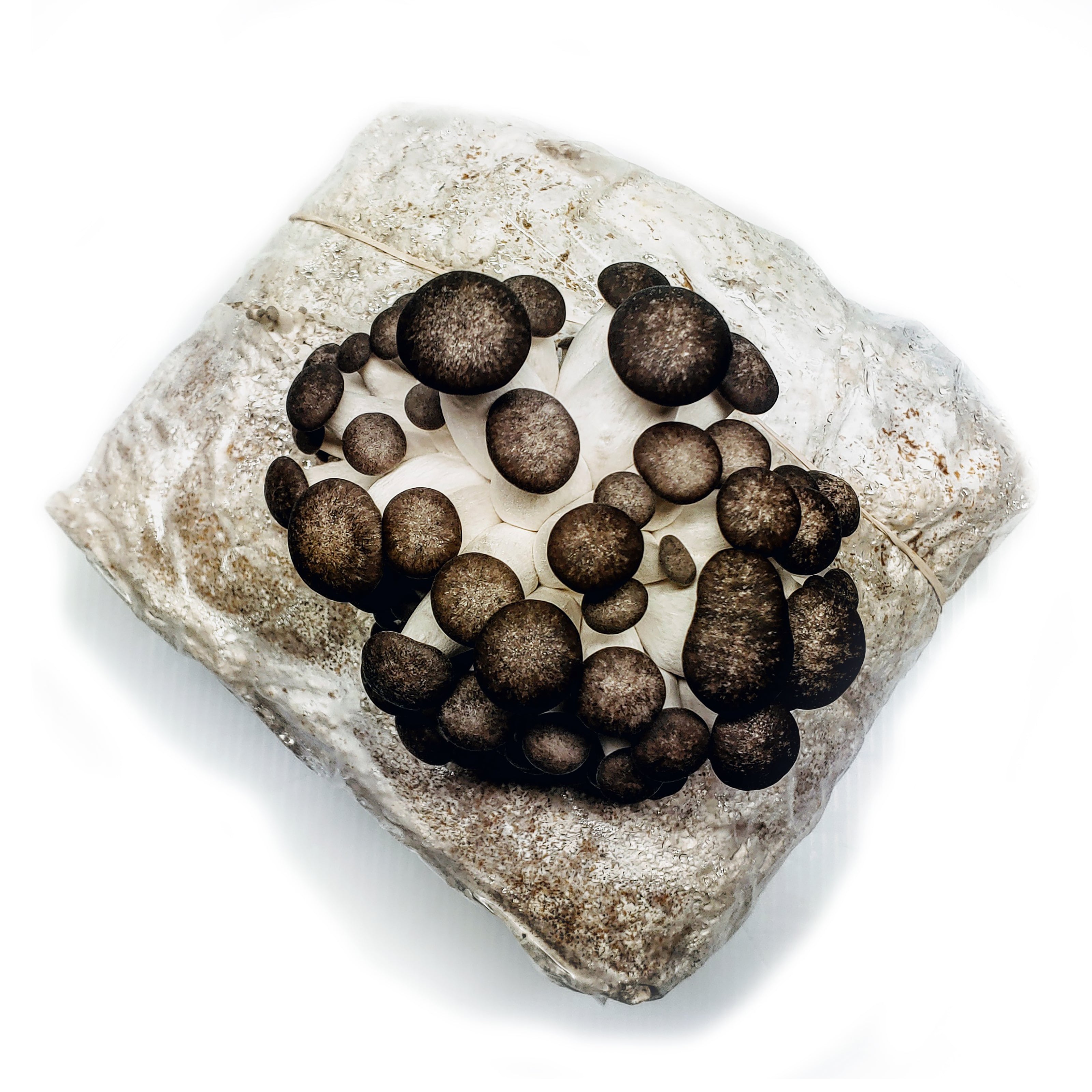
Black Pearl Oyster Strains
PO-BO
Black Pearl Oyster, like most Pleurotus varieties, can thrive on a wide variety of substrate recipes. It is highest-yielding on master's mix, hydrated to 60-63% total moisture content.
Incubation ranges from 14-21 days, depending on factors such as ambient incubation temp, spawn rate and substrate recipe. Unlike many other Pleurotus strains, Black Pearl Oyster does not pin immediately after colonization is complete, providing a grace period in which you can determine when to move your blocks into fruiting.
PO-BO prefers cool fruiting temps between 55-65° F, though can be fruited in warmer temps with mixed results. A standard x-cut or slit through the bag and into the substrate (no more than ½”) is the recommended initiation technique. If fruited in cold temps, Black Oysters manifest the morphology that most cultivators have come to expect- king oyster-like stems and dark, speckled caps. If fruited in warmer conditions, black pearl manifests in morphology a bit more similar to blue oyster, though with fleshier stems.
These are also a very popular sale at farmers markets and the like. They have a mild nutty and umami flavor similar to other oyster strains.
Top fruiting has become increasingly popular with PO-BO which increases the yield and shows off the P. eryngii genetics inherent in its hybridization.
Check out our MycoWizards PhenoFlick on Black Oyster HERE!
All Strains Explained
Blue Oyster Strains
PO-CNS
This is our bestselling house strain of Blue Oyster. Like most Pleurotus varieties, it can thrive on a wide variety of substrate recipes. It is highest-yielding on our master's mix combo-pellets, hydrated to 61% total moisture content.
Incubation ranges from 7-14 days, depending on factors such as ambient incubation temp, spawn rate, and substrate recipe. To avoid stroma and other biological problems during incubation, ensure that the core temperature of your PO-CNS blocks do not exceed 80F at the core. This can be achieved by incubating at 65F.
Bring blocks into the cold storage or the fruit room immediately after incubation is complete, as this strain pins fast and furious. A standard x-cut or slit through the bag and into the substrate (no more than ½”) is the recommended initiation technique. This strain of blue oyster prefers fruiting temperatures between 60-65° F. It maintains a vivid blue color and produces denser fruits of higher quality and a longer shelf life if fruited in cold temperatures. Yield typically ranges from 2½ -3½ lb per 10lb master’s mix block. It is known for very large cap size and tender stems all the way to their base, rendering the whole cluster marketable to a gourmet clientele.
This is a very versatile mushroom that will go good in many dishes such as stir fry, pasta, curry or even simply pan fried by themselves. This mushroom makes a great meat replacement. This strain has also been known to sell well at farmers markets.
PO-CHO
The 'chocolate' oyster is a blue oyster strain from China, sent to us by way of friends in Australia. At this point, it's been cultivated extensively by our farm customer base. It is less aggressive to pin compared with PO-CNS after colonization is complete. It yields very well, produces fruits of high quality (those with caps a bit smaller than a strain like POCNS), but thrives in warmer temps than the average blue strain and demonstrates some resistance to blotch and other bacteria. Its exceptional texture and culinary quality, as well as its slight brown hue to the caps, has made it very popular with chef and home grower alike!
PO-3044
PO-3044 is one of the more popular Blue Oyster varieties we offer. It is known for slightly smaller cap sizes than our house strain, PO-CNS, but still produces clusters of similar size.
PO-3044, like most Pleurotus strains, can thrive on a wide variety of substrate recipes. It is highest-yielding on master's mix, hydrated to 60-63% total moisture content. Calcium carbonate supplementation can help to slightly increase yield and fruit quality. It is best to have a tight contact between the block and the cultivation bag, which helps to prevent premature pinning inside the bag.
Incubation timelines ranges from 7-14 days, depending on factors such as ambient incubation temp, spawn rate, and substrate recipe. To avoid stroma and other biological problems in incubation, ensure that the core temperatures of your blocks do not exceed the low 70s F.
Bring blocks into cold storage or the fruit room immediately after incubation is complete, as this strain pins fast. A standard x-cut or slit through the bag and into the substrate (no more than ½”) is the recommended initiation technique. This strain of blue oyster prefers fruiting temperatures between 55-65° F, but can be fruited in slightly warmer conditions if necessary. It maintains a vivid blue color and produces denser fruit of higher quality and shelf life if fruited in cold temperatures. Yield typically ranges from 2½ -3½ lb per 10 lb master’s mix block. Great shelf life if fruited in cold conditions, shorter shelf life when fruited in warm conditions. A very predictable, flexible, and reliable strain overall.
Just like the PO-CNS strain, this variety is a great addition to any fruiting room.
PO-3015
If you know, you know...some love it, some hate it. This Blue oyster strain is something that simply exists for the folks who have come to rely on it!
PO-KB
The PO-KB strain is a result of breeding carried out by Mossy Creek Mushrooms, this is a somewhat less predictable blue oyster strain, but an ideal choice for those with variable fruiting conditions and/or warm average fruiting temperatures.
Like most Pleurotus varieties, the PO-KB strain can thrive on a wide variety of substrate recipes. It is highest-yielding on master's mix, hydrated to 60-63% total moisture content.
Incubation ranges from 7-16 days, depending on factors such as ambient incubation temp, spawn rate, and substrate recipe. To avoid stroma and other biological problems in incubation, ensure that the core temperatures of your blocks do not exceed the lower 70s F
Bring blocks into the fruit room immediately after incubation is complete, as this strain pins readily. A standard x-cut or slit through the bag and into the substrate (no more than ½”) is the recommended initiation technique. This strain of blue oyster prefers fruiting temperatures between 60-70° F, but can be fruited in colder and semi warm conditions if necessary. It maintains a vivid blue color and produces denser fruit of higher quality and shelf life if fruited in cold temperatures. Yield typically ranges from 2 -3 lb per 10lb master’s mix block. It is known for average cap size but still produces very large clusters. Great shelf life if fruited in cold conditions, shorter shelf life when fruited in warm conditions.
Just like the PO-CNS strain, this variety is a great addition to all your favorite dishes; and any type of Blue Oyster tends to be in high demand if you're looking to sling the fungi!
PO-LOG
While this strain is not as high-yielding or high in quality, when compared to other blue oyster strains, it is still known for its overall ease in cultivation, resistance to bacterial blotch and other contaminants, and its exceptional shelf life. This phenotype certainly maintains the longest post-harvest shelf life of any blue oyster strain we carry, thus making it a great strain option for wholesaling to distributors.
Like most Pleurotus varieties, PO-LOG can thrive on a wide variety of substrate recipes. It is highest-yielding on master's mix, hydrated to 60-63% total moisture content.
Incubation ranges from 10-18 days, depending on factors such as ambient incubation temp, spawn rate, and substrate recipe.
A standard x-cut or slit through the bag and into the substrate (no more than ½”) is the recommended initiation technique. This strain of blue oyster prefers fruiting temperatures between 55-65° F, but can be fruited in warmer conditions if necessary. Yield typically ranges from 2-2½ lb per 10lb master’s mix block. A very predictable, flexible and reliable strain overall.
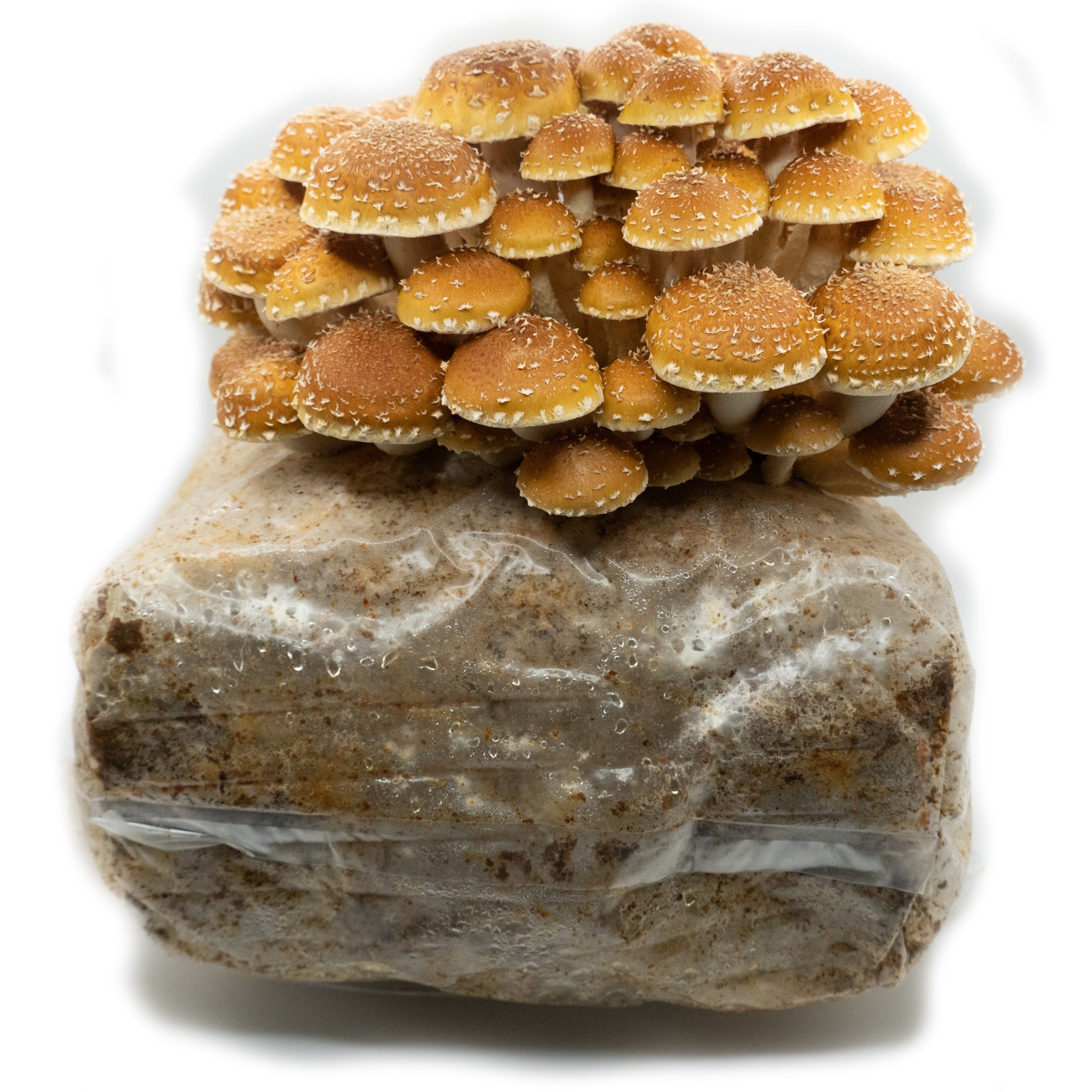
Chestnut Strains
PA-CNS
The infamous and mighty Chestnut strain PA-CNS thrives on master’s mix, especially if pelletized (the pelletization process breaks down the oak, rendering it more bioavailable for a weak metabolizer like chestnut) hydrated to 61-63%.
Initial colonization takes 3 weeks on average, but we recommend that you let the blocks sit for 1 additional week to fully mature- the block will swell with caramel-colored secondary metabolites. This allows the mycelium time to more effectively digest its growing medium, which leads to a faster and larger pinset once introduced into fruiting. Similar to most varieties, avoid letting the internal temperature of your blocks exceed the upper 70s to avoid deleterious biological impacts. Be mindful that chestnut mycelium is more prone to mold contamination than most other common varieties.
Chestnut prefers fruiting temperatures between 55-65° F (12-18° C), if the temperature exceeds 65° it will likely not pin at all. High relative humidity (90-95% ) is recommended for fast and healthy pinning. This is a more intermediate species to work with, if the conditions are not just right you will have a hard time harvesting anything off of the block.
A deep cut into the block is highly recommended for a dense pinset and high yield. Pinset emergence takes longer with chestnut than most other common varieties- 14 to 21 days in most cases. Once pins emerge, it is a fairly rapidly growing mushroom. Harvest after veils break but before caps flatten. Though chestnut does not have a fantastic shelf life, it is a strikingly beautiful mushroom and often sells fast. Average yield ranges between 2 and 3lbs.
Chestnuts have a nutty and meaty flavor, great for many dishes like pasta, soup or as a pizza topping. They are also good for drying as this will improve shelf life.
Check out out MycoWizards PHenoFlick on PA-CNS HERE!
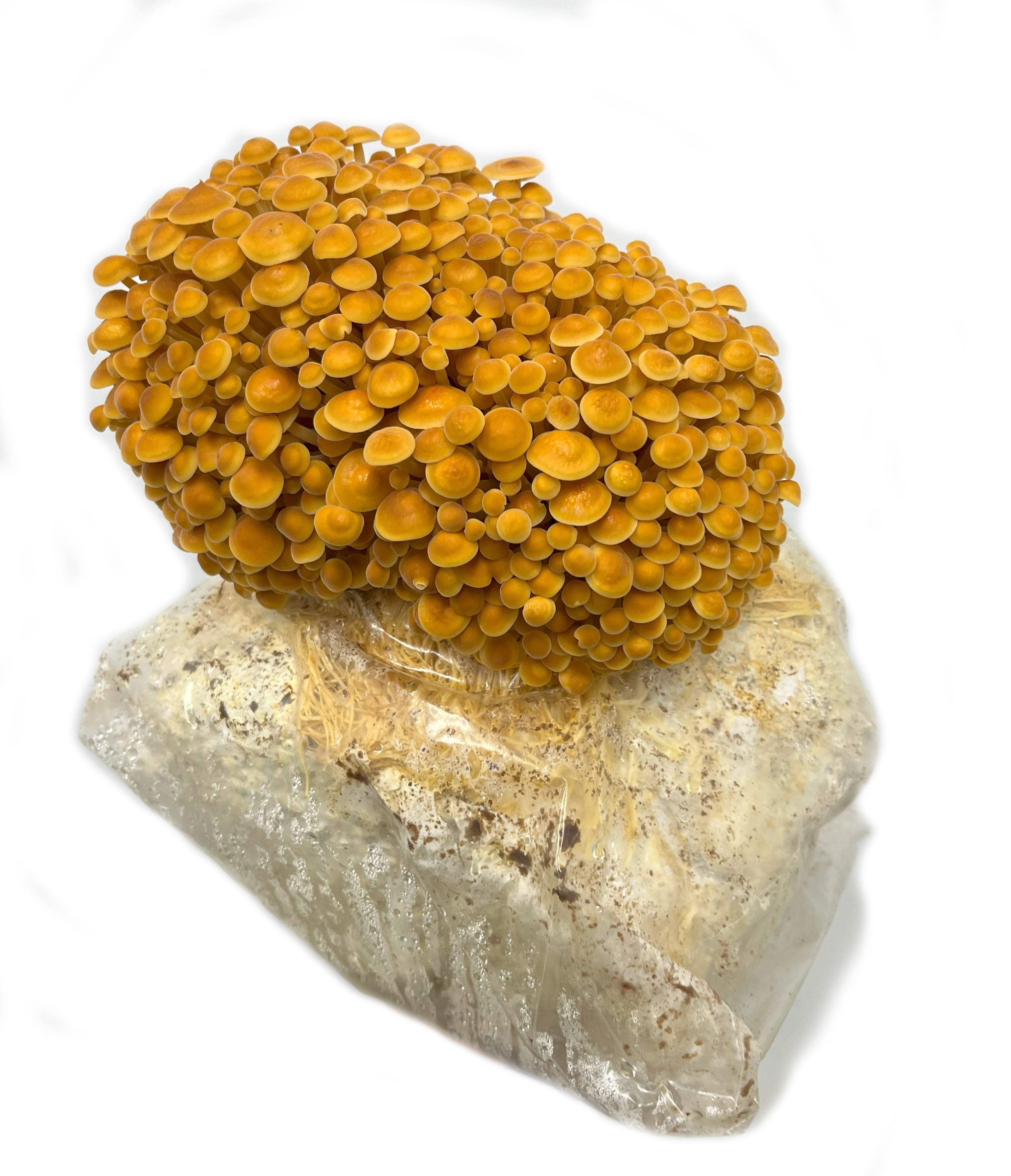
Enoki Strains
Golden Enoki FV-4600
Enoki is very tenacious and can grow on a variety of substrates, but we recommend master's mix for fastest growth and highest yields. Recommended moisture content is 60-63%, Calcium carbonate supplementation can help to slightly increase yield and fruit quality. It is best to have a tight contact between the block and the cultivation bag, which helps to prevent premature pinning inside the bag.
Enoki is fully colonized between 14-21 days in most circumstances. As with most varieties, enoki mycelium thrives with its interior temperature rests in the upper-70s Fahrenheit.
Enoki prefers cold fruiting temps, ideally 50-63° F. Some growers cold shock blocks for several days prior to inducing fruiting. Most growers top fruit enoki sometimes through scratching the top surface of the block. To encourage the most spindly spaghetti like form, let the pins form in vitro or fruit them in a high CO2 environment. If fruited in a regular fruiting environment with high oxygen levels, they will still be thin stemmed but with approximately dime-sized caps.
Enoki is sensitive to bacterial infection in the fruits, so avoid condensation settling on the fruits for a long period of time. Much like other common gourmet varieties, Enoki caps will flatten once they reach full maturity. So keep an eye on them to harvest before flattening for better storage life. FV 4600 can be quite high yielding and can be fruited multiple times with one block.
Enoki mushrooms are quite popular, they have a crunchy texture and umami flavor. They are good in a variety of dishes including soups, stir fry or even just by themselves.
White Enoki FV-1037
FV-1037 is a special order status strain. It is grown in the same conditions as Gold Enoki, however, your incubation and fruiting rooms need to be very on point as this is an overall weaker strain and needs exact conditions. The main appeal of the FV-1037 is the beautiful stark white color, as it was bred specifically for that purpose.
For substrate, we recommend master's mix for fastest growth and highest yields. Recommended moisture content is 60-63%, Calcium carbonate supplementation can help to slightly increase yield and fruit quality. It is best to have a tight contact between the block and the cultivation bag, which helps to prevent premature pinning inside the bag.
Enoki is typically fully colonized between 14-21 days in most circumstances. As with most varieties, enoki mycelium thrives with its interior temperature rests in the upper-70s Fahrenheit. Enoki prefers cold fruiting temps, ideally 50-63° F. Some growers cold shock blocks for several days prior to inducing fruiting. Most growers top fruit enoki sometimes through scratching the top surface of the block. To encourage the most spindly spaghetti like form, let the pins form in vitro or fruit them in a high CO2 environment.
Enoki is sensitive to bacterial infection in the fruits, so avoid condensation settling on the fruits for a long period of time. Much like other common gourmet varieties, Enoki caps will flatten once they reach full maturity. So keep an eye on them to harvest before flattening for better storage life.
If you would like to try this strain be sure to write *Special Order* at the bottom of your Spawn Form.
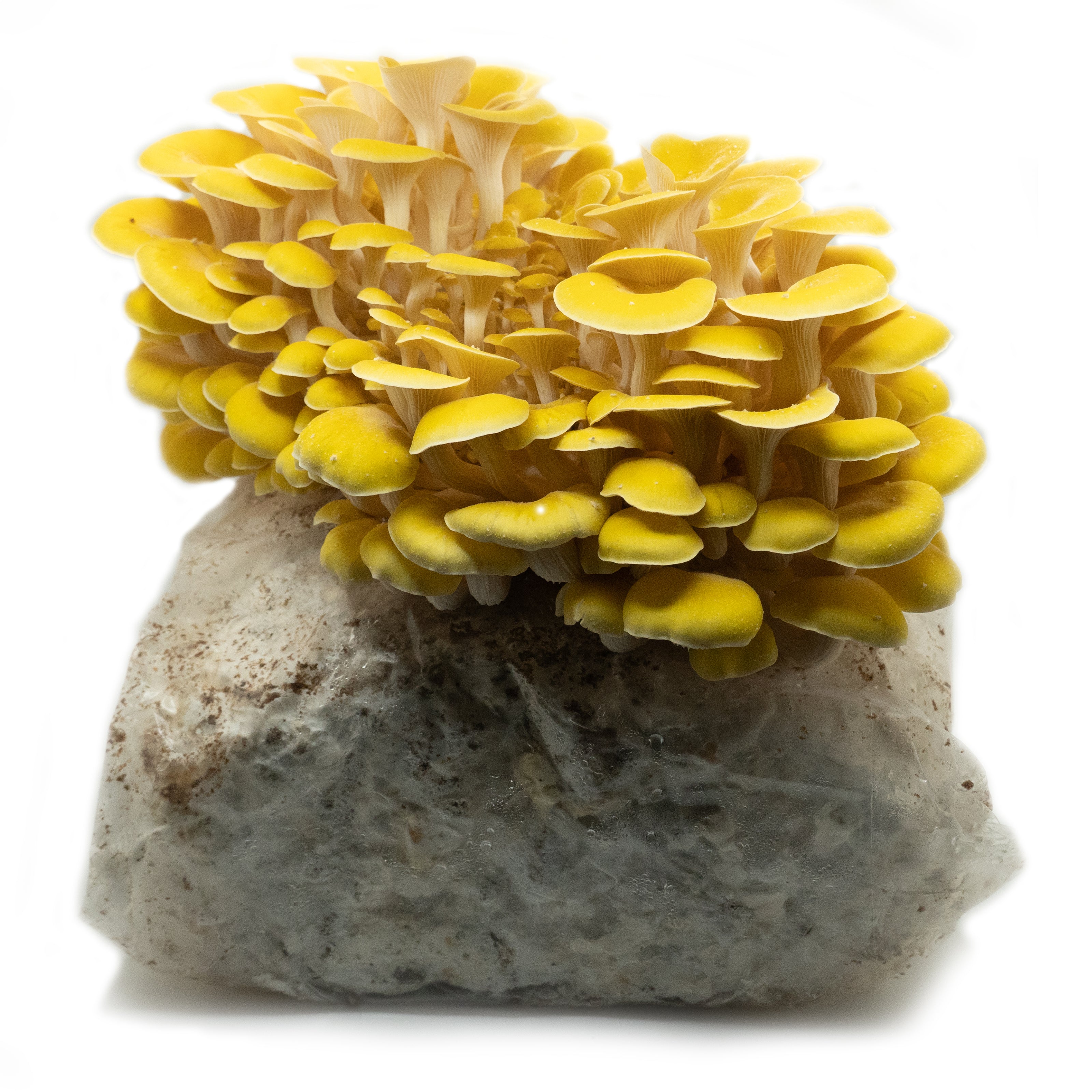
Gold Oyster Strains
PC-MM
Gold Oyster, like most Pleurotus varieties, can thrive on a wide variety of substrate recipes. It is highest-yielding on master's mix, hydrated to 60-63% total moisture content.
Incubation ranges from 7-14 days, depending on factors such as ambient incubation temp, spawn rate, and substrate recipe. To avoid stroma and other biological problems in incubation, ensure that the core temperatures of your blocks do not exceed the low 70s.
Bring blocks into the fruit room immediately after incubation is complete, as this strain pins readily. A standard x-cut or slit through the bag and into the substrate (no more than ½”) is the recommended initiation technique. This strain of Gold Oyster prefers immense flood lighting with fruiting temperatures between 65-70° F, but can be fruited in cooler conditions if necessary. It maintains a vivid color and higher yields when fruited in those warmer conditions. This strain can easily be fruited several times, but still has a high first flush yield. Its fruits develop rapidly; yield typically ranges from 2½ -3½ lb per 10 lb master’s mix block.
Pleurotus citrinopileatus is known for smaller cap size than other oyster species and for very delicate fruit tissue that is easily damaged. This PC-MM strain demonstrates stronger fruit tissue than average, while still maintaining a nice texture for gourmet cuisine. Mediocre shelf life. Fungus gnats and other insect pests are attracted by remnants of p. citrinopileatus fruits, so be sure to cut clean against the block when harvesting, and move the blocks to compost as soon as you are done flushing. A very predictable, flexible, and reliable strain overall.
Gold Oysters are desirable mainly because of their beautiful bright yellow color and notably nutty flavor.
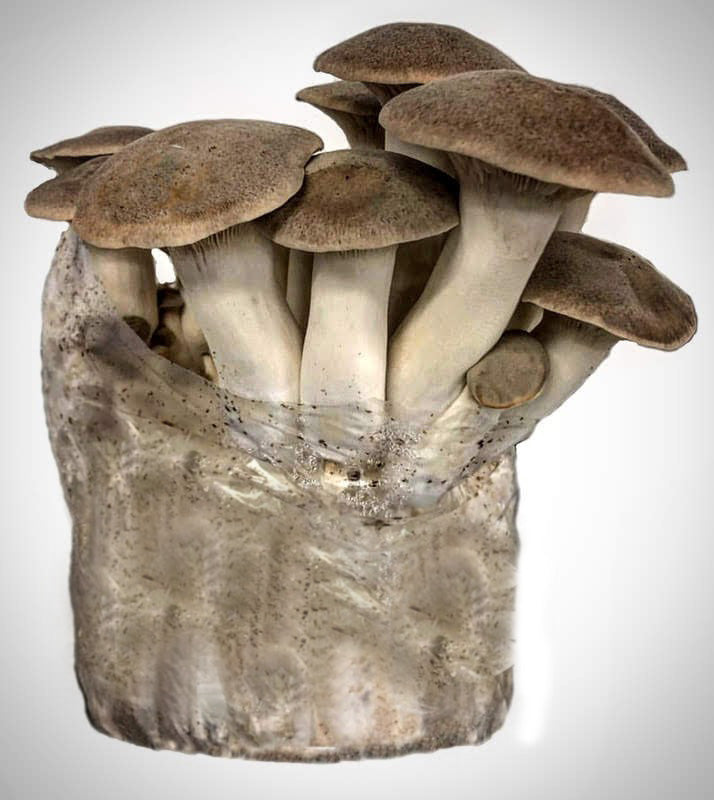
King Oyster Strains
PE-KONG
King oyster, like most Pleurotus varieties, can thrive on a wide variety of substrate recipes. It is highest-yielding on master's mix, hydrated to 60-63% total moisture content. It is best to have a flat top surface of your block and tight contact between the block and the cultivation bag, which encourages growth across the entire surface rather than along the edges of the block.
Incubation ranges from 14-21 days, depending on factors such as ambient incubation temp, spawn rate, and substrate recipe.
Bring blocks into the fruit room immediately after incubation is complete, as king oyster pins readily. There are three typical pin initiation approaches- letting the pins form in vitro before cutting off the seal and/or top portion of the bag, immediately cutting off the seal and/or top portion of the bag and scratching the top surface of the block, or simply cutting off the seal and/or top portion of the bag. Some farms like to form a casing layer (such as with peat moss and hydrated lime) for the fruits to emerge from. All have their merits and depend on the fruiting environment and grower preference. King oyster prefers cold fruiting temperatures between 50-60° F. Rapid pin growth and ideal morphology are encouraged through exposure to blue lighting; full spectrum LED is fine, if not too strong. Its fruits develop rapidly; yield typically ranges from 2-2.5 lb per 10lb master’s mix block and boast an excellent shelf-life.
King Oysters are a delicious and meaty mushroom, a great option as a meat replacement.
Check out our King Oyster Cultivation Deep Dive on our MycoWizards page!
PE-2603
PE2603 tends toward more uniformly medium-sized fruits with a pale, beige hue to the caps, while PEKONG demonstrates much more variance in fruit size with a stronger granite hue to the caps.
King oyster, like most Pleurotus varieties, can thrive on a wide variety of substrate recipes. It is highest-yielding on master's mix, hydrated to 60-63% total moisture content. It is best to have a flat top surface of your block and tight contact between the block and the cultivation bag, which encourages growth across the entire surface rather than along the edges of the block.
Incubation ranges from 14-21 days, depending on factors such as ambient incubation temp, spawn rate, and substrate recipe.
Bring blocks into the fruit room immediately after incubation is complete, as King Oyster pins readily. There are three typical pin initiation approaches- letting the pins form in vitro before cutting off the seal and/or top portion of the bag, immediately cutting off the seal and/or top portion of the bag and scratching the top surface of the block, or simply cutting off the seal and/or top portion of the bag. Some farms like to form a casing layer (such as with peat moss and hydrated lime) for the fruits to emerge from. All have their merits and depend on the fruiting environment and grower preference. King oyster prefers cold fruiting temperatures between 50-60° F. Rapid pin growth and ideal morphology are encouraged through exposure to blue lighting; full spectrum LED is fine, if not too strong. Its fruits develop rapidly; yield typically ranges from 2-2.5 lb per 10lb master’s mix block and boast an excellent shelf-life.
King Oysters are a delicious and meaty mushroom, a great option as a meat replacement.
Check out our King Oyster Cultivation Deep Dive on our MycoWizards page!
PE-REX
- Demonstrates higher blotch resistance and overall vigor
- Smaller, more attractive caps
- Much softer texture than other strains, great in a gourmet context
- More even fruit body size, easier to grade
- Similar yield to other commercial strains such as KONG and 2603
- Slightly slower to pin and harvest than KONG, by approximately one week
Lions Mane Strains
HE-CNS
HE-CNS is our go to house strain of Lion's Mane. HE-CNS produces the highest yield on master’s mix. We strongly recommend a final block moisture content of 60%; a moisture content even slightly exceeding that tends to lead to problems during incubation and fruiting for lion’s mane. In turn, insufficient moisture content often leads to issues with mold contamination and overall poor colonization of the block. Lion’s mane does equally well with ultrapasteurization and sterilization.
Incubation ranges from 8 to 16 days, depending on factors such as ambient incubation temp, spawn rate, and substrate recipe. Similar to most varieties, avoid letting the internal temperature of your blocks exceed the low 70s internally. Be mindful that Lion’s Mane mycelium is prone to myriad problems if it overheats and that it is more prone to mold contamination than most other common varieties.
Lion’s Mane prefers standard fruiting temperatures between 55-65° F (12-18° C). A high air exchange rate (lots of oxygen-rich air) and consistent relative humidity are ideal for good fruit development. A standard x-cut or slit in the bag is the recommended pinset initiation technique; many farms make their cut on the top surface of the block, where lion’s mane readily fruits on its own accord. Lion’s mane fruits develop at a relatively slow rate but grow to incredibly large size and weight. Average yield is quite high- 2½ to 3½ lb, with potential for even more with subsequent flushes of the same block. This strain is known for dense, club-like fruits with small spines, providing greater resistance to bruising and damage during handling/cold storage thus making it an eminent wholesaling mushroom.
Lion's Mane is not only a great versatile ingredient, it is also said to have many medicinal properties.
Check out our MycoWizards PHenoFlick on HE-CNS Here!
HE-POW
The HE-POW strain is different than typical Lion's Mane as it has demonstrated higher heat tolerance than other strains and is often the preferred strain by farms in hot climates and/or hot seasons.
HE-POW, like most Lion's Mane strains, produces the highest yield on master’s mix, but is easier to grow without issue on a lower-supplementation recipe, such as 65-70% hardwood and 30-35% wheat middlings/soy hulls. Regardless, we strongly recommend a final block moisture content between 59-62%; a moisture content even slightly exceeding that tends to lead to problems during incubation and fruiting for lion’s mane. In turn, insufficient moisture content often leads to issues with mold contamination and overall poor colonization of the block. HE-POW does equally well with ultrapasteurization and sterilization.
Incubation ranges from 8 to 16 days, depending on factors such as ambient incubation temp, spawn rate, and substrate recipe. Similar to most varieties, avoid letting the internal temperature of your blocks exceed the low 70s to avoid deleterious biological impacts; be mindful that lion’s mane mycelium is prone to myriad problems if it overheats, such as mold and bacterial contamination.
A standard x-cut or slit in the bag is the recommended pinset initiation technique; many farms make their cut on the top surface of the block, where it readily fruits on its own accord. Lion’s mane fruits develop at a relatively slow rate (14-21 days) but grow to an incredibly large size and weight. Average yield is quite high- 2½ to 3lb or more per 10lb master’s mix block, with potential for even more if fruited multiple times per block.
This strain is known for flashier fruits with more exposed spines, with excellent visual appeal while still maintaining wholesale production standards.
HE-LP
The fruit quality of this strain is not quite as gourmet as other Hericium strains offered by Cap N’ Stem, but its flexible cultivation parameters makes it a worthwhile consideration for some farms.
Lion’s Mane produces the highest yield on master’s mix, but is easier to grow without issue on a lower-supplementation recipe, such as 65-70% hardwood and 30-35% wheat middlings/soy hulls. Regardless, we strongly recommend a final block moisture content between 59-62%; a moisture content exceeding that tends to lead to problems during incubation and fruiting for lion’s mane, especially bacterial infections and subsequent pooling of secondary metabolites. In turn, insufficient moisture content often leads to issues with mold contamination and overall poor myceliation of the block. Lion’s mane does equally well with ultrapasteurization and sterilization.
Incubation ranges from 8 to 16 days, depending on factors such as ambient incubation temp, spawn rate, and substrate recipe. This strain is slightly more tolerant than other Hericium strains of varying moisture content in the block as well as varying incubation temperatures, making it a safe choice for farms with an inconsistent incubation environment.
Lion’s Mane thrives with lots of fresh air exchange and abundant oxygen levels, also ensure that you maintain high relative humidity without allowing condensation settling too long on the fruits, as lion’s mane is prone to both desiccation and bacterial rot. A standard x-cut or slit in the bag is the recommended pinset initiation technique. Many farms make their cut on the top surface of the block, where lion’s mane readily fruits on its own accord. Lion’s Mane fruits develop at a relatively slow rate (14-21 days) but grow to incredibly large sizes and weight. Average yield is less than other Lion’s Mane strains- 2 to 2½ lb- with potential for more if fruited multiple times per block.
HE-A
HE-A is a special order status strain. It is a wild clone from Quebec. We have not done much production with this strain so a lot of variables are still unknown. The main reason HE-A is special is it has vigorous and dense mycelium, much stronger and flexible than most other Lions Mane strains; This makes it a good contender if you have unstable fruiting conditions.
As this is a wild clone, the fruits of the HE-A look wild and spiny compared to regularly cultivated Lions Mane; which typically appear as a more dense round shape.
We do not have any average yield data as we have not brought this strain into our regular rotation. If you would like to try this strain be sure to write *Special Order* at the bottom of your Spawn Form.
HE-9514
HC-FF
HC-FF, also known as Combtooth or Hericium Corraloides is a commercial phenotype that hails from Funga Farm. The main difference between the strains is morphology; While the typical Lions Mane forms in multiple ball like fruits, the Combtooth has fruits more akin to a coral mushroom, very spread out and textured.
HC-FF produces the highest yield on master’s mix, but is easier to grow without issue on a lower-supplementation recipe, such as 65-70% hardwood and 30-35% wheat middlings/soy hulls. Regardless, we strongly recommend a final block moisture content between 59-62%; a moisture content exceeding that tends to lead to problems during incubation and fruiting for Combtooth, especially bacterial infections and subsequent pooling of secondary metabolites. In turn, insufficient moisture content often leads to issues with mold contamination and overall poor myceliation of the block. Combtooth does equally well with ultrapasteurization and sterilization.
Incubation ranges from 8 to 16 days, depending on factors such as ambient incubation temp, spawn rate, and substrate recipe. When compared to Lions Mane, HC-FF has a much denser mycelium during its colonization of a substrate block as well as spawn. It is less likely to autofruit in the high CO2 environment of a sealed XLS-A bag.
HC-FF thrives with lots of fresh air exchange and abundant oxygen levels, also ensure that you maintain high relative humidity without allowing condensation settling too long on the fruits, as Combtooth is prone to both desiccation and bacterial contamination. A standard x-cut or slit in the bag is the recommended pinset initiation technique; many farms make their cut on the top surface of the block, where Combtooth readily fruits on its own accord.
Typical yield ranges from 2 to 3 lbs. Depending on usual fruiting room factors such as lighting, oxygen levels and moisture content.
Check out our Mycowizards PhenoFlick on HC-FF HERE!
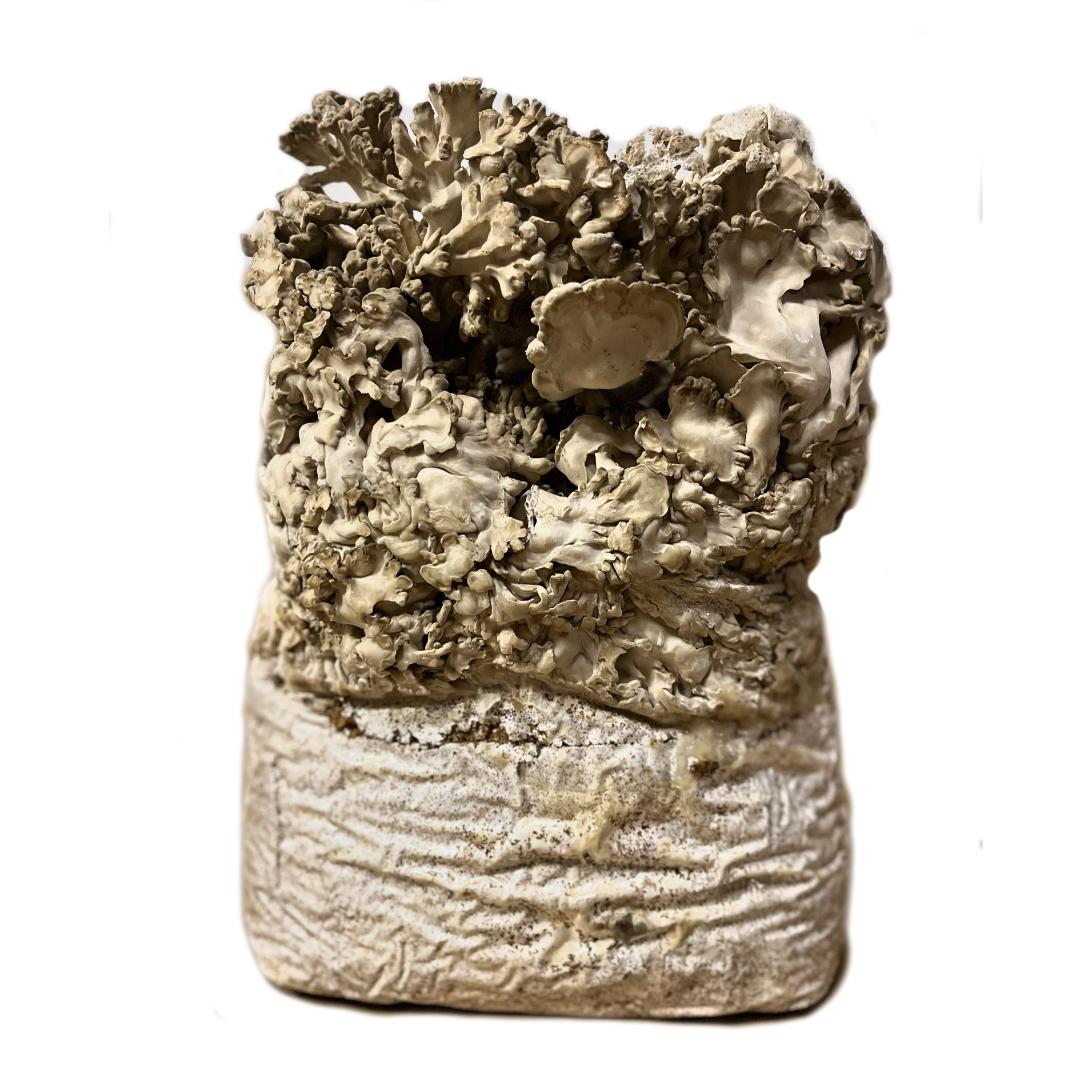
Maitake Strains
GF-494
GF-494 is a special order status strain. It has a slightly slower development rate when compared to other Maitake strains, however, It also has a slightly higher yield and tends to be more durable of a strain which makes it a great option for wholesale farmers.
As with the GF-9827, this is a particular strain when it comes to fruiting conditions; 65° F is recommended for incubation and fruiting. Be sure not to disturb the block as this will likely disrupt the growth of your mushrooms. The GF-494 is less flexible of a strain so all of your conditions should be on point.
If you would like to try this strain be sure to write *Special Order* at the bottom of your Spawn Form.
GF-9827
Maitake prefers a lower supplementation rate than standard masters mix. Something along the lines of 60-70% sawdust/hardwood pellets & 30-40% supplement. A moisture content between 60-63% is recommended to accommodate its longer timeframe in incubation. It is best to have a flat top surface of your block.
Initial colonization of the block will take about 3-4 weeks in most cases, but let the blocks remain in incubation as primordia develop in vitro. Let those primordia get as large as possible in incubation. Initial ‘blob-like’ primordia begin to develop ‘fingers’; this is a clear visual indication that the crop’s time in incubation is complete. Overall, incubation averages 3-4 weeks and primordia development averages 3-5 weeks. Extensive lighting over the top surface of the blocks is extremely helpful to encourage primordia to form along the entire top surface, rather than just along the sides of the top surface, which tends to occur in low-light conditions. Cool spectrum lighting is superior to warm spectrum for healthy primordial development. Maitake seems to have a very wide range in which it will grow, both in incubation and fruiting. As with most varieties, the speed is much greater in warm conditions, and the mushroom quality is greater in cool conditions. Temperature stability is extremely important for successful maitake cultivation. On average, growers tend to cultivate this strain at 65° F for incubation and fruiting.
Cut off the seal to leave a tall plastic collar around the developing fruits, and cut slits on the sides of the bottom of the collar to allow CO2 to flush out. Like any variety, Maitake requires fresh air exchange but is also prone to drying out, so it is best to position the blocks at a slight angle on your fruiting racks/shelves and have a collar that is as high as possible. In hot fruiting conditions, this is especially the case, whereas in cold fruiting conditions you will want to ensure that water doesn't pool inside the collar. For maximum storage life, harvest the fruits right when pores manifest on the undersides of the fronds. For maximum volume, wait to harvest until fruits have begun to produce spores.
As this species is more advanced than most, it is important to have extra consideration in fruiting conditions. Many growers have produced mediocre maitake (very short fronds, about halfway between 'blobtake' and healthy looking maitake) because they didn't have enough patience. Patience is key, especially in regard to letting primordia develop in vitro. If you allow the primordia as much time to develop as possible in vitro, you will see a higher yield, healthier mushrooms, better aroma.
Maitake will stop growing if disturbed too much. This is one of the main considerations for letting the blocks acclimate to the fruiting room before cutting off the seal. The principle of avoiding disturbance applies to other aspects of cultivation- avoid knocking the blocks, and avoid fruiting them in a fruit room with heavy spore load from other varieties (both may lead to growth stopping).
Maitake is said to have a rich earthy flavor with a hint of spice.
Phoenix Oyster Strains
PP-LOG
PP-LOG has been our go to Phoenix oyster strain for a decade. Also referred to as Italian Oyster, Pleurotus Pulmonarius loves the heat and fruits best between the temp range of 60 and 70F.
When it comes down to producing substrate for this variety it is typical to all the other standards of oysters, Masters Mix with 60-63% moisture content. On a 10lb block of substrate keep your incubation temps down around 66F to prevent any bacterial contamination that can proliferate into blotch once introduced into fruiting.
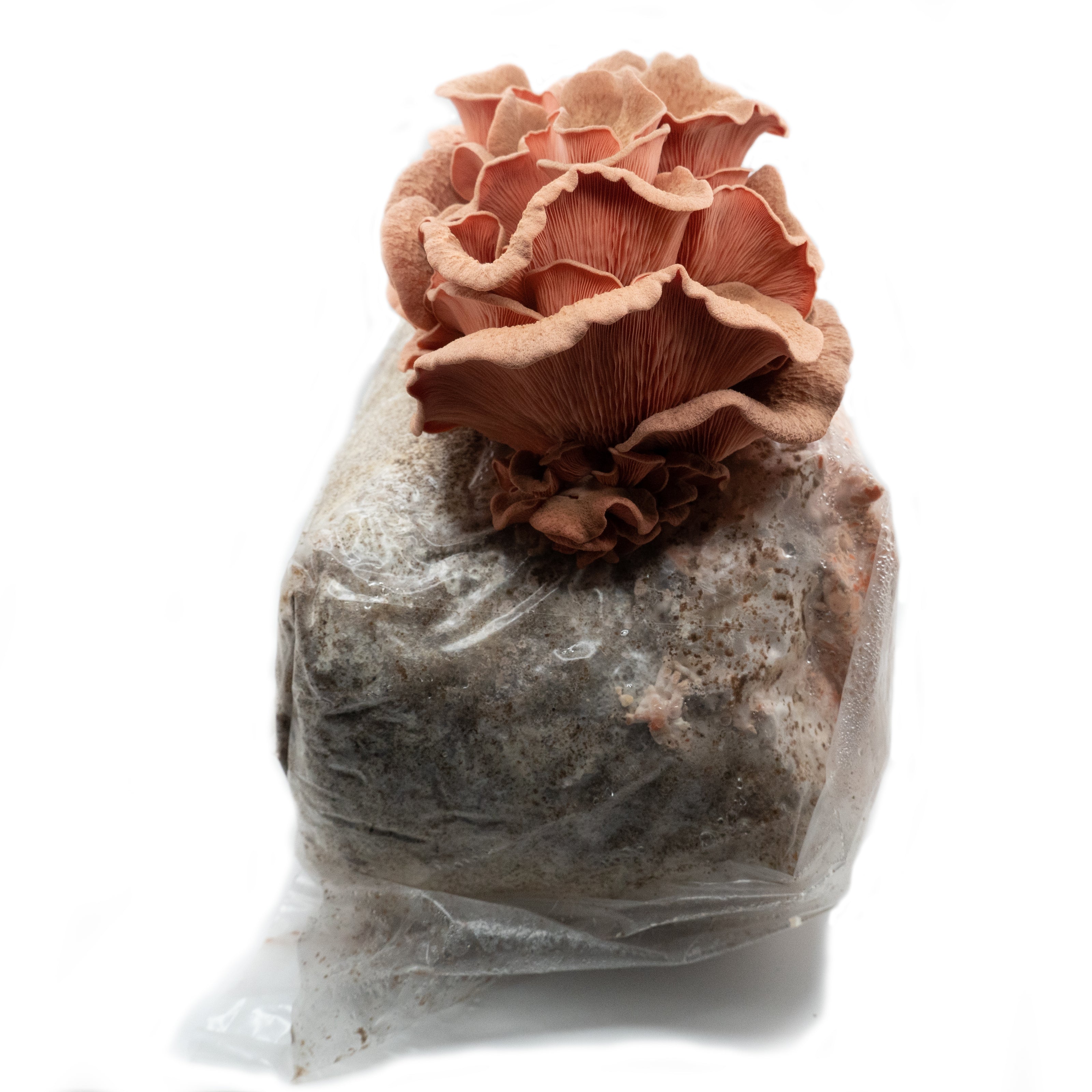
PP-2204
PP-2204 comes from Mycelia BVBA and has been a runner up to our PP-LOG strain for a few years. Also referred to as Italian Oyster, Pleurotus Pulmonarius loves the heat and fruits best between the temp range of 60 and 70F.
When it comes down to producing substrate for this variety it is typical to all the other standards of oysters, Masters Mix with 60-63% moisture content. On a 10lb block of substrate keep your incubation temps down around 66F to prevent any bacterial contamination that can proliferate into blotch once introduced into fruiting.
Pink Oyster Strains
PD-1
Pink Oysters can thrive on a wide variety of substrate recipes. It is highest-yielding on master's mix, hydrated to 60-63% total moisture content. It is best to have a tight contact between the block and the cultivation bag, which helps to prevent premature pinning inside the bag.
Incubation ranges from 10-16 days, depending on factors such as ambient incubation temp, spawn rate, and substrate recipe.
Bring blocks into the fruit room immediately after incubation is complete, as this strain pins all over the block fast. A standard x-cut or slit through the bag and into the substrate (no more than ½”) is the recommended initiation technique. Pink oysters are a tropical strain that prefers fruiting temperatures between 70-80° F with humidity levels between 85-95%. It maintains a vivid pink color if grown with slight light exposure and in their preferred temp range, and can produce thick meaty fruits or thin delicate fruits depending on growing conditions. This strain can easily be fruited several times, but still has a high first flush yield. Its fruits develop rapidly; yield typically ranges from 2½ -3 lb per 10 lb master’s mix block. The nice part about PD-1 is it can be fruited through the winter months if the temps in your fruiting facility stay in the low to middle 60s.
Pink Oysters are known to have a very short life. They also have a meaty texture and a notably "seafood" flavor.
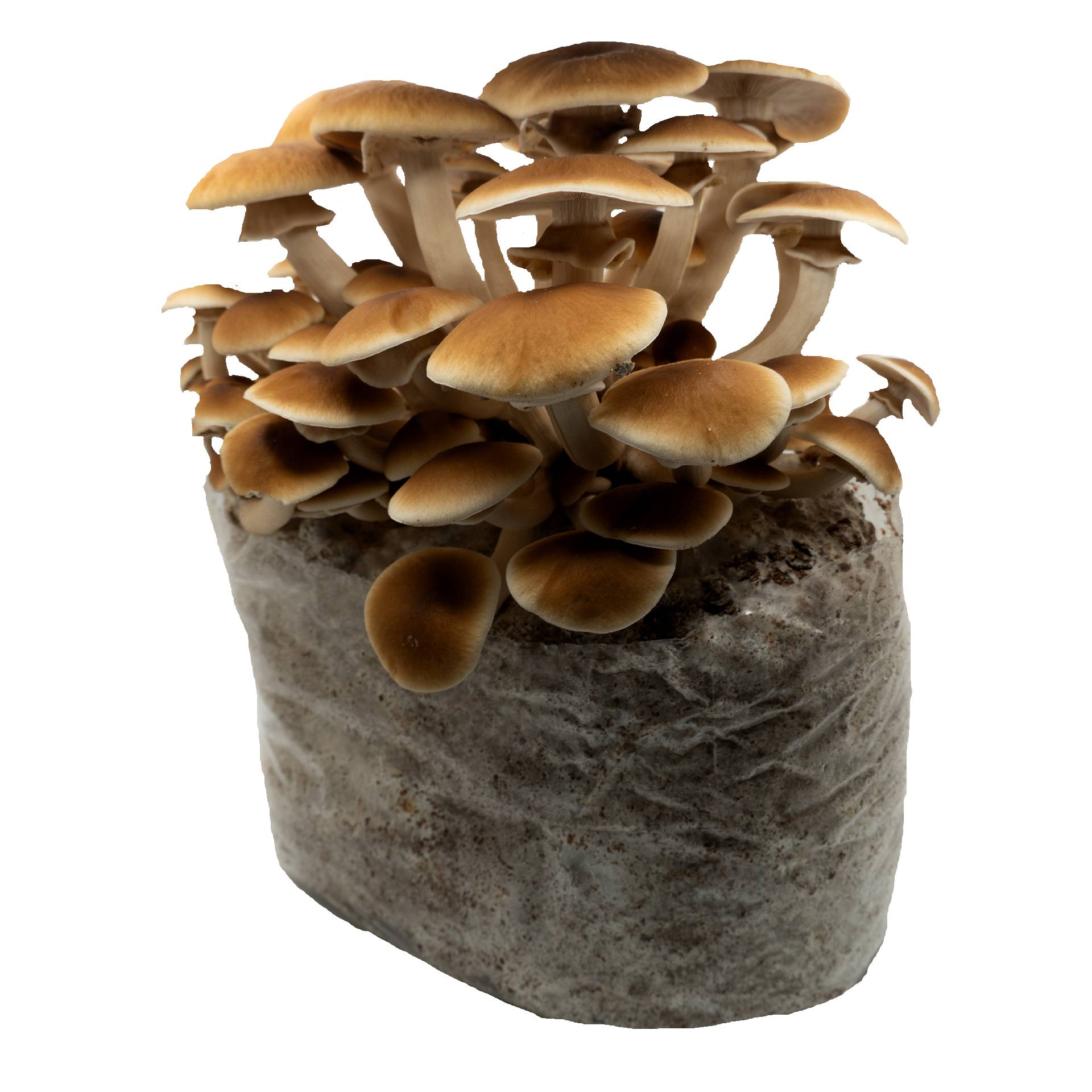
Pioppino Strains
AA-CNS
Pioppino is a relatively delicate mycelium. It obtains its highest yields on masters mix, ideally with a hardwood as its substrate base. For the smoothest colonization and easiest success, some growers cultivate pioppino on recipes similar to shiitakes substrate. Much like other delicate varieties, if pioppino is grown on substrate with insufficient moisture content, its mycelial growth rate is drastically inhibited and its hyphae are less robust and defined. If grown with excessive moisture content bacterial contamination easily occurs. Standard 60-63% moisture content is recommended.
Pioppino takes 18-22 days to fully colonize and be ready to fruit on average. indirect light exposure in incubation encourages more vigorous colonization of the block. When pioppino is ready to fruit cloud like plumes of mycelium form on the top of the block giving way to microdots of a yellow metabolite that forms into primordia. These pins can form on the exterior of the block so its best to maintain tight contact between plastic and block to encourage top fruits. If you catch the block before pillowy mycelium forms but the block is full colonized you can remove the air from the plenum with a small cut at the top of the bag and refrigerate at 34F for several weeks. After refrigeration, a side cut similar to oysters or lions mane will provide a successful and robust flush.
Pioppino prefers warm fruiting temperatures between 65-75 degrees but will fruit in cooler temps as well, just more slowly. It is highest yeilding when fruited from the top of the block. Once pins are formed they grow at a fast rate and will be ready to harvest within 7-10 days on average.
For the best balance of storage life and yield, harvest just when the veils are beginning to show signs of cracking and separating from the stem. This strain of Pioppino is known for mostly even, medium sized fruits. Its yield, while not exceptional, still falls within the range of a commercially viable first flush and outperforms other Pioppino strains that Cap N’ Stem has worked with.
The Pioppinos have a nutty and slightly sweet flavor. It is a popular mushroom in the culinary world.
Check out our MycoWizards PhenoFlick on fascinating strain HERE!
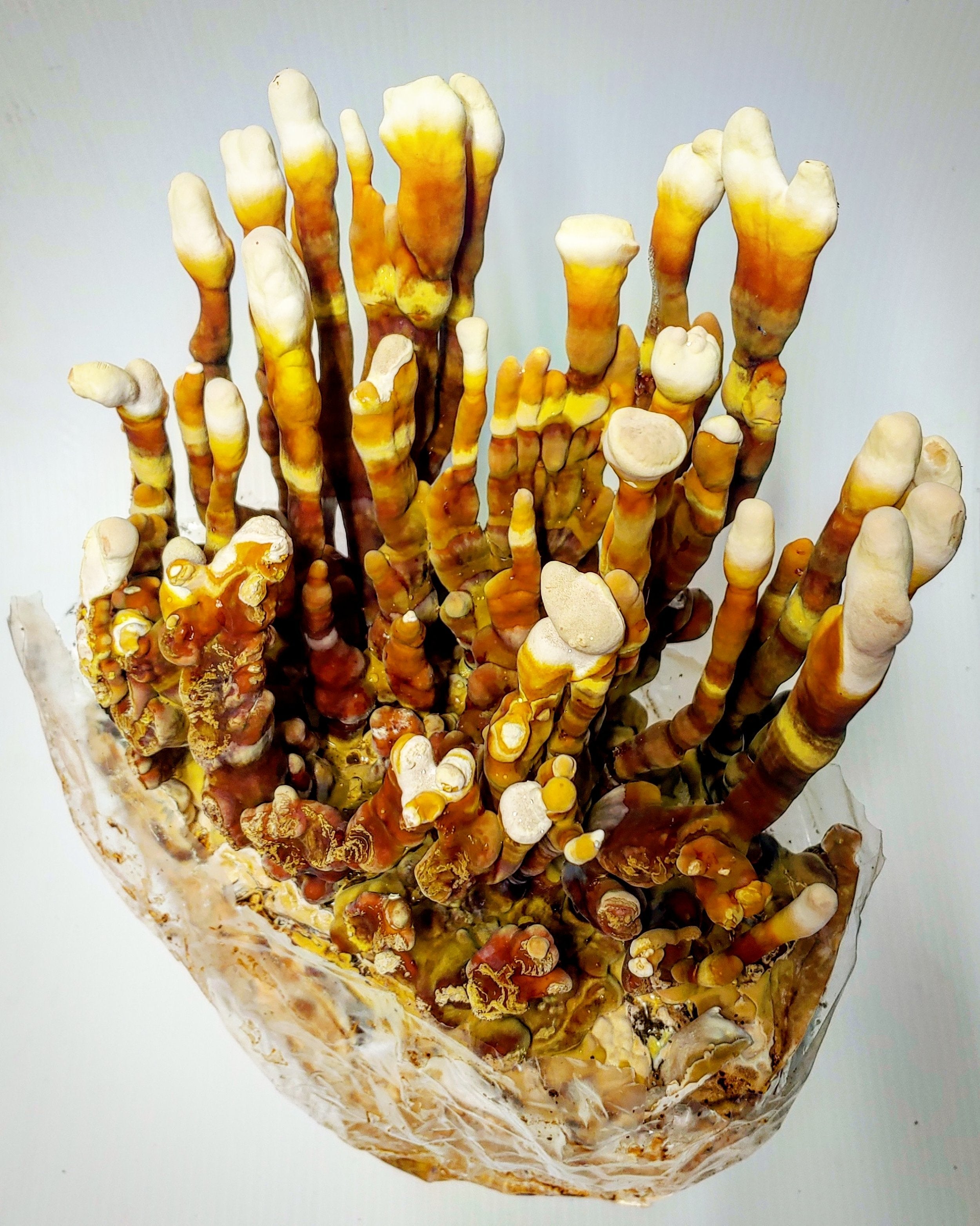
Reishi Strains
GLZ-9724
Reishi species are incredibly tenacious and will thrive on a wide variety of substrate recipes. Masters mix works quite well and allows for high yields. Standard moisture content of 60-63%. If you plan on fruiting antlers in vitro, be sure to have as large a plenum in the bag as possible to provide maximum amount of space for antlers to grow.
Reishi typically requires 10-16 days for full colonization. Reishi is a strong competitor and will outcompete most contaminants if they're not too prevalent. If you plan to fruit antlers in vitro, set them and forget them, ideally with good light exposure to stimulate faster fruit growth. If you plan to fruit conks, move them into your fruit room as soon as you see either a swelling of secondary metabolites and/or myelination along the exterior of the substrate.
While Reishi myceliates very fast, its fruits grow at a very slow, steady rate. Depending on context, reishi fruits reach maturity anywhere between 3-6 months; some cultivators extend their growth beyond that. Some strains are bred specifically for antler morphology, others for conk, and others are flexible. You can grow antlers in vitro or in a fruiting space with artificially elevated CO2 levels. If you want to grow conks, cut the bag in a similar fashion as you would oysters; primordia will quickly manifest. For conks, maintain a standard fruiting room environment- around 90% relative humidity and the usual 450-800 ppm CO2. This will encourage the organism to continue growing fruit body size rather than sporulating. Ideally, harvest before the mushrooms sporulate, as Reishi spores both contain medicinal potency and are very virulent and irritating to the respiratory system (and your equipment!).
Reishi is a great mushroom for tinctures as they are said to have many medicinal properties.
Check out our MycoWizards Deep Dive on the History Of Reishi HERE!
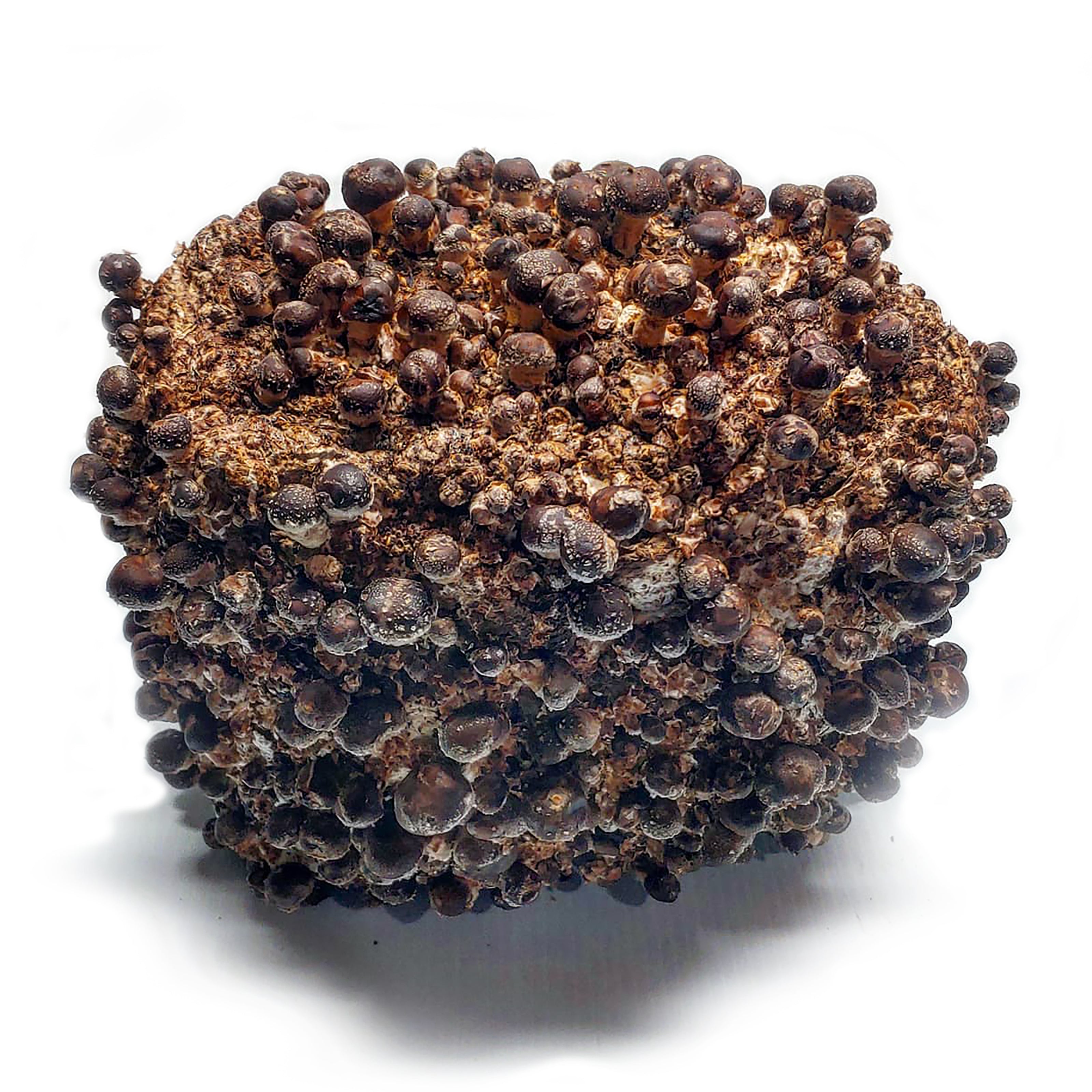
GM-CNS
GM-CNS is an incredibly tenacious species and will thrive on a wide variety of substrate recipes. Ganoderma Multipileum grows faster and antlers quicker than Ganoderma Lingzhi with less dense fruits in a pillowy zig zag fashion depending on the light spectrum. Masters mix works quite well and allows for high yields. Standard moisture content of 60-63%. If you plan on fruiting antlers in vitro, be sure to have as large a plenum in the bag as possible to provide maximum amount of space for antlers to grow.
Reishi typically requires 10-16 days for full colonization. Reishi is a strong competitor and will outcompete most contaminants if they're not too prevalent. If you plan to fruit antlers in vitro, set them and forget them, ideally with good light exposure to stimulate faster fruit growth. If you plan to fruit conks, move them into your fruit room as soon as you see either a swelling of secondary metabolites and/or myelination along the exterior of the substrate.
While Reishi myceliates very fast, its fruits grow at a very slow, steady rate. Depending on context, reishi fruits reach maturity anywhere between 3-6 months; some cultivators extend their growth beyond that. Some strains are bred specifically for antler morphology, others for conk, and others are flexible. You can grow antlers in vitro or in a fruiting space with artificially elevated CO2 levels. If you want to grow conks, cut the bag in a similar fashion as you would oysters; primordia will quickly manifest. For conks, maintain a standard fruiting room environment- around 90% relative humidity and the usual 450-800 ppm CO2. This will encourage the organism to continue growing fruit body size rather than sporulating. Ideally, harvest before the mushrooms sporulate, as reishi spores both contain medicinal potency and are very virulent and irritating to the respiratory system (and your equipment!).
Reishi is a great mushroom for tinctures as they are said to have many medicinal properties.
Check out our MycoWizards Deep Dive on the History Of Reishi HERE!
Shiitake Strains
LE-KOM
LE-KOM is much like any other Shiitake strain except it has a faster incubation rate, this is a good strain for wholesale farmers. Shiitake in general requires a less-rich growing medium than other varieties; the standard recipe is 20-30% wheat bran/middlings, 70-80% oak/harwood, hydrated to 63-65%. It prefers sterilized growing media rather than pasteurized growing media, though both can be successful.
Initial colonization takes 2-3 weeks; total time to fully browned maturity ranges from 7-9 weeks- this strain is exceptionally fast, relative to other shiitake strains and extremely forgiving. To ensure healthy popcorning, rather than blistering, ensure that you maintain stable ambient temperatures during incubation. To ensure proper browning, allow for even all spectrum light exposure to the blocks, even if indirect. To avoid overheating and its cataclysmic associated issues, as well as premature pinning in vitro, ensure that the core temperatures of your blocks do not ever exceed the low 70s, even for short time intervals. This strain has proven to be reasonably tolerant of variable substrate moisture content, but it is best practice to stick within the recommended 63-65% MC range and to avoid any standing water inside the cultivation bag.
This strain performs reasonably well through a wide temperature range, though 55-70° F is recommended for highest quality fruits and shelf life. Cold shocking is helpful to initiate a fast and robust pinset but is optional. It mostly produces medium-size caps of good quality with a smaller amount of large-size caps and few petite caps. If cultivated on 10lb blocks, it tends to produce a higher amount of large caps than if cultivated on 5 lb blocks. Its fruits develop rapidly and are easy to cultivate, as with most shiitake strains. For the highest quality, harvest soon after the veils break. For highest yield, allow the caps to swell with water as they flatten (this results in poor quality and shorter shelf life). Its stems tend to be fairly fleshy and marketable. Average yield typically ranges between 2½-3lbs per 10lb block.
Shiitakes in general are great mushrooms for soups, sauces and stir fry. They are one of the most in demand mushrooms in the US right now.
LE-321
LE-321 is a special order status strain from northwest mycological consultants. It is a classic shiitake strain and requires all the same care. The standard substrate recipe for Shiitakes is 20-30% wheat bran/middlings, 70-80% oak/harwood, hydrated to 63-65%. It prefers sterilized growing media rather than pasteurized growing media, though both can be successful. Incubation and fruiting temp should be around 60° F. It is lower yielding than other commercial strains but produces very gourmet fruits.
If you would like to try this strain be sure to write *Special Order* at the bottom of your Spawn Form.
LE-3790
LE-3790 is our most common shiitake in substrate and spawn sales. Shiitake in general requires a less-rich growing medium than other varieties; the standard recipe is 20-30% wheat bran/middlings, 70-80% oak/harwood, hydrated to 63-65%. It prefers sterilized growing media rather than pasteurized growing media, though both can be successful.
Initial colonization takes 2-3 weeks; total time to fully browned maturity ranges from 11-14 weeks. To ensure healthy buckling, rather than popcorning, ensure that you maintain stable ambient temperatures during incubation. To ensure proper browning, allow for some light exposure to the blocks, even if indirect. To avoid overheating and its cataclysmic associated issues, as well as premature pinning in vitro, ensure that the core temperatures of your blocks do not ever exceed the low 70s, even for short time intervals.
This strain prefers fruiting temperatures between 55-66° F, in which it will produce its largest, highest quality caps, but can be fruited in warmer conditions as well, in which its yield will be comparable but its cap size will trend smaller. Cold shocking is helpful to initiate a fast and robust pinset but is optional. If cultivated on 10 lb blocks, it tends to produce a higher amount of large caps than if cultivated on 5 lb blocks. For highest quality and shelf life, harvest soon after the veils break. Its stems tend to be fairly fleshy and marketable. LE 3790 boasts the highest average yield of our shiitake strains, typically between 3-4 lbs.
For more info on 3790 check out ourMycoWizards PhenoFlick HERE!
LE-3782
The OG, The strain to get the small cultivators of the US started back when Aloha Medicinals brought it in from Mycelia BVBA.
While the caps are small the hotter it gets, the cooler weather during fruiting will produce quite nice sized medium cap with a relatively thin outer skin.
So long as incubation temps are kept around 66F for a 10lb block, your sub will run, buckle and brown in under 10 weeks unlike 3790 which can take a bit longer.
While most folks don't cultivate 3782 anymore, it still holds a solid spot in our hearts as being the shiitake strain that made profitability possible!
LE-JC
Shiitake in general requires a less-rich growing medium than other varieties; the standard recipe is 20-30% wheat bran/middlings, 70-80% oak/harwood, hydrated to 63-65%. It prefers sterilized growing media rather than pasteurized growing media, though both can be successful.
Initial colonization takes 2-3 weeks; total time to fully browned maturity ranges from 9-12 weeks. To ensure healthy bucking, rather than popcorning, ensure that you maintain stable ambient temperatures during incubation. To ensure proper browning, allow for some light exposure to the blocks, even if indirect. To avoid overheating and its cataclysmic associated issues, as well as premature pinning in vitro, ensure that the core temperatures of your blocks do not ever exceed the low 70s for even a short time intervals.
LE-JC performs reasonably well through a wide temperature range, though 55-65° F (12-18° C) is recommended for highest quality fruits and shelf life. Cold shocking is helpful to initiate a fast and robust pinset but is optional; smacking the blocks is also effective. It tends to produce mostly medium-to-large caps and few petite caps. Its fruits are of excellent quality with nice ornamentation, less water weight and more flesh weight than most strains, woody stems that allow for quick and easy harvesting, and good shelf life. For highest quality, harvest soon after the veils break. For highest yield, allow the caps to swell with water as they flatten (this results in poor quality and much shorter shelf life). Average yield ranges between 2-2½ lb per 10lb block.
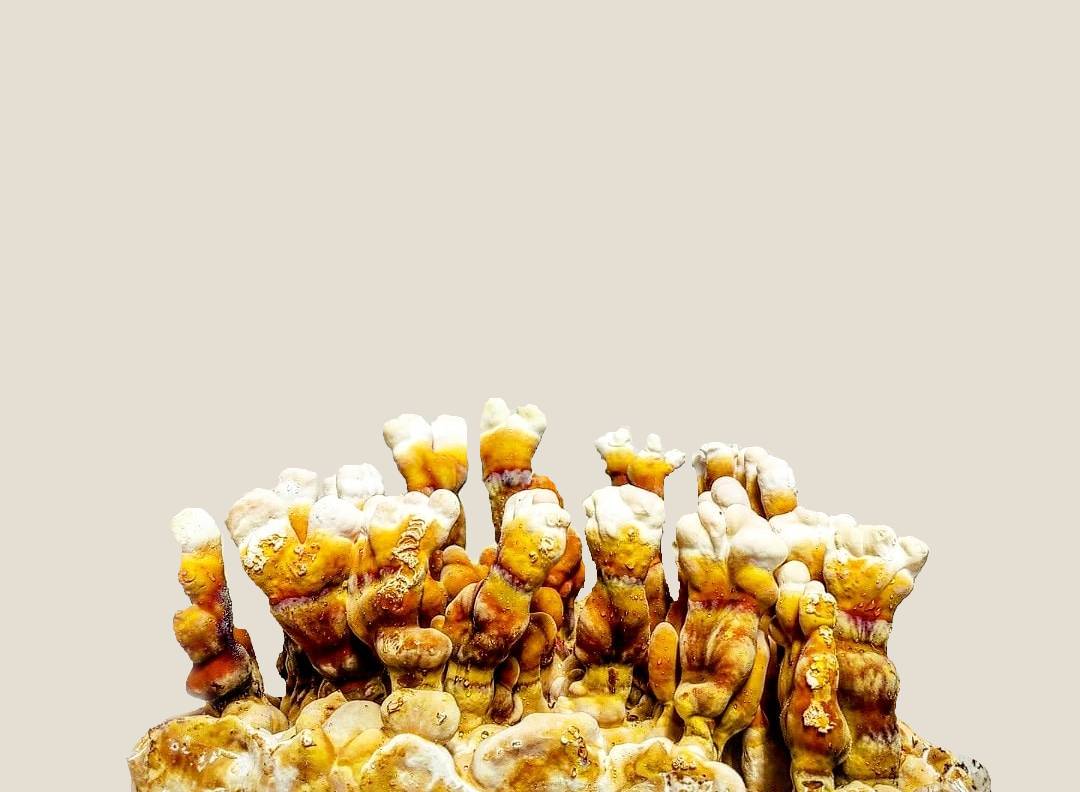
Beech Mushroom Strains
HT-1
Brown Beech belongs to a small genus known as Hypsizygus. It produces the highest yield on master’s mix, hydrated to 60-63% total moisture content.
Brown Beech is typically fully colonized at 3-4 weeks, however incubation ranges from 4-5 weeks as you should let them sit for a while after fully colonized. Brown Beech does not like disturbances once the mycelium is connecting, this may result in poor fruiting; so make sure once it is in incubation it stays there until pins form in bag before bringing to fruit room. This strain produces best when cold shocked, either overnight or up to a week in 34 F-40 F. This stresses the mycelium into production of fruit.
Brown Beech prefers a temperature of 60 F, relative humidity 85-92% with a dry fogging system to keep water droplets from setting on the mushroom pins or heads. Brown Beech is highly susceptible to rose comb so take care to not let water settle on the caps. A standard x-cut or slit in the bag, across the top just above the filter patch, is the recommended pinset initiation technique; alternatively, slit the sides down to the substrate to release more Co2.
Brown Beech has a a lightly sweet, savory and nutty flavor, and subtly crunchy texture. A typical yield for this strain is about 2 pounds.
HT-4780
White Beech HT-4786
Cauliflower Strains
SA-ET
SA-ET is a special order status strain. It is a wild clone from Texas and is purely experimental and can only be ordered as a culture at the moment.
SC-9641
SC-9641 is a special order status strain. It is a Mycelia clone from Europe and is purely experimental and can only be ordered as a culture at the moment.
Chicken of the Woods Strains
LS-FF
LS-FF is a special order status strain. It is a wild clone from Denmark and is purely experimental and can only be ordered as a culture at the moment.
Cordyceps Strains
CM-666
CM-777
Nameko Strains
PN-CNS
PN-CNS is a special order status strain. We have not done much production with this strain so a lot of variables are still unknown, here is what we do know: The Nameko has a slow growth rate, it is of the family Pholiota, same as the Chestnut, and therefor grows in a similar fashion.
This strain prefers cool temps and high humidity for pinning. We do not have any average yield data as we have not brought this strain into our regular rotation.
Nameko has a very viscous outer layer which makes it a great mushroom for thickening sauces and soups with that umami flavor.
If you would like to try this strain be sure to write *Special Order* at the bottom of your Spawn Form.
Purple Mukitake Strains
PS-MU
PS-MU is a special order status strain. It is purely experimental and is only available as a culture for the moment.
Turkey Tail Strains
TV-442
White Oyster Strains
PO-SNOW
PO-SNOW produces stark-white, beautiful clusters with average quality in a gourmet context. It is known for a tendency toward small cap size.
White Oysters, like most Pleurotus varieties, can thrive on a wide variety of substrate recipes. It is highest-yielding on master's mix, hydrated to 60-63% total moisture content. Calcium carbonate supplementation can help to slightly increase yield and fruit quality. It is best to have a tight contact between the block and the cultivation bag, which helps to prevent premature pinning inside the bag.
Incubation ranges from 8-14 days, depending on factors such as ambient incubation temp, spawn rate and substrate recipe.
Prefers cool fruiting temps between 50-60° F, though can be fruited in colder and warmer temps with mixed results. A standard x-cut or slit through the bag and into the substrate (no more than ½”) is the recommended initiation technique. A typical yield ranges between 2-2½ lbs over two flushes.
PO-SS
PO-SS is a special order status strain. We do not have a lot of data on this strain as we have not brought it into our regular rotation. From the few tests we have done, we know that this strain can be unpredictable and displays variability in growth patterns. This strain prefers cool fruiting temps between 50-60° F, though can be fruited in colder and warmer temps with mixed results.
PO-SS, if you can successfully fruit it, produces beautiful cream colored fruits with scalloped edges.
If you would like to try this strain be sure to write *Special Order* at the bottom of your Spawn Form.
PO-MOP
special order status
PO-ELM-A
more yellow caps