Inside Nearby Naturals: Running a Commercial Mushroom Farm | MycoWizards S1E1
In our very first episode I chat it up with Sam and Soraya of Nearby Naturals out of Orlando Florida. Check them out at www.nearbynaturalsfl.com
What is covered, by timestamp
Topics picked out of the transcript automatically. Times jump to that point in the video.
| Time | Topics |
|---|---|
| 0:05 | chestnut, started, oysters, oyster |
| 10:07 | fruiting, name, black, source |
| 20:08 | house, climate, farms, mycelium |
| 30:09 | media, fruiting, share, grow |
| 40:11 | send, tyler, turn, humidity |
| 50:12 | site, north, strain, shelf |
| 1:00:13 | faster, buying, stem, conversation |
Full transcript
Transcript generated automatically from the audio, so expect the odd wrong word. Timestamps jump to that point in the video.
0:05 there it is cool a little distortion on it yeah yeah we'll make it funky just do like doom metal voices the whole time that would be super fun um yeah yeah so i guess uh i don't know just to start off conversation how did how did you guys did you just stumble into mushrooms was it by accident yes and no did you guys meet beforehand or yeah well we met in when we were like what 12 yeah 12 years old we've been going to the same schools yeah you guys been dating that long no we've been dating about 10 years okay so yeah almost that long since we were 18 we're 28 now yeah um but yeah yes we were in the culinary industry yeah before we got into the mushroom thing um i went to culinary school in thailand in bangkok thailand yeah and when i was out there i was just messing with some really cool mushrooms that i had never seen before and i was like holy this uh this is really cool yeah and you know i never really thought about how they're grown or anything like that i've never really even you know thought about looking it up um yeah and then a couple years down the road soraya suggests like maybe we should try to grow some mushrooms in the backyard she said like under the kitchen table or something i was looking at like grow kits or like you know that home like straw pasteurization like methods and all that kind of stuff yeah yeah and then i was like okay we can grow them on logs how long does that take and she said about a year i said okay that like i have the attention span of like a squirrel so that's not gonna work don't have a year yeah we didn't really even look into the bag thing yet you know that i mean we didn't really even know that existed what year was this this is like two two years ago two and a half years this was like maybe five years ago and then when we were in peru we met a dude who uh forged morals for a living three months out of the year he made his money for the rest of the year and the rest of the rest of the year he was traveling yeah and i'm like okay now that's that's the thing that's what we need to do um and then we started researching it then and then we came up with a little business plan and um started reaching out to some chefs in orlando um moved into a little house and started uh using pasteurized straw just growing oysters starting with pink oysters um our first maybe 20 crops were totally sold before they were even harvested so we're like okay this is super cool then uh we started talking to josh and yeah and he started hooking us up with some some good oyster blocks and stuff like that how did you hook up with josh just by proximity or social media social media yeah well actually no no um because i reached out to uh tr yep and he sent me to andrew collierreed oh yeah yes who sent me to josh because josh had recently done a uh consultation with andrew okay yeah yeah yeah and that's it's such a funny world man because i have to like think back to like when uh when we were starting with this stuff although it's like stupid um you know i constantly remind myself that there were nobody like nobody was doing what we're doing at all um and uh and like most farms like us we started sport a store you know everybody has that concept but it's amazing in the background how many people had the same idea to just like run with blocks or run with spawn or run with whatever you know and and like andrew had pointed out the other day like we're now finally being able to specialize and work together which i can say it a million times but it sounds cool you know yeah yeah yeah yeah so when did you guys started what 15 years ago or something oh yeah we started in i started around 2010 um in arizona my late wife and i had come up to like portland maine from school we went to art school together and uh just like read about mushrooms you know and obviously both had um a fair amount of exposure to psychedelics but at the same time didn't you don't really know how many varieties are out there in 2010 you couldn't find anything but shitake and uh you know yeah yeah yeah so uh yeah that was then we sold everything we owned and just traveled worked uh worked on farms hitchhiked from here to there and everywhere in between and ran into a couple out in uh arizona um that had enough money from like the you know farmer world they just wanted to stop doing that and get out of the valley and farm so they had cash and we just we're hippies so we're like yeah we'll build it for you and and back then it was just roger rabbit and the shrimery you know so we sort of built everything according to that you know information and then came back here and uh i was done with mushrooms by then and it's like a year later you know and then christopher emmett christopher and his wife uh before we left um to go to arizona because uh just through a letterpress world because she owns a letterpress shop and you know didn't team up and do a lot of that stuff together and uh he was just like you're not done so we just kept going
5:05 well good thing he did that's awesome yeah there's such an explosion you know there's not yeah there's no telling why this took off when it did yeah yeah there's never been a better time to be working in the restaurant or the mushroom industry huh yeah no it really hasn't man you have so many options and uh and just the level of cultivatable species has gone through the roof yeah partly due to some of the work you guys are doing correct yeah yeah yep yeah most definitely like i i keep bringing that factoid up and i sound like an egotistical douchebag i'll bring it up for you yeah yeah yeah yeah no but it's just it's funny like uh i think about the chestnut mushroom like foliage that didn't exist like aside from a few growers and the only one in new england that was doing it was new hampshire mushroom company and i just snagged a box you know out of rosemont where i was working at the time and cloned it and then uh cmgn started up and i just gave it to everybody and that was like okay now everybody does this you know yeah now it's like one of the four most popular species yeah that one was awesome when we were growing yeah yeah we loved it people complained about that mushroom but we we loved it complaining about growing it or eating it yeah but we loved it as soon as we figured out just you know cut deep into the substrate and let it fruit from within yeah yeah we were getting amazing yields off of it great shelf life even if you harvest it on time for sure such a tasty mushroom beautiful looks like old sexy little pretzels no hamburger buns yeah i know there's some people who have allergies to him too which has blown my mind uh man i'm trying to think of uh it's brian simpson and his wife and i can't think of her name off top of my head i apologize but they had a um a farm in alabama and both of them got the chestnut culture for me and both of them were like deathly allergic to it oh so they thought you poisoned them yeah i'm sure yeah yeah what a dick this is when we were trying to take out one another no but it was it was like a cause for concern because like as we were putting more more and more weird varieties on the market you know people worried about what their chefs were going to think when somebody got sick you know and couldn't blame it on oysters that weren't in the restaurant we got kind of scared about that for a second because we we sold some yellow oysters yeah um to a restaurant called hunger street in orlando and and one of the chefs ate it and he got sick and he had that you know rare allergy to yellow oyster mushrooms he's like man i can't put these on the menu i'm like you can put them on the menu as long as you don't eat it right did he no no yeah i know i don't blame him either you know well chefs run that world you know and if you scare a chef you're done with that client all together especially with something as like like as there's a lot of people that have like kind of like a fungi phobia where it's like oh it's a weird fungus like you don't know it's like is it safe to eat we got that question all the time and he's like yeah you need to be able to be like this product is like super safe and give them that like peace of mind that you're not gonna like poison their clients yeah for sure but in reality you're just as likely to be allergic to parsley yeah exactly oyster mushrooms and develop it too you know like those allergies are totally developed over time and they go away i haven't heard of anybody being allergic to the chestnut who hasn't but it hasn't been around that long you know so who knows eventually could could get to that point where uh people get over their allergies of mushrooms but it's already weird enough to have an allergy to a specific mushroom yeah although if i ate some chestnut mushrooms and it didn't go well for me it would i would probably be pretty hesitant to try it again and yeah figure out if that allergy subsided yeah yeah it's totally understandable yeah yeah i've never had any allergic reactions to mushrooms other than uh i don't know ones that make you ill intentionally oh yeah i don't know i got over that like weird thing uh uh that dennis from new hampshire mushroom company who's like a partner there he was trying like a five different speed like new species a year wild ones and i was like you're crazy he's like i just put him on my lips and see what happens i'm like all right but yeah i've never been on swallow yeah yeah i know yeah tons of like foragers who go out and tours like to freak people out by biting into death caps and it's not my stick man yeah yeah here's a piece of bread i brought a granola bar for that reason yes exactly oh my god yeah well i think uh i think as things go on and more and more people develop more and more cool strains like the black oyster thing you know it's it's kind of it's invigorating to find a new one and just be like yes and where did that one come from because i i know tr was uh talking about that one a lot for a while and then it just kind of exploded and every small-scale grower had it yeah it was uh um so hope to konoko is like the i'm pretty sure they're like the uh um the breeders of it per se and i don't know if it came from their uh factories and sort of labs overseas or if it was developed where they have their spot in california but that's clearly where it came from and uh for me and Cap N Stem we got it
10:07 through um far west fungi there's a dude out there named brooks uh and yeah you know brooks so brooks uh gave it to us like before anybody knew what it was and we just had it and we didn't do anything with it because it was just like black oyster yeah yeah really no that didn't sound special until you fruited it out yeah nobody even knew yeah what it was doing and like hotel you know they barely advertised they just stuff shows up on a shelf you know and uh and that's sort of like you know far east advertising with like animation and stuff just doesn't hit u.s minds it's like girl the dragon tattoo you're like the i want the woman the action version you know so until like people see it in real life they can't you know equate what it is so yeah i came from brooks and then tr snagged it and then allegedly and he can tell me otherwise but uh i believe he didn't name it black pearl i think it was somebody else who named it that could have been brooks um and they took off as that but we refused so we just caught black oysters yeah it i like black pearl like shimmer furry as well that's cool yeah yeah which team of furries just like shima fury whatever the full name of that mushroom is is just a very hard taco yeah it's like a velvet oyster and it literally just means plural esophagus people like it's a hybrid i'm like i don't think it is it's just like you know it might be a hybrid but it's still an oyster yeah cause it was supposed to be a hybrid of king and blue correct that's what everybody's saying yeah that's what it like looks like too yeah for sure yeah i don't know yeah it definitely tastes different than a king for sure it's got a slightly softer texture but like yeah at the same time it's it's a killer mushroom it's it's a fun one to grow and the colder it gets the better it gets you know but there's been plenty of people who've had issues with it for sure yeah we were doing pretty solid with it when we were growing it didn't really give us any problems even down in florida where generally like any of the like the kings and stuff were giving us a lot of issues just because they do like that colder weather yeah although i guarantee we had the coldest rooting chambers in florida we totally over designed those chains yeah that's super important though you know that people like don't and then it's 80 degrees in their free room and they're like yes because we were talking to josh and we're like okay what's the number one thing that you just like kind of didn't consider when building your last fruiting chamber you said temperature temperature temperature yeah it's everything just like just get what you need and then buy double that yeah you know um yeah you know have an anti room to cool down your air before it goes in whatever you got to do just make it cold as hell in there yeah i think we spent probably a month trying to figure out like the configuration of the ac chamber and how like the main thing was going to sit outside the warehouse and then the tubing and the pumping and all that stuff yeah yeah yeah and that's not really we're not those kind of people you know we're not like engineers or anything like that not at all like we were went from 10 years of restaurant work into like mushrooms like whoa what are we doing yeah well like a lot of people do that though yeah and that's the weird part is most people like approach us from a business level or whether it's a loan officer or whoever it is right and they're like you you went to school for this i'm like no i went to art school i've painted naked people for four straight years and fell into mushrooms by accident and they they can't rationalize it because they went to school to do what they wanted to do yeah yeah most of us are just they totally stumbled upon this well i mean what would be the path if you decided you wanted wanted to go to school for mushrooms what would be the best path you'd start with like a mushroom mountain course and then go to the woods yeah yeah i have no idea you know i mean this is an interesting sort of platform for conversating now because uh uh you know brian callow from what the fungus is offering his sort of internships and what you know he doesn't offer there um for his own benefit and time you know management uh we end up having to consult with farms for you know just tell them how we would do it you know yeah and we figured out that sort of level of offering you know over 10 years now like telling people what exactly to do you know fruit but as well as the the you know the cultivation side of spawn and substrate and really going down those avenues too is people just want to backwards integrate so bad and they really want to it up it's within like the nature of people who are into it that they want to they just want to start from the beginning yeah we definitely took the opposite approach we're just like okay let's master fruiting yeah because it you know if we start with a culture yeah you know you up the first thing and then and then you nail that and then you go to the second thing and you up the second thing and then you have to start over again it's like yeah just start from fruiting master fruiting yeah and then start knocking your own blocks and then start making your own spawn and then start with cultures that's key man i mean so many people really don't they didn't take those steps before we could offer them blocks and before us it was just go knock on kss's door and really beg them for you know blocks just because there's no other option you know yeah it was super hard to source raw materials like back then too i remember it took us like not only did it take us like months to
15:08 source like just red oak sawdust at the same time it was like trying to find a consistent source for it and then convince mafka like our certifier that like oak stands or not soybean fields like you can't really certify uh oak stand organic yeah it's an absurd thought you know so yeah there's been so many just evolutionary steps in cultivation which i don't know how people would started now blows my mind because people do just know we're out there and it's funny to have somebody call and be like i found you on troomery or i heard you you know captain sten mentioned on there and you're like jesus i didn't know where you started or something yeah right yeah blue light airwind exactly uh you know whatever keeps those avenues up is interesting to me yeah we should we should look into that more we should start getting back on those forums and stuff just for shits and giggles just like feed it full of disinformation it's like people growing cubes on tube socks whatever man oh man i know some of the best things on there are not like it's not the content but it's those like little gifts of like hulk hogan like you know shaking and screaming and this is so awesome that's like half the reason i would go on the shroom just like finding those dumb images of mario like people's little sign-offs yeah yeah yeah there's little stickers and they put on there you're like this is fantastic but i think that's you know it's it's come so far from uh from like roger rabbit air yeah it's it's astounding it really is man i don't know if you guys even know who that is this is crazy okay so there's a guy named uh man i'm a butcher that was his username roger rabbit yeah was on schumer is that who came up with like pf tech and stuff uh he wasn't pf tech no but he was uh basically the first person to advocate for um atmospheric steaming so uh his name was keith i think uh forget his full name um but his wife died of cancer and i think he just went towards cannabis and got out of it all together but he he basically was like running the cool stuff in the shrimery for a long time and uh he's like he developed this like barrel system with these welded grates that we just literally copied out in arizona you know 12 years ago 10 years ago and uh and then just as like you just inject it with steam you know x amount of time yeah and that was the first time anybody here had like even really gone down the avenue of pasteurization or ultra pasteurization or whatever the you want to call it yeah yeah i'm just like trying to kill everything aside from you know really hard to kill bacterias so yeah yeah but that's that's roger rabbit so that's like my connection to it but clearly people are coming up shorter just have no idea like you know of that yeah no ideas yeah yeah yeah it's really interesting yeah i feel like a veteran of the weird mushroom growing world but i think like the most helpful thing to us when we were getting into it was all of the um like mushroom growers like facebook groups and stuff and like being able to reach out to people through there and it was just at least like a kind of like a served as like a weird road map almost just like oh this guy's doing this and this is who this is and like all that kind of like helped it fall into place yeah yeah who were who were we watching first when we started out i know we watched a lot of eric myers videos he was doing some farm tours with people like um yeah he was just doing tours of other people's farms and showing his own and stuff yep we uh watched a lot of tiaras videos um and uh some of mossy creeks as well yeah yeah so yeah so that was helpful for sure yeah that's super interesting yeah yeah because all those cats didn't really exist on the social media world yet you know we started to get into it so it's it's amazing how that's propelled forward and uh i know maine mushroom company brings up uh i don't know the guy's name but uh it's like southwest uh mushrooms oh yeah i don't know his name either but yeah like great quality videos yeah it's like really informative definitely jealous of that quality yeah yeah yeah what kind of gopro yeah that guy looks so cool right now he does yeah he's got big ass hair he's a he's a shoeman yeah without trying at all yeah but yeah he like sort of brings it from that uh like step back into cannabis world like by growing in those grow tents and stuff and showing that you can really grow in like such a wide variety of platforms yeah our first fruiting chamber was eight by four it was like one of those vizio basically a cannabis tent yeah yeah oh man that got all cooped up with lots of the co2 oh yeah yeah that was that was not fun it was it was definitely harder to like try and grow in that smaller space than it was yeah yeah and we tore down the tent and just started openly fruiting in our garage and and they just did way better way way better you know sometimes we would put a humidifier up in the garage just open it you know yeah it's also florida don't tell our landlords like
20:08 they're swimming out there anyways this is when we were in the rental house it was a it was a 700 square foot house including the garage yeah and the entire garage and the little workshop um was all mushroom farm that's awesome half of our house was mushrooms in them do you have any problems with them like ground in the walls no it was a concrete block house oh okay oh yeah it's florida right yeah yeah i just forget about no basements and like has to withstand hurricanes and moisture yeah yeah and it was an old house from the 50s too that's my outfit yeah i remember uh deanna and chris uh that were a detroit mushroom company i don't know if they're still around or you know they slowed down kind of because of kovid they were getting blocks from us for a while and um uh their first place in detroit was just like a burnt out old apartment building that they bought for 50k you know because detroit's detroit nobody wants to be there i figured that would happen with detroit yes once it's kind of you know lit on fire yeah i figured as soon as the fire went out it would be urban farms everywhere coffee shops it's like trying to force yeah yeah i mean it's like blueberry bearings up here you know like that's what they do it's it's wild to see but you kind of got to do it to a city eventually so yeah yep yeah so so in terms of nearby naturals what do you guys have like a vision at all for it or is it mostly just like really trying to focus on the business side of it do you have any like initial obsession that you're still sticking with well i can't answer for soraya but for me i just i guess the goal is to teach as many people how to fruit mushrooms at home as possible um and you know obviously we like return customers and developing relationships but you know we like new customers people who have never even heard of mushroom or these mushrooms and they've never seen how they grow they don't know what pins are you know right right they don't know anything about fruiting conditions and we're actually teaching them something and you know giving them something to get stoked about so far we've taught you know over 25 000 people how to grow mushrooms which is really exciting and it's it's fulfilling it's fulfilling so it's just it's really like about getting people excited about growing food and getting people more connected to like where their food comes from because that's really important to us just coming from the restaurant industry and just like realizing that there's so many you know like there's there's such a lack of connection between like the people who grow the food and and like all that like kind of thing that like people just miss like there's like the small smaller family farms are disappearing and things like that so it's like if you get people interested in growing and like even like all like the climate considering the climate that's like all the climate issues that are going on right now just getting them growing small amounts of their own stuff just like you know yeah and the more these people you know get turned on to these type of types of mushrooms the more they're going to seek out their local farms at farmer's markets for sure and eventually we'll have some sort of form on our website because you know we're developing a pretty large footprint yeah at this point um so eventually we'll have something on the website that will you know direct people to their local farms to so they can pick up the mushrooms if they don't feel like fruiting themselves which i think will be great um yeah there's a huge amount of that sort of uh i don't know the proper terminology for it but like open source socialistic mapping cooperation i guess yeah yeah without it sounding like a militant thing but yeah it's interesting because we've tried so hard to sort of push that uh envelope of like being open with what we do and how we do it and really trying to share with farms you know who actually ask but have to have the tickets just asking you know yeah not enough people especially in this world we're pretty like like a podcast for mushroom farmers is weird because we don't want to talk anyways yeah so it's it's mostly just trying to like you know push the conversation or give somebody something to listen to because half of us are just in you know our sort of day-to-day rigmarole in this business just listening to podcasts half of them have a headache from being in the incubation area yes yeah oh yeah i know i tell that story everywhere like half the people laugh but i swear to god we had no ventilation at our westbrook facility whatsoever we just had a ac that was like undersized and uh my late wife and my best friend mike vance at the time were both working for me and they both convinced themselves that there was a mycelium man within the warehouse and it was just co2 you know because you'd walk from flinders together for like a wrench and come back with a hamburger but you didn't leave you had no idea where the hamburger came from yeah it's so co2 it's like it's like when you're working in a restaurant and you walk into the walk-in to grab to grab celery and then you come out yeah there's so many of those like equivalents between different service kind of industries and hyper production worlds you know it's not made for humans yeah that's true i'm trying to work around it though mycelium man yeah yeah i think mike for
25:08 that i think mike was like the dude who said it and then he would like purposely take naps in there like it was like there's no drugs involved here he's like nah i'm just falling asleep and feeling real up he's like that's wild cool you should write a comic book mycelium man yeah he writes comic books right yeah he makes them yeah he's yeah he's he's got some killer art man he just did uh speaking of podcasts like a t-shirt design for last podcast on the left so he's like he's getting out there he's he's done some crazy there's like a sailor orgy image that i have somewhere that he's unreal i'm gonna pull this out i'd love to see it oh dude it's so good this is like his level of you know chaos i was like hanging in my upstairs bathroom oh that's so fun super cool my last house people would just go up there and take our and stare at that yes like dangling feet in the back yeah the more you look at that there's like a dude hanging there's like people under the bed yeah yeah straight up pornographic pirate awesomeness yeah for those of you at home uh we are looking at cartoon porn that's all it is now one of the cool things that i've i had a pleasure talking to uh this a couple of women from columbia university we're doing like a sustainability report uh just yesterday it was a brief conversation but they're working with smallhold uh speaking of them and uh and trying to sort of disseminate what the major sort of advantages are for these like micro fruiting farms and in scenarios where you're focused on like small fruiting which can definitely get you in trouble like you said if you're trying to fruit like in a shotgun tub versus just your garage you're gonna get two drastically different things so you can over control an environment and they've gone to that extent of over over over engineering these like spacey containers but they work well and they look really cool i mean the concept is just is on point yeah it's it's just really really cool it's and that's something we would like to do in orlando if possible well that's what i keep telling them too i was like there's it's hard to sort of understand the um people's like financial willingness but people are willing to pay 10 grand for a unit like that because you're like this is cool and you can trial anything in it you know and smallhold we will help you start this in orlando yeah and they're like they're distributing in texas they have a farm built out there they're starting to grow and my like initial first thought about them was they're just what what are they doing like i couldn't figure it out and they're just selling fresh mushrooms they're just choosing to do it in a very visible way and that's it took somebody with money and time to do it yeah and that's like the cool thing about this industry too is that there's like so many little niches that you can just like fit yourself into or create or like it almost just seems like it's there's just like an endless amount to like explore and play and it's still yeah yeah oh it totally is man it's a i think it's exciting from like the world of packaging materials and whatever you know leather like it's pretty far out yeah so so what was y'all's goal when you like really started this um you know i think our initial goal is just to sell mushrooms like just frankly to figure it out and it's the same obsession that everybody gets into or you just want to figure out more and more and more and this is like before masters mix revelations before any of the stuff was just like why are our blocks one will fruit great and 10 will do terrible and you know you couldn't figure it out and you didn't realize that all the ramifications came from like the design of your facility and airflow and all of these things and factors that fit into it so our goal was very simple it was just that and then the minute we switched over to the block specific production it really began to like be about innovation and pushing farms forward into environments where they're not spending so much money on r d in time that they just don't understand you know how they're not making money you know and that's where the block thing really worked we were just like okay if we supply people with blocks they'll either make it or fail right and they just kept making it and making it work and that was the weirdest part saving them from falling into these rabbit holes yes yeah and it's not like a savior mentality it's just like you know we've wasted that money don't waste that money yeah you know there's no need because it's not only wasted money it's just like wasted resources as well yeah yeah yeah truthfully it was a huge ego push for like the farms of 2010 forward to probably your entrance into this thing to be able to uh say i don't make my own substrate and that's okay it was like a real push for some people they're like man i can't do that would never not make my own spawn my own cultures and you're like why not i just outsource it like the rest of the world you know and that doesn't make it any less sustainable it's actually created like you guys are seeing these weird patterns and
30:09 formations of specializations within this industry and then people are just working with one another you know and it's really that's been cool to watch it has been like every it seems like everybody in this community is like pretty encouraging to each other and yeah it's definitely not a cutthroat industry where people are trying to you know mess with each other and stuff like when we stopped growing a couple months ago when we stopped fruiting yeah um we gave a couple of our restaurant clients to a super nearby mushroom farm yeah you know that they wanted mushrooms and we know somebody that has them like you know why not share the info yeah and i feel like that's how the whole industry is it really is man or at least the people we've met yeah yeah i think there's different levels to it and like business things can get weird but you know yeah that's when we first separated from blocks and came up to this facility it was like us north spore mausom and new hampshire mushroom company and we just chose to go in our different directions at that moment in time you know and it just worked you know so yeah it's a it's a hard thing to sort of uh to like say we had a plan from the beginning but we didn't at all you know but now we do pretty much the only plan is just make mushroom yeah make mushroom get money exactly yeah try new strands yeah yeah yeah so i don't know we keep going with it but yeah what is your guys's background besides this in the service industry did you grow up doing any sort of forging or hunting or anything um not really i grew up like kind of like on a small farmish thing we had our own little garden and we had some like horses and cows and stuff yeah lots of guns the south of the north so everybody up here is obsessive it is man it's crazy yeah yeah i i grew up you know in a suburb yeah never really forged or anything like that pretty much we got into mushrooms through culinary and that's yeah yeah that's that's it yep it was just like a like a you know that endless like hunt for weird ingredients like yeah yeah and florida's it was just a mushroom wasteland there's just nothing except for monterey which is buttons yeah they do sell oysters but you don't get to them until they're five days old yeah yeah i think that's the funny part there's still a lot of places out there that are wastelands for mushrooms like complete wastelands and uh definitely a lot of opportunity out there oh it's unreal there's so much yeah so like most people in florida like haven't you know seen any of even just like the different colored oysters or the lines made yeah you know coral tooth they're just like oh my god what is that like you put it in an aquarium or something yeah yeah yeah it is it's spacey and strange yeah it's fun seeing those reactions though yeah yeah that's the level that has to keep you in it uh when you're like in this world of just you know if you're not fruiting mushrooms you have to find a way to like find that same excitement and interact with those farms on some level you know yeah definitely one of the nicest things has been having like maine mushroom company up here just probably like you guys have josh in that regard so you can see the facet and not like lose touch with reality you just delete comments or whatever like oh cool we don't just sell dirt yeah right because it turns into that you know it's like i think we can ponder it and like get bummed out about it or sell it as such and be like look we're carrying the overhead so you guys are doing this as a sales pitch thing but at the same time no you definitely get bummed out you build tiny fruiters just to keep in it so yeah like on a on a personal level you guys doing anything else that isn't doing anything with mushrooms um currently well we did just get some like roller skates we haven't really had much time for anything else i think i sprained my wrist yeah but yeah it's great yeah it's really good stuff that's fine it's hard it's hard to find time to do other when you're out of business but it is it is i mean a lot of our work is you know 99 of our work is remote now yeah um so i mean but we still don't have a lot of time within the last month though we're still getting used to like not being at the farm seven days a week so yeah yeah yeah and it's it's a little depressing as well because you know as you were saying like seeing mushrooms grow is like yeah that's the thing you know it gives you that energy babies we do get you know quite literally hundreds of emails a day of people sending us photos of their successful kids which is great and especially if they take time lapses just like that is so that's awesome i love that that's pretty sweet yeah do you see that there's more people doing that sort of uh we have the social media revelation we have this cool new organism are there more people that are like i'm growing these specifically to create content just because it's cool oh yeah you see that a lot definitely we have a lot of people a lot of um influencers yeah if you will that reach out to us you know looking for free kids yeah um so that they can post the content on their page you know whether it's somebody who specializes in you
35:10 know ancient chinese medicine and they want to and they want to grow some reishi for a video or something yeah hell yeah i'll send you a kit tomorrow just to get it out there yeah yeah yeah and it's like i want to know those recipes yes i want to use them yeah it's cool um this is the world of like trying to share that uh content creation too you know there's plenty of people who aren't doing it which is why i think uh the majority of people who are in the mushroom industry know nearby naturals just because of obviously your heavy amount of like advertising but at the same time because the content isn't you know and it's not like complicated you're not like what what's happening yeah we don't talk too much about cultivation it's just really easy to digest our advertisements and content is just like really straightforward and just goofy you know we spell things wrong you know we just we're just yeah it's a reflection of us yeah and not like the product yeah yeah it has to be we we have fun with it yeah yeah there's so many businesses who cop to like it doesn't matter if you're in the mushroom industry or not who just they're like this is what we got to do because what people want yes you must write ad copy yeah yeah there's like no personality behind it no no so even like a funny hashtag makes my day just because it's like that's hilarious yeah eat my mushroom is like the greatest thing ever i don't know who started that i haven't seen that one i feel like amy speaking of her she was she said she was gonna steal it and use it to which she might i don't know like i try so hard not to look on social media all the time it's difficult lucky you it's like first thing when i wake up in the morning i roll over and look at instagram comments have you ever stopped yourself and just been like i think i'll drink coffee first or no not yet maybe tomorrow maybe tomorrow or you decide you stay out of it oh no i like try to totally stay out of it we kind of made like a deal so i do most of like the answering customer service emails like teaching people how to grow their kids yeah he handles the social media comments yeah yeah yeah split it up so we don't go nuts right that's a lot to deal with it's crazy amounts yeah i mean half of the job is half of what i do is just telling people that we don't supply any psychedelic yeah growing supplies or say it again so they all hear it yeah yeah by the way we we don't do that not yet there it is there it is but um but yeah a lot of people will comment and say like because i'll say no that's that's technically illegal yeah and we can't do that because we like our company and what we do for a living and they say well well actually it's it's legal for a microscope i'm like no that's those are the spores we're talking about selling mycelium here right right and then they're like well what's the difference i'm like oh i thought you knew everything that's the thing that this industry has promoted has been that and that's what i've noticed and it's not to talk trash on too many people but there is a large amount of people who just want to fight you're just like i don't what i don't care like yeah you already know the answers just keep going with it i'll find myself getting kind of worked up over some stupid comments in the mushroom grover's facebook group and stuff like that yeah i'm like what am i doing well and it's like 150 000 people in that group you know i like that group because there's a lot of people who are genuinely just excited to be getting into a new hobby yeah and you have the information that they want for sure it's just somebody asked for advice and then you give them legit information and then 30 other people give them the worst advice that you've ever seen yeah and they don't know who to trust yeah so that's partially this podcast right this is like trying to disseminate you know people who are the noobs people just have done it you know like and it's not to say that you can't figure it out it's just like there is no bible there's no way to go about like figuring this stuff out yeah and that's a great thing that there's no be all end all bible it makes it way more fun yeah and it also just like changes depending on where you are in the country like we're not going to grow mushrooms the same way you are like it just doesn't really it doesn't really like quite translate seriously like temperate you know geography whatever ph soil whatever it doesn't matter what it is there's so many things that attribute to sam strands growing different one state to another we were talking about that on the way up here we were saying um like we don't even know what it's like to have to warm a fruiting chamber yeah you know like just cool yeah we put so much effort into cooling systems that like yeah warming a fruiting chamber well that's like you know humidity we're like yeah yeah yeah well ford is an interesting spot that way so i feel like if if enough farms in those regions just worry about cooling then you're fine you know and it's really interesting having those conversations on a consultation level with individuals coming to us saying how do i do this you know and trying to like explain like a fruit room is a lung and like trying to like break it down psychologically so that they get what it's supposed to do and it's like not a weed grow you know you can't really do the same thing it's yeah it's not even really like a
40:11 like a normal plant grow where it's like okay you turn on the lights for this and whatever you kind of have to like look at them and just watch them and see what they adjust as you go like yeah and humidity stats are so yeah josh talked us out of using a humidistat and that was maybe halfway through growing in that warehouse and we're in it yeah just it was so liberating it's so liberating oh my god yeah because we had we had it hooked up so we could view it remotely on our iphones and it was just driving us crazy it would be right at 3am and i'm like only 55 humidity and cheaper too yeah like baby i i got to go to the farm she's like sam's down you're not you're not going anywhere oh yeah yeah just calm down my lay wife there and mike and i were working on st patrick's day it was like sunday or some and we decided to eat a bunch of shrooms and drink at the same time after doing a mix all morning and i was like uh you know we're finally like coming out of it i was like i'm gonna go get some some pizza and i was being a dick i was like making them slowly eat mushrooms you know it's like rising vibe but they're never fully there which is just it's like blue balls yeah you know it's pretty mean but uh so they're both hilariously hating me but uh mike left and i went to go get some pizzas i was like i'll stop by the farm you know it's right down the road and i go in and we were having trick problems at the time and like i'm still kind of a little out there and i just see like little green spots like everywhere i just like had a mental breakdown i was like i gotta leave i gotta go get these pizzas so i left i go to shaw's i'm sure you don't even know what the shots is right yeah we were talking about this later but uh i go to the grocery store and i get a bunch of pizzas and i'm standing in the self-checkout lane and i set the pizza boxes down and i go oh i didn't close any of the fruit room doors so i drive all the way back to the farm this is like your brain on drugs right yeah perfect commercial for how it actually works and all the doors are closed the lights are off everything's fine i've never even gone into a fruiting room so i go back to the grocery store i get the pizzas and i go home it was just the worst weirdest experience of why you never mix psychedelic mushrooms with ground gourmet mushrooms so yeah i haven't done them since hallucinogens imagine walking contamination chambers like it like multiplying before your eyes all the contamination oh my god yeah and when it's trick and you see it you're like your eyes getting closer to the bag and you're like is that trichoderma yeah like is that actually amazing yeah yeah the only thing worse is neurospora but it's a whole different thing like i've never seen that under the influence of any substance so i don't want to like i'd have to kill myself it's like that one time we got a we got a bunch of blocks from josh and um he had used orange tape oh to tape the bag those are the times to like trick you out and then you're like they're great you know yeah they'll keep you on your guard man i don't believe in a lot of weird spacey but i do believe mushrooms just like with people yeah you try and put them in environments they don't want to be in and they're like yeah i'm like all right i'm planning this new tattoo it's going to say death taxes trichoderma yeah yeah that's true three things you can always rely on in life yeah trichoderma should be crossed out and then neurospora nice orange and orange yeah fluffy orange oh dude you should get that that's a solid that dude are you covered in tattoos um my whole left arm and then my right leg is getting pretty full it's getting there yeah yeah i give up i'm like uh i i'll ride a motorcycle like a bat out of hell and not worry about dying but i hate getting tattooed like such a baby i'm like stop sticking i can't handle the pain yeah i kind of like it how expensive is your work mine not that it's like all you know like kind of you know small stuff or jailhouse stuff yeah so i don't know it's not it's just fun salary old school tattoos i don't think i've paid for many you know like i usually just have yeah you said painting so like you just tattoo artists and sign painting go hand it in you're like i made you a sign and they're like what does that do with no money yeah his art aspect like uh yeah exactly charles is everywhere yeah it's like the anti-marketing campaign of Cap N Stem prior to any of this was like provability it was like if we put our t-shirts on charles manson nobody will give a yeah and truthfully like they they didn't you know because nobody was looking i just think you are actually charles manson right yeah yeah just to explain i i've been talking to eric for for months maybe over a year now yeah probably yeah yeah and i thought the entire time that
45:11 he was the one in his profile picture on facebook who was charles manson just wearing a caption maybe a few less rings and then i pull up your instagram and i'm like okay this guy who looks like charles manson has a red-headed red-bearded best friend that he takes pictures of it like that's the dude yeah yeah we just call him the dude that's funny man that's like even using the sabbath logos and stuff like we'll have people who are like i get it like we had a uh was it i think it was the fedex guy or somebody picking up like an ltl truck was like i i just want to tell you i get the reference to the masters of reality but i really thought you'd be more of like a flu in that crowd and then in the background i was like wait there was this one time tyler said we should make a fleetwood mac t-shirt maybe he's not wrong i don't know man yeah do it v2 yeah i mean like who isn't a fleetwood mac person right right so i guess everybody is now that tick tock video went viral yeah so you do know something about tic-tac-toe oh yeah okay yeah i i scroll that's cool you screw it yeah yeah i have to figure out how to look at it and not be annoyed by it because both turn the sound off that's all i got here and squint my girlfriend's kid tyler will just like he'll be like you know it'll just be blasting out the same on repeat and she's like turn it down like immediately every time so that's my exposure to tick-tock is like it's loud and annoying i think tyler just got himself a job he might have he did he created a main Cap N Stem uh tick tock to give himself a follower i was like good for you man it's like i tried to convince him to do tick-tock dances like an incubation just because it would be hilarious that would be really funny nobody would have any idea what the was going on yeah yeah who is this is this the same company it looks like i don't know it's not charles manson yes i've been struggling with how to translate content into tick tock form for nearby naturals i'm not going to dance that platform just like straight up makes me feel like a troglodyte i'm like what is this i don't understand the format i don't understand how people sync their words to the song so perfectly like what's going on what's the secret it's amazing yeah these kids are scaring me they are but it's like we're saying like how do you how do you pretend to to advertise to a you know an 11 year old turning 15 year old turning 18 year old yeah it's like fellow kids yeah yeah yeah i feel like anybody it's just like parents our generations popping onto facebook no we don't use facebook you know it's the same thing with instagram it's just it's like making its waves but trying to follow that and like plan accordingly for sales yeah is i i would i didn't thought i hadn't thought about it until today yeah and mentioning it i was like oh my god it's it's definitely something that soraya and i have signed up to do yeah we gotta do it you gotta find somebody in here to just do tick-tock dances with mushrooms we'll probably end up having a lot of fun with it to be honest once we get into it i'm sure it's gonna be a great time yes i'm just you gotta share them with instagram because i'll never download it yeah i'll send them to you directly yes yes yeah that's the best that's like getting the like fresh mushroom photos from like customers you know some people send me a weird mushroom like because i love the mushroom lure and all that weird stuff they'll send me that i'm like three in the morning i'm like oh yeah i'll stay awake and read this this is fantastic yeah thank you i don't know if you've had that same reaction from like family and friends the minute you start a mushroom anything all they give you are gifts surrounded by mushroom-ish things yeah shirts and mushrooms on them shirts yeah books like all kinds of little cookbooks with mushrooms like everything and then people just drop links on your facebook page uh anything having to do with paul stamets yeah this dude's saving the world yeah yeah starting with the bees starting with the bees by letting them eat his face yeah did you know that button mushrooms are poisonous did you know carcinogenic yes i hope he calls me out if this podcast makes it anywhere past this room hey i'm gonna go home and listen to it ten times yeah there you go that's how you know you're stroking your own ego oh man i sound good yeah man was uh from like the artistic standpoint too and and granted you know these anti-marketing techniques that i call them techniques it's just me half-baked laughing at photoshop at three in the morning my underwear but uh like from the artistic standpoint it's interesting like you did you you're laughing it off in this one direction but like are you funky enough to grow mushrooms it's simple enough but like it takes somebody to be like that's hilarious yeah i should run with it and we had a few comments on that on that ad um people saying funky what a poor choice of words like this ad is really stupid did you keep those on there yeah
50:12 the lady was like these these people are druggies and this company is run by drugs don't give your money to these druggies like don't fund their drug problems like that's really funny i know norsport had that issue we had a dude named rick tibbetts i'll call him out and he was like the mushroom dude you know before there were mushroom farms and lots of mini ones you just went you told people you had mushroom farms you tell them i have these farms down in pennsylvania and you would just go buy mushrooms and bring them up and you know fish around portland and sell and he had truthfully like great clients you know from eventide and hugos and all those cats because he was the only guy and they're oddly loyal to this guy and uh um and he called native maine which is a uh uh basically like a produce distribution company that i used to drive trucks for and he was like uh i'm here to tell you uh about the north port mushroom company uh they're yeah they're tied in with the outlaw motorcycle clubs and this is verbatim and uh they're up to no good they're they're dealing with drugs they're dealing with cookers oh yeah you guys don't have much of the accent out there but this guy is straight from boston ken and uh yeah so he left this whole message and uh the dude who was working there i'm pretty sure i used to work with him just send them the audio file so they have it so they made like a a north spore uh north port i guess maybe i they probably just said north sport but it was like mushroom gang just like called them out and made some products and they sold it i was like this is gene that's amazing that's like using like the negative marketing as like yeah like like liquid death oh yeah yeah there's like this is so offensive and they use that as their ad yeah yeah i mean we're at that point too like advertising wise like it is everything and it's nothing at all at the same time and you can only people are like taking old comedy that's now offensive to the modern human and just making it offensive but marketing the defensiveness you know yeah it's great you know it's truthfully it works yeah and so now they're less offended exactly it just it just kind of like gives the whole thing like a more casual vibe than the whole like uptight like yeah like yeah yeah yeah it's totally true and that that's probably why everybody tries to free mushrooms differently like we were talking about earlier yeah the funniest funniest ones have just been when people like try to overdo it and create these environments for fruiting that like an alien wouldn't even try yeah they're like what nothing like like too much airflow too much air turbulence and like yeah like uh you you have explicit instructions to cut a line in the bag and you see you need home fooders okay yeah yeah it's been with some commercial people who are just starting out um and it's amazing people don't like asking questions now like it's like you're not considered cool if you ask how the to do something and uh yeah they'll like take a whole oyster block out of a bag and like mush it up or something and then they'll put it in a different bag and they'll be like this is what you're supposed to do you're like what what in the who dropped you on your head nobody even got close to telling you that's how to do it no and i can't figure out where they're coming from either and then they're like so i filled the bag with uh with orange juice you're like i don't know so i marinated it for 24 hours yeah there's literally some people that i read their emails and their customer service things like oh my god i literally have to get up go smoke a bowl and come back to it to answer it just like you yeah it's true and it's and it's not to like it's funny like when i worked at trader joe's i was in sign painting for them which is really funny every trader joe's has two side painters in the back that just eat all the things they're making signs for so i got super fat when i was there it was awesome cookies i'd be like you need another side for cookies but no matter how many signs you put up and there's a million of them in trader joe's people are like how much choose that and you're like there's three signs to say 399. you know like just look at the signs like when people comment right below the shop now yeah they say where can i buy these um are these on your website yeah oh there's somebody who sent me an email the other day that said what is this site what's the site it's like you had to scroll all the way to the bottom of the site to even find the help email i really don't know how to answer like this that's got to be like a bot you don't think that's like a bot of some sort maybe it's our competition trying to waste our time oh yeah yeah it doesn't mean it's better tonight they're doing the um like the blue oyster mostly i see them selling pink oyster ones too but i think the blue oyster is their main like home depot that's their thing oh right it's an home depot yeah yeah yeah yeah and i'm honestly not sure they got they got pretty good shelf life on this thing yeah i don't know how they're doing that that's a little cool well i think the shelf life comes down to like uh strain yeah well it's it's strain but it's also nutrient you get you know less than a third of a quarter of a pound off of those blocks right yeah you're small
55:13 that's totally rational like on on the level of uh kids to people who don't care about counting the pounds that they've actually generated off of a block so it's a novelty kit it's like it's totally nice yeah yeah for us and this is the the weirdest thing when it comes to like talking to people who are investors or bankers or whatever is they're like so a company approaches you and says we want to use your blocks free mushrooms and we're like no jeremy's like i kind of want to fruits and mushrooms how do i do it and we're like okay yeah and then we show them how you know and like that's how it goes or they research it or they watch the youtube videos or whatever it is and uh and it's it's an interesting thing to create your own customers you know whereas like that's not i don't think the back to the roots people are going towards nearby natural kits no no it's it's almost it's a totally different product yeah yeah it's just like a different kind of like category of people yeah you know like it's like the back to the roots kit it's almost like the experience just like that yeah yeah you know because they sell like micro green kits instead yeah it's kind of just like a like a micro farm company yeah what they do is it's really cool i like that whole little like miniature table top model you know yeah it's cool stuff yeah we're marketed more toward kids i think yeah it's how it seems yeah i mean not that our not that our marketing isn't super childish and playful and ridiculous yeah but there's a difference right yeah yeah i don't i mean yeah back to the roots like since their inception and i remember when they first like popped onto the scene just because i finished that long i think it was like it was interesting because everybody thought about it years ago yeah but they also started the stupid coffee ground thing and everybody still assumes that they're just fruiting coffee grounds and you're like there's not enough coffee grounds in the world no those blocks are being made in pa and just packaged and shipped out yeah it's always labeled it is which is cool it's on its own level but the shelf life really goes to like the nutrient uh content there if there's like low nitrogen those things will last forever and they just won't fruit until you give them some air and then they kind of fruit by accident and they um they tell you to soak them too to activate them yeah so i've been through here this is like the shitake thing right so one of the one of the interesting things about that uh substrate in general is you can put a lot of uh water in it but at the same time if you incubate it uh and sterilize and go through the whole sort of process with these shiitake blocks um there's a point at which they won't grow if they don't have enough moisture in them so we didn't realize it would be to our advantage like kit wise to just say yeah just flood the bag with water so that's also a form of shell stability i think it works way better with things like shiitakes over over oysters just because they're you know they're slower organism there's definitely enough moisture in there but if it's even five percent off for shiitakes they're just kind of like you know they don't really want fruit and it's heartbreaking to find out yeah ten weeks later that they're not gonna fit yeah yeah the shiitake thing is unreal like the fact that that was the first thing we started with and it's the thing we're trying to ward off but we can't really get away from because of the chinese log thing is it's astounding it's always going to be like the king of the mushroom world in the states anyways it's just the one people are most comfortable with yeah yeah they don't even know how to eat a lion's mane mushroom but they certainly will eat a stuck yeah we're trying to teach them we're going to get a lot more into the cooking demos and stuff like that sweet we just got a really nice camera and moved into a better apartment that has a you know actually like photographable kitchen yeah yeah yeah so we're going to start doing a lot of demos and stuff we're both really good cooks and yeah and so i think that's going to be fun it's going to be really helpful for our customers as well because we get a lot of those questions yeah now that i have the mushroom what do i do with it like right i'm like literally put salt on it and get it hot and it'll be tasty it's gonna be awesome yeah yeah enough butter and salt and garlic yeah this is delicious yeah yeah it's amazing how the flavor profiles do like strain the strain just like enhance any meal and it sounds kitsch and stupid to say but literally it doesn't matter like just put a mushroom in a dish and you're like yeah yeah even even desserts yeah people are getting creative with that i saw like um what was it aside from like candy caps and stuff yeah yeah yeah like a chestnut creme brulee it's awesome that's so good yeah it takes those creative minds which i think is why so many of the mushroom farmers went right towards chefs it wasn't because you know they're like this is the quickest way to sell mushrooms i don't even know how to cook this how are they going to cook it you know yeah that's you know we learned a lot from chefs and we were fruit and mushrooms especially the south farmers markets and we were doing that it was like yeah cook it like so and so fourth street or whatever you know and people like oh really yeah yeah yeah we love seeing what like or when we were fruiting and stuff we loved seeing what the chefs would come up with like all the dishes and all the stuff is so funny yeah and it really helped us gain new clientele as well because we would post the dishes that these chefs were making and then other chefs in the area would be like oh i want to make tattoos right yeah upstream that it creates like that
1:00:13 cool competition and then all the all the chefs in in the in your area are competing over who can use nearby naturals mushrooms the best keep going yeah there's there's some of you in that like fungi weirdo like in your town or your city you know yeah yeah it's interesting it's interesting i don't know i've like really dug staying in the background now people are like oh yeah like christopher i will mention like uh remarkable mention like oh yeah we uh own company and they're like oh you're you're north sport and we're like no so it's like it's you know who advertises the most or who uses charles manson you know yeah pick and choose i guess but uh i'm okay with it i just like elevating other companies like you know on a platform that keeps them going and at the same time you're gaining notoriety within the industry yeah yeah yeah yeah people keep coming back to us like if you really do need somebody to tell you you don't need a humidistat you should consider high pressure misting which really doesn't take a large compressor like everybody says and a ppm meter is the only piece of equipment you should really buy then that's it and people are like what yeah you're like what how do you not get that so the faster you say it the less people get it but at the same time it's it's learning how to like maneuver around those conversations where people have just read you know growing gourmet medicinal mushrooms and they're like so i need a sterilizer and you're like for what just buy a block so we should petition for a banning of books yeah certain books these are coming after yeah yeah yeah yeah let's start like a mushroom fascist movement yeah we gotta start making like physical brushes stapled and like that's like the radical mycology book you know peter mccoy's like first thing was i remember seeing that in amsterdam i was like what the is that and i like pulled it out of this like antarctica bookstore i was on acid and i was like oh my god i never heard radical mycology at all but that came out like late 90s you know so it's we have a copy that we haven't dug into apparently at all yeah yeah i'm just talking about the first one that came out was like this is the name page scene oh it was cool-ish yeah i never saw that yeah i wish i i should dig it up all my stuff's like scattered around but uh but yeah it's pretty rad it's just this like gnarly little brochure book but i would dig people making more of that stuff that would be cool yeah yeah well man i don't have much more i could talk about this stuff all night but same we probably will continue talking yeah probably yeah exactly yeah it's a hell of a lot easier to like think without a microphone on or have a natural conversation it's like a beta of jumping into these i've done like a couple quasi interviews with people yeah who'd you talk to before oh just friends and family you know like literally yeah you guys are the first farm oh cool because it doesn't really make sense to like to like schedule them and kind of put them out there until you have it all set up and yeah the truth of the covet thing is trying to figure out like how to zoom people into this like little board yeah how to do it i don't who knows we might listen to this after and be like no no no we're not pissed or like it didn't record like i had a new conversation yeah yeah yeah no that was the first thing i was fearful of i was like what if it doesn't record and like that's why you got this board because you're like okay story's on a file and then the store's on here or whatever so i still could be using it wrong but who cares yeah i mean i guess the last interesting question that i have for you guys is really like uh what what level of that uh marketing side do you enjoy the most is it just like you know having the camera and having a setup and like doing the time lapse stuff or is that mostly you and not you um a combination we had a photographer do um a big round of photos and videos which we've just been kind of like you know cutting and moving into into new content yeah um over the past couple months i mean i guess i enjoy the content creation um but really i just enjoy getting it out there and seeing what people say about it yeah it's the response yeah yeah people are like people are either like you or right oh my god this is amazing yeah and of course we go for the oh my god this is amazing and comment it sure is let me let me tell you more yeah yeah so so yeah i guess for me it's just getting it out there and showing people that you can do this stuff yeah and it's super super easy to do it at home yeah um if you are buying kids um but yeah that's pretty much it for me yeah it's just like watching people like get excited about it and you know like share it with other people and just like oh i want to try it it's like do it do it try it like grow something like grow anything like not even necessarily our product just like grow something yeah like it stimulates like a version of a mind uh that isn't very saturated with uh hands-on exploration anymore unless it's like with two thumbs and on instagram yeah and it's it's super rad to see something happen fast enough for like that short attention span but slow enough that you're like this is cool slightly faster than paint drying yeah
1:05:14 yeah exactly exactly yeah especially in florida yeah never painted a house in florida but i wouldn't want to do it it's like a week later can anybody use oil paint down there it just stays wet my house looks like a rainbow that's wild man well i will never move down to florida and i will never take over business like you guys are doing so thanks for doing what you're doing thank you for doing what you're doing thank you for joining us for the very first episode of the mico wizards podcast brought to you by Maine Cap N Stem mushroom company head on over to nearbynaturalsfl.com and support sam and sarai by buying a kit or two if you're interested in hearing more interviews with mycological entrepreneurs from around the world head on over to Cap N Stem.com podcast and follow the links for more episodes to come so you
What this episode covers, on the site
What we make that this touches
Starting a mushroom farm, or browse the rest of the library on MycoWizards.
Cap N Stem, Lewiston, Maine. sales@capnstem.com, 207-317-9852.
Black Pearl Oyster Strains
PO-BO
Black Pearl Oyster, like most Pleurotus varieties, can thrive on a wide variety of substrate recipes. It is highest-yielding on master's mix, hydrated to 60-63% total moisture content.
Incubation ranges from 14-21 days, depending on factors such as ambient incubation temp, spawn rate and substrate recipe. Unlike many other Pleurotus strains, Black Pearl Oyster does not pin immediately after colonization is complete, providing a grace period in which you can determine when to move your blocks into fruiting.
PO-BO prefers cool fruiting temps between 55-65° F, though can be fruited in warmer temps with mixed results. A standard x-cut or slit through the bag and into the substrate (no more than ½”) is the recommended initiation technique. If fruited in cold temps, Black Oysters manifest the morphology that most cultivators have come to expect- king oyster-like stems and dark, speckled caps. If fruited in warmer conditions, black pearl manifests in morphology a bit more similar to blue oyster, though with fleshier stems.
These are also a very popular sale at farmers markets and the like. They have a mild nutty and umami flavor similar to other oyster strains.
Top fruiting has become increasingly popular with PO-BO which increases the yield and shows off the P. eryngii genetics inherent in its hybridization.
Check out our MycoWizards PhenoFlick on Black Oyster HERE!
All Strains Explained
Blue Oyster Strains
PO-CNS
This is our bestselling house strain of Blue Oyster. Like most Pleurotus varieties, it can thrive on a wide variety of substrate recipes. It is highest-yielding on our master's mix combo-pellets, hydrated to 61% total moisture content.
Incubation ranges from 7-14 days, depending on factors such as ambient incubation temp, spawn rate, and substrate recipe. To avoid stroma and other biological problems during incubation, ensure that the core temperature of your PO-CNS blocks do not exceed 80F at the core. This can be achieved by incubating at 65F.
Bring blocks into the cold storage or the fruit room immediately after incubation is complete, as this strain pins fast and furious. A standard x-cut or slit through the bag and into the substrate (no more than ½”) is the recommended initiation technique. This strain of blue oyster prefers fruiting temperatures between 60-65° F. It maintains a vivid blue color and produces denser fruits of higher quality and a longer shelf life if fruited in cold temperatures. Yield typically ranges from 2½ -3½ lb per 10lb master’s mix block. It is known for very large cap size and tender stems all the way to their base, rendering the whole cluster marketable to a gourmet clientele.
This is a very versatile mushroom that will go good in many dishes such as stir fry, pasta, curry or even simply pan fried by themselves. This mushroom makes a great meat replacement. This strain has also been known to sell well at farmers markets.
PO-CHO
The 'chocolate' oyster is a blue oyster strain from China, sent to us by way of friends in Australia. At this point, it's been cultivated extensively by our farm customer base. It is less aggressive to pin compared with PO-CNS after colonization is complete. It yields very well, produces fruits of high quality (those with caps a bit smaller than a strain like POCNS), but thrives in warmer temps than the average blue strain and demonstrates some resistance to blotch and other bacteria. Its exceptional texture and culinary quality, as well as its slight brown hue to the caps, has made it very popular with chef and home grower alike!
PO-3044
PO-3044 is one of the more popular Blue Oyster varieties we offer. It is known for slightly smaller cap sizes than our house strain, PO-CNS, but still produces clusters of similar size.
PO-3044, like most Pleurotus strains, can thrive on a wide variety of substrate recipes. It is highest-yielding on master's mix, hydrated to 60-63% total moisture content. Calcium carbonate supplementation can help to slightly increase yield and fruit quality. It is best to have a tight contact between the block and the cultivation bag, which helps to prevent premature pinning inside the bag.
Incubation timelines ranges from 7-14 days, depending on factors such as ambient incubation temp, spawn rate, and substrate recipe. To avoid stroma and other biological problems in incubation, ensure that the core temperatures of your blocks do not exceed the low 70s F.
Bring blocks into cold storage or the fruit room immediately after incubation is complete, as this strain pins fast. A standard x-cut or slit through the bag and into the substrate (no more than ½”) is the recommended initiation technique. This strain of blue oyster prefers fruiting temperatures between 55-65° F, but can be fruited in slightly warmer conditions if necessary. It maintains a vivid blue color and produces denser fruit of higher quality and shelf life if fruited in cold temperatures. Yield typically ranges from 2½ -3½ lb per 10 lb master’s mix block. Great shelf life if fruited in cold conditions, shorter shelf life when fruited in warm conditions. A very predictable, flexible, and reliable strain overall.
Just like the PO-CNS strain, this variety is a great addition to any fruiting room.
PO-3015
If you know, you know...some love it, some hate it. This Blue oyster strain is something that simply exists for the folks who have come to rely on it!
PO-KB
The PO-KB strain is a result of breeding carried out by Mossy Creek Mushrooms, this is a somewhat less predictable blue oyster strain, but an ideal choice for those with variable fruiting conditions and/or warm average fruiting temperatures.
Like most Pleurotus varieties, the PO-KB strain can thrive on a wide variety of substrate recipes. It is highest-yielding on master's mix, hydrated to 60-63% total moisture content.
Incubation ranges from 7-16 days, depending on factors such as ambient incubation temp, spawn rate, and substrate recipe. To avoid stroma and other biological problems in incubation, ensure that the core temperatures of your blocks do not exceed the lower 70s F
Bring blocks into the fruit room immediately after incubation is complete, as this strain pins readily. A standard x-cut or slit through the bag and into the substrate (no more than ½”) is the recommended initiation technique. This strain of blue oyster prefers fruiting temperatures between 60-70° F, but can be fruited in colder and semi warm conditions if necessary. It maintains a vivid blue color and produces denser fruit of higher quality and shelf life if fruited in cold temperatures. Yield typically ranges from 2 -3 lb per 10lb master’s mix block. It is known for average cap size but still produces very large clusters. Great shelf life if fruited in cold conditions, shorter shelf life when fruited in warm conditions.
Just like the PO-CNS strain, this variety is a great addition to all your favorite dishes; and any type of Blue Oyster tends to be in high demand if you're looking to sling the fungi!
PO-LOG
While this strain is not as high-yielding or high in quality, when compared to other blue oyster strains, it is still known for its overall ease in cultivation, resistance to bacterial blotch and other contaminants, and its exceptional shelf life. This phenotype certainly maintains the longest post-harvest shelf life of any blue oyster strain we carry, thus making it a great strain option for wholesaling to distributors.
Like most Pleurotus varieties, PO-LOG can thrive on a wide variety of substrate recipes. It is highest-yielding on master's mix, hydrated to 60-63% total moisture content.
Incubation ranges from 10-18 days, depending on factors such as ambient incubation temp, spawn rate, and substrate recipe.
A standard x-cut or slit through the bag and into the substrate (no more than ½”) is the recommended initiation technique. This strain of blue oyster prefers fruiting temperatures between 55-65° F, but can be fruited in warmer conditions if necessary. Yield typically ranges from 2-2½ lb per 10lb master’s mix block. A very predictable, flexible and reliable strain overall.
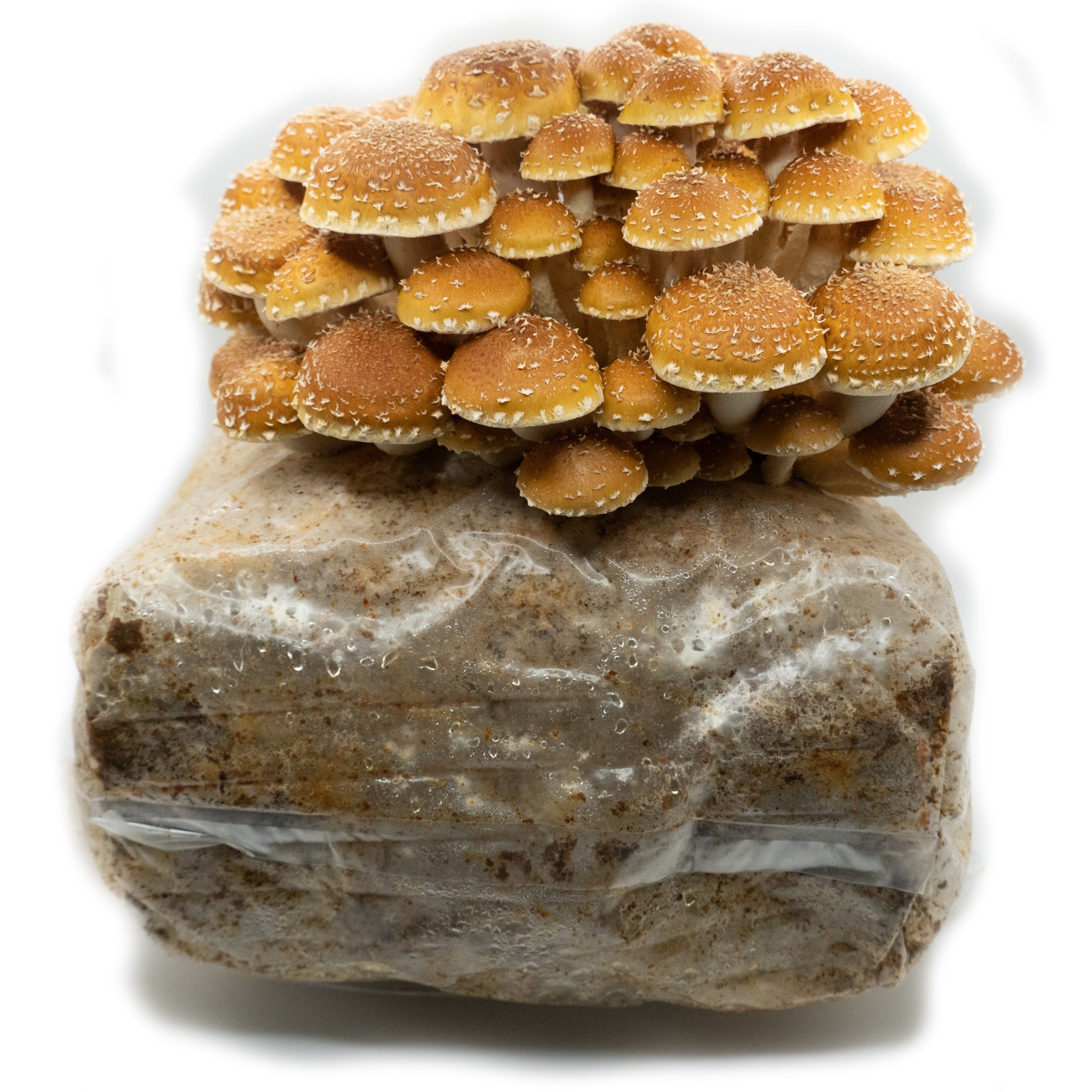
Chestnut Strains
PA-CNS
The infamous and mighty Chestnut strain PA-CNS thrives on master’s mix, especially if pelletized (the pelletization process breaks down the oak, rendering it more bioavailable for a weak metabolizer like chestnut) hydrated to 61-63%.
Initial colonization takes 3 weeks on average, but we recommend that you let the blocks sit for 1 additional week to fully mature- the block will swell with caramel-colored secondary metabolites. This allows the mycelium time to more effectively digest its growing medium, which leads to a faster and larger pinset once introduced into fruiting. Similar to most varieties, avoid letting the internal temperature of your blocks exceed the upper 70s to avoid deleterious biological impacts. Be mindful that chestnut mycelium is more prone to mold contamination than most other common varieties.
Chestnut prefers fruiting temperatures between 55-65° F (12-18° C), if the temperature exceeds 65° it will likely not pin at all. High relative humidity (90-95% ) is recommended for fast and healthy pinning. This is a more intermediate species to work with, if the conditions are not just right you will have a hard time harvesting anything off of the block.
A deep cut into the block is highly recommended for a dense pinset and high yield. Pinset emergence takes longer with chestnut than most other common varieties- 14 to 21 days in most cases. Once pins emerge, it is a fairly rapidly growing mushroom. Harvest after veils break but before caps flatten. Though chestnut does not have a fantastic shelf life, it is a strikingly beautiful mushroom and often sells fast. Average yield ranges between 2 and 3lbs.
Chestnuts have a nutty and meaty flavor, great for many dishes like pasta, soup or as a pizza topping. They are also good for drying as this will improve shelf life.
Check out out MycoWizards PHenoFlick on PA-CNS HERE!
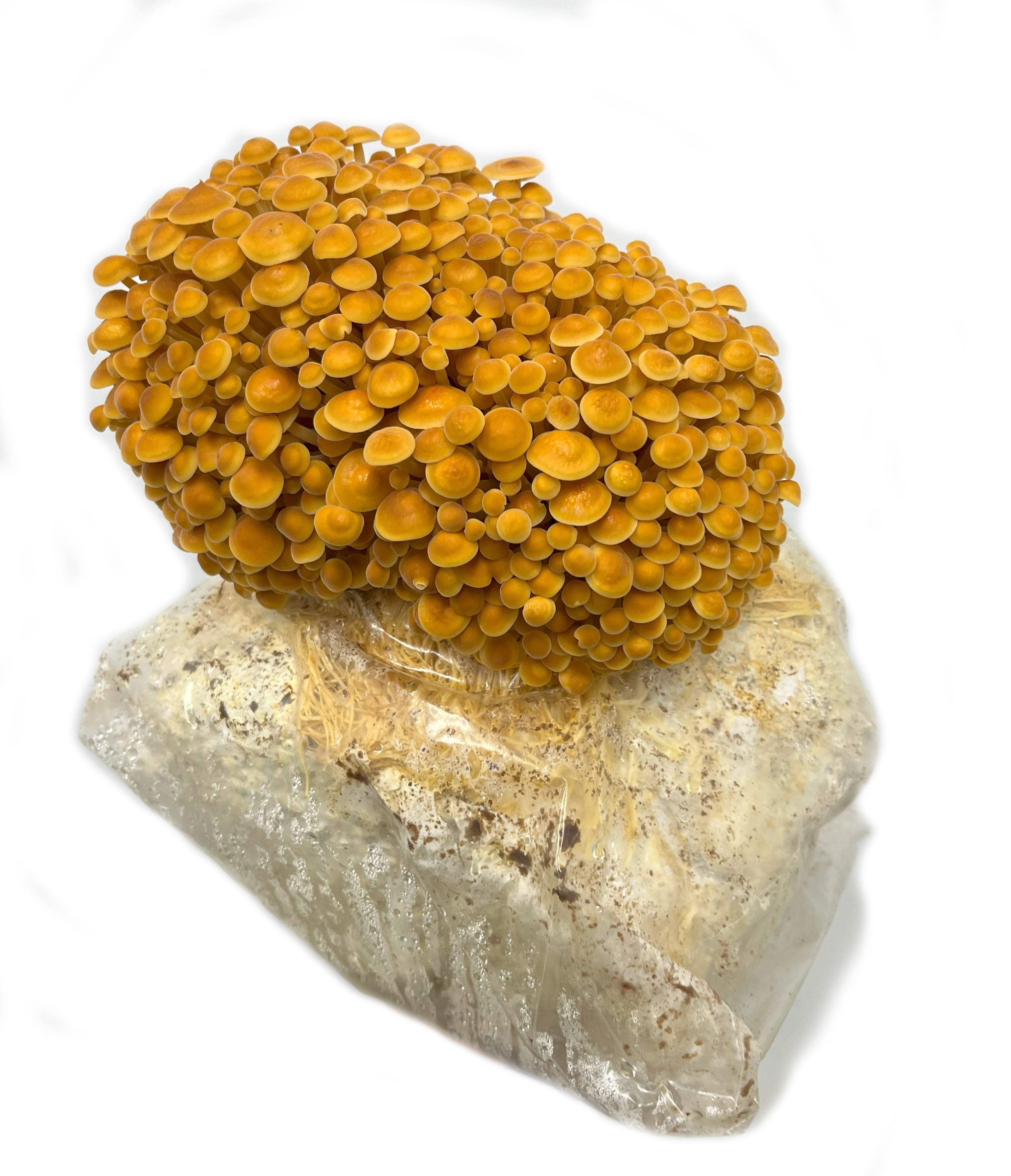
Enoki Strains
Golden Enoki FV-4600
Enoki is very tenacious and can grow on a variety of substrates, but we recommend master's mix for fastest growth and highest yields. Recommended moisture content is 60-63%, Calcium carbonate supplementation can help to slightly increase yield and fruit quality. It is best to have a tight contact between the block and the cultivation bag, which helps to prevent premature pinning inside the bag.
Enoki is fully colonized between 14-21 days in most circumstances. As with most varieties, enoki mycelium thrives with its interior temperature rests in the upper-70s Fahrenheit.
Enoki prefers cold fruiting temps, ideally 50-63° F. Some growers cold shock blocks for several days prior to inducing fruiting. Most growers top fruit enoki sometimes through scratching the top surface of the block. To encourage the most spindly spaghetti like form, let the pins form in vitro or fruit them in a high CO2 environment. If fruited in a regular fruiting environment with high oxygen levels, they will still be thin stemmed but with approximately dime-sized caps.
Enoki is sensitive to bacterial infection in the fruits, so avoid condensation settling on the fruits for a long period of time. Much like other common gourmet varieties, Enoki caps will flatten once they reach full maturity. So keep an eye on them to harvest before flattening for better storage life. FV 4600 can be quite high yielding and can be fruited multiple times with one block.
Enoki mushrooms are quite popular, they have a crunchy texture and umami flavor. They are good in a variety of dishes including soups, stir fry or even just by themselves.
White Enoki FV-1037
FV-1037 is a special order status strain. It is grown in the same conditions as Gold Enoki, however, your incubation and fruiting rooms need to be very on point as this is an overall weaker strain and needs exact conditions. The main appeal of the FV-1037 is the beautiful stark white color, as it was bred specifically for that purpose.
For substrate, we recommend master's mix for fastest growth and highest yields. Recommended moisture content is 60-63%, Calcium carbonate supplementation can help to slightly increase yield and fruit quality. It is best to have a tight contact between the block and the cultivation bag, which helps to prevent premature pinning inside the bag.
Enoki is typically fully colonized between 14-21 days in most circumstances. As with most varieties, enoki mycelium thrives with its interior temperature rests in the upper-70s Fahrenheit. Enoki prefers cold fruiting temps, ideally 50-63° F. Some growers cold shock blocks for several days prior to inducing fruiting. Most growers top fruit enoki sometimes through scratching the top surface of the block. To encourage the most spindly spaghetti like form, let the pins form in vitro or fruit them in a high CO2 environment.
Enoki is sensitive to bacterial infection in the fruits, so avoid condensation settling on the fruits for a long period of time. Much like other common gourmet varieties, Enoki caps will flatten once they reach full maturity. So keep an eye on them to harvest before flattening for better storage life.
If you would like to try this strain be sure to write *Special Order* at the bottom of your Spawn Form.
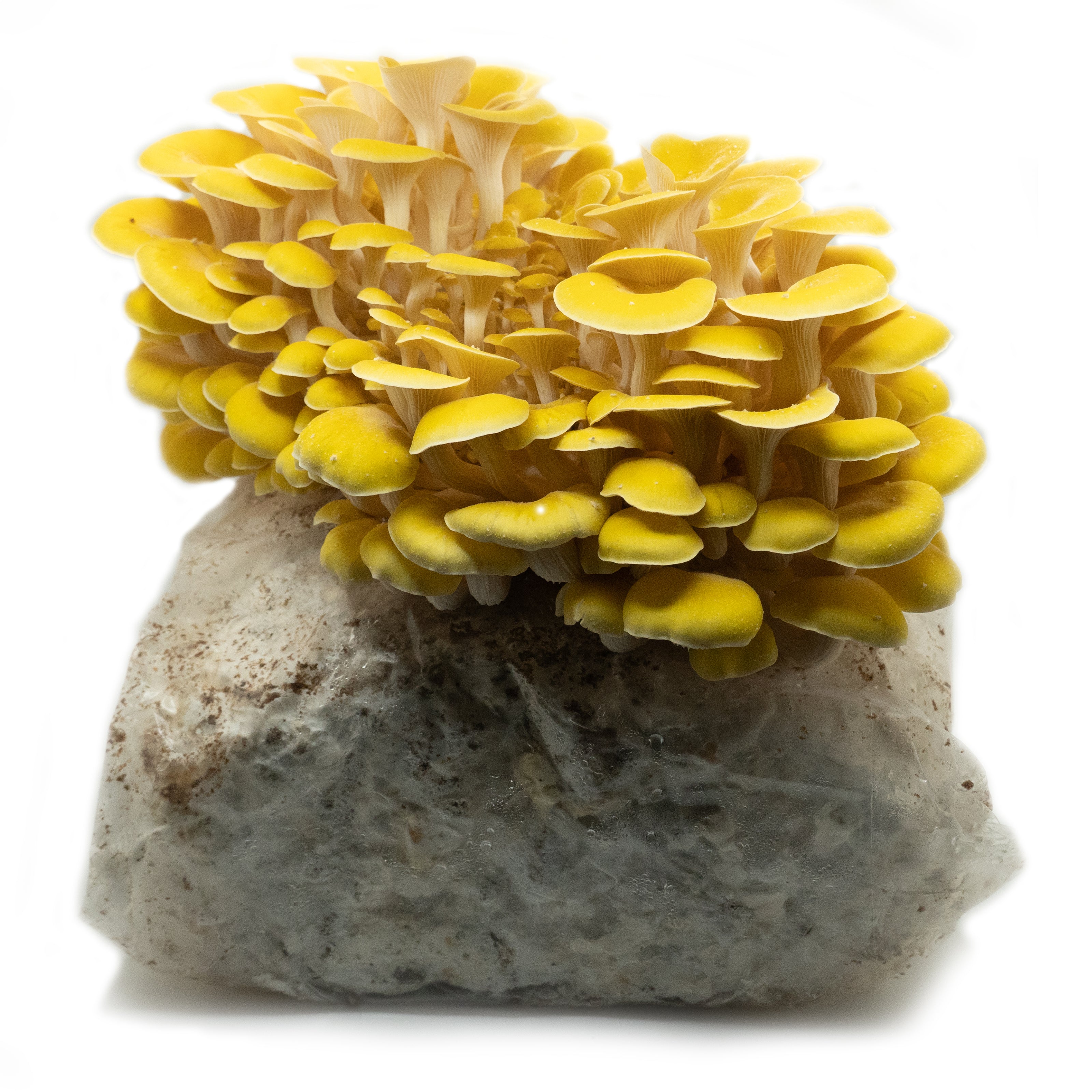
Gold Oyster Strains
PC-MM
Gold Oyster, like most Pleurotus varieties, can thrive on a wide variety of substrate recipes. It is highest-yielding on master's mix, hydrated to 60-63% total moisture content.
Incubation ranges from 7-14 days, depending on factors such as ambient incubation temp, spawn rate, and substrate recipe. To avoid stroma and other biological problems in incubation, ensure that the core temperatures of your blocks do not exceed the low 70s.
Bring blocks into the fruit room immediately after incubation is complete, as this strain pins readily. A standard x-cut or slit through the bag and into the substrate (no more than ½”) is the recommended initiation technique. This strain of Gold Oyster prefers immense flood lighting with fruiting temperatures between 65-70° F, but can be fruited in cooler conditions if necessary. It maintains a vivid color and higher yields when fruited in those warmer conditions. This strain can easily be fruited several times, but still has a high first flush yield. Its fruits develop rapidly; yield typically ranges from 2½ -3½ lb per 10 lb master’s mix block.
Pleurotus citrinopileatus is known for smaller cap size than other oyster species and for very delicate fruit tissue that is easily damaged. This PC-MM strain demonstrates stronger fruit tissue than average, while still maintaining a nice texture for gourmet cuisine. Mediocre shelf life. Fungus gnats and other insect pests are attracted by remnants of p. citrinopileatus fruits, so be sure to cut clean against the block when harvesting, and move the blocks to compost as soon as you are done flushing. A very predictable, flexible, and reliable strain overall.
Gold Oysters are desirable mainly because of their beautiful bright yellow color and notably nutty flavor.
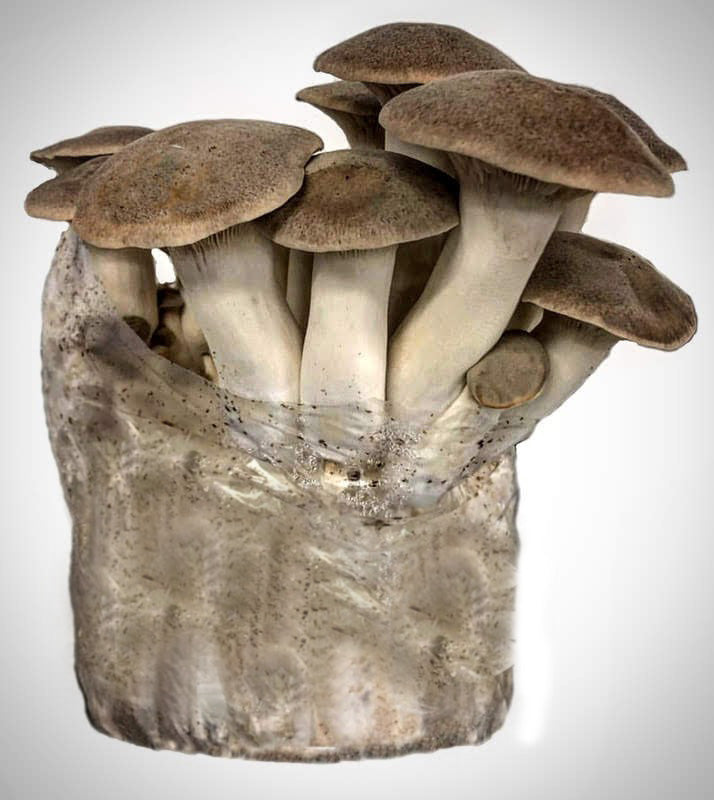
King Oyster Strains
PE-KONG
King oyster, like most Pleurotus varieties, can thrive on a wide variety of substrate recipes. It is highest-yielding on master's mix, hydrated to 60-63% total moisture content. It is best to have a flat top surface of your block and tight contact between the block and the cultivation bag, which encourages growth across the entire surface rather than along the edges of the block.
Incubation ranges from 14-21 days, depending on factors such as ambient incubation temp, spawn rate, and substrate recipe.
Bring blocks into the fruit room immediately after incubation is complete, as king oyster pins readily. There are three typical pin initiation approaches- letting the pins form in vitro before cutting off the seal and/or top portion of the bag, immediately cutting off the seal and/or top portion of the bag and scratching the top surface of the block, or simply cutting off the seal and/or top portion of the bag. Some farms like to form a casing layer (such as with peat moss and hydrated lime) for the fruits to emerge from. All have their merits and depend on the fruiting environment and grower preference. King oyster prefers cold fruiting temperatures between 50-60° F. Rapid pin growth and ideal morphology are encouraged through exposure to blue lighting; full spectrum LED is fine, if not too strong. Its fruits develop rapidly; yield typically ranges from 2-2.5 lb per 10lb master’s mix block and boast an excellent shelf-life.
King Oysters are a delicious and meaty mushroom, a great option as a meat replacement.
Check out our King Oyster Cultivation Deep Dive on our MycoWizards page!
PE-2603
PE2603 tends toward more uniformly medium-sized fruits with a pale, beige hue to the caps, while PEKONG demonstrates much more variance in fruit size with a stronger granite hue to the caps.
King oyster, like most Pleurotus varieties, can thrive on a wide variety of substrate recipes. It is highest-yielding on master's mix, hydrated to 60-63% total moisture content. It is best to have a flat top surface of your block and tight contact between the block and the cultivation bag, which encourages growth across the entire surface rather than along the edges of the block.
Incubation ranges from 14-21 days, depending on factors such as ambient incubation temp, spawn rate, and substrate recipe.
Bring blocks into the fruit room immediately after incubation is complete, as King Oyster pins readily. There are three typical pin initiation approaches- letting the pins form in vitro before cutting off the seal and/or top portion of the bag, immediately cutting off the seal and/or top portion of the bag and scratching the top surface of the block, or simply cutting off the seal and/or top portion of the bag. Some farms like to form a casing layer (such as with peat moss and hydrated lime) for the fruits to emerge from. All have their merits and depend on the fruiting environment and grower preference. King oyster prefers cold fruiting temperatures between 50-60° F. Rapid pin growth and ideal morphology are encouraged through exposure to blue lighting; full spectrum LED is fine, if not too strong. Its fruits develop rapidly; yield typically ranges from 2-2.5 lb per 10lb master’s mix block and boast an excellent shelf-life.
King Oysters are a delicious and meaty mushroom, a great option as a meat replacement.
Check out our King Oyster Cultivation Deep Dive on our MycoWizards page!
PE-REX
- Demonstrates higher blotch resistance and overall vigor
- Smaller, more attractive caps
- Much softer texture than other strains, great in a gourmet context
- More even fruit body size, easier to grade
- Similar yield to other commercial strains such as KONG and 2603
- Slightly slower to pin and harvest than KONG, by approximately one week
Lions Mane Strains
HE-CNS
HE-CNS is our go to house strain of Lion's Mane. HE-CNS produces the highest yield on master’s mix. We strongly recommend a final block moisture content of 60%; a moisture content even slightly exceeding that tends to lead to problems during incubation and fruiting for lion’s mane. In turn, insufficient moisture content often leads to issues with mold contamination and overall poor colonization of the block. Lion’s mane does equally well with ultrapasteurization and sterilization.
Incubation ranges from 8 to 16 days, depending on factors such as ambient incubation temp, spawn rate, and substrate recipe. Similar to most varieties, avoid letting the internal temperature of your blocks exceed the low 70s internally. Be mindful that Lion’s Mane mycelium is prone to myriad problems if it overheats and that it is more prone to mold contamination than most other common varieties.
Lion’s Mane prefers standard fruiting temperatures between 55-65° F (12-18° C). A high air exchange rate (lots of oxygen-rich air) and consistent relative humidity are ideal for good fruit development. A standard x-cut or slit in the bag is the recommended pinset initiation technique; many farms make their cut on the top surface of the block, where lion’s mane readily fruits on its own accord. Lion’s mane fruits develop at a relatively slow rate but grow to incredibly large size and weight. Average yield is quite high- 2½ to 3½ lb, with potential for even more with subsequent flushes of the same block. This strain is known for dense, club-like fruits with small spines, providing greater resistance to bruising and damage during handling/cold storage thus making it an eminent wholesaling mushroom.
Lion's Mane is not only a great versatile ingredient, it is also said to have many medicinal properties.
Check out our MycoWizards PHenoFlick on HE-CNS Here!
HE-POW
The HE-POW strain is different than typical Lion's Mane as it has demonstrated higher heat tolerance than other strains and is often the preferred strain by farms in hot climates and/or hot seasons.
HE-POW, like most Lion's Mane strains, produces the highest yield on master’s mix, but is easier to grow without issue on a lower-supplementation recipe, such as 65-70% hardwood and 30-35% wheat middlings/soy hulls. Regardless, we strongly recommend a final block moisture content between 59-62%; a moisture content even slightly exceeding that tends to lead to problems during incubation and fruiting for lion’s mane. In turn, insufficient moisture content often leads to issues with mold contamination and overall poor colonization of the block. HE-POW does equally well with ultrapasteurization and sterilization.
Incubation ranges from 8 to 16 days, depending on factors such as ambient incubation temp, spawn rate, and substrate recipe. Similar to most varieties, avoid letting the internal temperature of your blocks exceed the low 70s to avoid deleterious biological impacts; be mindful that lion’s mane mycelium is prone to myriad problems if it overheats, such as mold and bacterial contamination.
A standard x-cut or slit in the bag is the recommended pinset initiation technique; many farms make their cut on the top surface of the block, where it readily fruits on its own accord. Lion’s mane fruits develop at a relatively slow rate (14-21 days) but grow to an incredibly large size and weight. Average yield is quite high- 2½ to 3lb or more per 10lb master’s mix block, with potential for even more if fruited multiple times per block.
This strain is known for flashier fruits with more exposed spines, with excellent visual appeal while still maintaining wholesale production standards.
HE-LP
The fruit quality of this strain is not quite as gourmet as other Hericium strains offered by Cap N’ Stem, but its flexible cultivation parameters makes it a worthwhile consideration for some farms.
Lion’s Mane produces the highest yield on master’s mix, but is easier to grow without issue on a lower-supplementation recipe, such as 65-70% hardwood and 30-35% wheat middlings/soy hulls. Regardless, we strongly recommend a final block moisture content between 59-62%; a moisture content exceeding that tends to lead to problems during incubation and fruiting for lion’s mane, especially bacterial infections and subsequent pooling of secondary metabolites. In turn, insufficient moisture content often leads to issues with mold contamination and overall poor myceliation of the block. Lion’s mane does equally well with ultrapasteurization and sterilization.
Incubation ranges from 8 to 16 days, depending on factors such as ambient incubation temp, spawn rate, and substrate recipe. This strain is slightly more tolerant than other Hericium strains of varying moisture content in the block as well as varying incubation temperatures, making it a safe choice for farms with an inconsistent incubation environment.
Lion’s Mane thrives with lots of fresh air exchange and abundant oxygen levels, also ensure that you maintain high relative humidity without allowing condensation settling too long on the fruits, as lion’s mane is prone to both desiccation and bacterial rot. A standard x-cut or slit in the bag is the recommended pinset initiation technique. Many farms make their cut on the top surface of the block, where lion’s mane readily fruits on its own accord. Lion’s Mane fruits develop at a relatively slow rate (14-21 days) but grow to incredibly large sizes and weight. Average yield is less than other Lion’s Mane strains- 2 to 2½ lb- with potential for more if fruited multiple times per block.
HE-A
HE-A is a special order status strain. It is a wild clone from Quebec. We have not done much production with this strain so a lot of variables are still unknown. The main reason HE-A is special is it has vigorous and dense mycelium, much stronger and flexible than most other Lions Mane strains; This makes it a good contender if you have unstable fruiting conditions.
As this is a wild clone, the fruits of the HE-A look wild and spiny compared to regularly cultivated Lions Mane; which typically appear as a more dense round shape.
We do not have any average yield data as we have not brought this strain into our regular rotation. If you would like to try this strain be sure to write *Special Order* at the bottom of your Spawn Form.
HE-9514
HC-FF
HC-FF, also known as Combtooth or Hericium Corraloides is a commercial phenotype that hails from Funga Farm. The main difference between the strains is morphology; While the typical Lions Mane forms in multiple ball like fruits, the Combtooth has fruits more akin to a coral mushroom, very spread out and textured.
HC-FF produces the highest yield on master’s mix, but is easier to grow without issue on a lower-supplementation recipe, such as 65-70% hardwood and 30-35% wheat middlings/soy hulls. Regardless, we strongly recommend a final block moisture content between 59-62%; a moisture content exceeding that tends to lead to problems during incubation and fruiting for Combtooth, especially bacterial infections and subsequent pooling of secondary metabolites. In turn, insufficient moisture content often leads to issues with mold contamination and overall poor myceliation of the block. Combtooth does equally well with ultrapasteurization and sterilization.
Incubation ranges from 8 to 16 days, depending on factors such as ambient incubation temp, spawn rate, and substrate recipe. When compared to Lions Mane, HC-FF has a much denser mycelium during its colonization of a substrate block as well as spawn. It is less likely to autofruit in the high CO2 environment of a sealed XLS-A bag.
HC-FF thrives with lots of fresh air exchange and abundant oxygen levels, also ensure that you maintain high relative humidity without allowing condensation settling too long on the fruits, as Combtooth is prone to both desiccation and bacterial contamination. A standard x-cut or slit in the bag is the recommended pinset initiation technique; many farms make their cut on the top surface of the block, where Combtooth readily fruits on its own accord.
Typical yield ranges from 2 to 3 lbs. Depending on usual fruiting room factors such as lighting, oxygen levels and moisture content.
Check out our Mycowizards PhenoFlick on HC-FF HERE!
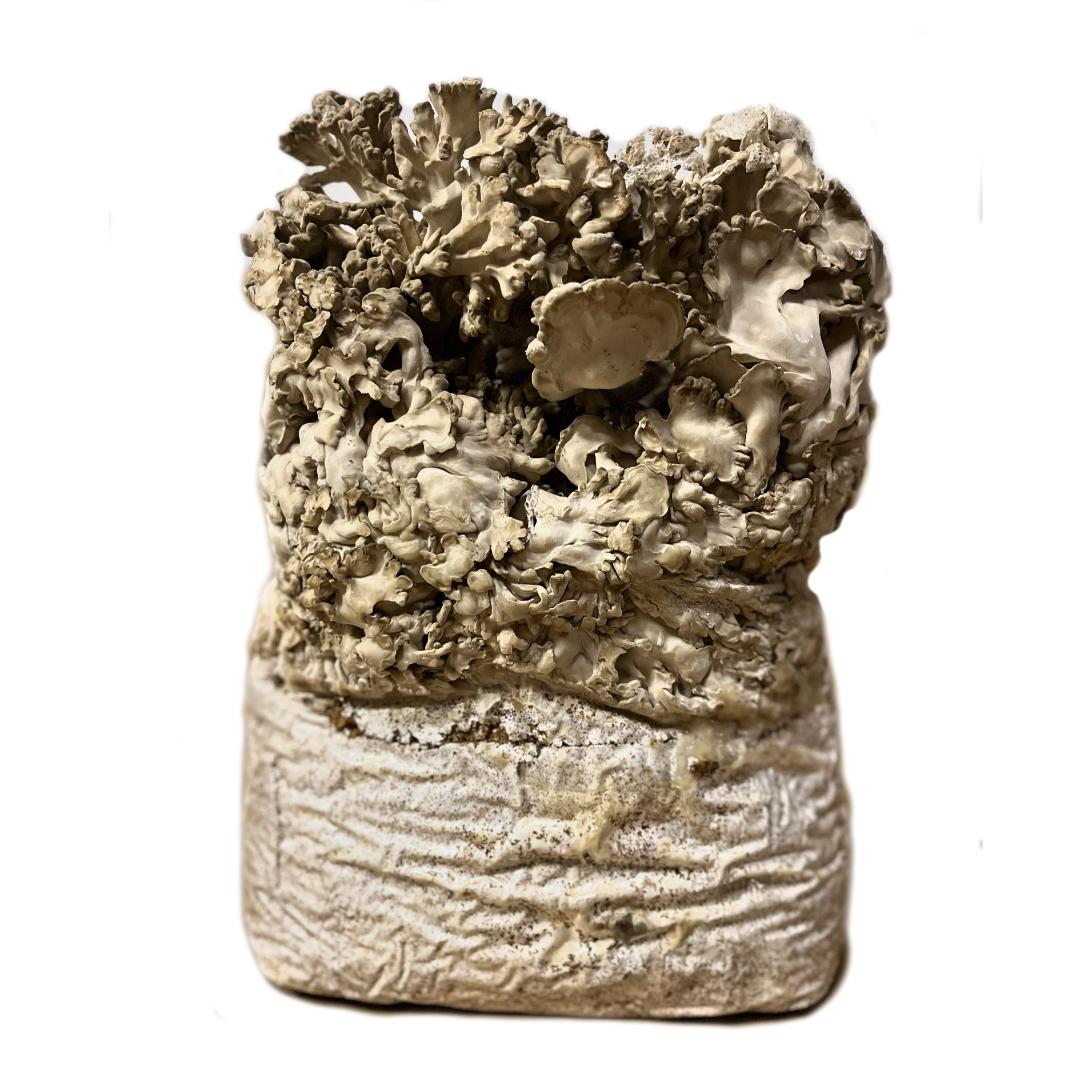
Maitake Strains
GF-494
GF-494 is a special order status strain. It has a slightly slower development rate when compared to other Maitake strains, however, It also has a slightly higher yield and tends to be more durable of a strain which makes it a great option for wholesale farmers.
As with the GF-9827, this is a particular strain when it comes to fruiting conditions; 65° F is recommended for incubation and fruiting. Be sure not to disturb the block as this will likely disrupt the growth of your mushrooms. The GF-494 is less flexible of a strain so all of your conditions should be on point.
If you would like to try this strain be sure to write *Special Order* at the bottom of your Spawn Form.
GF-9827
Maitake prefers a lower supplementation rate than standard masters mix. Something along the lines of 60-70% sawdust/hardwood pellets & 30-40% supplement. A moisture content between 60-63% is recommended to accommodate its longer timeframe in incubation. It is best to have a flat top surface of your block.
Initial colonization of the block will take about 3-4 weeks in most cases, but let the blocks remain in incubation as primordia develop in vitro. Let those primordia get as large as possible in incubation. Initial ‘blob-like’ primordia begin to develop ‘fingers’; this is a clear visual indication that the crop’s time in incubation is complete. Overall, incubation averages 3-4 weeks and primordia development averages 3-5 weeks. Extensive lighting over the top surface of the blocks is extremely helpful to encourage primordia to form along the entire top surface, rather than just along the sides of the top surface, which tends to occur in low-light conditions. Cool spectrum lighting is superior to warm spectrum for healthy primordial development. Maitake seems to have a very wide range in which it will grow, both in incubation and fruiting. As with most varieties, the speed is much greater in warm conditions, and the mushroom quality is greater in cool conditions. Temperature stability is extremely important for successful maitake cultivation. On average, growers tend to cultivate this strain at 65° F for incubation and fruiting.
Cut off the seal to leave a tall plastic collar around the developing fruits, and cut slits on the sides of the bottom of the collar to allow CO2 to flush out. Like any variety, Maitake requires fresh air exchange but is also prone to drying out, so it is best to position the blocks at a slight angle on your fruiting racks/shelves and have a collar that is as high as possible. In hot fruiting conditions, this is especially the case, whereas in cold fruiting conditions you will want to ensure that water doesn't pool inside the collar. For maximum storage life, harvest the fruits right when pores manifest on the undersides of the fronds. For maximum volume, wait to harvest until fruits have begun to produce spores.
As this species is more advanced than most, it is important to have extra consideration in fruiting conditions. Many growers have produced mediocre maitake (very short fronds, about halfway between 'blobtake' and healthy looking maitake) because they didn't have enough patience. Patience is key, especially in regard to letting primordia develop in vitro. If you allow the primordia as much time to develop as possible in vitro, you will see a higher yield, healthier mushrooms, better aroma.
Maitake will stop growing if disturbed too much. This is one of the main considerations for letting the blocks acclimate to the fruiting room before cutting off the seal. The principle of avoiding disturbance applies to other aspects of cultivation- avoid knocking the blocks, and avoid fruiting them in a fruit room with heavy spore load from other varieties (both may lead to growth stopping).
Maitake is said to have a rich earthy flavor with a hint of spice.
Phoenix Oyster Strains
PP-LOG
PP-LOG has been our go to Phoenix oyster strain for a decade. Also referred to as Italian Oyster, Pleurotus Pulmonarius loves the heat and fruits best between the temp range of 60 and 70F.
When it comes down to producing substrate for this variety it is typical to all the other standards of oysters, Masters Mix with 60-63% moisture content. On a 10lb block of substrate keep your incubation temps down around 66F to prevent any bacterial contamination that can proliferate into blotch once introduced into fruiting.
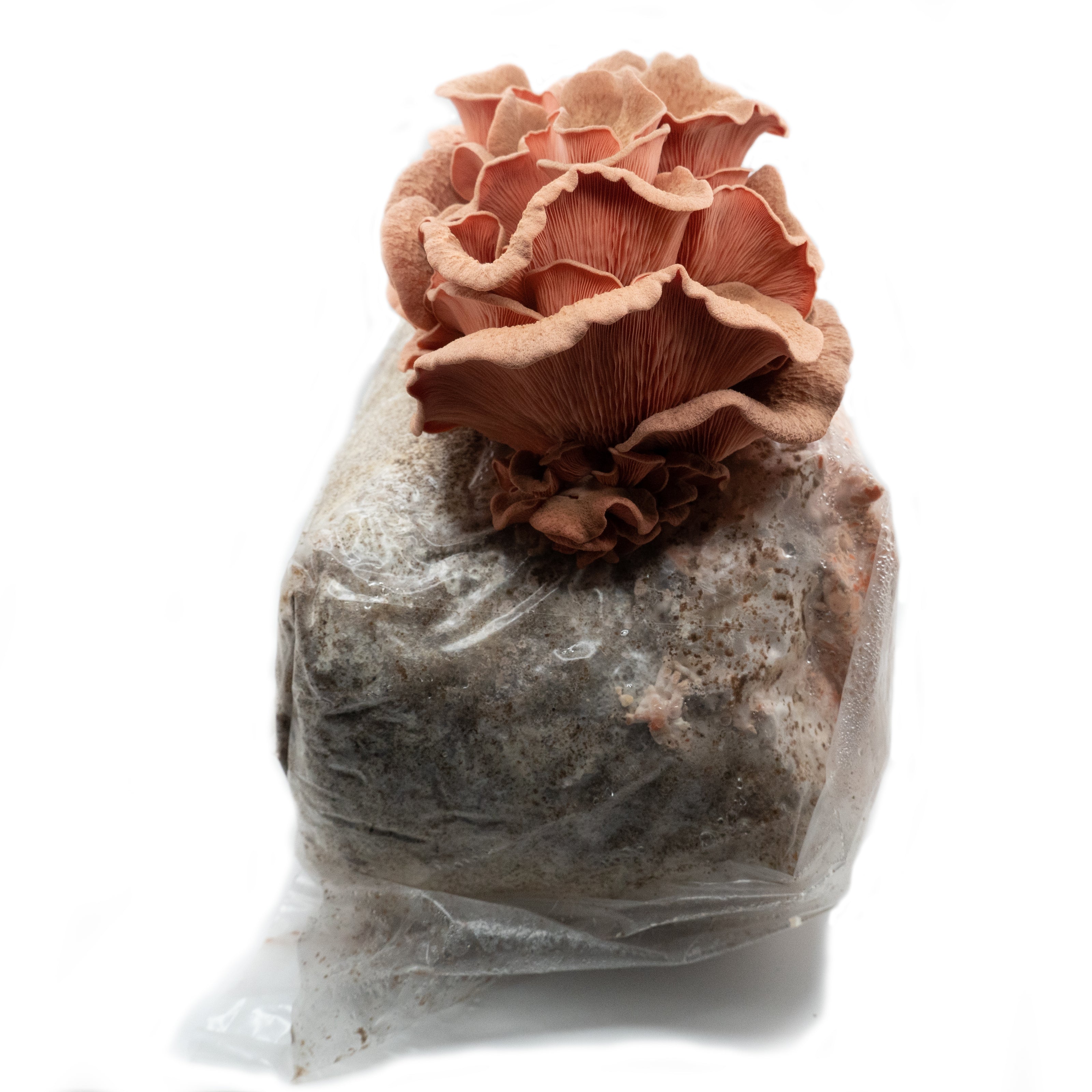
PP-2204
PP-2204 comes from Mycelia BVBA and has been a runner up to our PP-LOG strain for a few years. Also referred to as Italian Oyster, Pleurotus Pulmonarius loves the heat and fruits best between the temp range of 60 and 70F.
When it comes down to producing substrate for this variety it is typical to all the other standards of oysters, Masters Mix with 60-63% moisture content. On a 10lb block of substrate keep your incubation temps down around 66F to prevent any bacterial contamination that can proliferate into blotch once introduced into fruiting.
Pink Oyster Strains
PD-1
Pink Oysters can thrive on a wide variety of substrate recipes. It is highest-yielding on master's mix, hydrated to 60-63% total moisture content. It is best to have a tight contact between the block and the cultivation bag, which helps to prevent premature pinning inside the bag.
Incubation ranges from 10-16 days, depending on factors such as ambient incubation temp, spawn rate, and substrate recipe.
Bring blocks into the fruit room immediately after incubation is complete, as this strain pins all over the block fast. A standard x-cut or slit through the bag and into the substrate (no more than ½”) is the recommended initiation technique. Pink oysters are a tropical strain that prefers fruiting temperatures between 70-80° F with humidity levels between 85-95%. It maintains a vivid pink color if grown with slight light exposure and in their preferred temp range, and can produce thick meaty fruits or thin delicate fruits depending on growing conditions. This strain can easily be fruited several times, but still has a high first flush yield. Its fruits develop rapidly; yield typically ranges from 2½ -3 lb per 10 lb master’s mix block. The nice part about PD-1 is it can be fruited through the winter months if the temps in your fruiting facility stay in the low to middle 60s.
Pink Oysters are known to have a very short life. They also have a meaty texture and a notably "seafood" flavor.
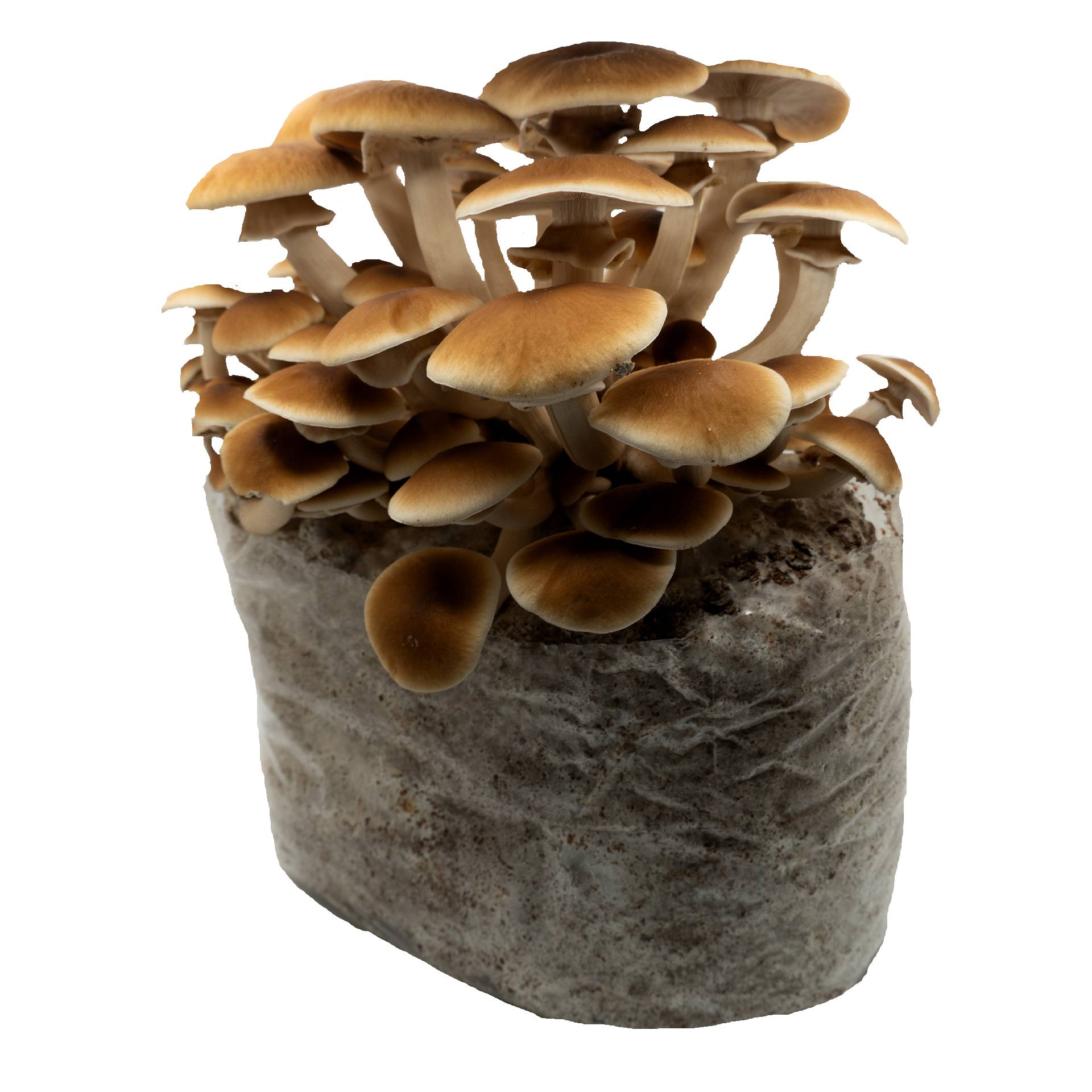
Pioppino Strains
AA-CNS
Pioppino is a relatively delicate mycelium. It obtains its highest yields on masters mix, ideally with a hardwood as its substrate base. For the smoothest colonization and easiest success, some growers cultivate pioppino on recipes similar to shiitakes substrate. Much like other delicate varieties, if pioppino is grown on substrate with insufficient moisture content, its mycelial growth rate is drastically inhibited and its hyphae are less robust and defined. If grown with excessive moisture content bacterial contamination easily occurs. Standard 60-63% moisture content is recommended.
Pioppino takes 18-22 days to fully colonize and be ready to fruit on average. indirect light exposure in incubation encourages more vigorous colonization of the block. When pioppino is ready to fruit cloud like plumes of mycelium form on the top of the block giving way to microdots of a yellow metabolite that forms into primordia. These pins can form on the exterior of the block so its best to maintain tight contact between plastic and block to encourage top fruits. If you catch the block before pillowy mycelium forms but the block is full colonized you can remove the air from the plenum with a small cut at the top of the bag and refrigerate at 34F for several weeks. After refrigeration, a side cut similar to oysters or lions mane will provide a successful and robust flush.
Pioppino prefers warm fruiting temperatures between 65-75 degrees but will fruit in cooler temps as well, just more slowly. It is highest yeilding when fruited from the top of the block. Once pins are formed they grow at a fast rate and will be ready to harvest within 7-10 days on average.
For the best balance of storage life and yield, harvest just when the veils are beginning to show signs of cracking and separating from the stem. This strain of Pioppino is known for mostly even, medium sized fruits. Its yield, while not exceptional, still falls within the range of a commercially viable first flush and outperforms other Pioppino strains that Cap N’ Stem has worked with.
The Pioppinos have a nutty and slightly sweet flavor. It is a popular mushroom in the culinary world.
Check out our MycoWizards PhenoFlick on fascinating strain HERE!
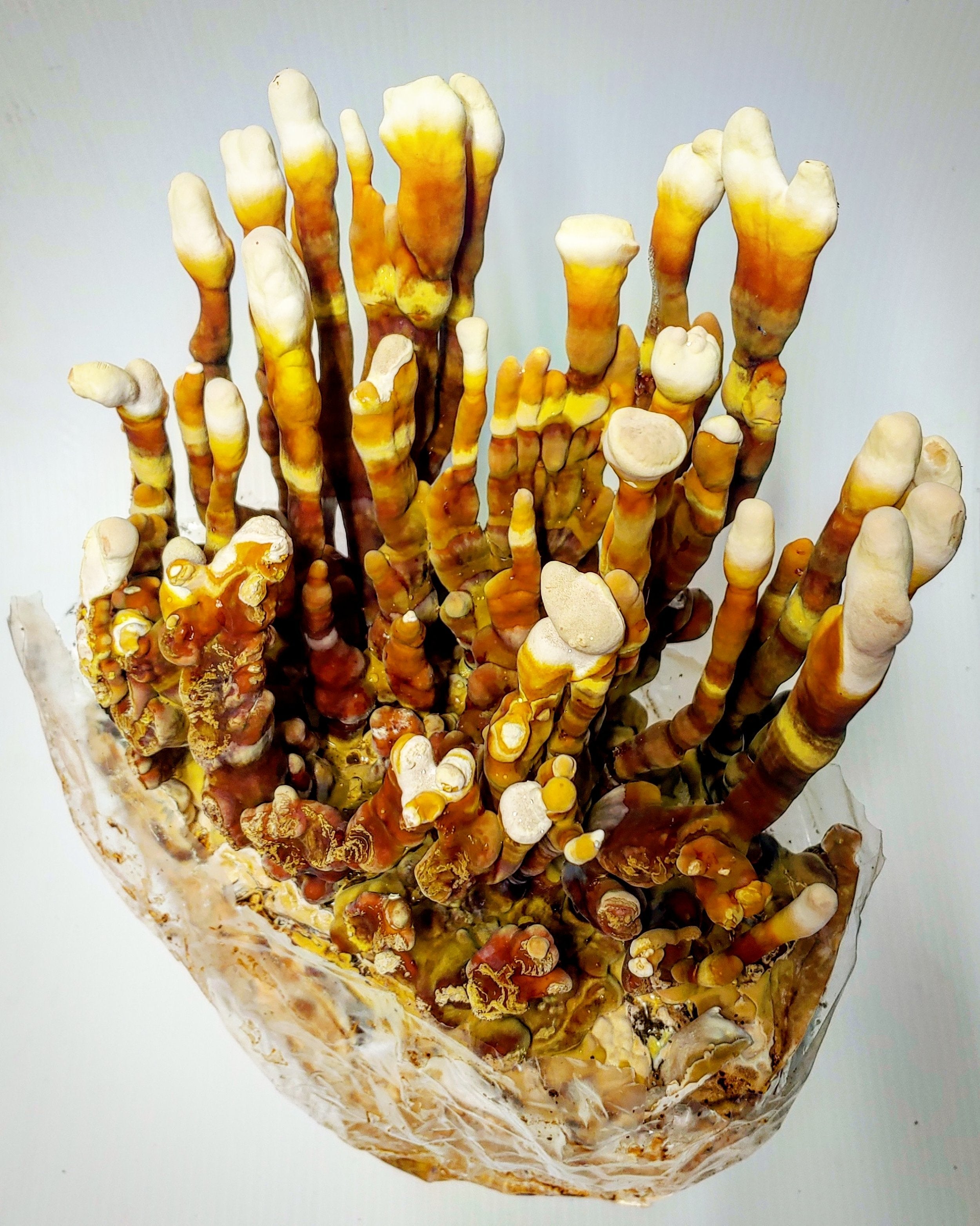
Reishi Strains
GLZ-9724
Reishi species are incredibly tenacious and will thrive on a wide variety of substrate recipes. Masters mix works quite well and allows for high yields. Standard moisture content of 60-63%. If you plan on fruiting antlers in vitro, be sure to have as large a plenum in the bag as possible to provide maximum amount of space for antlers to grow.
Reishi typically requires 10-16 days for full colonization. Reishi is a strong competitor and will outcompete most contaminants if they're not too prevalent. If you plan to fruit antlers in vitro, set them and forget them, ideally with good light exposure to stimulate faster fruit growth. If you plan to fruit conks, move them into your fruit room as soon as you see either a swelling of secondary metabolites and/or myelination along the exterior of the substrate.
While Reishi myceliates very fast, its fruits grow at a very slow, steady rate. Depending on context, reishi fruits reach maturity anywhere between 3-6 months; some cultivators extend their growth beyond that. Some strains are bred specifically for antler morphology, others for conk, and others are flexible. You can grow antlers in vitro or in a fruiting space with artificially elevated CO2 levels. If you want to grow conks, cut the bag in a similar fashion as you would oysters; primordia will quickly manifest. For conks, maintain a standard fruiting room environment- around 90% relative humidity and the usual 450-800 ppm CO2. This will encourage the organism to continue growing fruit body size rather than sporulating. Ideally, harvest before the mushrooms sporulate, as Reishi spores both contain medicinal potency and are very virulent and irritating to the respiratory system (and your equipment!).
Reishi is a great mushroom for tinctures as they are said to have many medicinal properties.
Check out our MycoWizards Deep Dive on the History Of Reishi HERE!
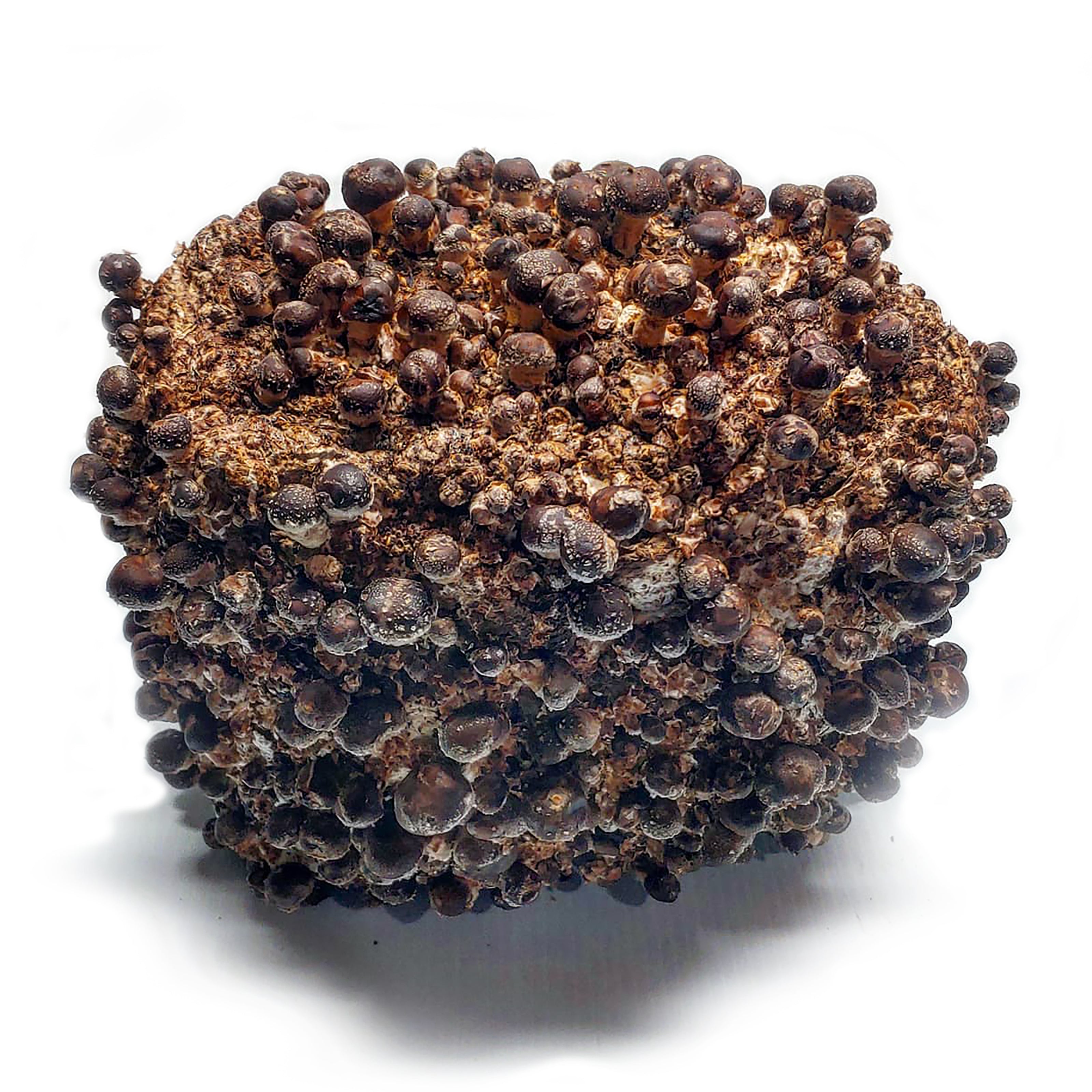
GM-CNS
GM-CNS is an incredibly tenacious species and will thrive on a wide variety of substrate recipes. Ganoderma Multipileum grows faster and antlers quicker than Ganoderma Lingzhi with less dense fruits in a pillowy zig zag fashion depending on the light spectrum. Masters mix works quite well and allows for high yields. Standard moisture content of 60-63%. If you plan on fruiting antlers in vitro, be sure to have as large a plenum in the bag as possible to provide maximum amount of space for antlers to grow.
Reishi typically requires 10-16 days for full colonization. Reishi is a strong competitor and will outcompete most contaminants if they're not too prevalent. If you plan to fruit antlers in vitro, set them and forget them, ideally with good light exposure to stimulate faster fruit growth. If you plan to fruit conks, move them into your fruit room as soon as you see either a swelling of secondary metabolites and/or myelination along the exterior of the substrate.
While Reishi myceliates very fast, its fruits grow at a very slow, steady rate. Depending on context, reishi fruits reach maturity anywhere between 3-6 months; some cultivators extend their growth beyond that. Some strains are bred specifically for antler morphology, others for conk, and others are flexible. You can grow antlers in vitro or in a fruiting space with artificially elevated CO2 levels. If you want to grow conks, cut the bag in a similar fashion as you would oysters; primordia will quickly manifest. For conks, maintain a standard fruiting room environment- around 90% relative humidity and the usual 450-800 ppm CO2. This will encourage the organism to continue growing fruit body size rather than sporulating. Ideally, harvest before the mushrooms sporulate, as reishi spores both contain medicinal potency and are very virulent and irritating to the respiratory system (and your equipment!).
Reishi is a great mushroom for tinctures as they are said to have many medicinal properties.
Check out our MycoWizards Deep Dive on the History Of Reishi HERE!
Shiitake Strains
LE-KOM
LE-KOM is much like any other Shiitake strain except it has a faster incubation rate, this is a good strain for wholesale farmers. Shiitake in general requires a less-rich growing medium than other varieties; the standard recipe is 20-30% wheat bran/middlings, 70-80% oak/harwood, hydrated to 63-65%. It prefers sterilized growing media rather than pasteurized growing media, though both can be successful.
Initial colonization takes 2-3 weeks; total time to fully browned maturity ranges from 7-9 weeks- this strain is exceptionally fast, relative to other shiitake strains and extremely forgiving. To ensure healthy popcorning, rather than blistering, ensure that you maintain stable ambient temperatures during incubation. To ensure proper browning, allow for even all spectrum light exposure to the blocks, even if indirect. To avoid overheating and its cataclysmic associated issues, as well as premature pinning in vitro, ensure that the core temperatures of your blocks do not ever exceed the low 70s, even for short time intervals. This strain has proven to be reasonably tolerant of variable substrate moisture content, but it is best practice to stick within the recommended 63-65% MC range and to avoid any standing water inside the cultivation bag.
This strain performs reasonably well through a wide temperature range, though 55-70° F is recommended for highest quality fruits and shelf life. Cold shocking is helpful to initiate a fast and robust pinset but is optional. It mostly produces medium-size caps of good quality with a smaller amount of large-size caps and few petite caps. If cultivated on 10lb blocks, it tends to produce a higher amount of large caps than if cultivated on 5 lb blocks. Its fruits develop rapidly and are easy to cultivate, as with most shiitake strains. For the highest quality, harvest soon after the veils break. For highest yield, allow the caps to swell with water as they flatten (this results in poor quality and shorter shelf life). Its stems tend to be fairly fleshy and marketable. Average yield typically ranges between 2½-3lbs per 10lb block.
Shiitakes in general are great mushrooms for soups, sauces and stir fry. They are one of the most in demand mushrooms in the US right now.
LE-321
LE-321 is a special order status strain from northwest mycological consultants. It is a classic shiitake strain and requires all the same care. The standard substrate recipe for Shiitakes is 20-30% wheat bran/middlings, 70-80% oak/harwood, hydrated to 63-65%. It prefers sterilized growing media rather than pasteurized growing media, though both can be successful. Incubation and fruiting temp should be around 60° F. It is lower yielding than other commercial strains but produces very gourmet fruits.
If you would like to try this strain be sure to write *Special Order* at the bottom of your Spawn Form.
LE-3790
LE-3790 is our most common shiitake in substrate and spawn sales. Shiitake in general requires a less-rich growing medium than other varieties; the standard recipe is 20-30% wheat bran/middlings, 70-80% oak/harwood, hydrated to 63-65%. It prefers sterilized growing media rather than pasteurized growing media, though both can be successful.
Initial colonization takes 2-3 weeks; total time to fully browned maturity ranges from 11-14 weeks. To ensure healthy buckling, rather than popcorning, ensure that you maintain stable ambient temperatures during incubation. To ensure proper browning, allow for some light exposure to the blocks, even if indirect. To avoid overheating and its cataclysmic associated issues, as well as premature pinning in vitro, ensure that the core temperatures of your blocks do not ever exceed the low 70s, even for short time intervals.
This strain prefers fruiting temperatures between 55-66° F, in which it will produce its largest, highest quality caps, but can be fruited in warmer conditions as well, in which its yield will be comparable but its cap size will trend smaller. Cold shocking is helpful to initiate a fast and robust pinset but is optional. If cultivated on 10 lb blocks, it tends to produce a higher amount of large caps than if cultivated on 5 lb blocks. For highest quality and shelf life, harvest soon after the veils break. Its stems tend to be fairly fleshy and marketable. LE 3790 boasts the highest average yield of our shiitake strains, typically between 3-4 lbs.
For more info on 3790 check out ourMycoWizards PhenoFlick HERE!
LE-3782
The OG, The strain to get the small cultivators of the US started back when Aloha Medicinals brought it in from Mycelia BVBA.
While the caps are small the hotter it gets, the cooler weather during fruiting will produce quite nice sized medium cap with a relatively thin outer skin.
So long as incubation temps are kept around 66F for a 10lb block, your sub will run, buckle and brown in under 10 weeks unlike 3790 which can take a bit longer.
While most folks don't cultivate 3782 anymore, it still holds a solid spot in our hearts as being the shiitake strain that made profitability possible!
LE-JC
Shiitake in general requires a less-rich growing medium than other varieties; the standard recipe is 20-30% wheat bran/middlings, 70-80% oak/harwood, hydrated to 63-65%. It prefers sterilized growing media rather than pasteurized growing media, though both can be successful.
Initial colonization takes 2-3 weeks; total time to fully browned maturity ranges from 9-12 weeks. To ensure healthy bucking, rather than popcorning, ensure that you maintain stable ambient temperatures during incubation. To ensure proper browning, allow for some light exposure to the blocks, even if indirect. To avoid overheating and its cataclysmic associated issues, as well as premature pinning in vitro, ensure that the core temperatures of your blocks do not ever exceed the low 70s for even a short time intervals.
LE-JC performs reasonably well through a wide temperature range, though 55-65° F (12-18° C) is recommended for highest quality fruits and shelf life. Cold shocking is helpful to initiate a fast and robust pinset but is optional; smacking the blocks is also effective. It tends to produce mostly medium-to-large caps and few petite caps. Its fruits are of excellent quality with nice ornamentation, less water weight and more flesh weight than most strains, woody stems that allow for quick and easy harvesting, and good shelf life. For highest quality, harvest soon after the veils break. For highest yield, allow the caps to swell with water as they flatten (this results in poor quality and much shorter shelf life). Average yield ranges between 2-2½ lb per 10lb block.
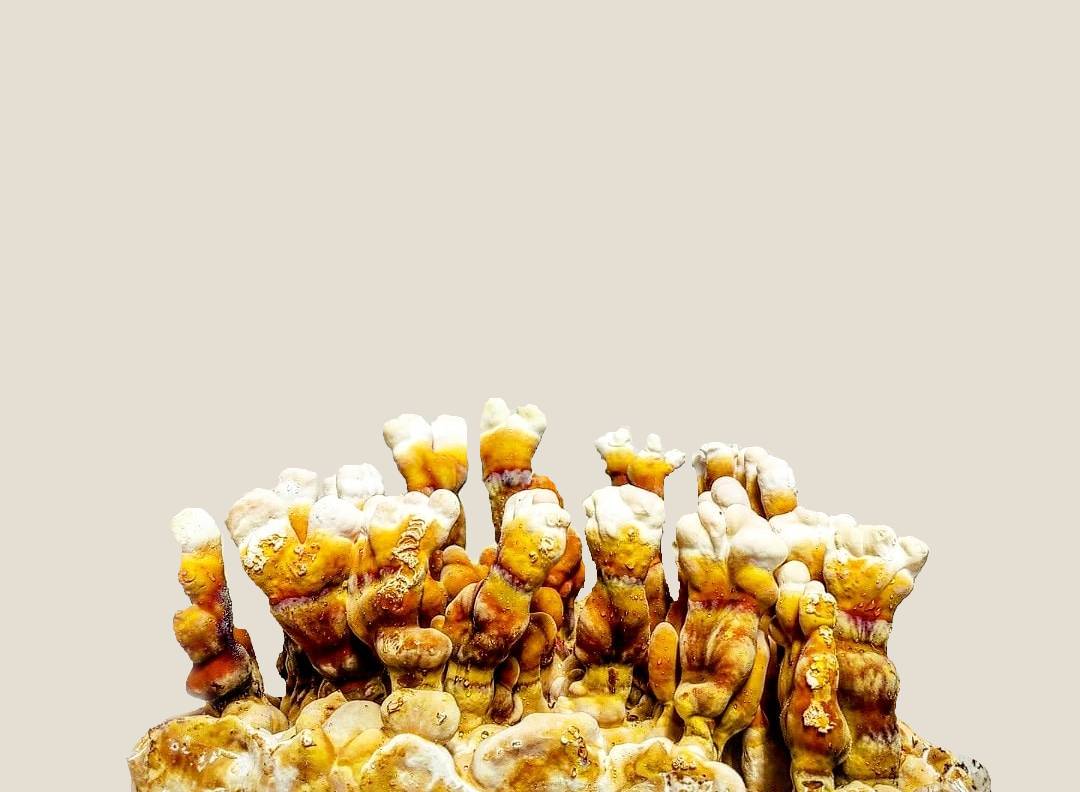
Beech Mushroom Strains
HT-1
Brown Beech belongs to a small genus known as Hypsizygus. It produces the highest yield on master’s mix, hydrated to 60-63% total moisture content.
Brown Beech is typically fully colonized at 3-4 weeks, however incubation ranges from 4-5 weeks as you should let them sit for a while after fully colonized. Brown Beech does not like disturbances once the mycelium is connecting, this may result in poor fruiting; so make sure once it is in incubation it stays there until pins form in bag before bringing to fruit room. This strain produces best when cold shocked, either overnight or up to a week in 34 F-40 F. This stresses the mycelium into production of fruit.
Brown Beech prefers a temperature of 60 F, relative humidity 85-92% with a dry fogging system to keep water droplets from setting on the mushroom pins or heads. Brown Beech is highly susceptible to rose comb so take care to not let water settle on the caps. A standard x-cut or slit in the bag, across the top just above the filter patch, is the recommended pinset initiation technique; alternatively, slit the sides down to the substrate to release more Co2.
Brown Beech has a a lightly sweet, savory and nutty flavor, and subtly crunchy texture. A typical yield for this strain is about 2 pounds.
HT-4780
White Beech HT-4786
Cauliflower Strains
SA-ET
SA-ET is a special order status strain. It is a wild clone from Texas and is purely experimental and can only be ordered as a culture at the moment.
SC-9641
SC-9641 is a special order status strain. It is a Mycelia clone from Europe and is purely experimental and can only be ordered as a culture at the moment.
Chicken of the Woods Strains
LS-FF
LS-FF is a special order status strain. It is a wild clone from Denmark and is purely experimental and can only be ordered as a culture at the moment.
Cordyceps Strains
CM-666
CM-777
Nameko Strains
PN-CNS
PN-CNS is a special order status strain. We have not done much production with this strain so a lot of variables are still unknown, here is what we do know: The Nameko has a slow growth rate, it is of the family Pholiota, same as the Chestnut, and therefor grows in a similar fashion.
This strain prefers cool temps and high humidity for pinning. We do not have any average yield data as we have not brought this strain into our regular rotation.
Nameko has a very viscous outer layer which makes it a great mushroom for thickening sauces and soups with that umami flavor.
If you would like to try this strain be sure to write *Special Order* at the bottom of your Spawn Form.
Purple Mukitake Strains
PS-MU
PS-MU is a special order status strain. It is purely experimental and is only available as a culture for the moment.
Turkey Tail Strains
TV-442
White Oyster Strains
PO-SNOW
PO-SNOW produces stark-white, beautiful clusters with average quality in a gourmet context. It is known for a tendency toward small cap size.
White Oysters, like most Pleurotus varieties, can thrive on a wide variety of substrate recipes. It is highest-yielding on master's mix, hydrated to 60-63% total moisture content. Calcium carbonate supplementation can help to slightly increase yield and fruit quality. It is best to have a tight contact between the block and the cultivation bag, which helps to prevent premature pinning inside the bag.
Incubation ranges from 8-14 days, depending on factors such as ambient incubation temp, spawn rate and substrate recipe.
Prefers cool fruiting temps between 50-60° F, though can be fruited in colder and warmer temps with mixed results. A standard x-cut or slit through the bag and into the substrate (no more than ½”) is the recommended initiation technique. A typical yield ranges between 2-2½ lbs over two flushes.
PO-SS
PO-SS is a special order status strain. We do not have a lot of data on this strain as we have not brought it into our regular rotation. From the few tests we have done, we know that this strain can be unpredictable and displays variability in growth patterns. This strain prefers cool fruiting temps between 50-60° F, though can be fruited in colder and warmer temps with mixed results.
PO-SS, if you can successfully fruit it, produces beautiful cream colored fruits with scalloped edges.
If you would like to try this strain be sure to write *Special Order* at the bottom of your Spawn Form.
PO-MOP
special order status
PO-ELM-A
more yellow caps