
Mushroom Substrate Composition: What Goes in a Block and Why
In this episode we cover a lot of the bases in regards to general info about popular and common fruiting substrate compositions.

What is covered, by timestamp

Topics picked out of the transcript automatically. Times jump to that point in the video.

Time Topics
0:00 carbon, release, ingredients, mycowizards
10:01 carbon, hydration, sourcing, cultivation
20:01 wheat, source, sourcing, fresh
30:02 pellets, hardwood, combo, sawdust
40:05 moisture, yields, pallets, hardwood
50:05 pellets, combo, easier, water
1:00:06 calcium, carbonate, source, substrate
1:10:06 running, recipe, oyster, example

Full transcript

Transcript generated automatically from the audio, so expect the odd wrong word. Timestamps jump to that point in the video.

0:00 welcome back MCO wizards of the world for our third release from the archive for free all over the YouTube and what you are now seeing is our video recorded several years back where Tyler and I explore substrate composition everything from raw sawdust and how we used to use it all the way through to adding in some pelletized nitrogen materials like soy holes and wheat middlings on through to the combo pellet we sort of explore it all and talk about it in relation to your Farm scale size and the actual cost associated with doing these things from the manual labor behind moving and manipulating actual raw sawdust to the Simplicity and ease of utilizing something like a combo pellet these things can make sense for different farms in various ways so as we release this third archive footage for free do check out MycoWizards.com last week we released speed mixing and this week we will release KNX seal and Shake sort of bookmarking two parts of the substrate production that this episode now released for free has in common with one another check it out now all at MycoWizards.com de people it is a bad that was a nice mug though cool yeah was man it too that's a pretty cool mushroom design who did it I don't know you know it might be capturing Charles Manson's eyes more than ours I can see the little square thing going down onto his eyes it's pretty great oh yeah he's in Focus the whole time which would just be funny do one of those things where you make his mouth the one that's talking right why has nobody done that yet we need to get on it need to get on it okay all right what are we going to talk about we're going to talk about I don't know if media is the right word oh hi I'm Tyler Crawford I'm Eric lman or I'm Edna welcome to the m wizard Deep D episode four is it oh I think it is yeah yeah wow wow all right we're gonna talk about what I hope to call Media or substrate that you spell it is it that CU yeah you pronounce it always it substrate right but it's at substrat substrat substratum um all right I think ingredients raw materials yeah ingredients right oh I like this blue pen this is judging me a little bit too heavily look in minut oh look at that and then you can like Cube it up yeah this is very like a 80s walk out it's a lightning Bowl sweet sick dude all right so the you're mixing that's the we want to go through uh we're just G to cover we're g to cover recruiting mixtures yeah pros and cons of different ingredients different ratios sourcing considerations yeah um whole nine yards everybody is very well acquainted with this like the Masters mix I I still need to know where that came from I have my theories you mean the name the master mix or Master's mix something about it Master that's true I mean both you and I were along around along before the soy hall reolution right before that was the default you who don't know 5050 is the Masters mix right is very American it's very American soy you know holy it is American it's like the most American thing ever yeah it's true it's true yeah people in Europe had like when I was there they this was completely foreign to them they still do like uh more cereal grain based recipes for everything not just shitake um and lower supplementation kind of slow and gentle right um approach to how your melium grows whereas in a very American fashion Master's mix is just like really hot to use that word from the last episode oils it's really high you know it it's very high yielding but it's also harder to manage and uh I think you know you're probably about to say this but like there's a lot of good reasons to do this we do this for pretty much everything but um it's important to know why and it's important to know your Alternatives

5:01 and it's important to not just view this as like a static input for the rest of time because these are still raw materials and availability is going to change um your approach might change yeah there's already a limited supply of both of these things especially like Oak you know yeah it's like I don't know um sometimes people get you know mushroom farming is a lot of more the engineering mind you know as much as it is biological but you're still farming and you need to know how to do these you know grow mushrooms in a variety of ways no matter what circumstances are wased upon you if you can't get soy you need to know what to do true true anyways that's Master's mix I guess yeah we do it I I don't know it works pretty well with everything what does it not work well with it's like shitake du yeah um there's some where yeah uh shitake Mai are probably the two biggest ones yeah um or yeah they don't neither of them do particularly well with with that much soy in particular um there are some others where uh you can kind of go either way with it and there's pros and cons um some more kind of relatively obscure stuff yeah like beach right I've seen a lot of people do lower supplement um yeah I think that there's like a bunch of fancy mixes coming out like uh the goat mix definitely came from mossi Creek which is just straw pellets a lot of this stuff is pellets um pellets are just easy to get um but it's always this combination of like a carbon and a nitrogen and to what degree the nutrients and the proteins and the different things that are in them are actually of any value right right yeah yeah I was talking to Brad shout out Brad very smart guy and we were talking about soy and as a pertains to shiitake and uh long story short um he was ripping on how um the actual carbon to nitrogen ratio in soy holes is actually not that much higher than other supplements like wheat middlings but something about I I can't remember what and not sure he knows specifically either something about the bioavailability of it is so radically different that it has this you know very different metabolic properties for different species so things behave radically different and it just seems to be much more bioavailable um with soy than we mid Lings which are very gentle yeah it's true yeah there it's well it's crude protein it's like uh fiber protein there's a bunch of like different things in there and the makeup of the actual I think cellular like structure of soy holes just makes it you know hot yeah right but important to take a broad view here Eric just wrote down carbon nitrogen um you know if you're you can grow these mushrooms just on you know a much more carbonous uh growing medium AKA just sawdust but obviously you know trying to maximize your yield you want to dial in the ideal amount of supplementation to boost up your nitrogen which means thanks will grow faster and you'll get a higher yield oh and plus you got to correct the sign because I think I put it upside no no I do no carbon and nitrogen I think are the balance of like most soil based growing medas yeah it's there's obviously a million other micronutrients that all matter to some extent and uh some of it's beyond you know our current knowledge but um you know in farming in general this is what a lot of it boils down to you know VY farming obviously the phosphorus and potassium right are the other two things but um yeah uh these are the two basic uh NPK right NPK NPK potassium nitrogen and carbon no no no what's the k k is potassium potassium we got potassium we got what's phosphorus yeah and then nitrogen yeah yeah but anyways um yeah uh you want to kind of dial in the ideal um balance between these two

10:01 things for what you're growing and how you want to grow it what kind of qualities you want to emphasize in your cultivation AKA speed yeah metabolic stability yield all these things you can kind of emphasize more or less depending on what recipe you go with that's true and like in most uh mushroom cultivation carbon like being the the starting point is always going to be something that has low nitrogen but it has nitrogen in it so even sawdust like has nitrogen in it you know it's got saps It's got yeah different sort of things happening so it's got its own CN ratio um but usually when we separate these things we always call the call saus like a carbon right and you would always call a nitrogen whatever you're adding in or your supplementation so we midling soy holes so on and so forth yes everything has both but it's just in short hand sh tuck um even things like um uh everybody using hemp herd right hemper is not like a not nitrogen right yeah oats are kind of the same way right have a ton of yeah carbon but they also have a fair amount of nitrogen OES are interesting I was this is like a quick tangent but there was something online this morning where somebody was comparing hydration of oats for spawn and it's like 40% hydration and 50% hydration and getting it up to 50 is pretty like pretty ballsy but it can do it it's got like that thin wall yeah anyways we're not talking about spawn up I mean we are we will um yeah so I I don't know I split it like this where you know you have these things that are pretty common base and easy to source so s and straw right and then you have your your uh you know what's applicable for your nitrogen or your percentage of um supplementation so this is anything from soy Halls to Wheats yeah this is the list this a lot longer yeah and if you go International that's where things start to get like very strained from our North American standpoint you know like uh like for instance in a lot of poor countries um or in more Aid countries uh people might be growing every damn thing on straw right um St straw and rice brand yeah like that's the case in Spain for example it's just a big mushroom producing place but it's obviously much D um old toys 99% deforested China okay I'm done uh sorry yes old toys from clearly you've been with compost there um the list for this is huge too like beat pulp hes like whatever yeah it's it's a huge area yeah for some reason these two have linked up because of you know they're mentioned in like gr Gourmet medicinal mushrooms soy holes and SAS um I know TR and uh a few other people started doing like heavy experimentation in the soil saas thing yeah and uh and that became a like an allround media that everybody was really comfortable using mostly because it was really sourceable yeah well you know soy is what the number two biggest crop in North America or something like that um and it's like majority exported yeah and then most of the holes previously and to this day still the vast majority are used just for animal feed so uh yeah there's a lot of availability and up until recently relatively low valuation on them right so totally that's changed a lot but um it has and I don't think it's got anything to do with us which is really interesting I think the mushroom industry would like to take a lot of credit yeah but it's not us yeah bigger macroeconomic stuff it's huge it's so interesting and it also comes with like weather patterns and I know this is like a tangent but like anything else if uh the grass and grain right if it rains heavily in a season and all the cows are eating for free grain prices drop like a yeah I mean you know regardless of what you're sourcing it's important to consider that stuff like these aren't just bits that you're buying and it's going to be always available like it's something on like buy online or something no you got to think about what are the conditions for that crop and how are they looking for that year and when's the right time to buy like what's the commodity price on it is right now the opportune time for you to Shell out a bunch of dough and you're going to thank yourself later when availability is low because there was a drought yeah or whatever um yeah and you never know just because it's raining in Washington State Alex doesn't mean that it's actually like yeah yeah son of a you always get

15:01 your rain doesn't mean that it's raining in the you know uh I don't know wherever the Midwest it's probably freezing and snowing and everybody's dying down in Texas whatever or Jordan uh yeah so I think like the grander picture is like when you're sourcing carbon and nitrogen it becomes predominant that you uh predominantly important that you develop a supply chain and you start of stick with it whatever it is you know and you diversify it and you make sure you have multiple sources yeah just because we sell combo pellets and I like not saying we're the only people doing it because people are really copycatted on this thing is like go find another Supply they might not be the same quality because we're the well we even have multiple uh sources for that yeah which I mean you know it could be better but that's still some redundancy and yeah we would have ideas of what to do if uh availability was limited that's true you know and everyone should you you shouldn't just have one plan no you got to have multiples I remember when we first started Christopher and I were like oh we need like four S suppliers like immediately yeah yeah and it was hard enough to just find one yeah I still never sent you over to uh to catch up with Frank the the lobster trap man oh right yeah that's the guy like will shoot you on site or whatever something like that yeah yeah you got to be careful where you're sourcing this from basically yeah we had this guy that was uh giving us saw us and if you drive by his spot it's essentially like this giant pile of red oak and this building disappearing behind it and tons of junky cars and the single skid steer that this 400 pound almost agoraphobic human sit in and uh and we pay this dude Scott to go get the sawdust and drop it off because he's got this relationship and we're like go give Frank some mushrooms he's curious so you know what a 5B box of mushrooms look like raw mushrooms need I say it again oh yeah this is the guy who just ate them raw right he just hands it to Frank and Frank goes oh and just starts stuffing five pounds of raw mushrooms into his face in his skid steer can't strap him in seat belt's too small the mushroom box is holding him against the controls and he just now away he's like holy you tell those guys that was good mushroom terrifying I hope Frank never my stomach would explode can you imagine that yeah but I bet he is he lives on a diet of like small children and soils and red oak a US yeah cool he's probably a great guy all right tangent um multiple sources carbon you can't just have one Frank all right uh saus is an interesting one though because most of the world's Red Oak in particular that's what we use is like I should say in the states red oak is very slim it like goes down the middle of the states down into like Brazil it's like a slim area where the majority is produced I should say produce the majority is harvested and grown right so straw you know the same thing you can kind of grow straw everywhere main is like 90% straw cultivation you go up to the county right yeah most most places are grow in some kind of green any society right so you can usually get straw yeah mil you know other places where other types of Oak are easier to get um yeah or something else entirely like um say again from my time in Belgium yeah they grow everything on Beach uh because that's the predominant that's the predominant hardwood that's available so everything's GR Beach yeah it's true and then out west you guys just used Alder right right yeah so there's you got to pick your your sort of scene and get into it the complicated thing is uh is when you start um looking at hard woods versus soft woods and we'll sort of get into that but is that carbon nitrogen should we wrap up any more of that in a bow and um pretty bow well there's no like magic formula but like I maybe we should talk about like just a general concept of what are typical ratios all I'll take all right so yeah you have these these sort of uh like very non-discriminant things like Masters mix being 50% and 50% yeah um that's when you're using soy wow this blue one's failing on man that fres up next time true for you guys for you guys

20:01 different colors so soy and sawdust becoming the primary thing here 5050 that works for things like uh you know oysters the pipas almost everything yeah yeah you name it it works for it um I should the list is shorter that it doesn't work with so let's just do that how about that right sure so shiak is the big one myi it doesn't really work well it's not as obvious as with uh shitake you can still grow some great mitake with this you tend to see some weird things weirder things like the fruit like the morphology might be a little off yeah um and also they tend to mold um yeah you'll see this funny thing happen we'll save this room my talk episode but in all reality it's it gets funny yeah yeah coring all sorts and then and then like I said earlier there's some varieties where um you know some people prefer to grow them on Master's mix and some people have good reasons why they don't um that would include like lions man would be the big yeah one that's kind of you can you can argue uh either perspective right L's kind of if you bring that down 40 30% you're in a better range even with these two if you drop that yeah TR I know recipe what you tell people it is um you can you can drop the soy and increase the dust and add in some other you know things yeah and you're going to have an entirely different uh uh incubation experience right yeah there's there's such a thing as like to dense of the substrate too and this is quite dense if your saus isn't coar enough um so if you have like powdery powdery sawdust or if you have like I should say not powdery sawdust but super powdery soy it creates these weird like textural issues within the block so you won't get an even you know mix therefore you end up with all sorts of weird things happening towards the bottom of a bag versus the top of the bag right weird similar with straw too but yeah they can't breathe that well yeah yeah yeah so this can get complicated if you're kind of trying to Source these things out there which we'll get into but uh percentages that's kind of that's like like the biggest thing for that Master's mix out of things right and again that's like it should always be pointed out that that's like the most aggressive uh type of recipe that's really used um maybe there's examples in other parts of the world that are as aggressive um yeah but most stuff is uh like what in North America we use for shitake most notably pretzel well if you don't eat your pretzels let's be honest the world will run out wheat midling as well as wheat brand right or so the fine folks down in Pennsylvania told me I tend to believe him I mean I'm like I literally called it was mcir mcir is this great spot area yeah and maybe they're not anymore but they were like the go-to for organic right and the I forget his name stupid name Scott May stupid I don't know but I just called him and he was like y'all your pretzels and he was just like losing it I was like this the guy who would never call you back right uh you know when when I would talk to him he would just start talking to me about his barbecues and how much he loves mushrooms and everybody gets our milet from us you want some milet we have lots of milet I was like Jesus all right let me tell you about these barbecued shitake oh my God any who uh most substrate recipes and the one that's typically used for shitake and and my talki um it's more along these lines much lower supplementation rate yeah um much lower I guess a general rule is that this often applies to the stuff that's really really slow yeah um so you know my talk is not as slow as sh talki when it comes to how long it takes to do its full colonization but it develops in vetro for a really long time y um chaki of course takes uh ages for its full cycle until fully Brown um yeah there's a lot in the sourcing of this stuff in particular because you'll have certain wheat mids that are like super super rich uh because mids are not a product NE they're not a thing they're they're not part of a wheat plant they're just the scrapings literally from like the floor right so Mills are dusty dirty joints and they basically just collect that and they put it into a thing that's called moods um whereas brand is more like a flaky component of a of a wheat

25:01 Milling process right so this is just a dog that comes from making brand so they're not the same they're not the same they're not the same in fact brand is pretty rich I think why we as well as a bunch of other places started moving towards mids like Mark was like what the are mids you know and somebody kept mentioning them and we were like all right we can get mids we can't get brand for some reason but the price discrepancy like five years ago was so extraordinary like a bag of mids is 10 bucks and a bag of brand was 50 you're 50 yeah yeah um those are not the same thing and they should be kind of treated differently and you should experiment yeah and if you're this kind of applies to everything but if uh if you're using a new source for any ingredient it's always good to like go into a testing phase when you first get it for a while and figure out if it's comparable or radically different from what you've used in the past yeah yeah any that's another typical ratio those are like the two the 50/50 for like oysters um and the 70 to 80% dust 20 to 30% wheat or or some other things rice brand and what have you or even soy um those are the two typical ratios that you're going to see most often in cultivation things that I don't see that I don't think a lot of people should use is like soy is it soy pulp or soy cakes it's like basically disregarded soy it's it's a little weird oh yeah yeah that's very different and that carbon nitrogen ratio yeah for like are you talking about like soybean meal like yeah yeah yeah that stuff's like really really high in nitrogen yeah so you gota be Wicked careful yeah man never go over 50% the soy I think people have even experimented grab being one of them is like how many percentages can you go down at like 43% it's the same technical yield as 50% but there becomes some discrepancies in there in terms of like once again how you cook the substrate what you inoculate it with all n yards so yeah 5050 is just easy it's interesting it's simple Americans are simple yeah and as far as making money you get a much higher yield that's true that's true um I guess sawas we should go into because you know that's like a very interesting issue wondering who's going to go buy on a motorcycle nobody um saus is this strange sourcing issue and it really uh is the first primary ingredient if you're going to make like blocks right so um you have to find a source for it um and if you don't have a source a lot of people Trend towards hardwood fuel pets um or combo pellets now so you kind of have three major categories you have raw dust I like calling it raw instead of saying raw dog you just say raw dust and then you have your hardwood fuel pets I don't know why my accents decided to kick in right now and then all of a sudden you got that combo pellets now I just sound like what's his name from uh Jesus Christ Kurt Russell thank you well isn't that right Cottonwood so you kind of have like two two major ways to get sawdust you can go to a Mill and you can Source it directly from the actual uh like Mills that are Mill the trees or you can go to somebody like a Furniture Factory and they're basically Milling K dried planks right right yeah so this splits into like two different categorical sides first which is yeah you get kill D um or you get fresh these things have to be treated like totally different products yeah or formally fresh which we'll get into but you know stuff that's already composted right right right well so yeah fresh even splits off into um yeah composted um or I don't know fermented so to speak yeah or like genuinely Fresh brand new um I'm just gonna put star there see that star special special it's just taking fresh and just doing it you know and adding nutrients to it as opposed to like composting but getting off topic here um that becomes a sourcing issue so you

30:02 got to figure out where you're going to get it from how pure is it once you know species or another right is there softwoods thrown in there if you throw soft Woods into this mixture and then compost it or mix it fresh or whatever you're going to end up with this sort of like um I'm G call this continued fresh looks better nice right it I don't know um you're in into all these issues if if soft Woods get into your uh raw SAA Supply that is primarily yeah just species depending you know and then sometimes the people who are you're sourcing from aren't they don't know a damn thing about matching the right subrate for your mushrooms and they're not going to understand the uh importance of the fact that it's actually going to screw you over if there's a bunch of Cedar thrown in there or something like that um yeah these aromatic Woods have antifungals they want to snipe out your myelon and kill it right yeah right yeah yeah to varying extents you know so like we'll get into you know people out west and and elsewhere growing on soof woods with no issue at all um right it really depends on the the species and the context and yeah all that um as well as the processing and stuff you know so if you took kill ride like Pine or Doug fur and tried to process it you'd end up with a little bit less of like a a yield and success rate right whereas if you took kill andde and pelletized Doug fur and you actually process it with a hardwood or whatever then you kind of end up with something that will yield just not as well um and it does run into other issues but it is rendering the actual carbon or uh sort of availability of that softwood into basically a benign carbon so you can just use it right right it's not it's not the best so that's Ross sawdust we'll go into that a little more a second yeah yeah hardwood fuel pallet is the same thing you're usually getting like I don't know 80% to 90% hardwood um and then you're usually getting yeah 10 to 20% uh softwood and the reason they do this for the majority of pellet mills is a binding uh issue and and it's not a binding issue in the way that you think so a lot of like things go around this conversation basically but they're only using it because the dyes and the actual Machinery that they use can't produce as much power to just Supply hard wood as a primary pelletization force so like when you're pushing all the sawas through the dyes you have to have a pretty large industrial size like horsepower to be able to do that and it up a lot of dyes and runs them really hot it's 100% hardwood but if you throw in soft Woods it basically like you know softens the dye uh Extrusion rate and it just allows the pellets to Glow a lot more evenly that's a fact I didn't know that it's fascinating that's why like they put that in but that's also why soy holes are a great thing to mix in right because most of these pallet nails are just running soy holes to actually clean their dies out that's fascinating I always thought it was just like for like cheap economic reasons like yeah yeah that's interesting it's because it will up the machines because all these pellet mills that were built like 20 years ago never sized their correctly originally okay it's like a large different sort of is interesting so were they all did it turn out to be like music to their ears when the combo pellet thing got proposed yeah because it's like oh that's really easy to pull off they never we never knew about it until one of the Mills is basically like oh yeah we soy basically to to clean and uh whatever hone our dyes really cool because it's a lubricant and same thing with softwoods it has you know different properties compared to Hardwoods so yeah yeah there's all sorts of pellet companies making hardwood specific pellets Oak pellets 100% oak or you know Barbe that's another thing where they're actually upgrading their equipment blah blah blah I don't know why I'm telling the world about the pellet industry but it's fasc it's interesting yeah yeah it's cool right and then the combo pellets are the other side we're like us as an entity or if you can trust another entity careful care produces exactly what we want in the pellets which if it's a 5050 Blend or in the case of our wheat mids or Shake Blends it's 7030 um we just make the mixture and through the actual pelletization process have different mixture methods in which the substrate is ground to the exact

35:03 consistency that we're after goes through the Milling process gets pelletized comes out it's good shelf stable it's where it's at um yeah and each Pet's pretty much exactly at that ratio through that process off by like 1% fundamental different quality than um just mixing pellets that are one and the other it leads to entirely like a different processing routine when you're actually making your blocks yeah there is like a huge push for a while where people like I just get soy hole pellets and Har fuel pellets now soy pellets are almost impossible to get primarily because of the sourcing issues um it's not our fault it's not our fault it's not your fault blame it on the cows blame something blame it on the ra yeah on the sun isn't that a Stevie Wonder song might be don't know a question for you since you're the pellet um expert with hardwood fuel pellets yes and there's always this notion of binders yeah there are other common binders besides just softwoods starch right so like they'll typically if they're trying to run hardwood through uh pelletizing machine and they don't have the power um in their actual like process I mean the literal like engine power um they'll add in things like starch or they'll add in you know other weird forms of sugars to basically just get the things to bind because these things are being extruded through basically plate with a bunch of holes in it you know and the way in which this they're not Square by the way I'm just drawing it Square sawdust is like forced down into these things or the mixture and then it it uh B basically gets pressed and exted down so the Heat and the pressure um that this produces based on friction um is an insane amount but sometimes it's not high enough so you have to throw in a binder so this is why like if you get an at home pellet Mill and you try to make your own pellets you can keep the moisture content a little bit higher because the moisture is actually what's creating the like you know pellet shape sure it's not the fact that you know you're you're creating a pellet you're just creating a shape right therefore they'll mold yeah like we threw 70% uh you know hydrated 70% moisture content it was 60 to 70% Oak through pzer in a forms pellets but they'll break they'll mold they're extremely absorbent to water yeah when they create hardwood fuel pellets or when we create combo pellets we're getting them down to 7% moer content which nothing can grow in there right it's de that's even just as a reference point from the grain world uh that's lower than like actual like professionally processed grains from Grain Mill those typically are at like depending on the Grain in question like 10 to 12% yeah I was going to which those you know they're dry they feel completely dry so um yeah I mean that's that's low man I I it's strange to like consider this pelletization thing a lot of different levels because it does take a hell of a lot of infrastructure and that's why primarily if you can't Source R Us you're going to go toward hard with fuel pellets but as more combo pellet people come online with more variations and what they offer just makes it easier so right those are the three major ways to get sawdust I think we should like go into the raust yeah start with ra and we'll just proceed so raw dog invest basically depending upon what you're getting you have like a mixture versus a you know a single whatever so you have Far West fungi Right Far West gets like probably amalgamation of all kinds of wood right a dozen different varieties of hardwood you know and that's primarily what they're using um as a raw component to their inputs um and then you have somebody like us five years ago you know it was just 100% Oak dust yeah so there's a couple different differentiations there but basically when you're using raw sawdust there are two different ways to use it and uh and I hope that somebody gives me for this but uh let's see it got somebody kicked off the cmgn shall remain Nam but uh not in a bad way just the arguments get heated I guess if you're using raw sawdust immediately versus um I'm

40:05 going to say composted or turned uh dust you end up with two very different results this one over time stabilizes a little bit whereas this one goes through these like pretty rapid swings if you're trying to like keep it dry and keep it inside so the interesting thing about it is you're not ending up with a a rampant moisture content change as well as a varying you know CN change um especially as the pile sort of like just sits there all the moisture is going to sort of fall to the middle and the center the outside sort of dries slowly so the point of having raw sawdust and actually composting it because it does have nitrogen in it which will actively start especially gigantic biomass too oh man it gets hot yeah and that like in a 33 T load if you put your hands like in the center of that be like it's no joke yeah so turning a pile becomes like your best means of entry into this like raw dust land um they they did that at casc Cascadia yeah yeah yeah yeah plus it was outside so it was also just yeah exposed to the elements yeah so most like Farms operate this way they'll basically just like most big farms prior to 10 years ago I guess yeah have a big mixer they have all their sawdust outside including ksfs KET Square any of these like uh any of these massive you know substrate producers that are using sawdust we just have piles of Oak and they just turn it every day and then they load it in the mixers they add their dry ingredients which actually bring the moisture content closer to reality right just bag from there y sterilize and so on so forth but yeah um I guess one thing that's important um to a greater extent with like truly raw fresh dust to a lesser extent but still present with stuff that's been aged the moisture content is going to be way more variable than um if you're using something that's pelletized and so um all kinds of old school things like the squeeze test and what have you that that can work to a point but if you want to be really thorough you want to have a solid methodology for actually knowing what the inherent moisture content is that you're starting from yeah um don't pretend like it's zero because everything will you know go pretty poorly yeah it's true we should say like when you're just using raw dust like we used to back in the day without turning or composting it because we're in Main and it freeze it definitely changes so variable over time like it's indiscriminate whether it's is top or bottom but good yields poor yields good yields poor yields good yields po Ys and that has to do with a lot of different like issues yeah it's it's very hard to manage so you have to have to really know what you're dealing with um yeah you have to have again a way to to measure where your Baseline is on any given day yeah I mean there are times when we would add like almost no water at all you just add as much crank up the especially given its really complex cell structure can hold on to a shitload of water and that becomes less and less so as you move from you know Oak at one end all the way down to softwoods yeah most varities being like fing whatever 62 to 63% moisture content for saw Spas substrate if you're at 70 or 80% dropping 20% of moisture content is insane yeah yeah yeah it's kind of nuts how you will have recipes like that or or times like that where all you're doing is trying to dry it out basically yeah with supplements yeah composting and turning helps it you know in a crazy way so the the issue here is like does this yield better than this infrequently pretty normalized you know so you have to treat this just as you would process a pellet or process some other raw ingredient otherwise you really don't know you know uh what's going to happen in this sort of scenario how do people VI this you know well also um depending on the uh you know there's obviously going to be a different profile depending on what type of wood you're using or woods and there's things like tannant that you want to you know there there are reasons to let those start to leech out over time through the composting process if you can find it a copy of the shitake Growers handbook by John Donahue there is it up there you see it great book it might be yeah might be at the farm it's out of print but but it's well worth yeah it's like 5050 bucks but uh I don't see it there yeah it's a bring next time yeah should have brought it

45:05 for the episode true what are we doing we'll put a link right here watch it's right there every set for this is gonna be different just you I don't know all right what was no I was going to say in that shiak handbook there's a huge sort of conversation about tanic level about moisture content raw materials aging and composting how you actually sterilize versus dry heat pasteurize versus regular pasturized he's this is like published in 88 I think ' 89 pretty old yeah yeah it's an old book but it's relevant more relevant than most of the M books being put out there genuinely yeah it really is really en tired of people writing new mology books that don't know anything about yeah this is one Speaking from us this is probably like top easily top five yeah uh most yeah uh informative reads you'll you'll access for yeah mushroom cultivation and it gives you more questions than answers which are good because you have a direction to go and learn right yeah it's actually like empirical you know yeah yeah totally is um all right you know it can be cheaper can be a lot easier to get that's a lot of reasons why hug issue though yeah spaces yeah and moisture content uh what is 33 33 tons uh which is like a moving for track or trailer truck takes up approximately what was that space right there 50 by 75 that sounds about right I think it was like 50 by 75 that we were putting that in um they're like 25 yeah must have been um if you don't have that one cell yeah yeah yeah and you're in a area like are and you're trying to store it inside or outside or turn it or whatever you need a tractor to get it in and out you need the labor to do it it's much more costly than just being like Oh it's only it's free I just have to pay for shipping that is like the most Co hearty thing handling the square footage are all considerations yeah for sure and like the amount of pallets that you can fit in there that are one ton pallets of dried material not hydrated you know material you're not storing water yeah there is no water 70% versus you know 7% yeah huge difference yeah yeah so whether it's you're using hard fuel pelts you're getting combo pells you're doing something else makes a lot of sense for micro medium or you know even larger scale Farms to operate that way um even Kyle gon is coming around interestingly enough I'll leave that there so saus is a but it can work and uh I'm not judging it well yeah I'm judging it are you judging it nope he's not judging it not judging it um so hardw field pets then um this became like uh huge on on the shary hwfp and then like Facebook and all these weird groups and and it was primarily because nobody knew how to get hardwood you know sawdust to actually process so right they ended up just finding these harder fuel pallets they don't tell you what percentage of you know softwoods are in them or anything like that but it doesn't necessarily matter they work kind of obvious most people know this but like the primary economic driver for these is heating so people don't really give a they're like What's in their their heat you know their fuel pellet for their stove so they just don't want it to form Ash right which is another contributing factor to putting software into heaing Source creates more Ash than hardwood hardwood Burns hotter that's kind of why they go that route um but you know these these like we said they're made up of many different things so it could be depending upon your area oak or popler or cherry or it doesn't matter it's yeah you know yeah and then the softwoods very too it's not just dug for it's not just you know whatever yeah yeah it's all over the place so you have this like softwood um sort of issue and those things can definitely create some context yield issues you know based on what percentages in here but mostly it's like 80 plus percent of Hardwoods and then less than you know 10% um of the softwood but because of the kill and drive process doesn't really matter like we were saying kills most of the like um antimicrobial contents in a soft wood specifically in Doug for which is really

50:05 weird so you have people at West uh that are using 100% Doug pellets which is pretty fascinating and they're growing stuff on them that is typically very temperamental yeah like shitake and they have no problem at all yeah yeah for sure um so hard fuel pellets are an option I think they're a great option um and combo pellets you know are the next best thing and it's us or whatever company that produces these things and there's a big difference between what people think combo pellets are and what they actually are um they are 100% uh Oak it's just a single species of Oak single species of hardwood and soy holes so that blend in the um actual Milling process goes through like I think it's like five or six different Vortex mixes um so basically gets huffed up and down with air to mix all this stuff after it's brought down to the same exact moisture content and then it's uh it's pulled into you know basically dyes extruded out and then a single pellet is comprised of that 50% um soy and 50% whatever uh o um or 2030 or sorry gr yeah and there's huge huge advantages um in our humble opinions to going about it this way it's also worth pointing out you know there's like whatever 400 something species of Oak this is specifically Red Oak which is yeah far less dense than say White Oak and obviously yeah um easier to obtain um another thing that John D book like cellular structure of Oak yeah yeah like if you were growing like old you know old school log shitake growing on White Oak is pretty dope um but in the case of you know massive volumes for the pelletization process Red Oak grows faster and is easier to obtain and and it's uh it's generally like the less dense Oaks are you know it's easier to release uh their nutrient value and get a higher yield faster whereas if you're going for a long term uh sustainability um denser you know something like a white oak is is the way to go yeah for sure but there's also uh you know there's this difference between were you around and we got uh was it like I think it was deemed uncrushed versus crushed soy holes oh yeah so let's go back to Raw issues right so you have let's just say you're trying to so so so did you so your soy holes today kid you have un crashed um crushed um the same thing goes for uh cotton seed holes for instance obviously they look a little bit different but uncrushed have this like curvature Bowl structure you know and essentially they look like you know half pellets or half BBS or something um they're extremely tough and if you mix those into a regular sawdust like a pretty coarsely you know ground sawdust you end up like not making it as available to the mushroom melum but also it can't hold as much moisture content right so you end up with a lot of issues just yeah yeah yeah exactly and you can end up with like anerobic blocks really easily if you just treat it the same way yeah especially past in right yeah yeah and getting them to actually soak up any water requires a lot of time I think what we discovered we had to use them yeah yeah crushed essentially throws them through a hammer Mill and you get just a relatively coarse it's like s Mi basically yeah yeah and that stuff's much more homogenized obviously and uh we'll soak up water pretty quickly yeah probably crushes one of these up into like six or seven you know little shreds which are ideal um then pelti crushes them peles them and they become very dense it's worth pointing out and uh in order to actually get those to pulverize at least in our experience back in the day when uh all of our blocks were used or produced using Helix mixers yeah we used to have to dump in like almost all the water required yeah uh for a given mix yeah because they just hold their shape forever until they're beaten the they just tough so we dump in the the soy holes and then pretty much all the water that was ultimately going to be added more or

55:05 less to that recipe um yeah and it just just to get them to actually break down yeah yeah otherwise you're in the same problem as what we talked about with unrushed where you're going to have a bunch of soy that just didn't soak up any water at all and then you're your uh carbon source is going to be too wet and everything's going to be screwy yeah without hindering and just like harping on the combo pellet Point Oak makes it easier for them to break up like a lot easier um interesting part about raw soy pellets too is rats love them no yeah little furry bastards oh that looks like a turtle rat with a really long tail sorry that man I suck could try not bad better than I can do he's just scurrying with his little weird feet he's hungry he's just like give me the toy but for some reason when you actually mix sawdust into that the rats just like forget where the they are they kill themselves self imulation um often times you'll see rats burning themselves prot the Vietnam War it's nuts man convert to Buddhism yeah simultaneously they defenestrate a lot they jump out of tall windows and or SAU oh suu right right right right three three different ways in which rats will kill themselves when you put SOS in and that's in particular because this combo pellet is just their mortal enemy it's great yeah it's not very cite right and that becomes a huge thing when you're uh if you're in a warehouse and you're there for a long time because you become known as a prime food source and then all of your employees just walk around with guns all day there's Damon the other day were were you back there when he set up no no but we had a few rats scaring around and he had set up in the back after we made these like racks for all of our pallets of grain to sit on he was just waiting for him like 10 minutes later he leaves he backs up and I just see Rea he's like you know so all us mushroom Farms have wanted to use for fun kind of like that yeah maybe rats will be deserving of their own episode someday but uh it's a serious War it is a war they will rip through anything give they hit you con yeah they literally board holes through the walls of our warehouse trying to get out our grain and we have a solid line of defense now yeah but it's taking a long time it's taking it's taking a moment yeah yeah any um dead rats are the only rats so that's that's an advantage to combo pellets but in all reality I think that you kind of have to consider like how much you're storing how much you have the ability to turn equipment wise if you're using raw sawdust and uh how you're actually making bags you know easier yeah what's your yeah what's your mixing uh equipment and infrastructure that you have yeah yeah um what else do we have on this crazy list of um well should we just chat let's mention I think I think this is really key and it's underestimated by people until you actually have some practical hands-on experience with it is uh if you're using just the processing uh benefits of the combo pellets oh for sure you know like this just becomes a combo pellet episode big advertis sorry we've made it this far we're trying to help everybody godamn it so yeah like regardless of if you're using say raw dust and soy holes um or if you're using pelletized hardwood fuel pellets and uh pelletized soy yeah um the amount of processing time to actually get that stuff to break down and homogenize and absorb all that water is much more intensive yeah um and takes it just takes longer and more effort than uh you know with these combo pellets it is really amazing how they start to swell up and dissolve when water introduced uh literally immediately takes like 10 seconds and that whole thing's broken down into a nice fluffy uh medium so the amount of like labor and effort required um even if they might be a little bit more expensive then some other options the amount of you know ultimately money and effort that you're saving by the fact that all you have to do is add water and then they're like pretty much good to go it's huge it's insane and there's no waste uh like in using pelletized if you're using yeah combos or anything else you can just leave them in dry Hoppers um despite what douche Tits McGee Eric Meers says like you don't

1:00:06 need a metal Hopper you just need a wooden Hopper you know like the affordability doesn't have to match up with uh the equipment that you're actually putting out there to um make these things work mixers are now like 30 grand they were like eight grand when we got a two yard mixer $3 th000 for a mixer like same it's too much man spend your money on a boiler you know um yeah I don't know we could harp all day on the combo thing but the reality is is we're trying to create a supply chain and in a line for the availability of it as are a few other companies out there right um which is great so you can make it work as well but you mentioned this morning like uh experimentation um as well as like coming up with alternative mixes this is really important for spawn but also for substrate is like trying to Define you know what works what doesn't work what might work for a little while primarily because you're trying to decide what happens when you lose a source of supply chain right right and what's feasible for you too you know like for instance you know know that Captain stem's like really even close to the biggest thing in terms of no scale but we're still pretty you know we produce a lot of blocks so to try to ask you know uh a pretty large crew that's making those blocks and as you know new people are kind of cycling in and out you know pretty quickly um to have this complex mix to manage yeah is not really viable whereas you know for example our buddy Jordan at Texas fungus um produces less blocks long story short and is able to you know devote some attention to these pretty cool recipes that he's at least talked to me about not sure what he's doing at this exact moment in time but he's using like molasses and all these really cool ingredients uh and there are some benefits for them uh you know like I would imagine in the case of molasses that's just a bunch of sugar that's really available for something like an oyster yeah to just go buck wild on but we couldn't ask the Y yeah like you to put in the Molasses you know no no but there's other ways to think about these things too like you can uh dissolve a lot of these things in water from you know your calcium sources to whatever so I mean one of the advantages to using these pellets and adding pellets and then adding water um to get your perfect uh hydration right is that like if you actually have your H2O Source in like an IBC container you can just pipe this up and into your water source and then in here you can have basically um your inputs calcium um just like like any hydroponic system would sure masses right um You can add whatever you want and then pump that into there so yeah yeah different ways but like I'll RI for a second on Calum um so one thing that you can do is use calcium carbonate AKA lime yeah um for adjusting pH if your pH is a little bit off you know generally you want to be right around 6 five more or less is a good general rule can we write the two calciums down the two most commonly used ones yeah calcium carbonate um and then uh calcium sulfate um AKA gypsum now you want to be careful about what you want to make sure about the actual like chemical purity of what you're sourcing cuz there's some pretty funky in these you know uh you can buy agricultural lime from somewhere and it's got all kinds of weird stuff in there heavy metals and yeah Arsenic and and what have you and you don't want any of that in there obviously um and you can also you can get from like Brewery sources right right and from my understanding with gypsum there's like different uh you know chemical forms of gypsum um and you want calcium sulfate dihydrate which is like pure gypsum yeah um and yeah don't break up a piece of drywall yeah the point is this stuff gets adulterated depending on their application because these are used in Myriad Industries all over the world so you just want to get the pure stuff calcium carbonate um is used to adjust pH um which can be really helpful for a healthy growing environment um and it's also um there's actually a lot of studies uh that kind of emphasize how calcium carbonate can increase yield especially with oysters yeah um and I've seen different amounts anywhere from like 1

1:05:06 to 4% added to your mix can be really beneficial and some Farms really swear by it oh yeah yeah um there's been Farms that have been using that stuff forever and it's it's becoming a primary interest which is why I mentioned the water thing because you been you know in line you know put the stuff in there you can get it into your pellets you know um but these things are worth messing around with especially because they have abilities to change you know substrate pretty easily yeah without having crazy effects unless you add too much you know uh for instance and and it creates too much heat in the actual colonization process right that's an issue yeah you can make things sticky as opposed to like not um if it's you know in the wrong material yeah yeah it can get really nuanced gypsum can stabilize pH as well it has that effect it's like relatively neutral as long as it's not too heavily hydrated um from my understanding yeah this is like a pH adjust this is like a pH buffer basically this is why most Farms will add gypsum as opposed to calcium carbonate yeah so calcium sulfate to sort of make sure through that colonization process you know yeah stays relatively stable yeah um and yeah like you should experiment with stuff you should like you might have something like you know there's you know like say up in Maine like we can Source beet pulp for like nothing we don't really use it but like we have and we've tried it out because it's like it's there and we can get it for yeah a good price point or oats would be another thing um whereas if you're in a different part of the country you might be able to get rice brand really easily or that's true something like that and um yeah West Coast can definitely get rice brand like it's going out of style yeah closer to the to the Far East and you might find something that is easy for you to obtain and maybe it's cheap too um and it just works really well for you um one of the most interesting things too to consider because like I'm sure people who are watching this are not just growing uh um you know edible Gourmet the Psychedelic thing is becoming increasingly interesting in regards to like what your legal uh from a decriminalized or legalized standpoint substrate can contain and it cannot contain anymore so like there is Harsh laws some of them are even limiting your ability to use P Moss but you can use core so there's like very particular reasons for that which are kind of but uh at the same time they're tested for it there's a lot of like crazy litigation issues so straw in soy for cubensis is a huge thing you know like straw and mids straw and whatever nitrogen Source you want so there's there's some interesting Avenues to go down even for dung loving like edible species that aren't right you get stuff that's often like a very like like we were talking about with the pelletization process something that's more of an inert carbon yeah you know like Coco quar uh is is one of those examples of something yeah you know it's just like a very like Bland growing medium totally is you have to you have to then introduce a lot of the nutrients that are going to be required to get a good yield of fruits yeah and if you can't add you gotta add something so right yeah yeah um yeah and then yeah experimentation um for like species specific reasons you know yeah um like it got really hard to find wheat mids and we talked about this in the shiitake episode but that led to a bunch of people to try to figure out how to grow it on soy because people do it in Asia yeah so how are they doing it and there's a lot of failure but there are some successes yeah um yeah it's strain specific I don't know if uh if um people are quite aware of this but this is something we should talk about before we kind of wrap up you know um the raw material side is something that like I've argued about specifically for grant writing or specifically for conversating with Farms is this um phenotype substrate combo it's just like sorry about that uh such it comparison it's just like a CN ratio uh not all phenotypes or strains are going to like a particular substrate so if you have a new phenotype and you just like found a oyster in the woods like dunk did this years ago found this delicious smelling oyster and we grew it out on spawn and then we put it on blocks it still smelled awesome but it didn't fruit a goddamn mushroom we just growing it on a hardwood I don't even know if it was growing on a hardwood so you take a while you put it into a very like rudimentary monoc substrate like 5050 or anything else sure yeah it's not always

1:10:06 yeah yeah yeah and I think in general like you know uh oyster cultivation has kind of been the primary driver for this proliferation of small mushroom farms and people sometimes get too locked in to try to think of everything is behaving like an oyster yeah uh and there there are stuff that is just fundamentally different you know even stuff that you can kind of grow on Master's mix uh well grow quite well you know for example Pipino it's a radically different mushroom and like in terms of what its actual ideals are yeah very very different and then yeah there's plenty of examples of stuff that um like yeah you can't just do a plug-and-play approach and expect them to like actually want a fruit mushrooms just CU they melate something doesn't mean that they're going to be induced to to fruit at all you know no no for sure not and I think that's like when we end up doing a culture episode and phenotypes and such and exploring different ways to manipulate these things you start to realize that companies like Amil or any of the larger uh sort of manufacturers of cultures and spawn products they're not genetically modifying these things none of us are wealthy or intelligent enough to do that they're just looking for mutations and then they save the mutations in cryovial storage and then they see what mutations work with what substrates yeah it's all they're doing you know right whether it's grain based substrate based whatever based it's all experimentation so right right and and I kind of mentioned this earlier but there's also just a whole conversation around the point of emphasis for you like uh you might want to emphasize just having things grow as fast as possible and yield as much as they can that's the most typical thing yeah that's our approach um but that requires a much different management routine um and you know it's just kind of higher risk higher high reward um to you know be using Master's mix for almost everything we're a country that just does one and done like nobody else fuing world does that they multiple pluses but you can get you know like if you have a more gentle recipe um number one as we talked about it's necessary for um certain species but even if it's not NE Neary for a given species it can make it a lot easier to have healthy um healthy blocks and kind of easier healthier fruit body development even if it's not as FAS or high yielding so a good example is lion's man is a notoriously finicky species and it becomes really hard to manage and get consistent results from uh when it's cultivated on Masters mix a lot of people will know about the yellow liquid and all kinds of all kinds of weird metabolic issues in incubation on such a nutrient Rich recipe yeah um whereas if you stle back a little bit Yeah if you lower it down a little bit you can get you know it's a little bit slower but it's going to colonize in a much healthier more vigorous fashion yeah and the fruits are going to more often than not be much more consistently healthy looking yeah that's true that's why you look at like for example looking at like cultivation info from Europe like say go to melia's website or silven or something yeah um and they'll talk about their average incubation time timelines and everything's way longer and the average yields are way slower that's because they have a fundamentally different approach to our crazy American one and done which it's not to say one's better than the other it's just no but we're running like cowboys and they're like running like scientists right we're like get it go it's good God damn it it's it's gnarly they're like out running rain storms yeah I know they I remember talking about our approach to people at Melia and they were just dumbfounded and they were really impressed when I was showing photos of these like beautiful gigantic oyster clusters but I was also describing like how chaotic it all is and yeah they just couldn't wrap their heads around why we do it that way you know it's a strange concept but you know we're we're revolutionizing yeah cool fun it's fun to be a cowboy um hi Brooks did did brooksy do you know what's happening with Brooks oh yes right all right that's why I say that I forgot yeah yeah yeah I forgot about that I gotta call him back wild is that it should we you could ramble forever but that's like you know that's the basics of those things we can always do another episode um on this but that's that's media social media Med yada yada thanks

1:15:06 everybody bye bye

What this episode covers, on the site

What we make that this touches

Grain spawn buying guide, or browse the rest of the library on MycoWizards.

Cap N Stem, Lewiston, Maine. sales@capnstem.com, 207-317-9852.

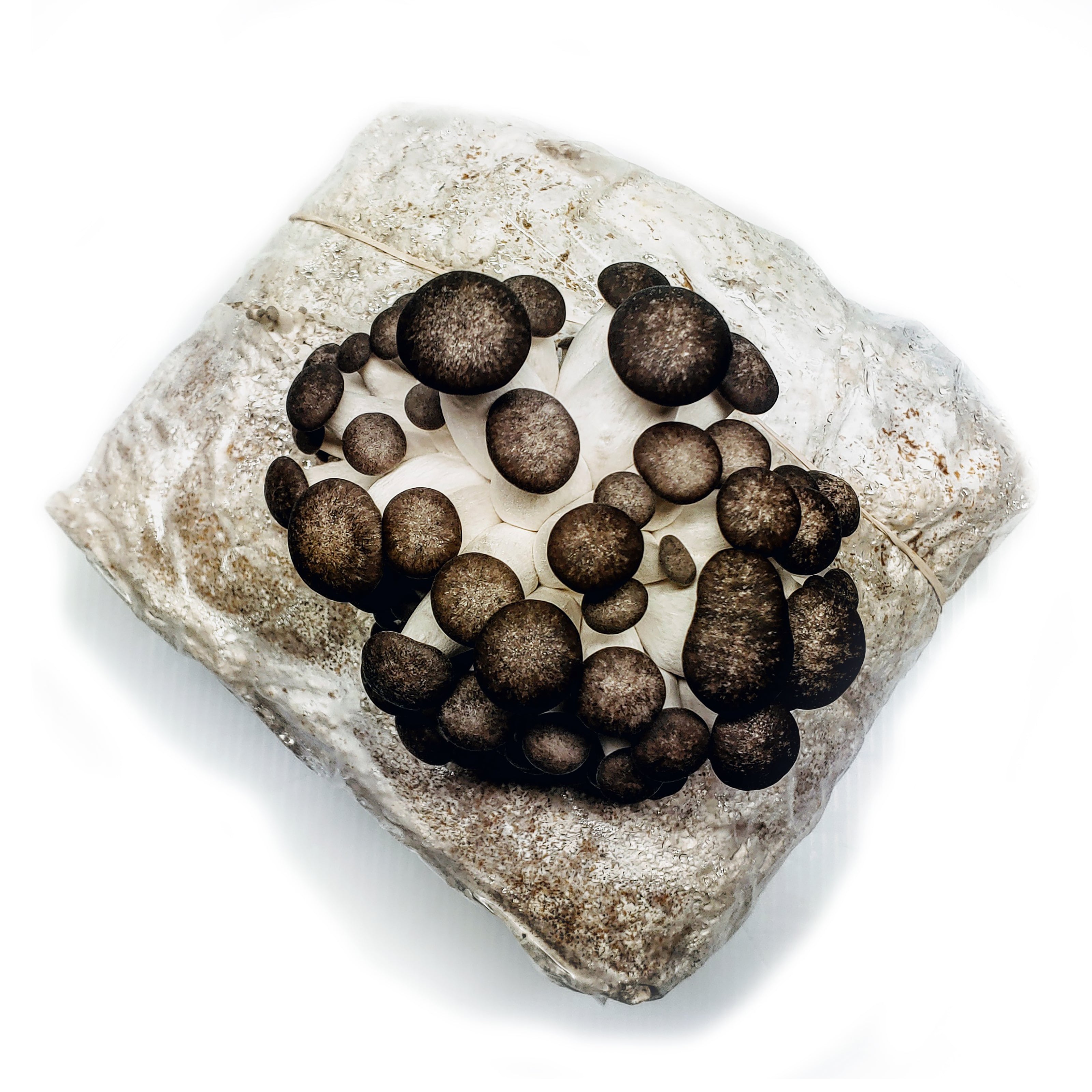
Black Pearl Oyster Strains

PO-BO

Black Pearl Oyster, like most Pleurotus varieties, can thrive on a wide variety of substrate recipes. It is highest-yielding on master's mix, hydrated to 60-63% total moisture content.

Incubation ranges from 14-21 days, depending on factors such as ambient incubation temp, spawn rate and substrate recipe. Unlike many other Pleurotus strains, Black Pearl Oyster does not pin immediately after colonization is complete, providing a grace period in which you can determine when to move your blocks into fruiting.

PO-BO prefers cool fruiting temps between 55-65° F, though can be fruited in warmer temps with mixed results. A standard x-cut or slit through the bag and into the substrate (no more than ½”) is the recommended initiation technique. If fruited in cold temps, Black Oysters manifest the morphology that most cultivators have come to expect- king oyster-like stems and dark, speckled caps. If fruited in warmer conditions, black pearl manifests in morphology a bit more similar to blue oyster, though with fleshier stems.

These are also a very popular sale at farmers markets and the like. They have a mild nutty and umami flavor similar to other oyster strains.

Top fruiting has become increasingly popular with PO-BO which increases the yield and shows off the P. eryngii genetics inherent in its hybridization.

Check out our MycoWizards PhenoFlick on Black Oyster HERE!

All Strains Explained

Blue Oyster Strains

PO-CNS

This is our bestselling house strain of Blue Oyster. Like most Pleurotus varieties, it can thrive on a wide variety of substrate recipes. It is highest-yielding on our master's mix combo-pellets, hydrated to 61% total moisture content.

Incubation ranges from 7-14 days, depending on factors such as ambient incubation temp, spawn rate, and substrate recipe. To avoid stroma and other biological problems during incubation, ensure that the core temperature of your PO-CNS blocks do not exceed 80F at the core. This can be achieved by incubating at 65F.

Bring blocks into the cold storage or the fruit room immediately after incubation is complete, as this strain pins fast and furious. A standard x-cut or slit through the bag and into the substrate (no more than ½”) is the recommended initiation technique. This strain of blue oyster prefers fruiting temperatures between 60-65° F. It maintains a vivid blue color and produces denser fruits of higher quality and a longer shelf life if fruited in cold temperatures. Yield typically ranges from 2½ -3½ lb per 10lb master’s mix block. It is known for very large cap size and tender stems all the way to their base, rendering the whole cluster marketable to a gourmet clientele.

This is a very versatile mushroom that will go good in many dishes such as stir fry, pasta, curry or even simply pan fried by themselves. This mushroom makes a great meat replacement. This strain has also been known to sell well at farmers markets.

PO-CHO

The 'chocolate' oyster is a blue oyster strain from China, sent to us by way of friends in Australia. At this point, it's been cultivated extensively by our farm customer base. It is less aggressive to pin compared with PO-CNS after colonization is complete. It yields very well, produces fruits of high quality (those with caps a bit smaller than a strain like POCNS), but thrives in warmer temps than the average blue strain and demonstrates some resistance to blotch and other bacteria. Its exceptional texture and culinary quality, as well as its slight brown hue to the caps, has made it very popular with chef and home grower alike!

PO-3044

PO-3044 is one of the more popular Blue Oyster varieties we offer. It is known for slightly smaller cap sizes than our house strain, PO-CNS, but still produces clusters of similar size.

PO-3044, like most Pleurotus strains, can thrive on a wide variety of substrate recipes. It is highest-yielding on master's mix, hydrated to 60-63% total moisture content. Calcium carbonate supplementation can help to slightly increase yield and fruit quality. It is best to have a tight contact between the block and the cultivation bag, which helps to prevent premature pinning inside the bag.

Incubation timelines ranges from 7-14 days, depending on factors such as ambient incubation temp, spawn rate, and substrate recipe. To avoid stroma and other biological problems in incubation, ensure that the core temperatures of your blocks do not exceed the low 70s F.

Bring blocks into cold storage or the fruit room immediately after incubation is complete, as this strain pins fast. A standard x-cut or slit through the bag and into the substrate (no more than ½”) is the recommended initiation technique. This strain of blue oyster prefers fruiting temperatures between 55-65° F, but can be fruited in slightly warmer conditions if necessary. It maintains a vivid blue color and produces denser fruit of higher quality and shelf life if fruited in cold temperatures. Yield typically ranges from 2½ -3½ lb per 10 lb master’s mix block. Great shelf life if fruited in cold conditions, shorter shelf life when fruited in warm conditions. A very predictable, flexible, and reliable strain overall. 

Just like the PO-CNS strain, this variety is a great addition to any fruiting room.

PO-3015

If you know, you know...some love it, some hate it. This Blue oyster strain is something that simply exists for the folks who have come to rely on it!

PO-KB

The PO-KB strain is a result of breeding carried out by Mossy Creek Mushrooms, this is a somewhat less predictable blue oyster strain, but an ideal choice for those with variable fruiting conditions and/or warm average fruiting temperatures.

Like most Pleurotus varieties, the PO-KB strain can thrive on a wide variety of substrate recipes. It is highest-yielding on master's mix, hydrated to 60-63% total moisture content.

Incubation ranges from 7-16 days, depending on factors such as ambient incubation temp, spawn rate, and substrate recipe. To avoid stroma and other biological problems in incubation, ensure that the core temperatures of your blocks do not exceed the lower 70s F

Bring blocks into the fruit room immediately after incubation is complete, as this strain pins readily. A standard x-cut or slit through the bag and into the substrate (no more than ½”) is the recommended initiation technique. This strain of blue oyster prefers fruiting temperatures between 60-70° F, but can be fruited in colder and semi warm conditions if necessary. It maintains a vivid blue color and produces denser fruit of higher quality and shelf life if fruited in cold temperatures. Yield typically ranges from 2 -3 lb per 10lb master’s mix block. It is known for average cap size but still produces very large clusters. Great shelf life if fruited in cold conditions, shorter shelf life when fruited in warm conditions.

Just like the PO-CNS strain, this variety is a great addition to all your favorite dishes; and any type of Blue Oyster tends to be in high demand if you're looking to sling the fungi!

PO-LOG

While this strain is not as high-yielding or high in quality, when compared to other blue oyster strains, it is still known for its overall ease in cultivation, resistance to bacterial blotch and other contaminants, and its exceptional shelf life. This phenotype certainly maintains the longest post-harvest shelf life of any blue oyster strain we carry, thus making it a great strain option for wholesaling to distributors.

Like most Pleurotus varieties, PO-LOG can thrive on a wide variety of substrate recipes. It is highest-yielding on master's mix, hydrated to 60-63% total moisture content.

Incubation ranges from 10-18 days, depending on factors such as ambient incubation temp, spawn rate, and substrate recipe.

A standard x-cut or slit through the bag and into the substrate (no more than ½”) is the recommended initiation technique. This strain of blue oyster prefers fruiting temperatures between 55-65° F, but can be fruited in warmer conditions if necessary. Yield typically ranges from 2-2½ lb per 10lb master’s mix block. A very predictable, flexible and reliable strain overall.
Chestnut Strains

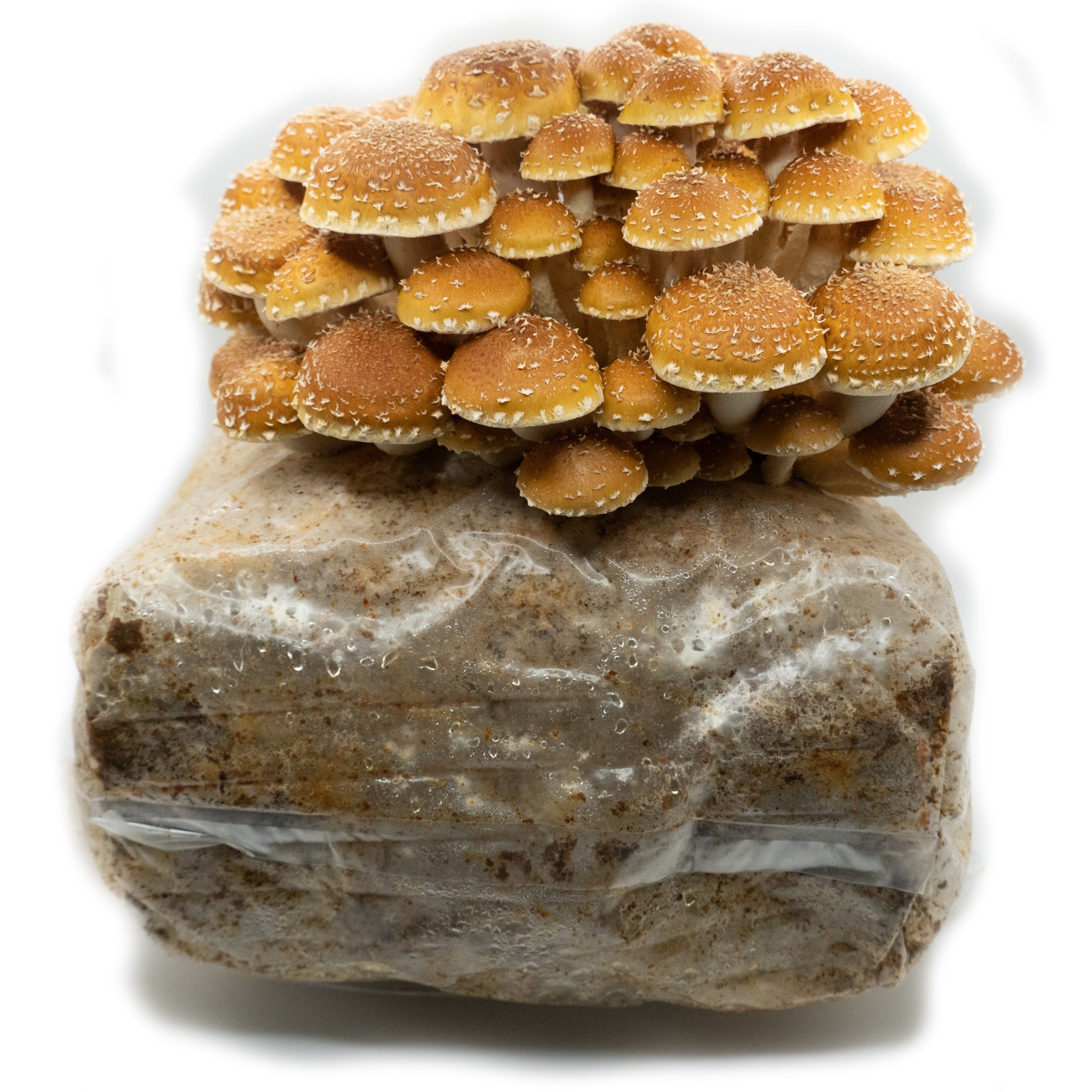
PA-CNS

The infamous and mighty Chestnut strain PA-CNS thrives on master’s mix, especially if pelletized (the pelletization process breaks down the oak, rendering it more bioavailable for a weak metabolizer like chestnut) hydrated to 61-63%.

Initial colonization takes 3 weeks on average, but we recommend that you let the blocks sit for 1 additional week to fully mature- the block will swell with caramel-colored secondary metabolites. This allows the mycelium time to more effectively digest its growing medium, which leads to a faster and larger pinset once introduced into fruiting. Similar to most varieties, avoid letting the internal temperature of your blocks exceed the upper 70s to avoid deleterious biological impacts. Be mindful that chestnut mycelium is more prone to mold contamination than most other common varieties.

Chestnut prefers fruiting temperatures between 55-65° F (12-18° C), if the temperature exceeds 65° it will likely not pin at all. High relative humidity (90-95% ) is recommended for fast and healthy pinning. This is a more intermediate species to work with, if the conditions are not just right you will have a hard time harvesting anything off of the block.

A deep cut into the block is highly recommended for a dense pinset and high yield. Pinset emergence takes longer with chestnut than most other common varieties- 14 to 21 days in most cases. Once pins emerge, it is a fairly rapidly growing mushroom. Harvest after veils break but before caps flatten. Though chestnut does not have a fantastic shelf life, it is a strikingly beautiful mushroom and often sells fast. Average yield ranges between 2 and 3lbs.

Chestnuts have a nutty and meaty flavor, great for many dishes like pasta, soup or as a pizza topping. They are also good for drying as this will improve shelf life.

Check out out MycoWizards PHenoFlick on PA-CNS HERE!
Enoki Strains

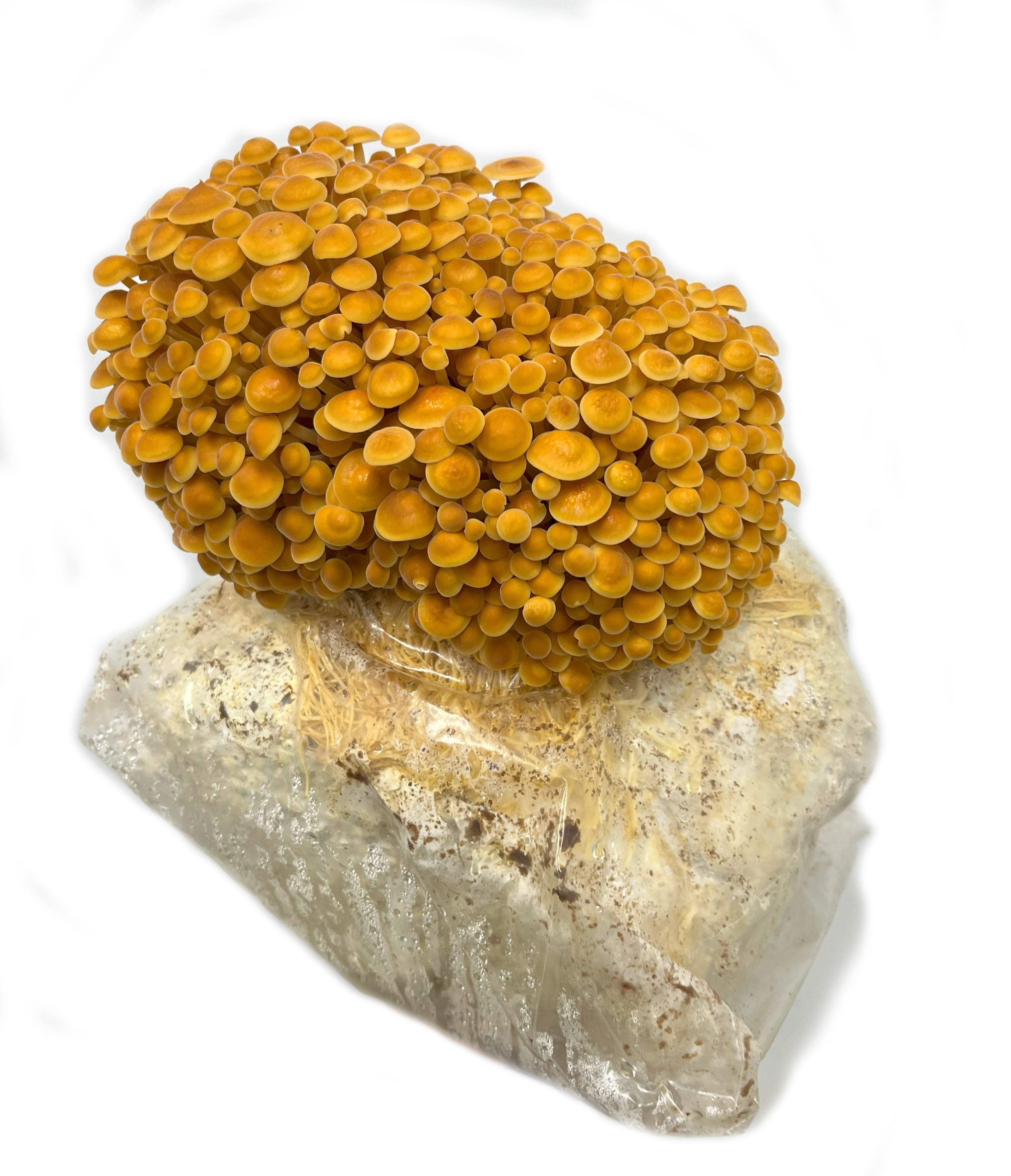
Golden Enoki FV-4600

Enoki is very tenacious and can grow on a variety of substrates, but we recommend master's mix for fastest growth and highest yields. Recommended moisture content is 60-63%, Calcium carbonate supplementation can help to slightly increase yield and fruit quality. It is best to have a tight contact between the block and the cultivation bag, which helps to prevent premature pinning inside the bag.

Enoki is fully colonized between 14-21 days in most circumstances. As with most varieties, enoki mycelium thrives with its interior temperature rests in the upper-70s Fahrenheit.

Enoki prefers cold fruiting temps, ideally 50-63° F. Some growers cold shock blocks for several days prior to inducing fruiting. Most growers top fruit enoki sometimes through scratching the top surface of the block. To encourage the most spindly spaghetti like form, let the pins form in vitro or fruit them in a high CO2 environment. If fruited in a regular fruiting environment with high oxygen levels, they will still be thin stemmed but with approximately dime-sized caps.

Enoki is sensitive to bacterial infection in the fruits, so avoid condensation settling on the fruits for a long period of time. Much like other common gourmet varieties, Enoki caps will flatten once they reach full maturity. So keep an eye on them to harvest before flattening for better storage life. FV 4600 can be quite high yielding and can be fruited multiple times with one block.

Enoki mushrooms are quite popular, they have a crunchy texture and umami flavor. They are good in a variety of dishes including soups, stir fry or even just by themselves.

White Enoki FV-1037

FV-1037 is a special order status strain. It is grown in the same conditions as Gold Enoki, however, your incubation and fruiting rooms need to be very on point as this is an overall weaker strain and needs exact conditions. The main appeal of the FV-1037 is the beautiful stark white color, as it was bred specifically for that purpose.

For substrate, we recommend master's mix for fastest growth and highest yields. Recommended moisture content is 60-63%, Calcium carbonate supplementation can help to slightly increase yield and fruit quality. It is best to have a tight contact between the block and the cultivation bag, which helps to prevent premature pinning inside the bag.

Enoki is typically fully colonized between 14-21 days in most circumstances. As with most varieties, enoki mycelium thrives with its interior temperature rests in the upper-70s Fahrenheit. Enoki prefers cold fruiting temps, ideally 50-63° F. Some growers cold shock blocks for several days prior to inducing fruiting. Most growers top fruit enoki sometimes through scratching the top surface of the block. To encourage the most spindly spaghetti like form, let the pins form in vitro or fruit them in a high CO2 environment.

Enoki is sensitive to bacterial infection in the fruits, so avoid condensation settling on the fruits for a long period of time. Much like other common gourmet varieties, Enoki caps will flatten once they reach full maturity. So keep an eye on them to harvest before flattening for better storage life.

If you would like to try this strain be sure to write *Special Order* at the bottom of your Spawn Form.
Gold Oyster Strains

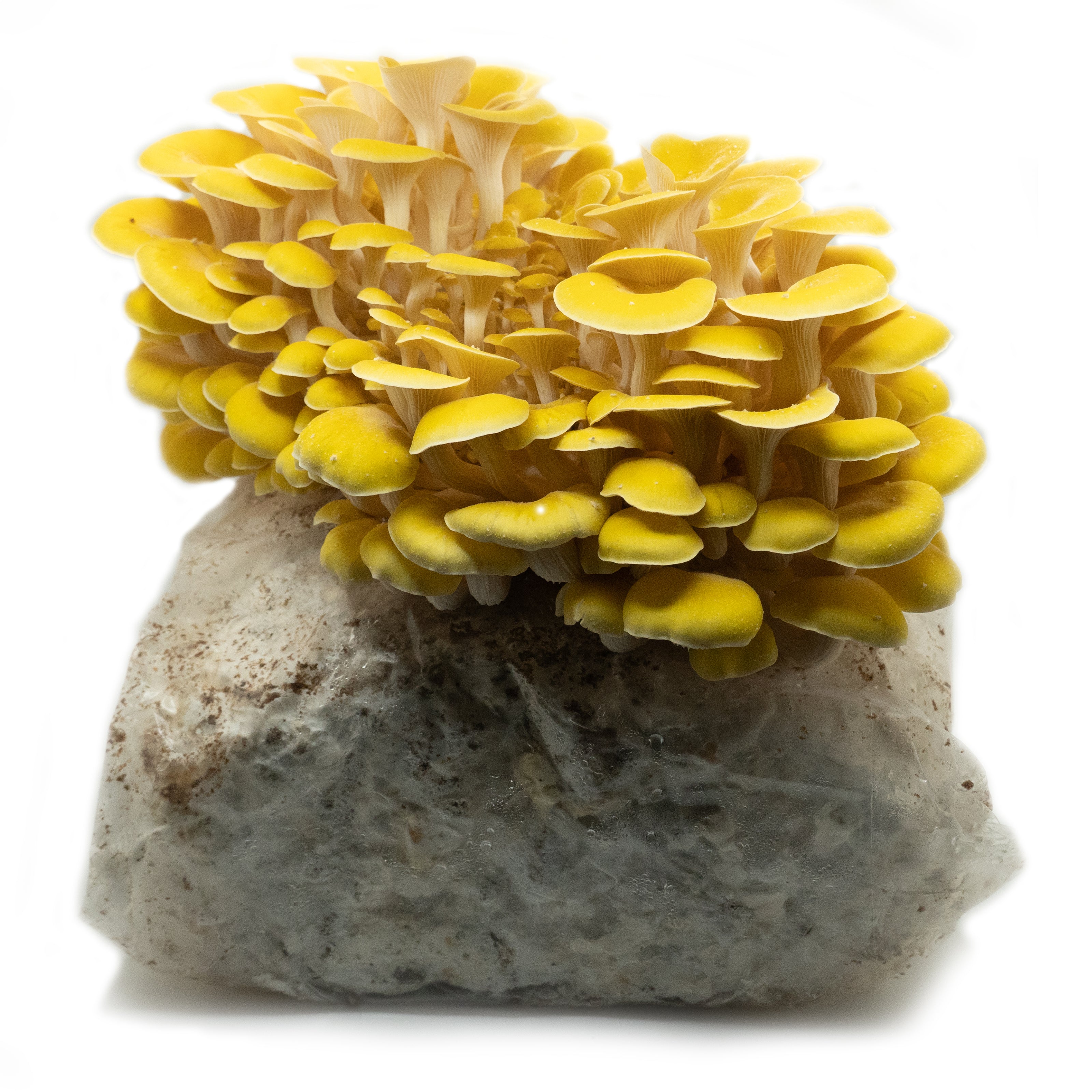
PC-MM

Gold Oyster, like most Pleurotus varieties, can thrive on a wide variety of substrate recipes. It is highest-yielding on master's mix, hydrated to 60-63% total moisture content.

Incubation ranges from 7-14 days, depending on factors such as ambient incubation temp, spawn rate, and substrate recipe. To avoid stroma and other biological problems in incubation, ensure that the core temperatures of your blocks do not exceed the low 70s.

Bring blocks into the fruit room immediately after incubation is complete, as this strain pins readily. A standard x-cut or slit through the bag and into the substrate (no more than ½”) is the recommended initiation technique. This strain of Gold Oyster prefers immense flood lighting with fruiting temperatures between 65-70° F, but can be fruited in cooler conditions if necessary. It maintains a vivid color and higher yields when fruited in those warmer conditions. This strain can easily be fruited several times, but still has a high first flush yield. Its fruits develop rapidly; yield typically ranges from 2½ -3½ lb per 10 lb master’s mix block.

Pleurotus citrinopileatus is known for smaller cap size than other oyster species and for very delicate fruit tissue that is easily damaged. This PC-MM strain demonstrates stronger fruit tissue than average, while still maintaining a nice texture for gourmet cuisine. Mediocre shelf life. Fungus gnats and other insect pests are attracted by remnants of p. citrinopileatus fruits, so be sure to cut clean against the block when harvesting, and move the blocks to compost as soon as you are done flushing. A very predictable, flexible, and reliable strain overall.

Gold Oysters are desirable mainly because of their beautiful bright yellow color and notably nutty flavor.
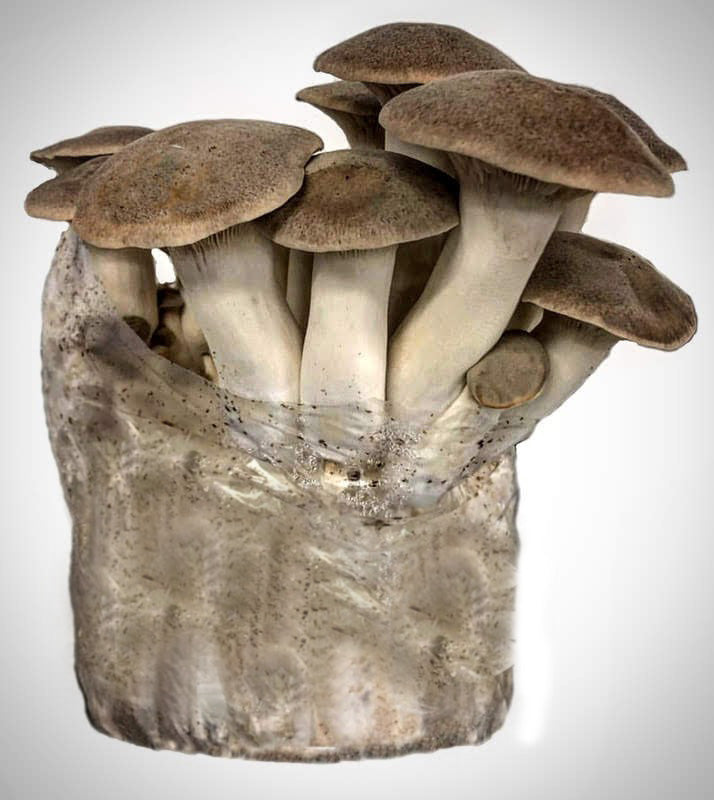
King Oyster Strains

PE-KONG

King oyster, like most Pleurotus varieties, can thrive on a wide variety of substrate recipes. It is highest-yielding on master's mix, hydrated to 60-63% total moisture content. It is best to have a flat top surface of your block and tight contact between the block and the cultivation bag, which encourages growth across the entire surface rather than along the edges of the block.

Incubation ranges from 14-21 days, depending on factors such as ambient incubation temp, spawn rate, and substrate recipe.

Bring blocks into the fruit room immediately after incubation is complete, as king oyster pins readily. There are three typical pin initiation approaches- letting the pins form in vitro before cutting off the seal and/or top portion of the bag, immediately cutting off the seal and/or top portion of the bag and scratching the top surface of the block, or simply cutting off the seal and/or top portion of the bag. Some farms like to form a casing layer (such as with peat moss and hydrated lime) for the fruits to emerge from. All have their merits and depend on the fruiting environment and grower preference. King oyster prefers cold fruiting temperatures between 50-60° F. Rapid pin growth and ideal morphology are encouraged through exposure to blue lighting; full spectrum LED is fine, if not too strong. Its fruits develop rapidly; yield typically ranges from 2-2.5 lb per 10lb master’s mix block and boast an excellent shelf-life.

King Oysters are a delicious and meaty mushroom, a great option as a meat replacement.

Check out our King Oyster Cultivation Deep Dive on our MycoWizards page!

PE-2603

PE2603 tends toward more uniformly medium-sized fruits with a pale, beige hue to the caps, while PEKONG demonstrates much more variance in fruit size with a stronger granite hue to the caps.

King oyster, like most Pleurotus varieties, can thrive on a wide variety of substrate recipes. It is highest-yielding on master's mix, hydrated to 60-63% total moisture content. It is best to have a flat top surface of your block and tight contact between the block and the cultivation bag, which encourages growth across the entire surface rather than along the edges of the block.

Incubation ranges from 14-21 days, depending on factors such as ambient incubation temp, spawn rate, and substrate recipe.

Bring blocks into the fruit room immediately after incubation is complete, as King Oyster pins readily. There are three typical pin initiation approaches- letting the pins form in vitro before cutting off the seal and/or top portion of the bag, immediately cutting off the seal and/or top portion of the bag and scratching the top surface of the block, or simply cutting off the seal and/or top portion of the bag. Some farms like to form a casing layer (such as with peat moss and hydrated lime) for the fruits to emerge from. All have their merits and depend on the fruiting environment and grower preference. King oyster prefers cold fruiting temperatures between 50-60° F. Rapid pin growth and ideal morphology are encouraged through exposure to blue lighting; full spectrum LED is fine, if not too strong. Its fruits develop rapidly; yield typically ranges from 2-2.5 lb per 10lb master’s mix block and boast an excellent shelf-life.

King Oysters are a delicious and meaty mushroom, a great option as a meat replacement.

Check out our King Oyster Cultivation Deep Dive on our MycoWizards page!

PE-REX

  • Demonstrates higher blotch resistance and overall vigor
  • Smaller, more attractive caps
  • Much softer texture than other strains, great in a gourmet context
  • More even fruit body size, easier to grade
  • Similar yield to other commercial strains such as KONG and 2603
  • Slightly slower to pin and harvest than KONG, by approximately one week

Lions Mane Strains

HE-CNS

HE-CNS is our go to house strain of Lion's Mane. HE-CNS produces the highest yield on master’s mix. We strongly recommend a final block moisture content of 60%; a moisture content even slightly exceeding that tends to lead to problems during incubation and fruiting for lion’s mane. In turn, insufficient moisture content often leads to issues with mold contamination and overall poor colonization of the block. Lion’s mane does equally well with ultrapasteurization and sterilization.

Incubation ranges from 8 to 16 days, depending on factors such as ambient incubation temp, spawn rate, and substrate recipe. Similar to most varieties, avoid letting the internal temperature of your blocks exceed the low 70s internally. Be mindful that Lion’s Mane mycelium is prone to myriad problems if it overheats and that it is more prone to mold contamination than most other common varieties.

Lion’s Mane prefers standard fruiting temperatures between 55-65° F (12-18° C). A high air exchange rate (lots of oxygen-rich air) and consistent relative humidity are ideal for good fruit development. A standard x-cut or slit in the bag is the recommended pinset initiation technique; many farms make their cut on the top surface of the block, where lion’s mane readily fruits on its own accord. Lion’s mane fruits develop at a relatively slow rate but grow to incredibly large size and weight. Average yield is quite high- 2½ to 3½ lb, with potential for even more with subsequent flushes of the same block. This strain is known for dense, club-like fruits with small spines, providing greater resistance to bruising and damage during handling/cold storage thus making it an eminent wholesaling mushroom.

Lion's Mane is not only a great versatile ingredient, it is also said to have many medicinal properties.

Check out our MycoWizards PHenoFlick on HE-CNS Here!

HE-POW

The HE-POW strain is different than typical Lion's Mane as it has demonstrated higher heat tolerance than other strains and is often the preferred strain by farms in hot climates and/or hot seasons.

HE-POW, like most Lion's Mane strains, produces the highest yield on master’s mix, but is easier to grow without issue on a lower-supplementation recipe, such as 65-70% hardwood and 30-35% wheat middlings/soy hulls. Regardless, we strongly recommend a final block moisture content between 59-62%; a moisture content even slightly exceeding that tends to lead to problems during incubation and fruiting for lion’s mane. In turn, insufficient moisture content often leads to issues with mold contamination and overall poor colonization of the block. HE-POW does equally well with ultrapasteurization and sterilization.

Incubation ranges from 8 to 16 days, depending on factors such as ambient incubation temp, spawn rate, and substrate recipe. Similar to most varieties, avoid letting the internal temperature of your blocks exceed the low 70s to avoid deleterious biological impacts; be mindful that lion’s mane mycelium is prone to myriad problems if it overheats, such as mold and bacterial contamination.

A standard x-cut or slit in the bag is the recommended pinset initiation technique; many farms make their cut on the top surface of the block, where it readily fruits on its own accord. Lion’s mane fruits develop at a relatively slow rate (14-21 days) but grow to an incredibly large size and weight. Average yield is quite high- 2½ to 3lb or more per 10lb master’s mix block, with potential for even more if fruited multiple times per block.

This strain is known for flashier fruits with more exposed spines, with excellent visual appeal while still maintaining wholesale production standards.

HE-LP

The fruit quality of this strain is not quite as gourmet as other Hericium strains offered by Cap N’ Stem, but its flexible cultivation parameters makes it a worthwhile consideration for some farms.

Lion’s Mane produces the highest yield on master’s mix, but is easier to grow without issue on a lower-supplementation recipe, such as 65-70% hardwood and 30-35% wheat middlings/soy hulls. Regardless, we strongly recommend a final block moisture content between 59-62%; a moisture content exceeding that tends to lead to problems during incubation and fruiting for lion’s mane, especially bacterial infections and subsequent pooling of secondary metabolites. In turn, insufficient moisture content often leads to issues with mold contamination and overall poor myceliation of the block. Lion’s mane does equally well with ultrapasteurization and sterilization.

Incubation ranges from 8 to 16 days, depending on factors such as ambient incubation temp, spawn rate, and substrate recipe. This strain is slightly more tolerant than other Hericium strains of varying moisture content in the block as well as varying incubation temperatures, making it a safe choice for farms with an inconsistent incubation environment.

Lion’s Mane thrives with lots of fresh air exchange and abundant oxygen levels, also ensure that you maintain high relative humidity without allowing condensation settling too long on the fruits, as lion’s mane is prone to both desiccation and bacterial rot. A standard x-cut or slit in the bag is the recommended pinset initiation technique. Many farms make their cut on the top surface of the block, where lion’s mane readily fruits on its own accord. Lion’s Mane fruits develop at a relatively slow rate (14-21 days) but grow to incredibly large sizes and weight. Average yield is less than other Lion’s Mane strains- 2 to 2½  lb- with potential for more if fruited multiple times per block.

HE-A

HE-A is a special order status strain. It is a wild clone from Quebec. We have not done much production with this strain so a lot of variables are still unknown. The main reason HE-A is special is it has vigorous and dense mycelium, much stronger and flexible than most other Lions Mane strains; This makes it a good contender if you have unstable fruiting conditions.

As this is a wild clone, the fruits of the HE-A look wild and spiny compared to regularly cultivated Lions Mane; which typically appear as a more dense round shape.

We do not have any average yield data as we have not brought this strain into our regular rotation. If you would like to try this strain be sure to write *Special Order* at the bottom of your Spawn Form.

HE-9514

HC-FF

HC-FF, also known as Combtooth or Hericium Corraloides is a commercial phenotype that hails from Funga Farm. The main difference between the strains is morphology; While the typical Lions Mane forms in multiple ball like fruits, the Combtooth has fruits more akin to a coral mushroom, very spread out and textured.

HC-FF produces the highest yield on master’s mix, but is easier to grow without issue on a lower-supplementation recipe, such as 65-70% hardwood and 30-35% wheat middlings/soy hulls. Regardless, we strongly recommend a final block moisture content between 59-62%; a moisture content exceeding that tends to lead to problems during incubation and fruiting for Combtooth, especially bacterial infections and subsequent pooling of secondary metabolites. In turn, insufficient moisture content often leads to issues with mold contamination and overall poor myceliation of the block. Combtooth does equally well with ultrapasteurization and sterilization.

Incubation ranges from 8 to 16 days, depending on factors such as ambient incubation temp, spawn rate, and substrate recipe. When compared to Lions Mane, HC-FF has a much denser mycelium during its colonization of a substrate block as well as spawn. It is less likely to autofruit in the high CO2 environment of a sealed XLS-A bag.

HC-FF thrives with lots of fresh air exchange and abundant oxygen levels, also ensure that you maintain high relative humidity without allowing condensation settling too long on the fruits, as Combtooth is prone to both desiccation and bacterial contamination. A standard x-cut or slit in the bag is the recommended pinset initiation technique; many farms make their cut on the top surface of the block, where Combtooth readily fruits on its own accord.

Typical yield ranges from 2 to 3 lbs. Depending on usual fruiting room factors such as lighting, oxygen levels and moisture content.

Check out our Mycowizards PhenoFlick on HC-FF HERE!
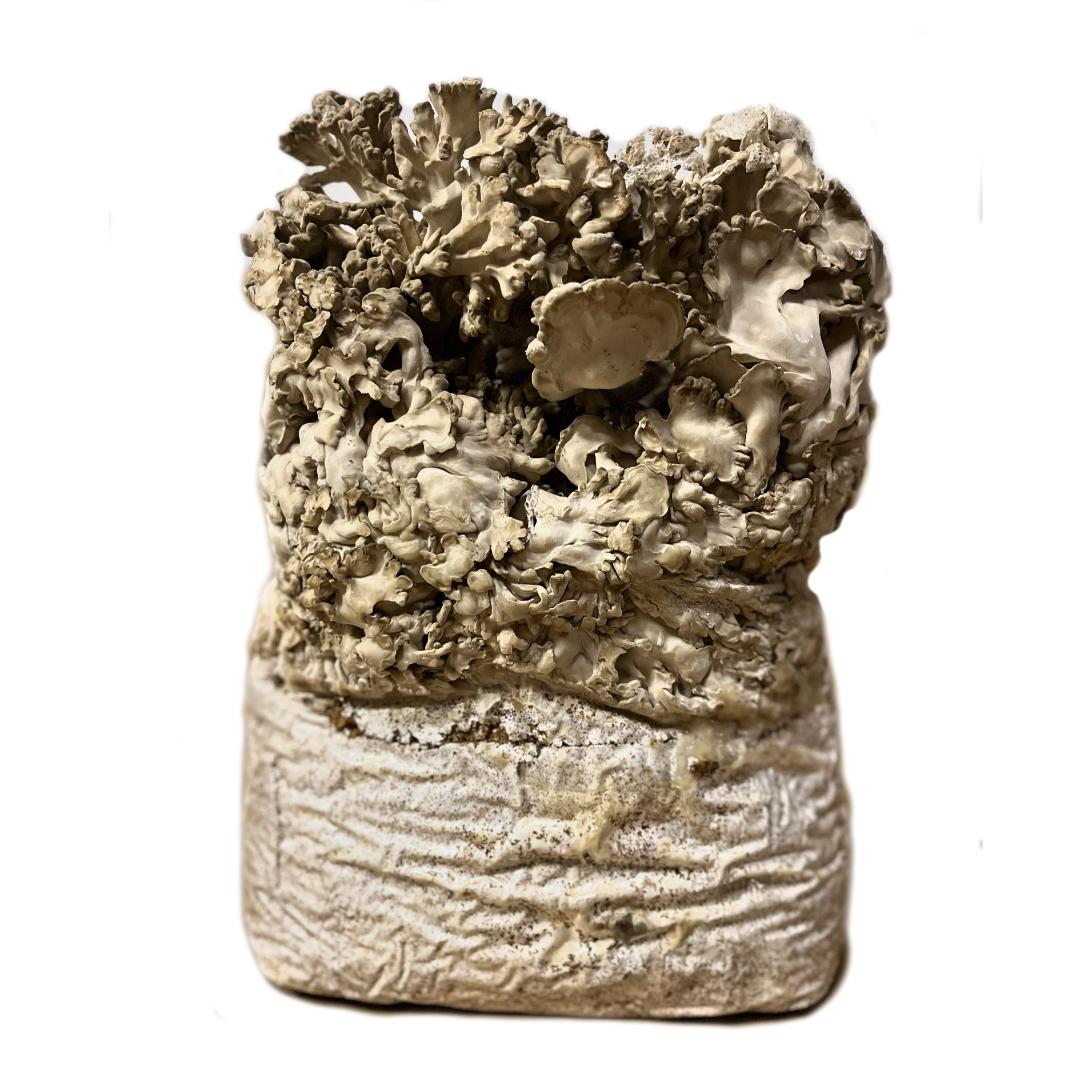
Maitake Strains

GF-494

GF-494 is a special order status strain. It has a slightly slower development rate when compared to other Maitake strains, however, It also has a slightly higher yield and tends to be more durable of a strain which makes it a great option for wholesale farmers.

As with the GF-9827, this is a particular strain when it comes to fruiting conditions; 65° F is recommended for incubation and fruiting. Be sure not to disturb the block as this will likely disrupt the growth of your mushrooms. The GF-494 is less flexible of a strain so all of your conditions should be on point.

If you would like to try this strain be sure to write *Special Order* at the bottom of your Spawn Form.

GF-9827

Maitake prefers a lower supplementation rate than standard masters mix. Something along the lines of 60-70% sawdust/hardwood pellets & 30-40% supplement. A moisture content between 60-63% is recommended to accommodate its longer timeframe in incubation. It is best to have a flat top surface of your block.

Initial colonization of the block will take about 3-4 weeks in most cases, but let the blocks remain in incubation as primordia develop in vitro. Let those primordia get as large as possible in incubation. Initial ‘blob-like’ primordia begin to develop ‘fingers’; this is a clear visual indication that the crop’s time in incubation is complete. Overall, incubation averages 3-4 weeks and primordia development averages 3-5 weeks. Extensive lighting over the top surface of the blocks is extremely helpful to encourage primordia to form along the entire top surface, rather than just along the sides of the top surface, which tends to occur in low-light conditions. Cool spectrum lighting is superior to warm spectrum for healthy primordial development. Maitake seems to have a very wide range in which it will grow, both in incubation and fruiting. As with most varieties, the speed is much greater in warm conditions, and the mushroom quality is greater in cool conditions. Temperature stability is extremely important for successful maitake cultivation. On average, growers tend to cultivate this strain at 65° F for incubation and fruiting.

Cut off the seal to leave a tall plastic collar around the developing fruits, and cut slits on the sides of the bottom of the collar to allow CO2 to flush out. Like any variety, Maitake requires fresh air exchange but is also prone to drying out, so it is best to position the blocks at a slight angle on your fruiting racks/shelves and have a collar that is as high as possible. In hot fruiting conditions, this is especially the case, whereas in cold fruiting conditions you will want to ensure that water doesn't pool inside the collar. For maximum storage life, harvest the fruits right when pores manifest on the undersides of the fronds. For maximum volume, wait to harvest until fruits have begun to produce spores.

As this species is more advanced than most, it is important to have extra consideration in fruiting conditions. Many growers have produced mediocre maitake (very short fronds, about halfway between 'blobtake' and healthy looking maitake) because they didn't have enough patience. Patience is key, especially in regard to letting primordia develop in vitro. If you allow the primordia as much time to develop as possible in vitro, you will see a higher yield, healthier mushrooms, better aroma.

Maitake will stop growing if disturbed too much. This is one of the main considerations for letting the blocks acclimate to the fruiting room before cutting off the seal. The principle of avoiding disturbance applies to other aspects of cultivation- avoid knocking the blocks, and avoid fruiting them in a fruit room with heavy spore load from other varieties (both may lead to growth stopping).

Maitake is said to have a rich earthy flavor with a hint of spice.

Phoenix Oyster Strains

PP-LOG

PP-LOG has been our go to Phoenix oyster strain for a decade. Also referred to as Italian Oyster, Pleurotus Pulmonarius loves the heat and fruits best between the temp range of 60 and 70F.

When it comes down to producing substrate for this variety it is typical to all the other standards of oysters, Masters Mix with 60-63% moisture content. On a 10lb block of substrate keep your incubation temps down around 66F to prevent any bacterial contamination that can proliferate into blotch once introduced into fruiting.
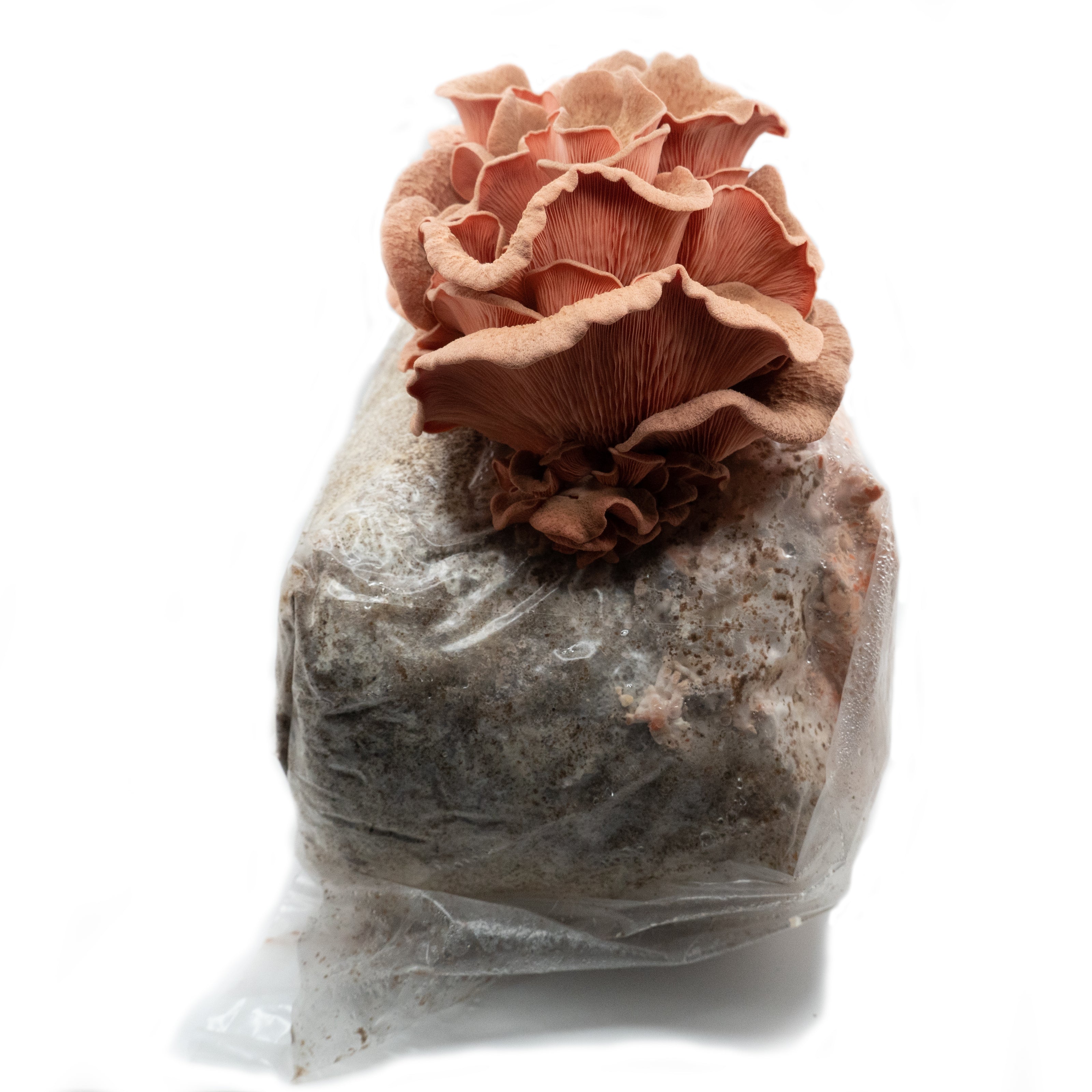
PP-2204

PP-2204 comes from Mycelia BVBA and has been a runner up to our PP-LOG strain for a few years. Also referred to as Italian Oyster, Pleurotus Pulmonarius loves the heat and fruits best between the temp range of 60 and 70F.

When it comes down to producing substrate for this variety it is typical to all the other standards of oysters, Masters Mix with 60-63% moisture content. On a 10lb block of substrate keep your incubation temps down around 66F to prevent any bacterial contamination that can proliferate into blotch once introduced into fruiting.

Pink Oyster Strains

PD-1

Pink Oysters can thrive on a wide variety of substrate recipes. It is highest-yielding on master's mix, hydrated to 60-63% total moisture content. It is best to have a tight contact between the block and the cultivation bag, which helps to prevent premature pinning inside the bag.

Incubation ranges from 10-16 days, depending on factors such as ambient incubation temp, spawn rate, and substrate recipe.

Bring blocks into the fruit room immediately after incubation is complete, as this strain pins all over the block fast. A standard x-cut or slit through the bag and into the substrate (no more than ½”) is the recommended initiation technique. Pink oysters are a tropical strain that prefers fruiting temperatures between 70-80° F with humidity levels between 85-95%. It maintains a vivid pink color if grown with slight light exposure and in their preferred temp range, and can produce thick meaty fruits or thin delicate fruits depending on growing conditions. This strain can easily be fruited several times, but still has a high first flush yield. Its fruits develop rapidly; yield typically ranges from 2½ -3 lb per 10 lb master’s mix block. The nice part about PD-1 is it can be fruited through the winter months if the temps in your fruiting facility stay in the low to middle 60s.

Pink Oysters are known to have a very short life. They also have a meaty texture and a notably "seafood" flavor.
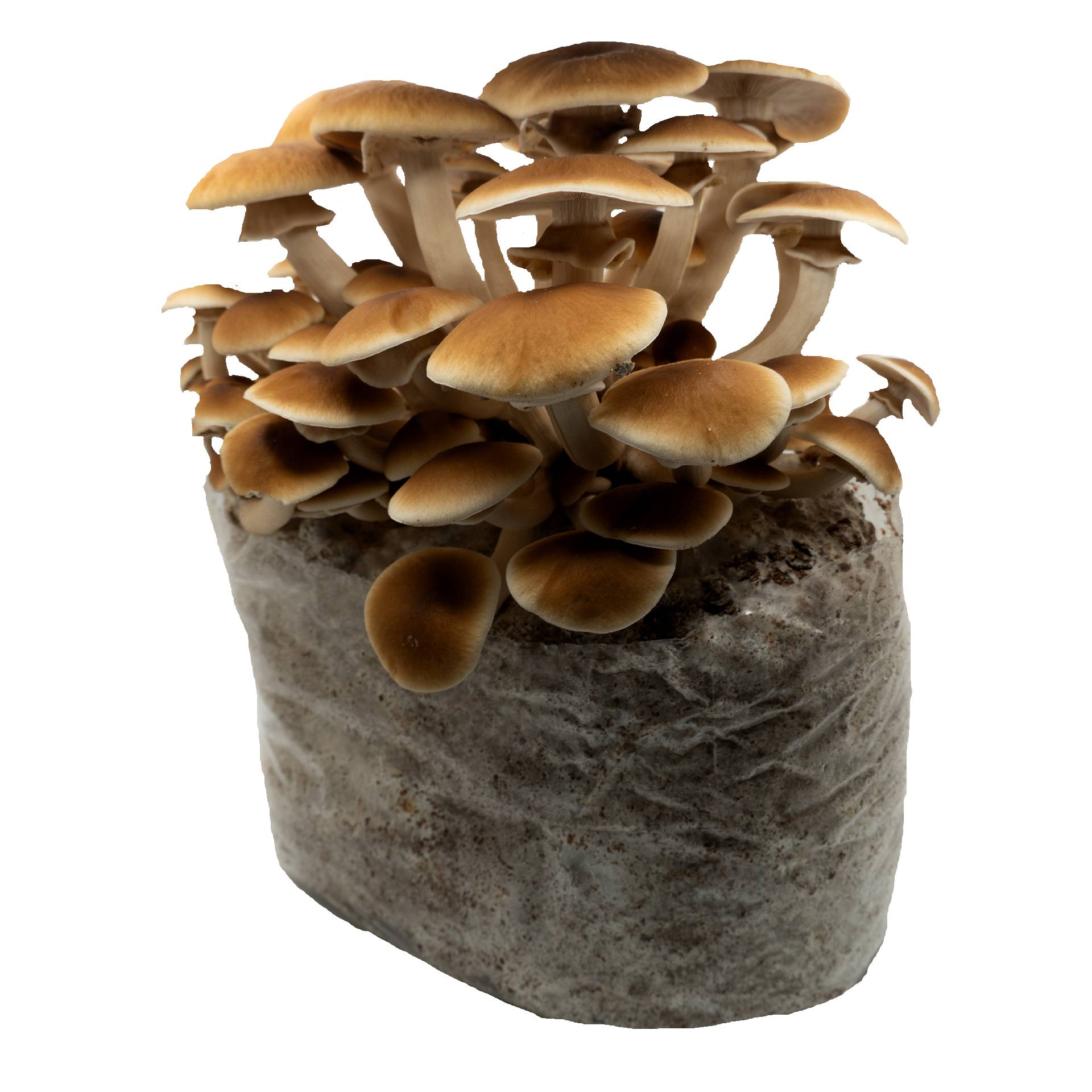
Pioppino Strains

AA-CNS

Pioppino is a relatively delicate mycelium. It obtains its highest yields on masters mix, ideally with a hardwood as its substrate base. For the smoothest colonization and easiest success, some growers cultivate pioppino on recipes similar to shiitakes substrate. Much like other delicate varieties, if pioppino is grown on substrate with insufficient moisture content, its mycelial growth rate is drastically inhibited and its hyphae are less robust and defined. If grown with excessive moisture content bacterial contamination easily occurs. Standard 60-63% moisture content is recommended.

Pioppino takes 18-22 days to fully colonize and be ready to fruit on average. indirect light exposure in incubation encourages more vigorous colonization of the block. When pioppino is ready to fruit cloud like plumes of mycelium form on the top of the block giving way to microdots of a yellow metabolite that forms into primordia. These pins can form on the exterior of the block so its best to maintain tight contact between plastic and block to encourage top fruits. If you catch the block before pillowy mycelium forms but the block is full colonized you can remove the air from the plenum with a small cut at the top of the bag and refrigerate at 34F for several weeks. After refrigeration, a side cut similar to oysters or lions mane will provide a successful and robust flush.

Pioppino prefers warm fruiting temperatures between 65-75 degrees but will fruit in cooler temps as well, just more slowly. It is highest yeilding when fruited from the top of the block. Once pins are formed they grow at a fast rate and will be ready to harvest within 7-10 days on average.

For the best balance of storage life and yield, harvest just when the veils are beginning to show signs of cracking and separating from the stem. This strain of Pioppino is known for mostly even, medium sized fruits. Its yield, while not exceptional, still falls within the range of a commercially viable first flush and outperforms other Pioppino strains that Cap N’ Stem has worked with.

The Pioppinos have a nutty and slightly sweet flavor. It is a popular mushroom in the culinary world.

Check out our MycoWizards PhenoFlick on fascinating strain HERE!
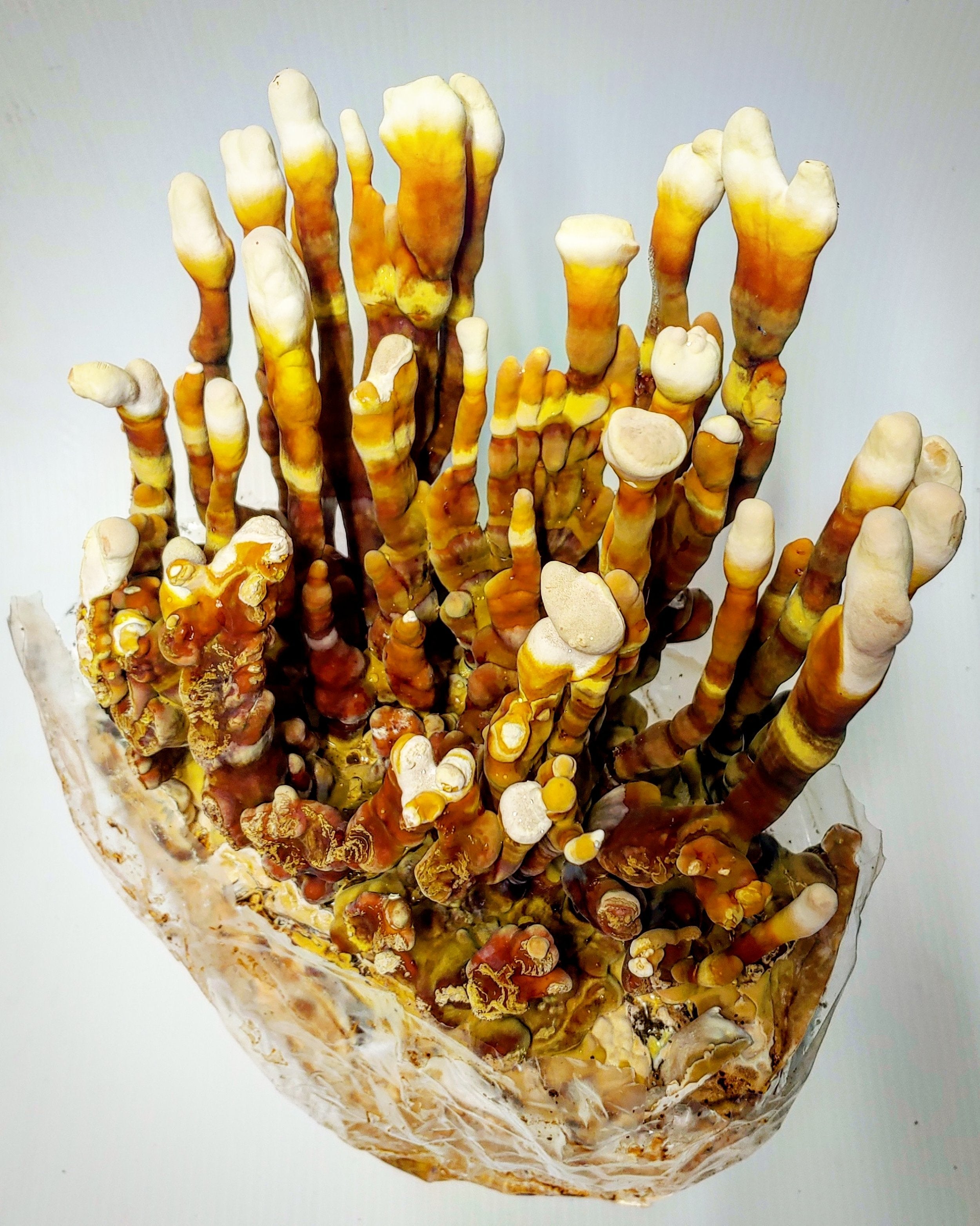
Reishi Strains

GLZ-9724

Reishi species are incredibly tenacious and will thrive on a wide variety of substrate recipes. Masters mix works quite well and allows for high yields. Standard moisture content of 60-63%. If you plan on fruiting antlers in vitro, be sure to have as large a plenum in the bag as possible to provide maximum amount of space for antlers to grow. 

Reishi typically requires 10-16 days for full colonization. Reishi is a strong competitor and will outcompete most contaminants if they're not too prevalent. If you plan to fruit antlers in vitro, set them and forget them, ideally with good light exposure to stimulate faster fruit growth. If you plan to fruit conks, move them into your fruit room as soon as you see either a swelling of secondary metabolites and/or myelination along the exterior of the substrate.

While Reishi myceliates very fast, its fruits grow at a very slow, steady rate. Depending on context, reishi fruits reach maturity anywhere between 3-6 months; some cultivators extend their growth beyond that. Some strains are bred specifically for antler morphology, others for conk, and others are flexible. You can grow antlers in vitro or in a fruiting space with artificially elevated CO2 levels. If you want to grow conks, cut the bag in a similar fashion as you would oysters; primordia will quickly manifest. For conks, maintain a standard fruiting room environment- around 90% relative humidity and the usual 450-800 ppm CO2. This will encourage the organism to continue growing fruit body size rather than sporulating. Ideally, harvest before the mushrooms sporulate, as Reishi spores both contain medicinal potency and are very virulent and irritating to the respiratory system (and your equipment!).

Reishi is a great mushroom for tinctures as they are said to have many medicinal properties.

Check out our MycoWizards Deep Dive on the History Of Reishi HERE!
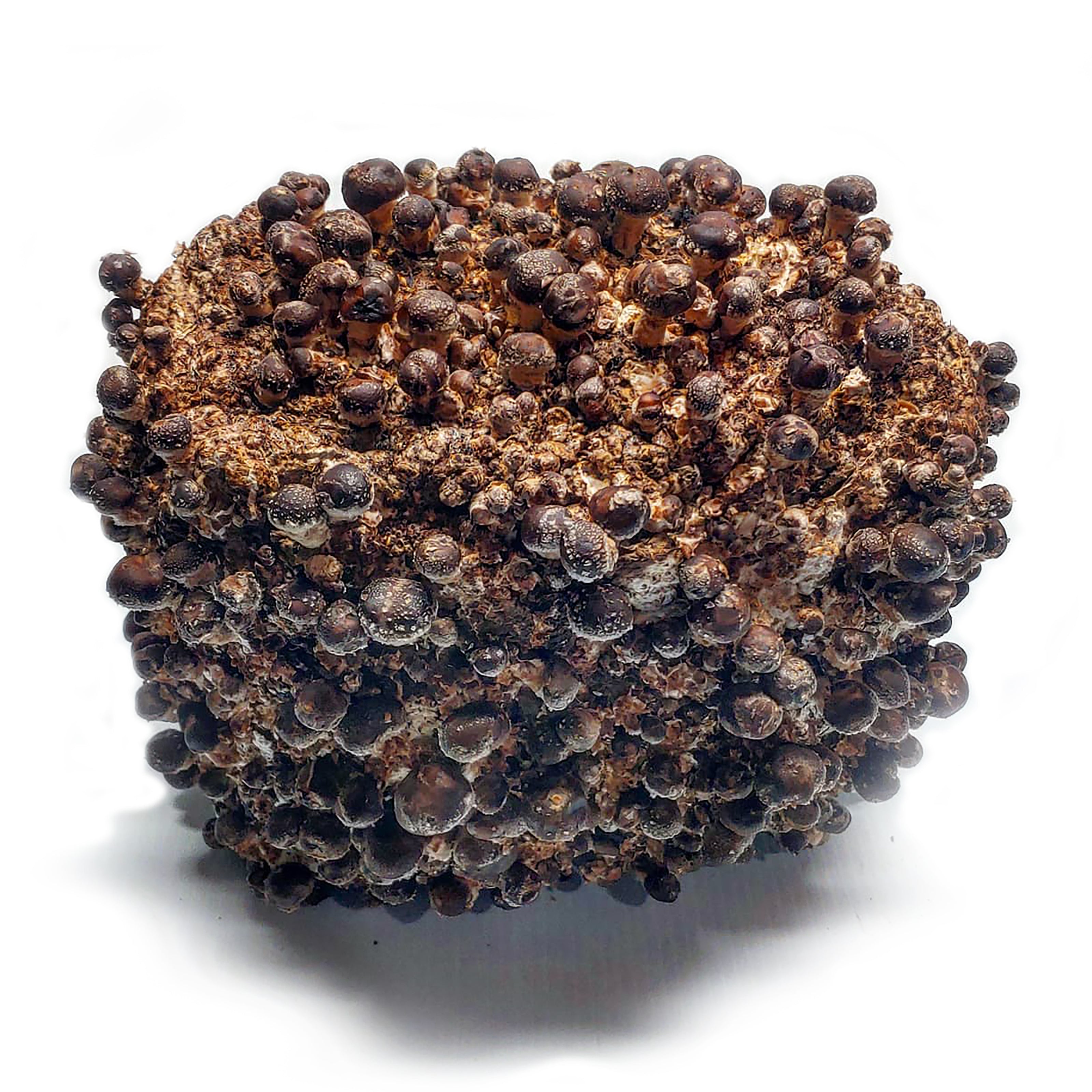
GM-CNS

GM-CNS is an incredibly tenacious species and will thrive on a wide variety of substrate recipes. Ganoderma Multipileum grows faster and antlers quicker than Ganoderma Lingzhi with less dense fruits in a pillowy zig zag fashion depending on the light spectrum. Masters mix works quite well and allows for high yields. Standard moisture content of 60-63%. If you plan on fruiting antlers in vitro, be sure to have as large a plenum in the bag as possible to provide maximum amount of space for antlers to grow. 

Reishi typically requires 10-16 days for full colonization. Reishi is a strong competitor and will outcompete most contaminants if they're not too prevalent. If you plan to fruit antlers in vitro, set them and forget them, ideally with good light exposure to stimulate faster fruit growth. If you plan to fruit conks, move them into your fruit room as soon as you see either a swelling of secondary metabolites and/or myelination along the exterior of the substrate.

While Reishi myceliates very fast, its fruits grow at a very slow, steady rate. Depending on context, reishi fruits reach maturity anywhere between 3-6 months; some cultivators extend their growth beyond that. Some strains are bred specifically for antler morphology, others for conk, and others are flexible. You can grow antlers in vitro or in a fruiting space with artificially elevated CO2 levels. If you want to grow conks, cut the bag in a similar fashion as you would oysters; primordia will quickly manifest. For conks, maintain a standard fruiting room environment- around 90% relative humidity and the usual 450-800 ppm CO2. This will encourage the organism to continue growing fruit body size rather than sporulating. Ideally, harvest before the mushrooms sporulate, as reishi spores both contain medicinal potency and are very virulent and irritating to the respiratory system (and your equipment!).

Reishi is a great mushroom for tinctures as they are said to have many medicinal properties.

Check out our MycoWizards Deep Dive on the History Of Reishi HERE!

Shiitake Strains

LE-KOM

LE-KOM is much like any other Shiitake strain except it has a faster incubation rate, this is a good strain for wholesale farmers. Shiitake in general requires a less-rich growing medium than other varieties; the standard recipe is 20-30% wheat bran/middlings, 70-80% oak/harwood, hydrated to 63-65%. It prefers sterilized growing media rather than pasteurized growing media, though both can be successful.

Initial colonization takes 2-3 weeks; total time to fully browned maturity ranges from 7-9 weeks- this strain is exceptionally fast, relative to other shiitake strains and extremely forgiving. To ensure healthy popcorning, rather than blistering, ensure that you maintain stable ambient temperatures during incubation. To ensure proper browning, allow for even all spectrum light exposure to the blocks, even if indirect. To avoid overheating and its cataclysmic associated issues, as well as premature pinning in vitro, ensure that the core temperatures of your blocks do not ever exceed the low 70s, even for short time intervals. This strain has proven to be reasonably tolerant of variable substrate moisture content, but it is best practice to stick within the recommended 63-65% MC range and to avoid any standing water inside the cultivation bag.

This strain performs reasonably well through a wide temperature range, though 55-70° F is recommended for highest quality fruits and shelf life. Cold shocking is helpful to initiate a fast and robust pinset but is optional. It mostly produces medium-size caps of good quality with a smaller amount of large-size caps and few petite caps. If cultivated on 10lb blocks, it tends to produce a higher amount of large caps than if cultivated on 5 lb blocks. Its fruits develop rapidly and are easy to cultivate, as with most shiitake strains. For the highest quality, harvest soon after the veils break. For highest yield, allow the caps to swell with water as they flatten (this results in poor quality and shorter shelf life). Its stems tend to be fairly fleshy and marketable. Average yield typically ranges between 2½-3lbs per 10lb block.

Shiitakes in general are great mushrooms for soups, sauces and stir fry. They are one of the most in demand mushrooms in the US right now.

LE-321

LE-321 is a special order status strain from northwest mycological consultants. It is a classic shiitake strain and requires all the same care. The standard substrate recipe for Shiitakes is 20-30% wheat bran/middlings, 70-80% oak/harwood, hydrated to 63-65%. It prefers sterilized growing media rather than pasteurized growing media, though both can be successful. Incubation and fruiting temp should be around 60° F. It is lower yielding than other commercial strains but produces very gourmet fruits.

If you would like to try this strain be sure to write *Special Order* at the bottom of your Spawn Form.

LE-3790

LE-3790 is our most common shiitake in substrate and spawn sales. Shiitake in general requires a less-rich growing medium than other varieties; the standard recipe is 20-30% wheat bran/middlings, 70-80% oak/harwood, hydrated to 63-65%. It prefers sterilized growing media rather than pasteurized growing media, though both can be successful.

Initial colonization takes 2-3 weeks; total time to fully browned maturity ranges from 11-14 weeks. To ensure healthy buckling, rather than popcorning, ensure that you maintain stable ambient temperatures during incubation. To ensure proper browning, allow for some light exposure to the blocks, even if indirect. To avoid overheating and its cataclysmic associated issues, as well as premature pinning in vitro, ensure that the core temperatures of your blocks do not ever exceed the low 70s, even for short time intervals.

This strain prefers fruiting temperatures between 55-66° F, in which it will produce its largest, highest quality caps, but can be fruited in warmer conditions as well, in which its yield will be comparable but its cap size will trend smaller. Cold shocking is helpful to initiate a fast and robust pinset but is optional. If cultivated on 10 lb blocks, it tends to produce a higher amount of large caps than if cultivated on 5 lb blocks. For highest quality and shelf life, harvest soon after the veils break. Its stems tend to be fairly fleshy and marketable. LE 3790 boasts the highest average yield of our shiitake strains, typically between 3-4  lbs. 

For more info on 3790 check out ourMycoWizards PhenoFlick HERE!

LE-3782

The OG, The strain to get the small cultivators of the US started back when Aloha Medicinals brought it in from Mycelia BVBA.

While the caps are small the hotter it gets, the cooler weather during fruiting will produce quite nice sized medium cap with a relatively thin outer skin.

So long as incubation temps are kept around 66F for a 10lb block, your sub will run, buckle and brown in under 10 weeks unlike 3790 which can take a bit longer.

While most folks don't cultivate 3782 anymore, it still holds a solid spot in our hearts as being the shiitake strain that made profitability possible!

LE-JC

Shiitake in general requires a less-rich growing medium than other varieties; the standard recipe is 20-30% wheat bran/middlings, 70-80% oak/harwood, hydrated to 63-65%. It prefers sterilized growing media rather than pasteurized growing media, though both can be successful.

Initial colonization takes 2-3 weeks; total time to fully browned maturity ranges from 9-12 weeks. To ensure healthy bucking, rather than popcorning, ensure that you maintain stable ambient temperatures during incubation. To ensure proper browning, allow for some light exposure to the blocks, even if indirect. To avoid overheating and its cataclysmic associated issues, as well as premature pinning in vitro, ensure that the core temperatures of your blocks do not ever exceed the low 70s for even a short time intervals.

LE-JC performs reasonably well through a wide temperature range, though 55-65° F (12-18° C) is recommended for highest quality fruits and shelf life. Cold shocking is helpful to initiate a fast and robust pinset but is optional; smacking the blocks is also effective. It tends to produce mostly medium-to-large caps and few petite caps. Its fruits are of excellent quality with nice ornamentation, less water weight and more flesh weight than most strains, woody stems that allow for quick and easy harvesting, and good shelf life. For highest quality, harvest soon after the veils break. For highest yield, allow the caps to swell with water as they flatten (this results in poor quality and much shorter shelf life). Average yield ranges between 2-2½ lb per 10lb block.
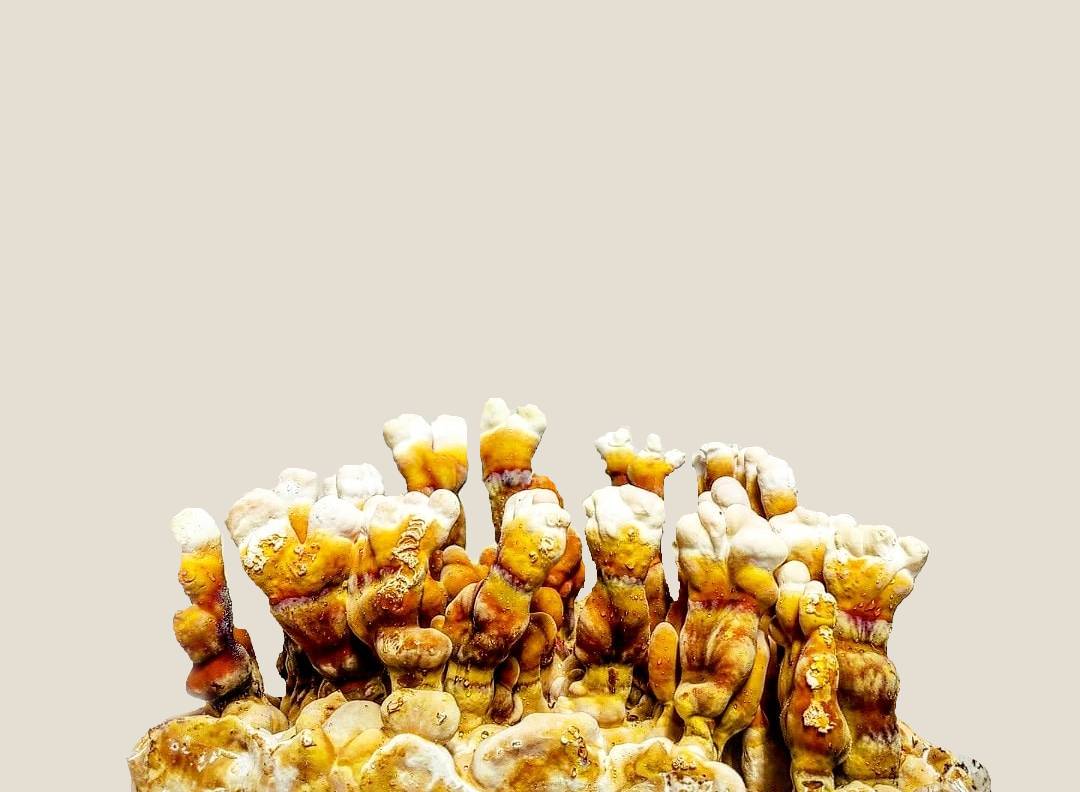
Beech Mushroom Strains

HT-1

Brown Beech belongs to a small genus known as Hypsizygus. It produces the highest yield on master’s mix, hydrated to 60-63% total moisture content.

Brown Beech is typically fully colonized at 3-4 weeks, however incubation ranges from 4-5 weeks as you should let them sit for a while after fully colonized. Brown Beech does not like disturbances once the mycelium is connecting, this may result in poor fruiting; so make sure once it is in incubation it stays there until pins form in bag before bringing to fruit room. This strain produces best when cold shocked, either overnight or up to a week in 34 F-40 F. This stresses the mycelium into production of fruit.

Brown Beech prefers a temperature of 60 F, relative humidity 85-92% with a dry fogging system to keep water droplets from setting on the mushroom pins or heads. Brown Beech is highly susceptible to rose comb so take care to not let water settle on the caps. A standard x-cut or slit in the bag, across the top just above the filter patch, is the recommended pinset initiation technique; alternatively, slit the sides down to the substrate to release more Co2.

Brown Beech has a a lightly sweet, savory and nutty flavor, and subtly crunchy texture. A typical yield for this strain is about 2 pounds.

HT-4780

White Beech HT-4786

Cauliflower Strains

SA-ET

SA-ET is a special order status strain. It is a wild clone from Texas and is purely experimental and can only be ordered as a culture at the moment.

SC-9641

SC-9641 is a special order status strain. It is a Mycelia clone from Europe and is purely experimental and can only be ordered as a culture at the moment.

Chicken of the Woods Strains

LS-FF

LS-FF is a special order status strain. It is a wild clone from Denmark and is purely experimental and can only be ordered as a culture at the moment.

Cordyceps Strains

CM-666

CM-777

Nameko Strains

PN-CNS

PN-CNS is a special order status strain. We have not done much production with this strain so a lot of variables are still unknown, here is what we do know: The Nameko has a slow growth rate, it is of the family Pholiota, same as the Chestnut, and therefor grows in a similar fashion.

This strain prefers cool temps and high humidity for pinning. We do not have any average yield data as we have not brought this strain into our regular rotation.

Nameko has a very viscous outer layer which makes it a great mushroom for thickening sauces and soups with that umami flavor.

If you would like to try this strain be sure to write *Special Order* at the bottom of your Spawn Form.

Purple Mukitake Strains

PS-MU

PS-MU is a special order status strain. It is purely experimental and is only available as a culture for the moment.

Turkey Tail Strains

TV-442

White Oyster Strains

PO-SNOW

PO-SNOW produces stark-white, beautiful clusters with average quality in a gourmet context. It is known for a tendency toward small cap size.

White Oysters, like most Pleurotus varieties, can thrive on a wide variety of substrate recipes. It is highest-yielding on master's mix, hydrated to 60-63% total moisture content. Calcium carbonate supplementation can help to slightly increase yield and fruit quality. It is best to have a tight contact between the block and the cultivation bag, which helps to prevent premature pinning inside the bag.

Incubation ranges from 8-14 days, depending on factors such as ambient incubation temp, spawn rate and substrate recipe.

Prefers cool fruiting temps between 50-60° F, though can be fruited in colder and warmer temps with mixed results. A standard x-cut or slit through the bag and into the substrate (no more than ½”) is the recommended initiation technique. A typical yield ranges between 2-2½ lbs over two flushes. 

PO-SS

PO-SS is a special order status strain. We do not have a lot of data on this strain as we have not brought it into our regular rotation. From the few tests we have done, we know that this strain can be unpredictable and displays variability in growth patterns. This strain prefers cool fruiting temps between 50-60° F, though can be fruited in colder and warmer temps with mixed results. 

PO-SS, if you can successfully fruit it, produces beautiful cream colored fruits with scalloped edges.

If you would like to try this strain be sure to write *Special Order* at the bottom of your Spawn Form.

PO-MOP

special order status

PO-ELM-A

more yellow caps