
Pasteurize or Sterilize Mushroom Substrate? The Full Breakdown
Welcome back to another MycoWizards archive release! Now we start getting into cold hell and thicket, into the weeds as they say, inside the belly of the beast, within the center of the insanity in our MWDD Episode 5: “To Pasteurize or To Sterilize”.

What is covered, by timestamp

Topics picked out of the transcript automatically. Times jump to that point in the video.

Time Topics
0:10 steam, water, option, pressure
10:12 pressure, option, blue, steam
20:13 shipping, steam, volume, capacity
30:17 steam, clean, flow, hand
40:20 data, steel, inoculated, temperature
50:22 steam, size, water, treat
1:00:24 steam, pressure, cycle, vacuum
1:10:24 genuinely, clean, vacuum, medium
1:20:28 input, rooms, room, steam

Full transcript

Transcript generated automatically from the audio, so expect the odd wrong word. Timestamps jump to that point in the video.

0:10 I am like a corrupt inoculator I see out spreading all consuming sacri power growing as the ground's reached this is like the behavior of complete crazy people now this is like First first day of first grade first day of first grade that's where we're at I can take that okay and that will be the topic today how to not with people ask me anything information ask me anything ask me a question ask me anything okay if you're gonna do it you got to do it she's like um um I need to be invited I'm the vampire she's a vampire dog so now now that we've got that out of the way the actual topic is pasteurization pasties as I like to call them pasturization and sterilization sterilize me this house makes funny noises with steam um I like how you're drawing on this one this is excellent well I'll do the writing okay and uh I'll do the illustrations while Edna breathes heavily on you and judges you but wait but wait there is more and what this means is that most people use steam to kill off contaminants in their blocks in their grain whatever the case might be in their liquids there are alternatives we know people who are doing them uh dry there's convection uh heat that can be used the more there's also Shady stuff like FM Malahide Shady stuff um or tindel isation and all these weird uh old school uncommon or not recommended options um but we're mostly going to focus on Steam the uh yeah the X's and O's of running a good pasteurization uh cycle um and what that entails as far as how you got to handle your blocks and risk and yada yada and then we'll also look into sterilization contrast the two talk about empirically what defines these things and how you got to go about running your production based off of the choice you make the choice you make actually we had a good conversation about or I did with somebody about this yesterday considering Steam and the funny part about the sterilization pasteurization side is how you actually generate Steam and I feel like maybe that's a good place to start where does the steam come from yeah because there's like different types of efficiencies for these things right so if we're considering an electric Bubba Barrel you're essentially filling this barrel with a little bit of water and it's got a heating element and that heating element is just you know hooked up to like a 240 plug right so you're packing as many sub blocks in here as possible covering it with a lid and letting some steam weep out that is as efficiently inefficient As It Gets In terms of timeline right so this magical Bubba Barrel which produces steam bya electric is like a what it takes like 12 to 18 hours I've heard obscene amounts of time from people or more yeah um but technically you're pasteurizing it yeah for sure and by definition oh I didn't put my phone on airplane mode what a dick so Bubba barels electric steam takes for

5:12 ever right right but then but then you can have a container a vessel if you will would you like to write the word vessel in there yeah and over here I'll write the word boiler so vessel a vessel can be anything that is essentially nonporous although we've made wooden steam boxes and uh all you're trying to do is get these up to pasteurization temperatures so instead of using an electric heating element to get a small minute layer of water to boil you're essentially using a boiler or a steam generator to feed the vessel with steam and replace that air that's in the vessel with steam by exhausting the air out how boring is that I think it's important it's an important rationalization of these two slight like in in the world of boilers there is like if I'm correct there are slight like differentiations about what qualifies as a steam generator versus what actually fits the bill as a real boiler and then of course there's a step up from that just high pressure boilers yeah so yeah no as pertaining to all that stuff we'll go into it more the only difference between uh a steam generator and a boiler in regards to the vessel you're using is what if this is a pressure vessel yeah and this is really just the third option in this whole shenanigans right you either have uh a small electric steam generator like in the case of a Bubba Barrel a vessel that's just empty and being fed with a boiler or steam generator that generates a fairly high volume of steam until the internals of this get up or you have a really oversized boiler and uh and essentially that allows you to build pressure In Your Vessel to you know Force the air out and inject it and fill it with steam right and if you're pasteurizing then with this Outlet as depicted here you're never under pressure no matter like that's if you are under pressure then you're starting to creep up towards a sterilization protocol right um with this you might be pumping in an obscene rate of steam but as long as it's not hermetically sealed and it's constantly venting out then you're never going to get Beyond uh 212 yeah that's true and uh being the boiling point yeah I guess we should we should just talk about the function of these things independently before we talk about the issues surrounding them does that sense sure all right so like in order of importance dude I really like your cursive I feel like but you should put it up there yeah up there you can get rid of this yeah swipe it out all right what am I you you can just write steam no no sh should it be steam I feel like I'm I don't know yeah so we're talking about how to generate steam nice I have a serious addiction to these it's bad it's not coffee are you drinking coffee these days yeah I just I told you I drink like way too much at like 500 a.m. so right I think I'm like time did you get up I don't know maybe like two hours ahead you in the yeah you must be in the wave all right I'm on my way down then this makes sense all right so how to generate steam without talking about coffee too hard um like we just said we have basically three different ways so you have an electric option and an electric option is essentially like what's in the bottom of your hot water heater you know so you have a heating element that basically sits at the base of whatever submerged under a thin layer of contained uh Aqua or h2o then you have your vessel and essentially so essentially what you're trying to do is you're trying to heat this water up and you're heating it to the point at which it gets to Boiling Point which you know at sea level is 212 F and that forms steam as Steam goes up it's basically water goes down steam goes up and uh and everything above that water mark becomes pasteurized eventually but it takes a really long

10:12 time because that heating element's only so strong and yeah I mean a lot of the waiting is just getting that up to Temp with these it's it's crazy people have used all Americans they know what we're talking about Bubble barrels yeah all that stuff um yeah yeah it's crazy when you think about like uh I I've definitely heard people say this is like a 24hour thing and and then sometimes they'll hold it for more or whatever but uh y the alternative to this which is an interesting everybody's like okay this is pasteurization you're getting it up to 212 and you're you're basically getting your internal bags above 200 Fahrenheit so once your bags are at that point you can hold it for you know one to three hours let's say right um You can hold it for more but it presents issues so this is the cheapest way by far which I don't actually know anymore I think bubble barrels are getting quite expensive they definitely are because they become trendy um they are trendy and obviously they're viable but um there's some kind of characteristic issues uh that it seems like people run into um I don't know if we should get into this now but when it comes to like how you load and volume and all that we can probably have that as a separate topic but well let's explain that after we explain the next alternative which is what a lot of people are going towards right now which is um I don't know how much people are in the know of these different weird instruments but they kind of look like strange submarine doors and they are you know pressure vessel and what they essentially are fermentation tanks for breweries and there's a company called uh blue Mico I think it's oh yeah right so a fair amount of people are buying these and uh there's a couple other people who are making like 55 gallon drum pressure vessels I mean I just like don't advise these things yeah it doesn't seem fit for that it seems crazy level of pressure yeah this one's a little bit more expensive but once again it's a heating element and the only reason it is actually as fun as higher highly functioning as like a uh uh pressure cooker and and a Bubba Barrel is it's somewhere in between essentially because it can build up pressure so you're trying to build up pressure with steam it takes a long time still to generate this you know because there's no existing boiler for these BL this isn't much faster a little bit faster than a Bubba or really not at all no no I think it's about the same probably okay it's probably about a day production like 24hour cycle would be my assumption because these from like I think it's like 10 to 30 l or something like that like they're pretty large so you might be able to fit like a 100 bags in them so if you're trying to do grain spawn you know this is an option at the lowest possible most affordable level if you're trying to do substr I wouldn't advise going in this direction because there's no real need to get you know 15 psi yeah for substrate at all especially at this side of scale but once again this is electric heating element so oh you already wrote it yep do you sing The Body Electric who wrote that it wasn't ladel Ray I'll give you that iing the Body Electric yeah that was um uh what's his name the Walt Whitman battle the Starship Troopers Robert Hein line right no it was Walt Whitman but that's cool oh yeah really yes sir Starship Troopers that's awesome all right so you got blue Mico and you got a Bubba Barrel there I mean like I can't think of any other real options that are out there those two things as far as electric eating are concerned yeah yes there's one other option should we talk about the other option the Unicorn option oh oh oh yeah we might as well we might as well say something basically unicorn Lou like him hate him love him as created he hasn't created he's just buying in uh single or double door autoclaves which are electric uh which are basically electric uh elements and these electric elements are you know I think they're like 240 they have to be like uh 60 amps maybe good God it's so much electricity for like this little layer of water to actually get this thing which is pretty big up to 15 psi what I'm just going to OU them because it's kind of interesting but norport has used these for years that's part of the rationale and why we didn't

15:13 go down like a traditional autocave route so what are Bubba barrels Bubba barrels are like almost $1,000 doll a couple thousand dollars I I think it really depends now cuz they're like such a hot item that like depending on your sizing and your little like yeah your options basically yeah it depends yeah well Blue mic thing is probably like between seven to 10 something like that and then one of these is like I think these are like 35 Grand something like that wow so you have this like you know gradient of 10 to 35k let's say so that's this is this weird investment for uh pasteurization of blocks from the Bubba Barrel standpoint to sterilization of some sort of grain to the m blue M to this which is you know you can do substrate you can do um you can do spawn you just have to consider like as with any like big purchase like this you know you have your upfront consideration yeah of the cost and then you have operating cost and then you have time Jesus and maintenance over the long run yeah those heating elements from what I understand because we know a couple people who use these units is they have to be replaced quite often or uh adapted or whatever and I think this is like a 10ft auto clave so it's also it's not like enormous for the time it takes to actually generate this it's once again it's probably like an 18 hour cycle or more yeah um and let's clarify 15 psi because it actually doesn't get up to 15 psi because that would be illegal I guess so it's like it hovers at around uh between 12 12 and 14 okay um that's like an that's an important distinction but you know for sure we can go into that a little later but the uh the main sort of barrier for entry and pasturization to uh sterilization in an electrical format are these three options so you can call good old unicorn L up and uh he'll be eager if you talk to him about these yeah man did I do as good as you yours is better can actually read yours mine just looks like it's not bad right can't tell if it's an F though true oh that could be a few whatever you can call him if you want to Le is not a bad dude um anyways those are the three electrical options 60 amps is a lot of amps dude it's crazy Jesus yeah so you're running that for that long like just to produce Steam and pressure it's not an efficient run and like we can get into that in DET DET in a minute but like your utilities can go from being like we're used to thinking of these things as like marginal changes over time depending on your decisions but right the more you start making the more your utilities become just a gigantic operating cost that you can't just be Cavalier about no you really have to compare like the yeah processing time and the um and the quality so right quality is going to uh I can't like write and talk today it's really funny yeah what you're trying to say here is uh the more trying to ride his way but I don't have sunglasses yeah um the amount of the more time that's spent uh exposing your growing medium to steam the lower the quality of the growing medium will be you want to find that optimal Middle Ground where if you're pasteurizing it's thoroughly pasturized AKA you know at um you know internal temps around 200 up to 212 um for one to three hours your blocks are completely rided of um all molds and fungi um any AC active bacteria and then the only thing remaining are the endospores of bacteria um hope you can overcook it mildly point you know you can overcook it and it might be sure like you have this greater sense of comfort which is totally unnecessary yeah that you've killed everything off but you've also basically just roasted your blocks to the point where you're uh Your Spawn your melium isn't going to be as happy growing in that environment because it's literally chemically altered through Steam so yeah it's totally true yeah I mean we run into all these issues uh uh especially like Consulting with other farms and places primarily because they're asking like us what is the proper investment what should I like what should I do you know so I'm not going to say no to any of those three

20:13 options because if they're your if that's what you can afford that's what you can afford yeah there's nothing wrong with that yeah who knows maybe you're like in a spot where you have like you rented a part of a warehouse and you got insane amage on hand yeah and also electricity like if you're trying to fire something with oil right now you might as well use electricity right and maybe you only want to do like one run a day and the fact that or run a week rather and the fact that um you know it takes 24 hours is is justifiable for you so yeah um I'm gonna write propane H let's just write gas gas um we have like a lot of uh things that we can use to back up this sort of lingo especially with our own infrastructure so we'll throw a lot of videos into this to explain it but um when I say gas I just mean not electric so be natural gas or propane that's where I've mentioned that a lot of not all and you can speak to this better than I can but a lot of equipment you can convert to we to do that with one of our steam kettles it was initially set up for natural gas and it's just a matter of swapping out fittings for having it tied into propane yeah it's essentially ports and uh and some other different components to make sure it doesn't propane just burns so clean whereas natural gas I think Burns cleaner or not as clean but the port size has to be different because it's all about uh you know suck bang blow so you're trying to pull air in make an explosion and exhaust that anybody who rides the motorcycle should know this we were just talking about going through TSA it's a whole any uh don't gas meaning Natural Gas Propane yeah well like an oil fired boiler I guess that was propane natural gas I guess oil I mean there there's definitely oil there's probably somebody doing that yeah yeah and granted that shit's really expensive but anyways not electric small electric mostly to run blowers um yeah very limited amperage yeah so to give a metric uh because this is like Eric Milligan's fault too for starting the whole Sue Obsession I don't know anybody who used anything su's besides him uh 10 years ago so 10 years ago Eric maybe more bought a Sue is a it's a company out of where is it South Dakota or North Dakota they're somewhere in the Dakotas you just offended a whole tribe did I really is it is it I you yeah dude I'm just white I'm a white guy dude all right you spell it that's sex gorp right there Jesus there we go ever graduated right yeah uh yeah you got it you got it the whole tr slow down Jesus all right all right take my time uh suor creates uh steam generators I can spell Steam and essentially these are like low press uh boilers so you don't need a license to operate them they're all under 15 psi boilers that's the key where yeah yeah licenses and regulations and all that can get it really depends on the state but you have to do your due diligence legally yeah make sure that you're not if you're trying to operate at 15 psi or higher yeah for sure and I think they have I forget what the the names are but I think it's sr11 and the sr25 yeah that sounds right essentially it's like quarter of a million BTUs and I think this is a half a million BTS uh yeah so the difference between these is not negligible for sure uh it's how often it comes on uh based in the um the volume of the actual unit which I think the sr11 is a little bit smaller so when we're talking about boilers we're talking about like two main issues the first issue is um uh BTUs and horsepower so horsepower uh versus and BTUs right and then volume so the more volume of steam you have the more you're pumping that steam into an actual vessel whether it's an auto clay whether it's a steam box shipping container you name it you have to make sure that the volume of that is able to keep up with whatever you're trying to use so I know a couple people with the SR 111s and they can steam um

25:14 pasteurize uh let's say a 20 foot shipping container at the most but I think most sr11 uh who people are using these sr1 are operating with like 10 foot shipping containers mhm and those 10 foot shipping containers can do something like 500 blocks in a run right right so and that's at like what you would consider like a good Baseline timeline of uh you know give or take eight eight hours 10 hours somewhere in that range yeah so you have this 10 foot shipping container which are great for pasteurization Chambers just don't make a steam box for sake and then you have your sr11 man if I'm this up I'm sorry I think it's s sorry it's something 11 but uh but essentially you know it becomes this like really easy transfer of steam because this has enough capacity to fill this with steam and inject it you know and then exhaust it um so that pass through is really important we'll go into that after but just trying to nail down these like you know boiler options yeah that's basically the principle is it has to be right sized for yeah um it's application aka the volume of blocks and the volume of the container that yeah you are working with yeah the sr25 which is half a million BTUs or more um it's uh you can do a 20 or 40 foot shipping container capacity wise so you're going from 500 blocks to uh you know a th000 plus um and that thousand plus blocks is really you know sort of the I'm not going to say like capacity but it's like it's the capacity for a pasteurization container given that you're using a low press boiler um these are all low pressure boilers from Sue so uh they're good options man and they're like I forget I bought that for like 30 to 40K which is actually it could be cheaper than that I think it was like 18 or yeah who knows now so who knows I think it was 18 to 20 but now it's probably 30 to 40 so it seems like a huge investment but you go from being able to do in uh even a lose style Auto cave a couple hundred at most you know over a whole day to a th000 so are you going to spend this 30 to 40K on a single autoclave that takes forever to use or do you just buy a $5,000 shipping container and a 18 to 40K boiler and call it a day this is like an 8 to 10 hour run right and it will you can go home at night is the idea yeah nobody's coming in at 4 a tweaking probably worth mentioning on the front end and we can reiterate this a hundred times over and most people know about this for most of their Plumbing but uh water softening um oh becomes essential quite key to not up such a important and expensive piece of equipment yeah should we talk about boilers for a minute sure before we go on to the pressure so that's pasteurization uh if you're you're you're in a shipping container or you want to weld a box together just buy a shipping container for sake well you know what before we go on I think we should um aside from the you know mechanics of it and the equipment just talk about like why you might want to go in that direction why you might want to go in the other direction in terms of electric versus no no no no pasteurization versus sterilization oh totally I was just covering pasteurization for now just to like we can should we do that should we comb no I sort of mean just like a the difference between the two totally just super basic stuff so all right so we're gonna we're going to put a little tag in boiler maintenance all right before we forget yeah um right so 30,000 for view thing here um we already mentioned pasteurization like the standard that we recommend is one to three uh hours where the internal temp of your growing medium is between 200 and 212 so that's like the gold standard of no matter what else is going on with your cycle and your equipment and how long it takes this is the variable that really matters um that is internal temperature not not ambient temp the ambient temp in the chamber or whatever is going to reach this pretty darn quick yeah to get into a dense 10 pound block or whatever it's going to take a while and the idea with pasteurization is that number one you don't use pressure so it simplifies things as far as risk literal risk and uh legality um yeah and you end up killing off basically most of the microbiota that typically cause problems for cultivation so it successfully should kill off all fungi fungi can survive above 160 in most cases

30:17 Fahrenheit um most of these are dying at like 110 and even most bacteria are two and in in pasteurization to any active bacteria that have you know propagated um they will die as well um it's the endospores that bacteria form that will survive this process yeah the thermophilic VAR species of bacteria that they have these endospores that have basically this hard cell wall that will survive almost anything you throw at them um it's got like a magnetic field of chaos around it right it kind of looks like Co it's an extremophile as they call them it pasteurization uh like long story short it's like generally cheaper a little bit more straightforward and then another key aspect to consider is um the different uh kind of handling and facility uh considerations after that point so when you're pasteurizing you can get away with a lot uh you have a much bigger margin for error in terms of like how clean is the space how clean are the people inoculating those blocks and so forth you know like you can success ful move a pasturized you know rack of blocks through a space that's not some like beautiful pristine over pressured lab um and really be completely fine yeah and we'll show a video of this right now but basically right now a um but yeah basically the the the lab which should be overpressurized should be pretty close in proximity and not go outside per se although some Farms do it Neil and uh I think that it's not a bad thing to like examine is the fact that when you're pulling your blocks out red hot and bringing them through a dirty area as John donu put it 10 years ago to me everything's touching the block is just dying on impact to a degree right we've definitely pulled blocks across dirty areas where neurospora has been like growing outside yeah and then there's like yeah neurospora is like a mean one for sure yeah but the goal of this like pasteurization is basically to you know everything is red red hot coming out of your uh sterilizer or your I should say your pasturization container um Your Vessel yeah your past vessel past vest Bud that sounds like a venial disease of some kind and this area shouldn't have a lot of air flow so low air flow um clean and clean disinfect mop it you know yeah this Prett basic it can be outside but you know if this is a leaky ass vessel of some kind and you're trying to like bring it into your overpressurized sterile Laboratory hea hea hea heab um you're gonna end up with uh blocks that come in here really hot and cool down under HEPA filtration and have you know basically a 99% successory right please refer to what was that episode two right um oh for that that whole thing which we'll get into again at a future date but like they have to go hand in hand another thing you know people are always going to want to like uh like you're gonna once in a while you're going to drop a block you're going to drop a rack even yeah don't pick it up don't don't put it in with everything else that you didn't drop you very likely could risk everything you made yeah for sure because the thing is is like you know even if you're cleaning this guarantee there's a bunch of particulates and organic matter and mold on the floor um and just by rubbing it all over your block then putting it in this environment you might everything up so for your soap making right the uh make your waste M it's hard to do that it's hard to say good buy block right later dude we've all been there but just take the loss and move on yeah it's true um so I mean that is a huge advantage to pasteurization and that's something worth mentioning is yeah you you have this moment but but I would not cool down unlike some people do inside of a pasteurization vessel explain why as I shut this photo right right so few factors here so it's um with pasteurization you do have a basically an expiration date after which the the blocks start to ferment and they're not going to be suitable for inoculation so you got to inoculate them straight away um and they are just more susceptible at that point to contamination the more they cool down so you want them cooled down in a HEPA filtered incredibly clean environment so because once they get down to you know depending on the type of contaminant somewhere in the hundred something degree range um they become liable to contamination and so if they're in this

35:18 space surrounded by a bunch of puddles of water and dirt and warehouse and metal and yada yada typal you bring him across the semi clean area yeah then the chances are they got contaminated overnight basically um and then you're bringing those into your lab and that only compounds the issue yeah so don't be a and put some welding gloves on and bring those sons of out hot and then uh and then let them cool down in here and you're good sorry I didn't mean to call everybody a and yeah not to go Circle back to the the hea thing too deep but just to reinstate it one last time because I've talked to Farms a bunch of times that make this mistake these are not recirculating HEPA filters inside the lab otherwise it's not providing that function that you're after they're fed from the outside as a over pressure unit right let's just draft that up real fast right right so I mean this it's similar similar for how these things are going to function pasteurization wise but uh um yeah your your filters let's pick a wall they're basically the fans are out side of your wall right here and the filter the filter is on the inside of the wall and it's connected to this fan so that filter is essentially feeding it's being fed from dirty air and then it goes across a filter inside of the room that's the filter yeah and basically only clean air comes through and what that's doing when it's pulling air from outside is it's positive pressurizing the space cuz that is the one put through which air gets in otherwise it's hermetically sealed and it's going to take the path of least resistance so ideally up high in a corner and then let's say you know this is the the back Corners over here you want an exit to go that way you know then you got nice smooth air flow clean air flow and more pressure in here always pushing air away basically exactly you're just creating a straight up yep and that looks like it's epic yeah episode episode two but those things have to go hand in hand they do and pasturization works in a similar manner so briefly to go into it because I think it's important before we dip into sterilization because it it's a bit different um let's draw the same thing you have your 10 or 20 foot shipping container right and essentially well a lot of people will consider this the wrong way to do it and me describe why um and they're taking essentially people who don't uh think about the thermodynamics of steam in a low pressure situation are trying to make it applicable towards a sterilization system so what you actually want to do is inject steam high so steam comes in towards the top of your container so steam in and then at the back of your container uh opposite corner of the injection uh Port you want you know uh you want your steam lit out so basically outlet and the reason for doing that in particular is so that steam is always going to rise no matter what so if you have it coming In Low it's not doing anything by like coming in low it's just it's forcing its way up and then slowly building down right when you have the opposite happening the steam is slowly going to saturate the air until it gets towards the bottom and as the steam pushes the air towards the bottom all that air is being pushed out naturally with gravity via the exhaust Outlet on the bottom um it can look a bunch of different ways but essentially that is the best sort of mechanistic approach to getting everything to be evenly saturated with steam and replacing all the air that's in here with the processed steam so just a linear flow pattern so yeah it's same not collecting yeah it will just like sterile a with the lab it'll collect in certain spots right and you got these weird little like wavy turbulent motions of steam if it's not set up this way yeah for sure but it looks a lot like a lab right so everything comes in high exits low it's similar in that sense it's for two different functions but you can think about it is it's the same connected man oh bro colors peyote buttons um yeah right on is that is that pasteurization kind of in a nutshell um yeah yeah and I guess just I I believe I just mentioned this but um uh you have to knock them up quickly or they will will ferment the reason that they will ferment even if they don't get contaminated after the

40:20 pasteurization Cycles done is there are bacterial endospores in there that will will germinate if given the opportunity it's true so if you ever let your block sit for days on end before knocking them you'll smell how sour they are they're fermenting yeah yeah it's not good I think a lot of people get away with that for a short period of time yeah it's not that your shit's just like done it's not it's just not healthy it's a bunch of you know what happens alcohol and weird stuff that happens in your in your incubation yeah you'll see it immediately it looks like your blocks got inoculated too hot right so like if they get inoculated too hot nothing grows it just kills the spawn on impact it almost looks the same when you have uh waited too long essentially uh to knock something up because bacteria is already flourishing but it's not going to show like mold therefore it's going to actually just perform like it kills the spawn as everything gets sort of really like gnarly on the bottom to Mid center of the bag and then you might get a little gr on top which is probably mold yeah often smells like the mycelium that you want that does survive you can tell that it's like you want that nice roric fast feathery beautiful melium and instead you'll often get this really dense um unhappy walled off little little colonies of the species you are growing struggling to survive yeah being assaulted by much more aggressive competitors it's hard to beat most bacteria once they get going idea in any of these applications uh thermac couple Data Logger is important mitech yeah if you're really gonna is that how you spell is it m um magitech makes these little silver bullets and they're about this size they're a little bigger I don't know yeah it depends yeah but basically they come with this little you know platform that hooks up to your laptop and these are Wireless by the way and waterproof yeah so you're not going to know right away like what this is because essentially you're going to put this in the bottom of a bag um it's really big they're like it's not that big they're maybe like the size of this on the pen they're like these little they're like like a little bullet made out of stainless steel yeah they got a little gasket in the middle and all the sensors are inside the steel housing yeah as long as you got that gasket tight you can literally drop it in uh you know liquid and it's fine and it'll take readings of the temp of that water um but these things are the most accurate and reliable data loggers we've ever come across so we're a big fan and always suggest this company to folks yeah I think they're like 500 bucks right somewhere in there well yeah yeah and there's the um the one that we bought recently for for our blocks that it's like a new one they're making that's really tiny for just for pasteurization yeah and it costs like two or 300 Jesus yeah so don't buy a shitty like if you go to Amazon and look for a typ k uh thermac couple which is kind of what you're after for this stuff and that's just a type of thermac couple um for certain situations it's a Data Logger is like 150 bucks the wir I think people don't really consider how useful these are especially when it comes to anytime you implement a change with your equipment or with a like a facility change yeah you want to get accurate readings of what the hell's happening now that you you say you bought a suit or you bought unicorn aut clave you want to know um what's actually happening in reality and not relying on some shitty probe that breaks down after the 10th time you used it yeah also those typ K thermac couple data loggers the little stupid plugs on the ends and then they're they're reading here they actually sense temperature the entire length it's a differential of temperature so for some reason it gets frayed right there and like this is the edge of your steam box and that's the Block it's going to get a lot hotter than that so this will register at like 500 and it's because it's registering this like breaking the line yeah went through the box oh that's cool so these things are ex yeah it's just like it's the difference you know and there's plenty of other companies that are that are worth their salt too yeah for data loggers we just highly recommend these folks these things are like Wicked tough they're super accurate and then the coolest thing about them is besides the fact that they're Wireless there's a free software that you just get from their website and like said you get these little USS and then you can see like literally exactly what happens inside your and you can select your presets you want it to read every 10 seconds every hour every 15 minutes it'll tell you you yeah they're awesome so I think whether you're sterilizing or pasteurizing that's like a super important thing to have it's on par with if if you have a Fring room and you don't have a C2 meter

45:21 off right like get a CO2 meter again Golden Rule no matter what you know what you hear what you think talking to other mushroom Farmers online reading books the key is like again with pasteurization one to three hours at 200 212 and you only get that based off of taking data from the core of a block yeah you can't get there's no way around that and win is going to be different than summer all these things have to be tracked and you should track it all the time as had it right um it's just like cleaning a fooding room or whatever make are good yeah yeah it's all that stuff so yeah P transition it's time temperature and it's speed if you cook stuff you need to knock it and you need to cool it fast between that you know in that period I think that sums that up yeah oh one last thing we'll get into this with like I don't know inoculation more like specific episode yeah but um don't knock your blocks when they're too hot there's a lot of Mis cly on that you know there's you'll hear different numers but the ideal is that it's at room you know so ideally you cool it down to about that point yeah people would tell you like 90 something it seems like it kind of depends on the species and stuff so you want to air closer to room temp if you can um but you know I've read like 86 is like the empirical number regardless you know room temp is ideal so if you have knockup stuff when it's really really hot you run the risk of either killing the mycelium on impact or at least denaturing it to a point where it's not going to look good yeah it might survive but it won't look great yeah that's the secondary goal too of pulling these things out into a lab to cool down fast and take all of that hot air is so that a no fermentation happens because things are only pasteurized but then simultaneously you want to be able to get them to a temperature fast enough that is not going to kill you know the myel as soon as you knock it up so it's time and temperature it's just speed you're trying to get as fast as possible with it the issue that I see with like Bubba barrels and with these other like electric based autoclaves is not necessarily for uh grain spawn um you don't want to cook grain in a bubble Barrel but their time takes too long and you actually end up altering the media to a degree at which it's not going to be as conducive to my cular growth so you just end up with a really battered sense of up carbon that you're inoculating yeah yeah it's like it's it's kin to me eating dog food for the rest of my life versus eating a wild array of organic vegetation and grass ped beef yeah dude sweet yeah dude sweet um quick like this applies to pasteurization sterilization just like anything there's a whole notion of like the proportion of the volume of your chamber oh yeah that's smart to not exceed then you figure out okay how many blocks can I fit in here yeah basically and there's like you know again you'll hear slightly different numbers but somewhere between like 2/3 and 80% um as like a maximum yeah for like your actual blocks and the racks that they're on taking up space um which is pretty easy matted too but often see those blue micos like they stack the that's the key not only is a total volume but it's air flow um throughout the unit so you want space for steam to be able to easily penetrate all these little nooks and crannies so don't have all your blocks just compressed into this crazy mass or directly stacked on top of each other I you see that a lot with Bubba barrels just because they're cylindrical they trying to maximize the yeah he's got this big giant brick can you imagine how much easier it' be to act to pasteurize all those if there was a direct throughway of steam to those blocks that are like right in the center of that right yeah which is why we fabricate a lot of racks basically to uh to sort of have these you know um I forget how many shelves I have something like seven but you know they're Wheels they're easy to move they're just you know basically Metro racks but they have stainless steel angles so you can slide metro rack shelves in between these areas but you know up close of that is like you you want this metro rack that we're all used to seeing to be uh you know a portion of the space between the blocks but you need a little bit above it you know you don't want that's really the most important aspect is like these big channels yeah yeah you just need air you know and this comes down to shipping comes down to cooking comes down to cooling if you actually have these

50:22 things stacked in there and you're you're not sort of facilitating and the movement of these things into a lab in efficient way then they're going to take forever to cool down too and you'll be knocking blocks on the peripheral that are half cool and some are warmer in the middle so the more air the better um also I guess yeah we're kind of jumping all over the place but the uh the interesting component that is a major issue to these things that you either fill from the top like a Bubba Barrel or from the sides and you stack in is like there's a physical person that has to move each one of these things every single time yeah and uh you fill her for unload it and as the great Paul Stam it said that is a vector of your imagination of contamination so when you're actually having to move you know individual blocks to individual points back and forth you're creating like a ton of like you know issues there yeah you get away with it to a point but at some point you're going to have some employee that's just dirty and they come in and they don't give a and they're just going to start moving or you just get tired and forget and contamination you have to figure out where it's coming from if it's coming from somewhere yeah you just want the most expedient the most frictionless like transition yeah from one space to another as possible so ideally that's in like some sort of rack Rack system or cages or people have different things like that but ideally you get Beyond moving them by hand because it will burn you even if you got the best protocol you got like giant rubber gloves up to your shoulders and the whole nine yards like at some point there's going to be some really infectious thing that um this is even more important for uh um for sterilization but right pasturization the same sort of theoretical things apply they're not that different you know in regards to precautions risk profile really is like the biggest difference are we at that point now to get into sterilization yeah well let's get there let's jump I just want to get this boiler maintenance out of the way and it's it's an important one but it doesn't matter if you're an electric uh steam generator or if you're an actual boiler as a person if you are a boiler are you a boiler if you're using a boiler or an electric steam generator you want a water softener of some kind so water treatment plan basically it kind of the specifics will vary on the qualities of your water where you live and stuff but um yeah and the thing that we just decided to add on is a carbon uh process too so basically raw water will go in and it goes uh through a carbon scrub goes through a softener and then this goes to your feed tank um and then essentially your boiler um the reason why you want to do this is scaling uh water is nasty as it might run clear it might like something you drink won yeah not like get sick from it or whatever but sediment and scale and stuff's going to build up yeah these machines are complicated and they're hard to work on and there's a lot of you know intricate little parts that are very delicate that perform vital functions and if you get scale buildup you will your boiler going go down yeah it's going to go down fast too and I think that's that's that's a consideration like we haven't taken at times uh the other Farms never took and if you don't soften and treat the water to some extent which doesn't have to be chemical by any means your boiler is going to build up scale to the point of which it will fire shittily it won't produce As Nice of a steam or it'll just fail entirely based on like any of the sensors or anything that are in there right um or you'll have a total meltdown and burn your facility down we've almost done a couple times so the mosquitoes are gnarly yeah badass like yeah just got to like suck it in though and eat it up so treat your water uh regardless if you even if you're going into like a a you know just a Bubba Barrel or electric steam yeah the line yeah just treat your man it's a couple thousand bucks and uh it'll save your equipment um you know these things are supposed to run for decades not months or a year so you gotta like keep up on the the scale component also that applies for that steam getting put into a expensive autoclave or something like that right so let's go into sterilization right on wow there's lots of eyes in

55:24 sterilization yeah dude it's like a lot and a half so sterilization to find it for us yeah is the process by which you basically kill everything using pressure pressurized steam like the whole vessel is under pressure uh sterilized through Steam and you kill off basically any organism Under the Sun except for prons which we had an unnamed entity come and look at our autoclave and they're like what do you guys do about prons was like your pons dude um was that uh I remember who that was yeah any who um the similar to like the basic metric for pasteurization um in the context of mushroom cultivation uh sterilization um your uh internal temps of 250 degrees or more and then you're going to hear different things here about how long that needs to be um the like actual scientific fact of it is based off of this calculation referred to as bioburden and so you'll hear different things but um in like in like very fancy laboratory settings people typically don't actually have a internal temp at this level for much longer than 5 to 15 minutes the mushroom industry um there's like a air of caution that's generally applied um given that it's obviously would have a very high bio burden being just like a bunch of grain or a bunch of sawdust um obviously there's a lot of a lot of life already har in there so and it's like a really dense Thermo Mass yeah it's hard to penetrate something like hardwood saus like literally get into all the nooks and crannies of its cell structure so um typically what we recommend for folks is 35 minutes we are not smoking craco here there really is a lot ofos uh again this is there's there's some room for debate depending on the context you're about at this is this is a good standard recommendation is that your internal temps are at 250 or above for 35 minutes or more thing that happens with sterilization that's unique and where you really get into this concept of cook the necessary amount of time but IDE we know more is that once you get up to 250 certain chemical um reactions start occurring in your growing medium like uh the most commonly referred to one is caramel as ation same thing that happens when you're sauté in your onions um and that just denatures uh the growing medium makes it less conducive to Healthy mycelial Growth and so you want to basically sterilize it so by Nature you are uh causing chemical reactions like this occurring you want to do it for the minimal viable time um because then you start overcooking the more overcooking you get just again just like we were talking about with pasture I growing mediums um just the shittier it's going to grow basically right so yeah this goes back to like boiler size and autoclave size too and trying to like get the volume and the horsepower to match up with the vessel so say you got some 80 foot Auto cave 100 foot Auto cave they're out there it's crazy yeah um and you have an insufficient boiler to do it uh there was a farm in upstate that was doing that oh right your boiler is like the size of this tin yeah size of like a like a window AC unit yeah and it was like and then they have this like giant like half the size of Eric's house yeah um the address of which is just kidding um don't come ever um yeah it was nuts so like that couldn't have been efficient and the thing about it is like you need something that's right size not only so that the total run time isn't crazy long but also so that like you can um get to a a degree where there's homogeneous temperatures the whole way through so in the chamber in the blocks on the edge in the blocks in the middle and so with a situation like that by X like the 10th hour or something you're you've gotten the blocks on the outer side up to 250 so they're already caramelizing by the time you actually get to the rest of them this shit's

1:00:24 overcooked yeah such a crazy degree and the other stuff might be maybe cooked enough yeah um so you want stuff that's right size so there's the right flow rate of uh you know that people refer to as ramp rate where um the rate of pressure increase um in Steam penetration um should be high basically this is also why pasteurization is a lot more efficient and uh I guess scalable from the standpoint of like a grower not putting in all of their hundreds of thousands of dollars into autoclaves and stuff right because pasturization is not going to cause that level of caramelization and different cooking reactions um it will to a degree but it really happens a lot faster when you're with pressure right if you're not with pressure you don't to worry as see you'll see it like very easily as you kind of manipulate certain variables and test out what's best for you yeah um yeah without a doubt yeah 250 is interesting too and it is this threshold of uh oh it's worth out one thing here sorry to but in no no no you can be at no please um you can be at I haven't made reference G as they say PSIG um um PSI basically just to simplify it um you can be at 15 psi but not um necessarily be at 250 yeah what that means is that you didn't displace all of the air yeah inside your chamber so you got these little air pockets that never got flushed out and so those you know air has a remarkable like thermal resistance and resistance to you know this process of trying to basically kill everything inside that chamber yeah so you need to make sure that these things correlate if you want a good process yeah and a visual example of that is just a pressure cooker right so if you've got your pressure cooker all locked down and you're uh you have these like two valves right one is your air Escape valve and the other is your uh you know your pressure valve if this is closed and you're not allowing the air to purge you're you're going to be a 15 psi in like 10 minutes you know or or a little bit longer but basically you didn't rid the air in here so steam could be building up in like certain weird stratified areas and air is just building up his pressure those aren't the same thing whatsoever but they'll Reg on a meter is the exact same yeah this is all calculated based off of the like temperature that's achieved by steam under pressure by water under pressure not air not yeah that's where whether it's a a pressure cooker whether it's an auto cave or a steam box is you want through air what I've seen a lot of the time actually is like people will have like a a 1.5 inch uh pipe Inlet and then they'll have like they're like it just kind of Weeps out the doors or whatever and you're like the they're not actually they're doing the same thing in this scenario as if this started closed and didn't actually generate steam because how you actually use a pressure cooker is you wait for steam to be like pissing out of there and then you close it off then you have some like imperfect yes but reasonable degree of confidence that you flushed out all that air and displaced it with steam and thereby more readily achieving this goal of a homogeneous you know constant temperature of 250 yeah um with every little you know Block in every little bit of empty space in that yeah and on a 20 foot shipping container like if you have a 1.5 inch pipe entrance you know of steam basically of you know of processed steam you want two inches of uh of Airline always out um and that's through the whole process of your boiler EB and flowing of steam like trickling and then forcing its way out until you'll notice like as your boiler Cycles or steam generator Cycles the same amount of steam is coming out of there and that means the Satur satz of steam is like fully maxed out you're not there's no more air in there for the most part and this is where this common misconception of like vacuum ceiling bags and comes from right you can tell you've had a pretty successful cook in a lot of these scenarios if your bags are sort of like sucked in um for Gravity cycles and pasteurization cycles and that's because it's pulled all the air out and replaced it with steam and uh and that is a very efficient way to sort of read you know what's going on um it's not an exact science way for sure but you know yeah it's it's a que something seems off something's off um but the displacement of air with steam is like the goal of sterilization right and there's all kinds of interesting ways that that's been modernized um but you know there's like

1:05:24 the old school approach of uh what you call gravity gravity cycle yeah as Eric just referred to so here's your um uh you know zero PSI Baseline um and the goal is you know you got your stuff here to begin with and you just start pumping in Steam um once you get to that point where um uh youve flushed out air you start to ramp it up to a plateau um and then once you're at that point where everything is indeed at a homogeneous 250 or whatever the set point is then you hold it there for a predetermined amount of time again AKA somewhere in this range um and then cut your Steam and they'll passively start to cool down um gravity Cycles are really straight forward they don't require um they're yeah they're not that complicated um in terms of infrastructure what most uh most Industries do is some variety of what's called a vacuum cycle um the basic concept here is that you utilize both a uh you know your your boiler and a vacuum pump to sort of force the process of flushing out all that air and you basically just have these moments where it goes up and pressure down and pressure up and pressure and then the same thing like gravity gravity cycle you're able to bring it up to to Temp and hold it there and shoot your way back down to Baseline Zer PSI the reason why this is done is a dras L speeds up the process long story short um the interesting part about like that exact shape though is it's it's morein to like this so every time yeah it draws it up it's like drawing it up a little bit further until this thing is at the plateau where it you know sort of functions yeah well the way it often functions too is like in order to get to that point where you reach homogeneity yeah those vacuum pulses down have to get really intense as you as you try to climb higher with your pressure so it's kind of like Eric's right is this upward momentum but like these get pitch down yeah they pitch down and by the time you're doing your last pulse it's pulling a really deep vacuum so this is trying to get rid of every little every little bit a then again the upshot of this is in this process that whole initial point where you're trying to flush out air get temperature uh homogeneity can be radically faster than just shooting in Steam um that can take hours and hours and hours longer and again that's your time that's propane or natural gas that you're spending and the products and then the health of your the health of your growth basically yeah I think one of the reasons that we have such a a carefully calculated process is because we want our products to jump off to that degree for everybody in the process you know um there's also liquid cycle which is interesting and probably an important distinction if people are making their own yeah but it's essentially a gravity cycle which is very gentle yeah so like here's a a traditional gravity cycle or something like that you know a liquid cycle is like uh it basically you know it gets up to Temp like that holds it and then like really gently pulls it down right you really just don't want to boil over yeah that's it you don't want to break all your Pyrex or whatever the case might be you don't want to boil oil over so on and so forth yeah yeah there's a huge uh huge sort of issue to compare contrast and this is all like again this is just a great example of something um similar to like the basics of pasteurization and a lot of the concepts that come up in mushroom farming we can get stuck in our own little Silo about this and only be talking to each other and then it just takes a little bit of research to be like holy like people that do way more heady stuff than what we do as as it is they do this stuff too like it's it's known it's online you know just like all those different cycle options that's like standard operating procedure for the Sciences as a whole and for all kinds of interesting Industries they're just trying to figure out the right time and temperature for the right products and processes and I think that that becomes like the distinguishing factors like if you're just trying to cook you know rat cages it's just like exactly some piece of equipment yeah it's about speed at that point really don't give a about caramelization or anything so our heady Notions come in when we're trying to preserve the Integrity of a piece of hydrated kernel yeah yeah exactly or a a piece of Oak yeah um so we're assuming with this 35 even though that's above what people typically say is the highest bioburden sterilization need is we got some obscene bioburden because we're packing in thousands of pounds of

1:10:24 hydrated organic matter in really tight bags right so we assume that the bio burden is unprecedented as far as you know Duke University is concerned but who knows oh my God it is interesting it is an issue that I don't think a lot of people cook like these sensitive products that are going through different biological living organisms and stuff it's a little strange I mean I don't know I'm no Pharmaceutical sterilization agent of chaos right it's just it's an interesting process that we try to use and utilize um it's expensive though so like let's talk about the barrier for entry for these two things because it is interesting right yeah it's big if you find an autocave that can just be injected with a boiler you've got whatever the cost of the autoclave is 10 to 20K then your boiler to run that it's this is complicated this is ideal right but let's give the example of somebody who's uh trying to operate with a low press boiler so like a sue right they put you know 30k into their big boiler that's not high pressure and it will only ever get this Auto clave up to you know maybe five to 10 psi is it better than nothing sure right especially for something like substr would I cook Grandin spawn through it probably not yeah it's just a gradient like I think we talked about this before with shiitake I think Shake but like there's yeah there's clear differentiation between pasturization sterilization all kinds of other more esoteric like heat processes like look up what the milk industry does and you'll see like weird weird terms like short time high temp cycle weird terms like that it's it's a gradient ultimately and like being at that 5 to 10 you're in a unique kind of Middle Ground where you are killing off certain things that you wouldn't be at a true pasteurization but you're not genuinely sterilization where you're like quite confident you're killing every bacterial endospore under the sun no for sure not you know and uh I think you get away with certain things and not others and this becomes a very like mystical approach to not having hard science behind it at all right uh a vacuum style autoclave is like 100 to 300K or more yeah it depends on the size and it's very very expensive as the idea and then a high press boiler to run it about 150 to 200k and uh so these are the I don't even want to add that up I know how much money we've almost spent so you're calling it half a mill man um to be able to like get to to this point it's not necessary that you take these other steps you could just buy a really nice high pressure boiler and run a gravity cycle on a AO clave you know that can't do vacuum yeah um it should be clarified that you can't just attach a vacuum to a normal AOC there are certain ways to do that um but they're not as efficient as you know an actual mechanis you can't you can't do this manually it's not a it's not like an old school retort if you're trying to go in that direction which is really conducive there's like one or two people that do it I know that for a fact manual vacuum poles that's scary yeah it's not I don't know yeah that's a whole other Dynamic chaos there's an important uh middle ground though that I don't know if we've covered everything for sterilization but we talked about it in that shitake episode maybe we should go into it a little bit more um just that like Middle Ground of Quasi sterilization with that 10ish PSI situation no just uh how you cook stuff right so if you have a retort that can get up to um say 15 psi mhm and so the maximum this can get to is 15 psi right an important distinction if you have a boiler that is apt in size to feed this and get it up to that is to use your thermac couple as the marker so this thing will get up to like 40 PSI right I think for our clave you need like 45 to the head right of the vessel so the the boundary here and this is like the more complicated notion is like clean dirty just to distinguish these two zones so you load things in dirty you exit them into a clean room there is no middle ground in this scenario this is HEPA filtered all the way over on this side you basically get your internals of the The Vessel up to 15 psi and then you wait until your thermac couple uh on the inside of a bag gets to 200 you know to 212 so only pasteurization

1:15:26 temps and it's got pressure surrounding it and that way you're basically cutting off the boiler at the time that this gets to that which allows you to not overcook substrate which can become detrimental if you're using raw inputs for instance um but it allows the vessel to maintain sterility so as the vessel drops in pressure and then you can pull these you know pasteurized or ultra pasteurized locks out into a clean room you end up with far less contamination and some other weird advantages occur like shitake yields Browning buckling there's a lot of like interesting Avenues there but I don't know what to call this other than utilizing really expensive equipment to try to not overcook something right which goes right back to what I was saying about like uh pasturization being this very efficient scalability you know option or Ultra pasturization yeah it's worth mentioning too here that like um another 30,000 foot consideration yeah with uh you know your your blocks or um logs or whatever it is uh um with your substrate uh you have like a lot of optionality totally we do know of examples of people who would like pasteurize their their spawn yeah not recommended it's a bad idea yeah um you need to go fullbore and sterilize even if that's in a tiny vessel at a tiny scale as the case might be you know yeah um it should be genuinely sterilized cuz you're at the the top of that pyramid and I'm checking your mic dude you're good sorry I had a fear oh Charlie oh no sorry all right top of the pyramid uh yeah so you don't want to take those risks uh you know not genuinely having a truly sterile growing medium at the beginning of the cultivation cycle from which you just expand the quality of your work so it's compromised with a little bit of bacteria whatever that survived and then by the time you get to fully expanded substrate Lots um you might be in deep so yeah sterilize Your Spawn that's the moral of the story there yeah and you can get away with this quasi pasteurization sterilization methodology for substrate um yeah totally with sterile um if you sterilize uh kind of in contrast what we were talking about with um the flexibility with pasteurization where you can kind of like move it from your uh your chamber your shipping container whatever it is you know through kind of a middle ground space into your HEPA filtered cool down space yeah sterilization as this uh illustration indicates um you need to be um uh moving direct from uh the chamber you know directly into a um completely sterile hea positive filtered space the basic idea there is that um you know once you've sterilize something you've killed everything that's inside of it so you have this this great sterile medium you can be convinced is going to be genuinely axenic word of the day um damn meaning only only one species growing in it aka the oysters or whatever that you want to grow but it's like an open buffet for any um contaminants lurking about um yeah it's much more readily contaminated than a pasturized growing medium um so by moving it you know through the second door of an autoclave directly into a clean clean room environment you're ensuring that um you know that's not going to happen um and then in general there there's just a higher degree of risk so generally a higher degree of steps taken to ensure that you don't contaminate sterilized growing medium so that primarily extends to just uh until they're hermetically sealed um in the knock process yeah having them in as clean and of environment as possible it might even go so far as to have things like what we do in our spawn lab which is um everyone wearing full body PPE and like the whole nine yards of like the you know cleanest Martian environment you might want um so there's some room for interpretation depending on the type of risk you want to um take on as a farm but the moral of the story is if you are actually sterilizing you just need to be very very clean in your process yeah um yeah yeah and you need to concern yourself with a lot more other variables for instance um I'm gonna draw out like two things that I think this kind of uh I'll do one for uh for Shane because apparently he watches these things which is cool no you will know who Shane is but Shane um so this is just like a a quick example of

1:20:28 the idea of a a plenum two equally sized rooms and um the way in which air can sort of flow um and this this thanks you almost got it oh man so I know this is going to be a little complicated and convoluted but it's an important consideration and probably gives away too much information but it we'll just do it um The Plum for temperature to keep a lab at an integral sort of safety standpoint with these positive pressurized fans is to equally pressurize two identically sized rooms or equally pressurize different sized rooms doesn't matter so long as the same air flow is going through there when you create a sterile laboratory environment every room has to have an input of Plum air essentially um the the alternative is that when you're trying to cool down substrate something that you can do if these things are coming out of a cave at like 100 to I say 250 depending on like yeah it depends on the cave I guess so sure all right well they they only be coming out of 212 right because you're not going to pull anything out pressurized so yeah that's fair point open the door open the door now get it boom yeah oh so listen to me yeah these are like 200 degree air if you have people working in a Flo Hood like you know in here both these rooms are positive pressurized by these fans right one can pull from like the plum or from a different area and exhaust outside um it doesn't have to go back into the stream uh to recirculate so generally don't want it to no but the room right next to it can be be 60° ideally and it can come through your little uh doggy doors back into your main Corridor and back to the plum so that you can you know evenly you know pressurize that but you don't at the same time have to worry about cooling uh or having this hot air get through your system you can just kind of create this separate area yeah I mean the main reasons for that are really simple it's just um number one you don't want to be sweating your ass off um as you're doing your work in the rest of the clean room facility um CU if you have the air going this way it's just you know Wicked hot sterile yeah but really hot air coming coming at you totally and then also to just smell bad um if you just have like a bunch of blocks or a bunch of grain spawn bags just you know you know off gassing and whatnot just hit me at all times that's also just not nice no it's not um and then you want those rooms at the same level basically because you're going to be moving between the two of them frequently as you pull racks from the cave move racks to do a knock session you'll be moving back and forth back and forth all the time so if they're at the same level then you can kind of ensure that you're not um sending air from the cool down room through the facility as we talked about but also that you're maximizing the amount of air from the rest of the facility uh getting recirculated if you want to recirculate it through a plenum yep as opposed to getting pulled through the cool down and having the wrong air flow situation um pasturization it sort of goes a little bit differently but you can still use a cooling capacity to your favor so let's say you have your steam box or or you have your whatever unicorn L thing out here and your entrance so this is going to be your your you know sort of Quasi clean area this is your uh vessel and this is your lab basically if you take an AC uh depending upon the size that you need for recirculation the input of the AC comes into this kind of Walled off area this is a room separate from the lab but the static pressure and the fan speed is matched so this is coming in at 3,000 cfms and you have to have enough HEPA filtration fans that carry that 3,00 cfms into the actual laboratory and then have the return come back to the AC um so essentially this like a precooling room or a pre-cooling plenum it's uh technically like a pre filter room instead of a pre uh preconditioning room if you will yeah so the goal in this is just you can get your stuff to cool down a lot faster same principle applies you know for for a sterilization area as well so you just need to match the fan hand speed and and have an AC with a return coming from the lab and only input into this like

1:25:29 pre-filter room where all your floods will carry it forward so the same sort of Concepts can apply to these things um I guess this is no longer how to generate steam but I still like it yeah so those are I don't know that's I mean kind of went a little further there but uh yeah those are the major differences yeah there's pros and to yeah you know the two ends of the spectrum neither of them is necessarily right if you're talking about blocks um no man I think uh I think when it comes down to it you really do have to like you have to consider your your your financial entury too we're not talking on bubba barrels either by no means like that's your way to do it do it yeah yeah yeah for sure and just be just be cognizant of the equipment you're using and the limitations that it imposes upon you because any of them have limitations yeah they do whether those limitations are it's really goddamn hard to get your blocks uh thoroughly pasteurized in a bubble Barrel to oh you're operating a vacuum autoclave and um don't blow up the neighborhood you know um so you know it's true it just depends on where you're at and what you want to focus on yeah that's very true the important I think one of the most important things that we talked about here is there are empirical standards about what is pasteurization what is sterilization follow those not you know um M John 772 on some uh I tend to trust that guy about you know what he thinks is legit you know yeah it's funny is like I I remember it totally does man yeah and a lot of these Concepts like are not as easy to understand initially and you really need to like go through the motion so hopefully some of this is rather helpful to somebody but I think that when it comes down to it the general principle for all of this is like how the third world Works in terms of ultra pasteurization which is just a ton of steam to get blocks to a certain point it's inefficient but it's also pretty efficient you know compared to Electric uh you know boiling so I think that's kind of where a lot of people over the years have built those like RR systems with like two barrels you know having a boiler barrel and having a pasteurization chamber um which is pretty cool did you ever see one of those I built one like out in in Arizona not sure it's you know basically you have 55 gallon drums right so you'd have a 55 Cal drum either this is like usually it's just flame you get those like uh oh yeah burners right yeah so you can have like x amount of water in here if you figure out what you're going into yeah and and then it steams into a barrel up top which is on its side and like you it's fancy as so we copied his ass and he did two shelves so you'd have like blocks up here if this is open right and then you'd have blocks down here and they'd feed the whole way in and uh essentially you just have have it like this so you just have a single rack holding these things and you essentially have made a boiler and you injecting it into a 55 gallon drum up top and you're exhausting it and same principle Supply so you can build something like that too I know a fair amount of people operate like that but you have an open flame um if you try to put an electric water heater in here it would just take a lot longer so considerations can be made for like getting back woodsy about it and really going whole ham with a propane burner um is it legal and safe I don't know probably not it right on so thank you Roger Rabbit think that covers it damn I think that's it yeah how to generate steam I feel like it's just going to be a like a disclaimer because you can always go on and on about these topics like we'll talk about this again um yeah yeah no doubt it's really hard to to to navigate the ins and outs all these things but um well I'm Eric lomman yes I'm Tyler Crawford and thank you for listening to the micro Wizard's deep Dives episode my life five think you did five of these five four three two one you

What this episode covers, on the site

What we make that this touches

Grain spawn buying guide, or browse the rest of the library on MycoWizards.

Cap N Stem, Lewiston, Maine. sales@capnstem.com, 207-317-9852.

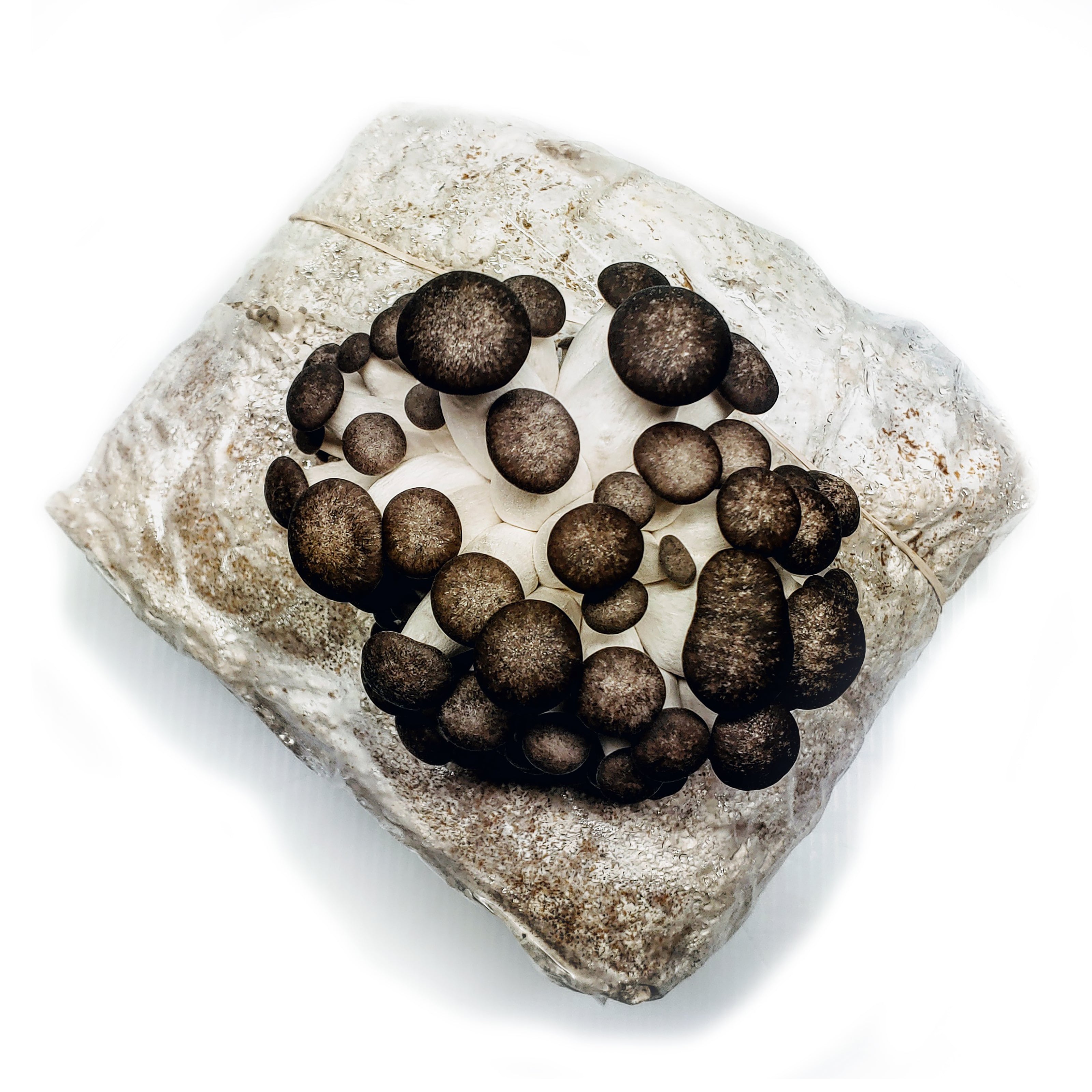
Black Pearl Oyster Strains

PO-BO

Black Pearl Oyster, like most Pleurotus varieties, can thrive on a wide variety of substrate recipes. It is highest-yielding on master's mix, hydrated to 60-63% total moisture content.

Incubation ranges from 14-21 days, depending on factors such as ambient incubation temp, spawn rate and substrate recipe. Unlike many other Pleurotus strains, Black Pearl Oyster does not pin immediately after colonization is complete, providing a grace period in which you can determine when to move your blocks into fruiting.

PO-BO prefers cool fruiting temps between 55-65° F, though can be fruited in warmer temps with mixed results. A standard x-cut or slit through the bag and into the substrate (no more than ½”) is the recommended initiation technique. If fruited in cold temps, Black Oysters manifest the morphology that most cultivators have come to expect- king oyster-like stems and dark, speckled caps. If fruited in warmer conditions, black pearl manifests in morphology a bit more similar to blue oyster, though with fleshier stems.

These are also a very popular sale at farmers markets and the like. They have a mild nutty and umami flavor similar to other oyster strains.

Top fruiting has become increasingly popular with PO-BO which increases the yield and shows off the P. eryngii genetics inherent in its hybridization.

Check out our MycoWizards PhenoFlick on Black Oyster HERE!

All Strains Explained

Blue Oyster Strains

PO-CNS

This is our bestselling house strain of Blue Oyster. Like most Pleurotus varieties, it can thrive on a wide variety of substrate recipes. It is highest-yielding on our master's mix combo-pellets, hydrated to 61% total moisture content.

Incubation ranges from 7-14 days, depending on factors such as ambient incubation temp, spawn rate, and substrate recipe. To avoid stroma and other biological problems during incubation, ensure that the core temperature of your PO-CNS blocks do not exceed 80F at the core. This can be achieved by incubating at 65F.

Bring blocks into the cold storage or the fruit room immediately after incubation is complete, as this strain pins fast and furious. A standard x-cut or slit through the bag and into the substrate (no more than ½”) is the recommended initiation technique. This strain of blue oyster prefers fruiting temperatures between 60-65° F. It maintains a vivid blue color and produces denser fruits of higher quality and a longer shelf life if fruited in cold temperatures. Yield typically ranges from 2½ -3½ lb per 10lb master’s mix block. It is known for very large cap size and tender stems all the way to their base, rendering the whole cluster marketable to a gourmet clientele.

This is a very versatile mushroom that will go good in many dishes such as stir fry, pasta, curry or even simply pan fried by themselves. This mushroom makes a great meat replacement. This strain has also been known to sell well at farmers markets.

PO-CHO

The 'chocolate' oyster is a blue oyster strain from China, sent to us by way of friends in Australia. At this point, it's been cultivated extensively by our farm customer base. It is less aggressive to pin compared with PO-CNS after colonization is complete. It yields very well, produces fruits of high quality (those with caps a bit smaller than a strain like POCNS), but thrives in warmer temps than the average blue strain and demonstrates some resistance to blotch and other bacteria. Its exceptional texture and culinary quality, as well as its slight brown hue to the caps, has made it very popular with chef and home grower alike!

PO-3044

PO-3044 is one of the more popular Blue Oyster varieties we offer. It is known for slightly smaller cap sizes than our house strain, PO-CNS, but still produces clusters of similar size.

PO-3044, like most Pleurotus strains, can thrive on a wide variety of substrate recipes. It is highest-yielding on master's mix, hydrated to 60-63% total moisture content. Calcium carbonate supplementation can help to slightly increase yield and fruit quality. It is best to have a tight contact between the block and the cultivation bag, which helps to prevent premature pinning inside the bag.

Incubation timelines ranges from 7-14 days, depending on factors such as ambient incubation temp, spawn rate, and substrate recipe. To avoid stroma and other biological problems in incubation, ensure that the core temperatures of your blocks do not exceed the low 70s F.

Bring blocks into cold storage or the fruit room immediately after incubation is complete, as this strain pins fast. A standard x-cut or slit through the bag and into the substrate (no more than ½”) is the recommended initiation technique. This strain of blue oyster prefers fruiting temperatures between 55-65° F, but can be fruited in slightly warmer conditions if necessary. It maintains a vivid blue color and produces denser fruit of higher quality and shelf life if fruited in cold temperatures. Yield typically ranges from 2½ -3½ lb per 10 lb master’s mix block. Great shelf life if fruited in cold conditions, shorter shelf life when fruited in warm conditions. A very predictable, flexible, and reliable strain overall. 

Just like the PO-CNS strain, this variety is a great addition to any fruiting room.

PO-3015

If you know, you know...some love it, some hate it. This Blue oyster strain is something that simply exists for the folks who have come to rely on it!

PO-KB

The PO-KB strain is a result of breeding carried out by Mossy Creek Mushrooms, this is a somewhat less predictable blue oyster strain, but an ideal choice for those with variable fruiting conditions and/or warm average fruiting temperatures.

Like most Pleurotus varieties, the PO-KB strain can thrive on a wide variety of substrate recipes. It is highest-yielding on master's mix, hydrated to 60-63% total moisture content.

Incubation ranges from 7-16 days, depending on factors such as ambient incubation temp, spawn rate, and substrate recipe. To avoid stroma and other biological problems in incubation, ensure that the core temperatures of your blocks do not exceed the lower 70s F

Bring blocks into the fruit room immediately after incubation is complete, as this strain pins readily. A standard x-cut or slit through the bag and into the substrate (no more than ½”) is the recommended initiation technique. This strain of blue oyster prefers fruiting temperatures between 60-70° F, but can be fruited in colder and semi warm conditions if necessary. It maintains a vivid blue color and produces denser fruit of higher quality and shelf life if fruited in cold temperatures. Yield typically ranges from 2 -3 lb per 10lb master’s mix block. It is known for average cap size but still produces very large clusters. Great shelf life if fruited in cold conditions, shorter shelf life when fruited in warm conditions.

Just like the PO-CNS strain, this variety is a great addition to all your favorite dishes; and any type of Blue Oyster tends to be in high demand if you're looking to sling the fungi!

PO-LOG

While this strain is not as high-yielding or high in quality, when compared to other blue oyster strains, it is still known for its overall ease in cultivation, resistance to bacterial blotch and other contaminants, and its exceptional shelf life. This phenotype certainly maintains the longest post-harvest shelf life of any blue oyster strain we carry, thus making it a great strain option for wholesaling to distributors.

Like most Pleurotus varieties, PO-LOG can thrive on a wide variety of substrate recipes. It is highest-yielding on master's mix, hydrated to 60-63% total moisture content.

Incubation ranges from 10-18 days, depending on factors such as ambient incubation temp, spawn rate, and substrate recipe.

A standard x-cut or slit through the bag and into the substrate (no more than ½”) is the recommended initiation technique. This strain of blue oyster prefers fruiting temperatures between 55-65° F, but can be fruited in warmer conditions if necessary. Yield typically ranges from 2-2½ lb per 10lb master’s mix block. A very predictable, flexible and reliable strain overall.
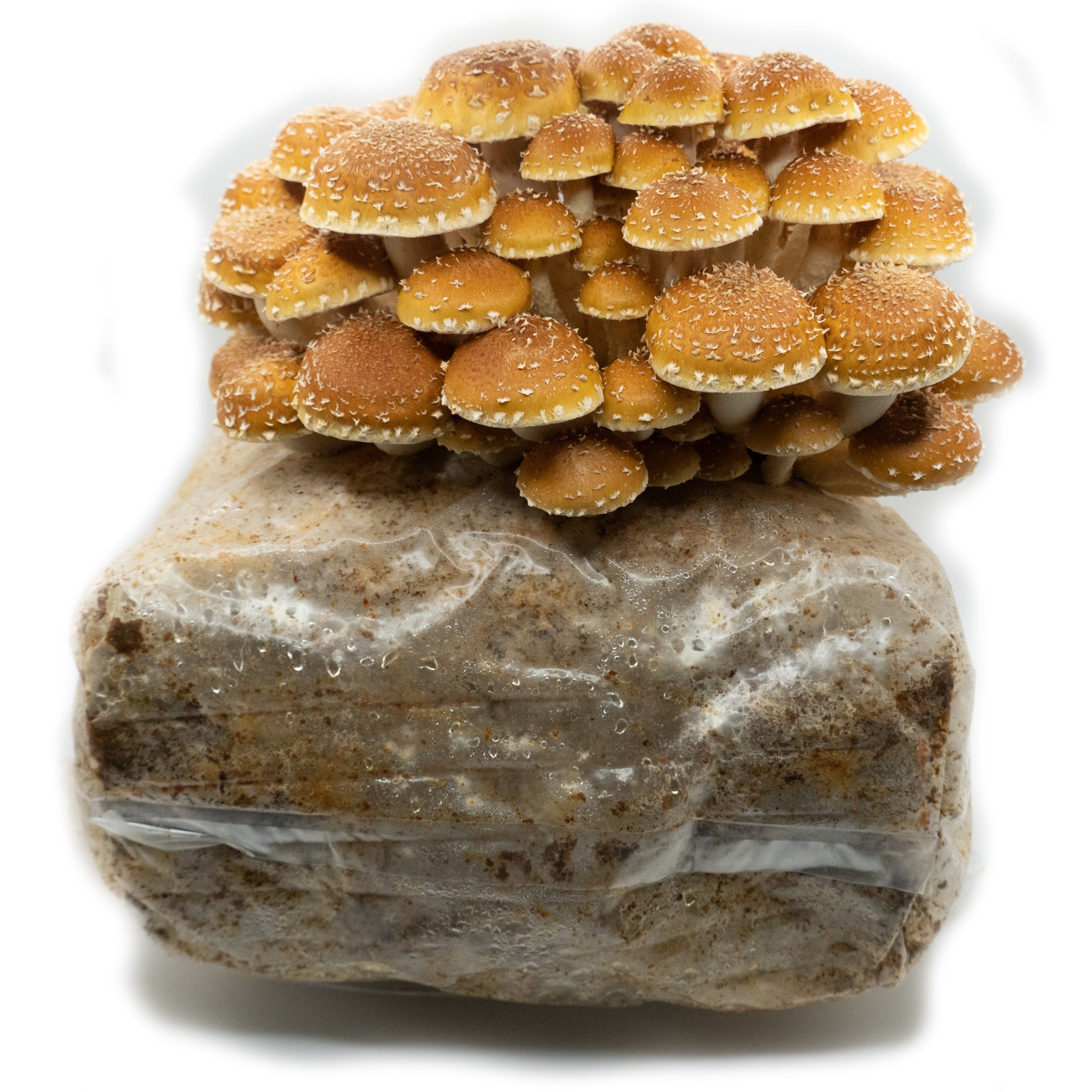
Chestnut Strains

PA-CNS

The infamous and mighty Chestnut strain PA-CNS thrives on master’s mix, especially if pelletized (the pelletization process breaks down the oak, rendering it more bioavailable for a weak metabolizer like chestnut) hydrated to 61-63%.

Initial colonization takes 3 weeks on average, but we recommend that you let the blocks sit for 1 additional week to fully mature- the block will swell with caramel-colored secondary metabolites. This allows the mycelium time to more effectively digest its growing medium, which leads to a faster and larger pinset once introduced into fruiting. Similar to most varieties, avoid letting the internal temperature of your blocks exceed the upper 70s to avoid deleterious biological impacts. Be mindful that chestnut mycelium is more prone to mold contamination than most other common varieties.

Chestnut prefers fruiting temperatures between 55-65° F (12-18° C), if the temperature exceeds 65° it will likely not pin at all. High relative humidity (90-95% ) is recommended for fast and healthy pinning. This is a more intermediate species to work with, if the conditions are not just right you will have a hard time harvesting anything off of the block.

A deep cut into the block is highly recommended for a dense pinset and high yield. Pinset emergence takes longer with chestnut than most other common varieties- 14 to 21 days in most cases. Once pins emerge, it is a fairly rapidly growing mushroom. Harvest after veils break but before caps flatten. Though chestnut does not have a fantastic shelf life, it is a strikingly beautiful mushroom and often sells fast. Average yield ranges between 2 and 3lbs.

Chestnuts have a nutty and meaty flavor, great for many dishes like pasta, soup or as a pizza topping. They are also good for drying as this will improve shelf life.

Check out out MycoWizards PHenoFlick on PA-CNS HERE!
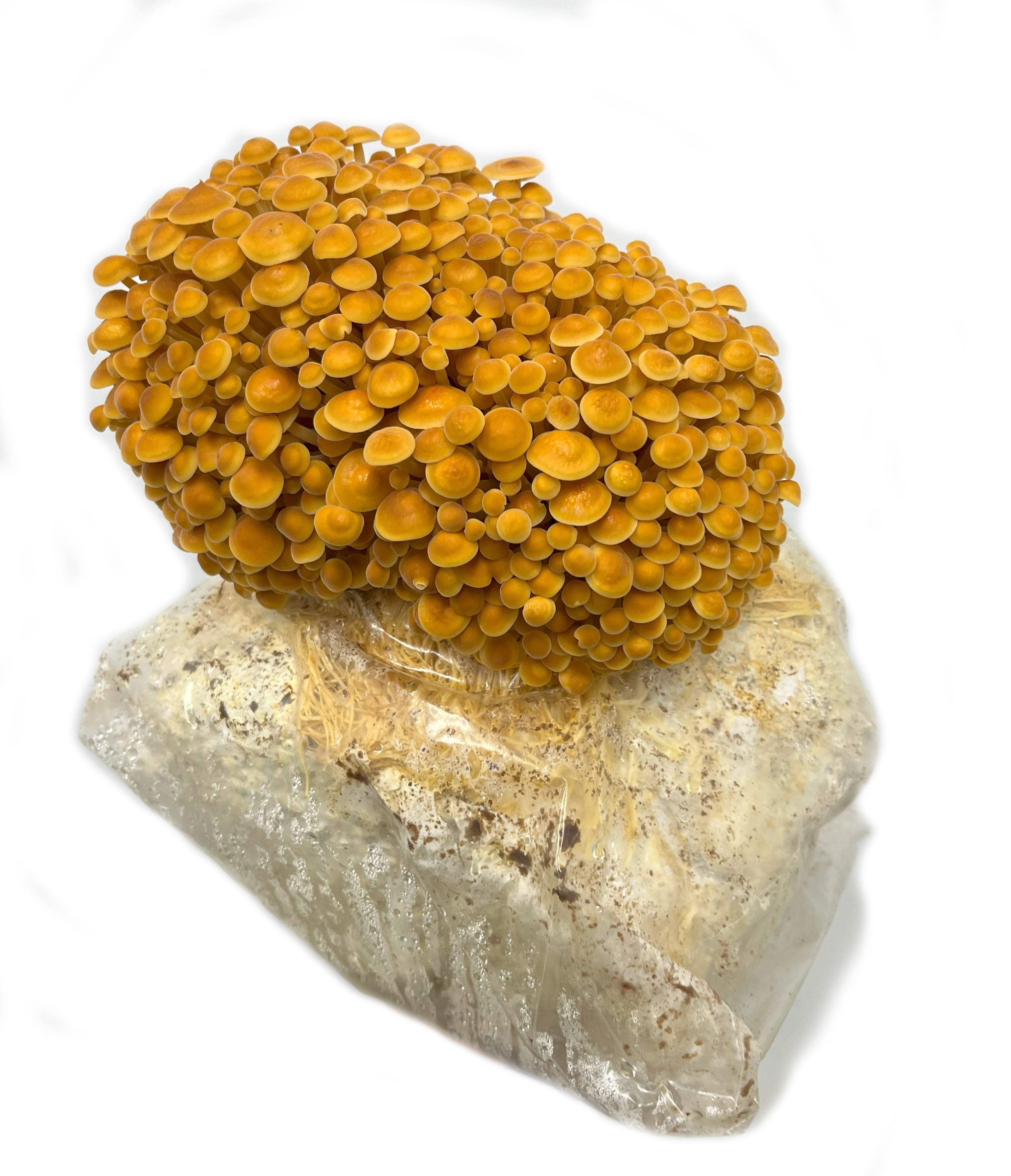
Enoki Strains

Golden Enoki FV-4600

Enoki is very tenacious and can grow on a variety of substrates, but we recommend master's mix for fastest growth and highest yields. Recommended moisture content is 60-63%, Calcium carbonate supplementation can help to slightly increase yield and fruit quality. It is best to have a tight contact between the block and the cultivation bag, which helps to prevent premature pinning inside the bag.

Enoki is fully colonized between 14-21 days in most circumstances. As with most varieties, enoki mycelium thrives with its interior temperature rests in the upper-70s Fahrenheit.

Enoki prefers cold fruiting temps, ideally 50-63° F. Some growers cold shock blocks for several days prior to inducing fruiting. Most growers top fruit enoki sometimes through scratching the top surface of the block. To encourage the most spindly spaghetti like form, let the pins form in vitro or fruit them in a high CO2 environment. If fruited in a regular fruiting environment with high oxygen levels, they will still be thin stemmed but with approximately dime-sized caps.

Enoki is sensitive to bacterial infection in the fruits, so avoid condensation settling on the fruits for a long period of time. Much like other common gourmet varieties, Enoki caps will flatten once they reach full maturity. So keep an eye on them to harvest before flattening for better storage life. FV 4600 can be quite high yielding and can be fruited multiple times with one block.

Enoki mushrooms are quite popular, they have a crunchy texture and umami flavor. They are good in a variety of dishes including soups, stir fry or even just by themselves.

White Enoki FV-1037

FV-1037 is a special order status strain. It is grown in the same conditions as Gold Enoki, however, your incubation and fruiting rooms need to be very on point as this is an overall weaker strain and needs exact conditions. The main appeal of the FV-1037 is the beautiful stark white color, as it was bred specifically for that purpose.

For substrate, we recommend master's mix for fastest growth and highest yields. Recommended moisture content is 60-63%, Calcium carbonate supplementation can help to slightly increase yield and fruit quality. It is best to have a tight contact between the block and the cultivation bag, which helps to prevent premature pinning inside the bag.

Enoki is typically fully colonized between 14-21 days in most circumstances. As with most varieties, enoki mycelium thrives with its interior temperature rests in the upper-70s Fahrenheit. Enoki prefers cold fruiting temps, ideally 50-63° F. Some growers cold shock blocks for several days prior to inducing fruiting. Most growers top fruit enoki sometimes through scratching the top surface of the block. To encourage the most spindly spaghetti like form, let the pins form in vitro or fruit them in a high CO2 environment.

Enoki is sensitive to bacterial infection in the fruits, so avoid condensation settling on the fruits for a long period of time. Much like other common gourmet varieties, Enoki caps will flatten once they reach full maturity. So keep an eye on them to harvest before flattening for better storage life.

If you would like to try this strain be sure to write *Special Order* at the bottom of your Spawn Form.
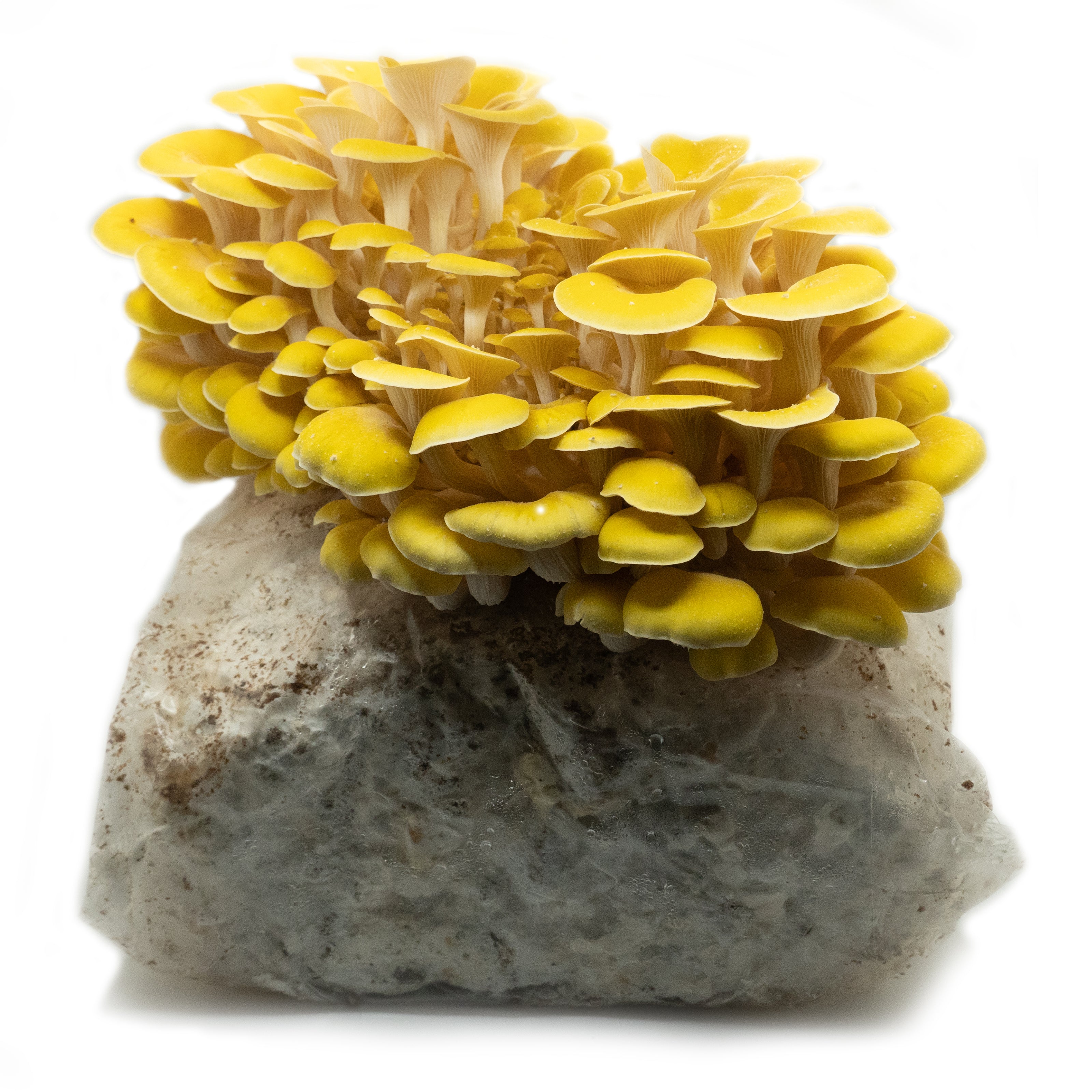
Gold Oyster Strains

PC-MM

Gold Oyster, like most Pleurotus varieties, can thrive on a wide variety of substrate recipes. It is highest-yielding on master's mix, hydrated to 60-63% total moisture content.

Incubation ranges from 7-14 days, depending on factors such as ambient incubation temp, spawn rate, and substrate recipe. To avoid stroma and other biological problems in incubation, ensure that the core temperatures of your blocks do not exceed the low 70s.

Bring blocks into the fruit room immediately after incubation is complete, as this strain pins readily. A standard x-cut or slit through the bag and into the substrate (no more than ½”) is the recommended initiation technique. This strain of Gold Oyster prefers immense flood lighting with fruiting temperatures between 65-70° F, but can be fruited in cooler conditions if necessary. It maintains a vivid color and higher yields when fruited in those warmer conditions. This strain can easily be fruited several times, but still has a high first flush yield. Its fruits develop rapidly; yield typically ranges from 2½ -3½ lb per 10 lb master’s mix block.

Pleurotus citrinopileatus is known for smaller cap size than other oyster species and for very delicate fruit tissue that is easily damaged. This PC-MM strain demonstrates stronger fruit tissue than average, while still maintaining a nice texture for gourmet cuisine. Mediocre shelf life. Fungus gnats and other insect pests are attracted by remnants of p. citrinopileatus fruits, so be sure to cut clean against the block when harvesting, and move the blocks to compost as soon as you are done flushing. A very predictable, flexible, and reliable strain overall.

Gold Oysters are desirable mainly because of their beautiful bright yellow color and notably nutty flavor.
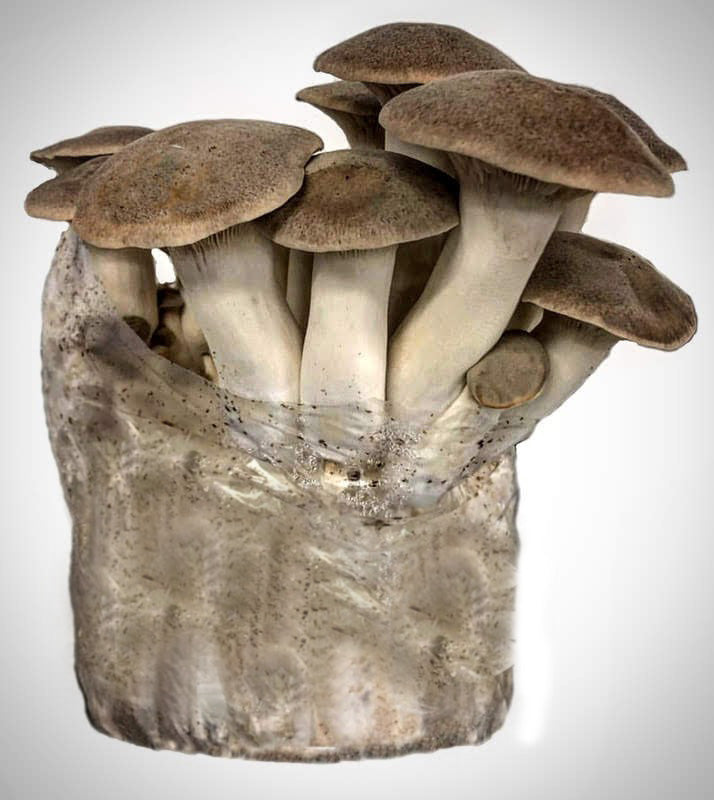
King Oyster Strains

PE-KONG

King oyster, like most Pleurotus varieties, can thrive on a wide variety of substrate recipes. It is highest-yielding on master's mix, hydrated to 60-63% total moisture content. It is best to have a flat top surface of your block and tight contact between the block and the cultivation bag, which encourages growth across the entire surface rather than along the edges of the block.

Incubation ranges from 14-21 days, depending on factors such as ambient incubation temp, spawn rate, and substrate recipe.

Bring blocks into the fruit room immediately after incubation is complete, as king oyster pins readily. There are three typical pin initiation approaches- letting the pins form in vitro before cutting off the seal and/or top portion of the bag, immediately cutting off the seal and/or top portion of the bag and scratching the top surface of the block, or simply cutting off the seal and/or top portion of the bag. Some farms like to form a casing layer (such as with peat moss and hydrated lime) for the fruits to emerge from. All have their merits and depend on the fruiting environment and grower preference. King oyster prefers cold fruiting temperatures between 50-60° F. Rapid pin growth and ideal morphology are encouraged through exposure to blue lighting; full spectrum LED is fine, if not too strong. Its fruits develop rapidly; yield typically ranges from 2-2.5 lb per 10lb master’s mix block and boast an excellent shelf-life.

King Oysters are a delicious and meaty mushroom, a great option as a meat replacement.

Check out our King Oyster Cultivation Deep Dive on our MycoWizards page!

PE-2603

PE2603 tends toward more uniformly medium-sized fruits with a pale, beige hue to the caps, while PEKONG demonstrates much more variance in fruit size with a stronger granite hue to the caps.

King oyster, like most Pleurotus varieties, can thrive on a wide variety of substrate recipes. It is highest-yielding on master's mix, hydrated to 60-63% total moisture content. It is best to have a flat top surface of your block and tight contact between the block and the cultivation bag, which encourages growth across the entire surface rather than along the edges of the block.

Incubation ranges from 14-21 days, depending on factors such as ambient incubation temp, spawn rate, and substrate recipe.

Bring blocks into the fruit room immediately after incubation is complete, as King Oyster pins readily. There are three typical pin initiation approaches- letting the pins form in vitro before cutting off the seal and/or top portion of the bag, immediately cutting off the seal and/or top portion of the bag and scratching the top surface of the block, or simply cutting off the seal and/or top portion of the bag. Some farms like to form a casing layer (such as with peat moss and hydrated lime) for the fruits to emerge from. All have their merits and depend on the fruiting environment and grower preference. King oyster prefers cold fruiting temperatures between 50-60° F. Rapid pin growth and ideal morphology are encouraged through exposure to blue lighting; full spectrum LED is fine, if not too strong. Its fruits develop rapidly; yield typically ranges from 2-2.5 lb per 10lb master’s mix block and boast an excellent shelf-life.

King Oysters are a delicious and meaty mushroom, a great option as a meat replacement.

Check out our King Oyster Cultivation Deep Dive on our MycoWizards page!

PE-REX

  • Demonstrates higher blotch resistance and overall vigor
  • Smaller, more attractive caps
  • Much softer texture than other strains, great in a gourmet context
  • More even fruit body size, easier to grade
  • Similar yield to other commercial strains such as KONG and 2603
  • Slightly slower to pin and harvest than KONG, by approximately one week

Lions Mane Strains

HE-CNS

HE-CNS is our go to house strain of Lion's Mane. HE-CNS produces the highest yield on master’s mix. We strongly recommend a final block moisture content of 60%; a moisture content even slightly exceeding that tends to lead to problems during incubation and fruiting for lion’s mane. In turn, insufficient moisture content often leads to issues with mold contamination and overall poor colonization of the block. Lion’s mane does equally well with ultrapasteurization and sterilization.

Incubation ranges from 8 to 16 days, depending on factors such as ambient incubation temp, spawn rate, and substrate recipe. Similar to most varieties, avoid letting the internal temperature of your blocks exceed the low 70s internally. Be mindful that Lion’s Mane mycelium is prone to myriad problems if it overheats and that it is more prone to mold contamination than most other common varieties.

Lion’s Mane prefers standard fruiting temperatures between 55-65° F (12-18° C). A high air exchange rate (lots of oxygen-rich air) and consistent relative humidity are ideal for good fruit development. A standard x-cut or slit in the bag is the recommended pinset initiation technique; many farms make their cut on the top surface of the block, where lion’s mane readily fruits on its own accord. Lion’s mane fruits develop at a relatively slow rate but grow to incredibly large size and weight. Average yield is quite high- 2½ to 3½ lb, with potential for even more with subsequent flushes of the same block. This strain is known for dense, club-like fruits with small spines, providing greater resistance to bruising and damage during handling/cold storage thus making it an eminent wholesaling mushroom.

Lion's Mane is not only a great versatile ingredient, it is also said to have many medicinal properties.

Check out our MycoWizards PHenoFlick on HE-CNS Here!

HE-POW

The HE-POW strain is different than typical Lion's Mane as it has demonstrated higher heat tolerance than other strains and is often the preferred strain by farms in hot climates and/or hot seasons.

HE-POW, like most Lion's Mane strains, produces the highest yield on master’s mix, but is easier to grow without issue on a lower-supplementation recipe, such as 65-70% hardwood and 30-35% wheat middlings/soy hulls. Regardless, we strongly recommend a final block moisture content between 59-62%; a moisture content even slightly exceeding that tends to lead to problems during incubation and fruiting for lion’s mane. In turn, insufficient moisture content often leads to issues with mold contamination and overall poor colonization of the block. HE-POW does equally well with ultrapasteurization and sterilization.

Incubation ranges from 8 to 16 days, depending on factors such as ambient incubation temp, spawn rate, and substrate recipe. Similar to most varieties, avoid letting the internal temperature of your blocks exceed the low 70s to avoid deleterious biological impacts; be mindful that lion’s mane mycelium is prone to myriad problems if it overheats, such as mold and bacterial contamination.

A standard x-cut or slit in the bag is the recommended pinset initiation technique; many farms make their cut on the top surface of the block, where it readily fruits on its own accord. Lion’s mane fruits develop at a relatively slow rate (14-21 days) but grow to an incredibly large size and weight. Average yield is quite high- 2½ to 3lb or more per 10lb master’s mix block, with potential for even more if fruited multiple times per block.

This strain is known for flashier fruits with more exposed spines, with excellent visual appeal while still maintaining wholesale production standards.

HE-LP

The fruit quality of this strain is not quite as gourmet as other Hericium strains offered by Cap N’ Stem, but its flexible cultivation parameters makes it a worthwhile consideration for some farms.

Lion’s Mane produces the highest yield on master’s mix, but is easier to grow without issue on a lower-supplementation recipe, such as 65-70% hardwood and 30-35% wheat middlings/soy hulls. Regardless, we strongly recommend a final block moisture content between 59-62%; a moisture content exceeding that tends to lead to problems during incubation and fruiting for lion’s mane, especially bacterial infections and subsequent pooling of secondary metabolites. In turn, insufficient moisture content often leads to issues with mold contamination and overall poor myceliation of the block. Lion’s mane does equally well with ultrapasteurization and sterilization.

Incubation ranges from 8 to 16 days, depending on factors such as ambient incubation temp, spawn rate, and substrate recipe. This strain is slightly more tolerant than other Hericium strains of varying moisture content in the block as well as varying incubation temperatures, making it a safe choice for farms with an inconsistent incubation environment.

Lion’s Mane thrives with lots of fresh air exchange and abundant oxygen levels, also ensure that you maintain high relative humidity without allowing condensation settling too long on the fruits, as lion’s mane is prone to both desiccation and bacterial rot. A standard x-cut or slit in the bag is the recommended pinset initiation technique. Many farms make their cut on the top surface of the block, where lion’s mane readily fruits on its own accord. Lion’s Mane fruits develop at a relatively slow rate (14-21 days) but grow to incredibly large sizes and weight. Average yield is less than other Lion’s Mane strains- 2 to 2½  lb- with potential for more if fruited multiple times per block.

HE-A

HE-A is a special order status strain. It is a wild clone from Quebec. We have not done much production with this strain so a lot of variables are still unknown. The main reason HE-A is special is it has vigorous and dense mycelium, much stronger and flexible than most other Lions Mane strains; This makes it a good contender if you have unstable fruiting conditions.

As this is a wild clone, the fruits of the HE-A look wild and spiny compared to regularly cultivated Lions Mane; which typically appear as a more dense round shape.

We do not have any average yield data as we have not brought this strain into our regular rotation. If you would like to try this strain be sure to write *Special Order* at the bottom of your Spawn Form.

HE-9514

HC-FF

HC-FF, also known as Combtooth or Hericium Corraloides is a commercial phenotype that hails from Funga Farm. The main difference between the strains is morphology; While the typical Lions Mane forms in multiple ball like fruits, the Combtooth has fruits more akin to a coral mushroom, very spread out and textured.

HC-FF produces the highest yield on master’s mix, but is easier to grow without issue on a lower-supplementation recipe, such as 65-70% hardwood and 30-35% wheat middlings/soy hulls. Regardless, we strongly recommend a final block moisture content between 59-62%; a moisture content exceeding that tends to lead to problems during incubation and fruiting for Combtooth, especially bacterial infections and subsequent pooling of secondary metabolites. In turn, insufficient moisture content often leads to issues with mold contamination and overall poor myceliation of the block. Combtooth does equally well with ultrapasteurization and sterilization.

Incubation ranges from 8 to 16 days, depending on factors such as ambient incubation temp, spawn rate, and substrate recipe. When compared to Lions Mane, HC-FF has a much denser mycelium during its colonization of a substrate block as well as spawn. It is less likely to autofruit in the high CO2 environment of a sealed XLS-A bag.

HC-FF thrives with lots of fresh air exchange and abundant oxygen levels, also ensure that you maintain high relative humidity without allowing condensation settling too long on the fruits, as Combtooth is prone to both desiccation and bacterial contamination. A standard x-cut or slit in the bag is the recommended pinset initiation technique; many farms make their cut on the top surface of the block, where Combtooth readily fruits on its own accord.

Typical yield ranges from 2 to 3 lbs. Depending on usual fruiting room factors such as lighting, oxygen levels and moisture content.

Check out our Mycowizards PhenoFlick on HC-FF HERE!
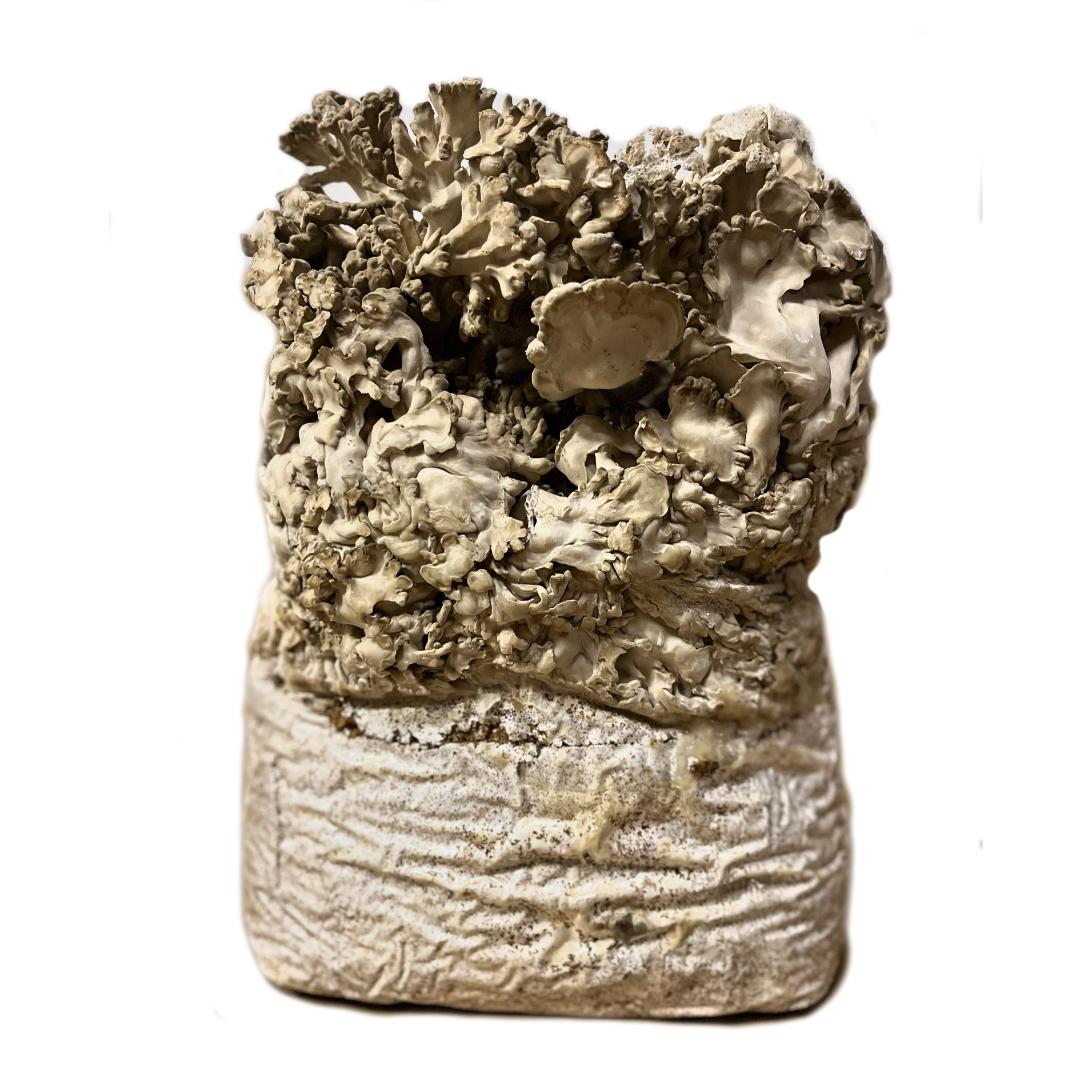
Maitake Strains

GF-494

GF-494 is a special order status strain. It has a slightly slower development rate when compared to other Maitake strains, however, It also has a slightly higher yield and tends to be more durable of a strain which makes it a great option for wholesale farmers.

As with the GF-9827, this is a particular strain when it comes to fruiting conditions; 65° F is recommended for incubation and fruiting. Be sure not to disturb the block as this will likely disrupt the growth of your mushrooms. The GF-494 is less flexible of a strain so all of your conditions should be on point.

If you would like to try this strain be sure to write *Special Order* at the bottom of your Spawn Form.

GF-9827

Maitake prefers a lower supplementation rate than standard masters mix. Something along the lines of 60-70% sawdust/hardwood pellets & 30-40% supplement. A moisture content between 60-63% is recommended to accommodate its longer timeframe in incubation. It is best to have a flat top surface of your block.

Initial colonization of the block will take about 3-4 weeks in most cases, but let the blocks remain in incubation as primordia develop in vitro. Let those primordia get as large as possible in incubation. Initial ‘blob-like’ primordia begin to develop ‘fingers’; this is a clear visual indication that the crop’s time in incubation is complete. Overall, incubation averages 3-4 weeks and primordia development averages 3-5 weeks. Extensive lighting over the top surface of the blocks is extremely helpful to encourage primordia to form along the entire top surface, rather than just along the sides of the top surface, which tends to occur in low-light conditions. Cool spectrum lighting is superior to warm spectrum for healthy primordial development. Maitake seems to have a very wide range in which it will grow, both in incubation and fruiting. As with most varieties, the speed is much greater in warm conditions, and the mushroom quality is greater in cool conditions. Temperature stability is extremely important for successful maitake cultivation. On average, growers tend to cultivate this strain at 65° F for incubation and fruiting.

Cut off the seal to leave a tall plastic collar around the developing fruits, and cut slits on the sides of the bottom of the collar to allow CO2 to flush out. Like any variety, Maitake requires fresh air exchange but is also prone to drying out, so it is best to position the blocks at a slight angle on your fruiting racks/shelves and have a collar that is as high as possible. In hot fruiting conditions, this is especially the case, whereas in cold fruiting conditions you will want to ensure that water doesn't pool inside the collar. For maximum storage life, harvest the fruits right when pores manifest on the undersides of the fronds. For maximum volume, wait to harvest until fruits have begun to produce spores.

As this species is more advanced than most, it is important to have extra consideration in fruiting conditions. Many growers have produced mediocre maitake (very short fronds, about halfway between 'blobtake' and healthy looking maitake) because they didn't have enough patience. Patience is key, especially in regard to letting primordia develop in vitro. If you allow the primordia as much time to develop as possible in vitro, you will see a higher yield, healthier mushrooms, better aroma.

Maitake will stop growing if disturbed too much. This is one of the main considerations for letting the blocks acclimate to the fruiting room before cutting off the seal. The principle of avoiding disturbance applies to other aspects of cultivation- avoid knocking the blocks, and avoid fruiting them in a fruit room with heavy spore load from other varieties (both may lead to growth stopping).

Maitake is said to have a rich earthy flavor with a hint of spice.

Phoenix Oyster Strains

PP-LOG

PP-LOG has been our go to Phoenix oyster strain for a decade. Also referred to as Italian Oyster, Pleurotus Pulmonarius loves the heat and fruits best between the temp range of 60 and 70F.

When it comes down to producing substrate for this variety it is typical to all the other standards of oysters, Masters Mix with 60-63% moisture content. On a 10lb block of substrate keep your incubation temps down around 66F to prevent any bacterial contamination that can proliferate into blotch once introduced into fruiting.
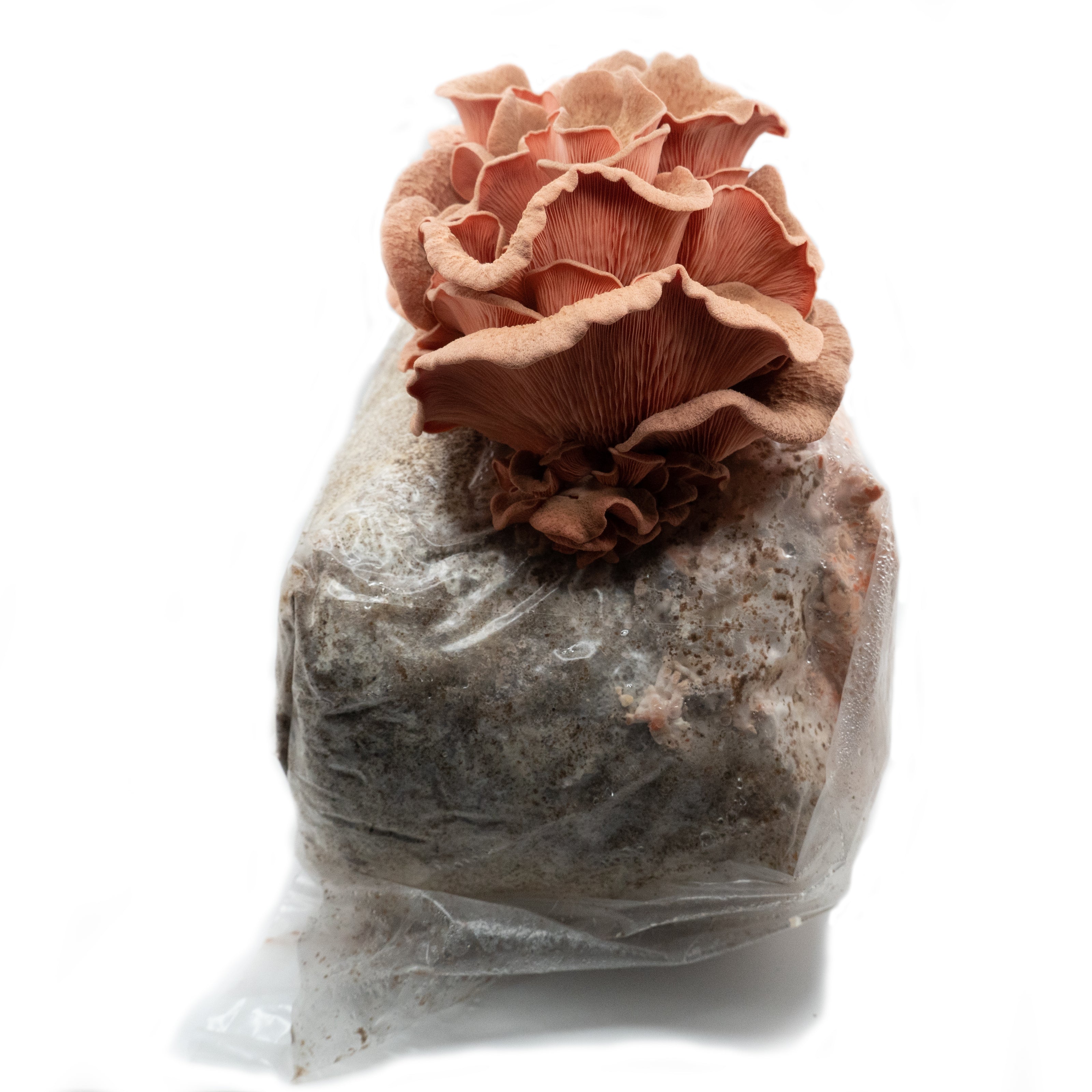
PP-2204

PP-2204 comes from Mycelia BVBA and has been a runner up to our PP-LOG strain for a few years. Also referred to as Italian Oyster, Pleurotus Pulmonarius loves the heat and fruits best between the temp range of 60 and 70F.

When it comes down to producing substrate for this variety it is typical to all the other standards of oysters, Masters Mix with 60-63% moisture content. On a 10lb block of substrate keep your incubation temps down around 66F to prevent any bacterial contamination that can proliferate into blotch once introduced into fruiting.

Pink Oyster Strains

PD-1

Pink Oysters can thrive on a wide variety of substrate recipes. It is highest-yielding on master's mix, hydrated to 60-63% total moisture content. It is best to have a tight contact between the block and the cultivation bag, which helps to prevent premature pinning inside the bag.

Incubation ranges from 10-16 days, depending on factors such as ambient incubation temp, spawn rate, and substrate recipe.

Bring blocks into the fruit room immediately after incubation is complete, as this strain pins all over the block fast. A standard x-cut or slit through the bag and into the substrate (no more than ½”) is the recommended initiation technique. Pink oysters are a tropical strain that prefers fruiting temperatures between 70-80° F with humidity levels between 85-95%. It maintains a vivid pink color if grown with slight light exposure and in their preferred temp range, and can produce thick meaty fruits or thin delicate fruits depending on growing conditions. This strain can easily be fruited several times, but still has a high first flush yield. Its fruits develop rapidly; yield typically ranges from 2½ -3 lb per 10 lb master’s mix block. The nice part about PD-1 is it can be fruited through the winter months if the temps in your fruiting facility stay in the low to middle 60s.

Pink Oysters are known to have a very short life. They also have a meaty texture and a notably "seafood" flavor.
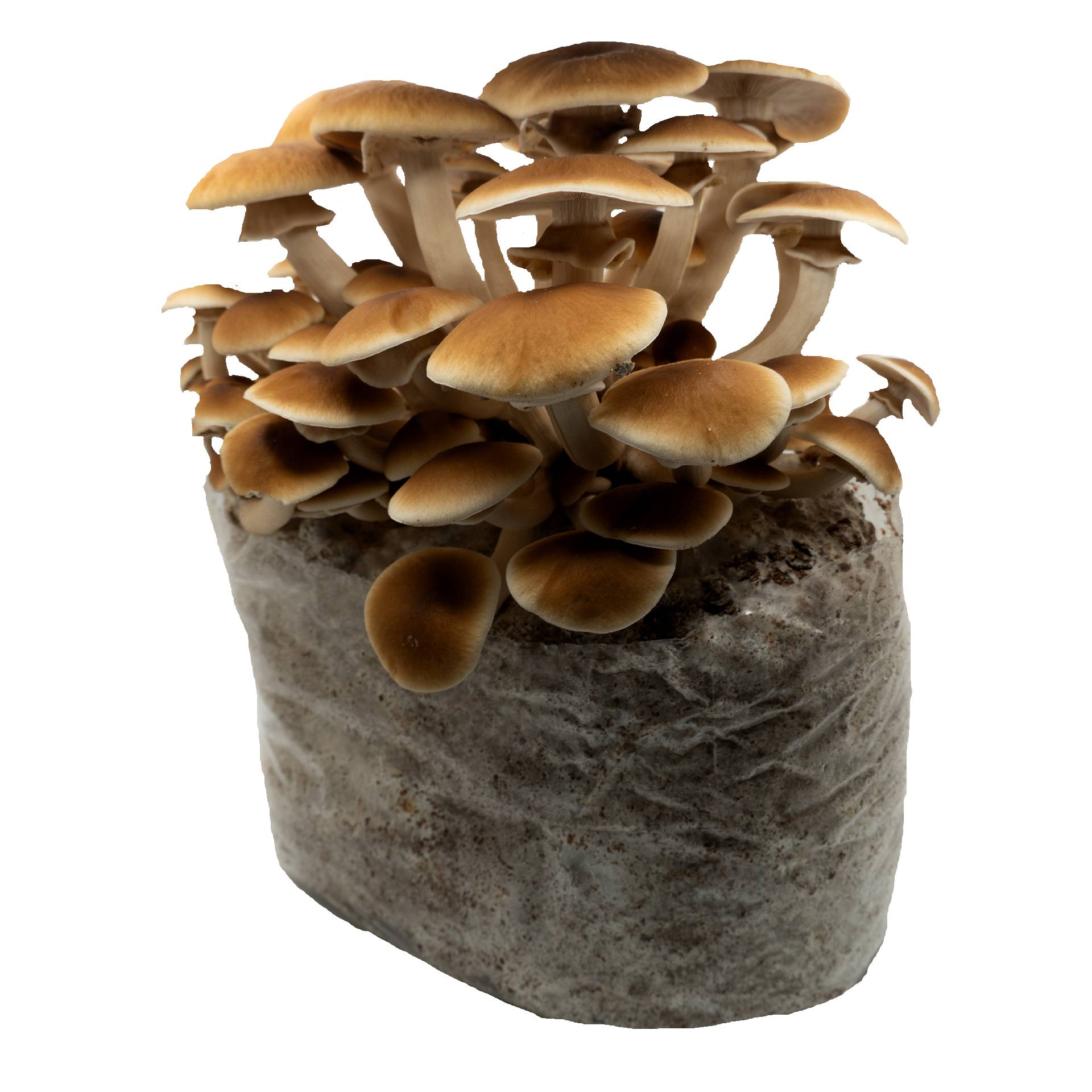
Pioppino Strains

AA-CNS

Pioppino is a relatively delicate mycelium. It obtains its highest yields on masters mix, ideally with a hardwood as its substrate base. For the smoothest colonization and easiest success, some growers cultivate pioppino on recipes similar to shiitakes substrate. Much like other delicate varieties, if pioppino is grown on substrate with insufficient moisture content, its mycelial growth rate is drastically inhibited and its hyphae are less robust and defined. If grown with excessive moisture content bacterial contamination easily occurs. Standard 60-63% moisture content is recommended.

Pioppino takes 18-22 days to fully colonize and be ready to fruit on average. indirect light exposure in incubation encourages more vigorous colonization of the block. When pioppino is ready to fruit cloud like plumes of mycelium form on the top of the block giving way to microdots of a yellow metabolite that forms into primordia. These pins can form on the exterior of the block so its best to maintain tight contact between plastic and block to encourage top fruits. If you catch the block before pillowy mycelium forms but the block is full colonized you can remove the air from the plenum with a small cut at the top of the bag and refrigerate at 34F for several weeks. After refrigeration, a side cut similar to oysters or lions mane will provide a successful and robust flush.

Pioppino prefers warm fruiting temperatures between 65-75 degrees but will fruit in cooler temps as well, just more slowly. It is highest yeilding when fruited from the top of the block. Once pins are formed they grow at a fast rate and will be ready to harvest within 7-10 days on average.

For the best balance of storage life and yield, harvest just when the veils are beginning to show signs of cracking and separating from the stem. This strain of Pioppino is known for mostly even, medium sized fruits. Its yield, while not exceptional, still falls within the range of a commercially viable first flush and outperforms other Pioppino strains that Cap N’ Stem has worked with.

The Pioppinos have a nutty and slightly sweet flavor. It is a popular mushroom in the culinary world.

Check out our MycoWizards PhenoFlick on fascinating strain HERE!
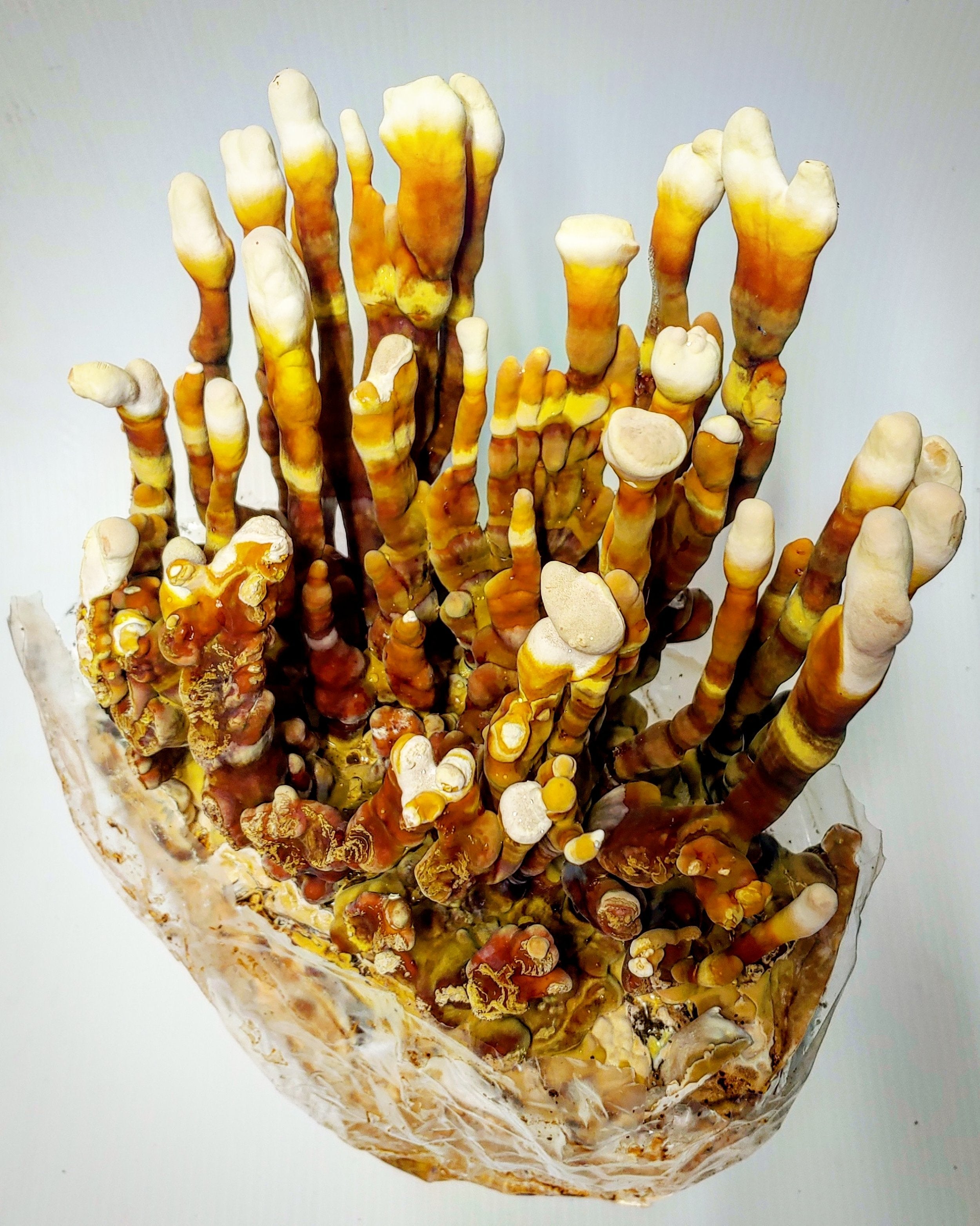
Reishi Strains

GLZ-9724

Reishi species are incredibly tenacious and will thrive on a wide variety of substrate recipes. Masters mix works quite well and allows for high yields. Standard moisture content of 60-63%. If you plan on fruiting antlers in vitro, be sure to have as large a plenum in the bag as possible to provide maximum amount of space for antlers to grow. 

Reishi typically requires 10-16 days for full colonization. Reishi is a strong competitor and will outcompete most contaminants if they're not too prevalent. If you plan to fruit antlers in vitro, set them and forget them, ideally with good light exposure to stimulate faster fruit growth. If you plan to fruit conks, move them into your fruit room as soon as you see either a swelling of secondary metabolites and/or myelination along the exterior of the substrate.

While Reishi myceliates very fast, its fruits grow at a very slow, steady rate. Depending on context, reishi fruits reach maturity anywhere between 3-6 months; some cultivators extend their growth beyond that. Some strains are bred specifically for antler morphology, others for conk, and others are flexible. You can grow antlers in vitro or in a fruiting space with artificially elevated CO2 levels. If you want to grow conks, cut the bag in a similar fashion as you would oysters; primordia will quickly manifest. For conks, maintain a standard fruiting room environment- around 90% relative humidity and the usual 450-800 ppm CO2. This will encourage the organism to continue growing fruit body size rather than sporulating. Ideally, harvest before the mushrooms sporulate, as Reishi spores both contain medicinal potency and are very virulent and irritating to the respiratory system (and your equipment!).

Reishi is a great mushroom for tinctures as they are said to have many medicinal properties.

Check out our MycoWizards Deep Dive on the History Of Reishi HERE!
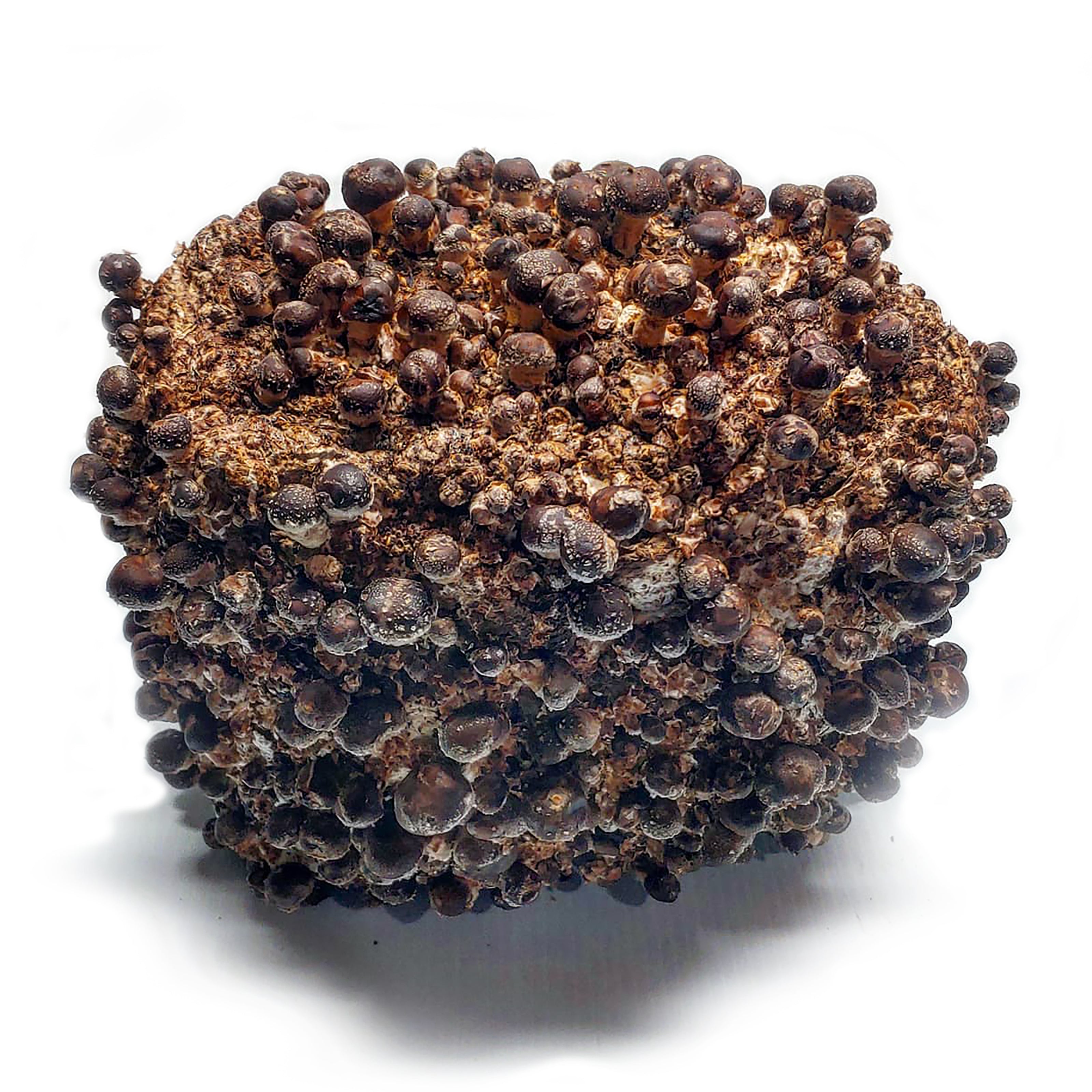
GM-CNS

GM-CNS is an incredibly tenacious species and will thrive on a wide variety of substrate recipes. Ganoderma Multipileum grows faster and antlers quicker than Ganoderma Lingzhi with less dense fruits in a pillowy zig zag fashion depending on the light spectrum. Masters mix works quite well and allows for high yields. Standard moisture content of 60-63%. If you plan on fruiting antlers in vitro, be sure to have as large a plenum in the bag as possible to provide maximum amount of space for antlers to grow. 

Reishi typically requires 10-16 days for full colonization. Reishi is a strong competitor and will outcompete most contaminants if they're not too prevalent. If you plan to fruit antlers in vitro, set them and forget them, ideally with good light exposure to stimulate faster fruit growth. If you plan to fruit conks, move them into your fruit room as soon as you see either a swelling of secondary metabolites and/or myelination along the exterior of the substrate.

While Reishi myceliates very fast, its fruits grow at a very slow, steady rate. Depending on context, reishi fruits reach maturity anywhere between 3-6 months; some cultivators extend their growth beyond that. Some strains are bred specifically for antler morphology, others for conk, and others are flexible. You can grow antlers in vitro or in a fruiting space with artificially elevated CO2 levels. If you want to grow conks, cut the bag in a similar fashion as you would oysters; primordia will quickly manifest. For conks, maintain a standard fruiting room environment- around 90% relative humidity and the usual 450-800 ppm CO2. This will encourage the organism to continue growing fruit body size rather than sporulating. Ideally, harvest before the mushrooms sporulate, as reishi spores both contain medicinal potency and are very virulent and irritating to the respiratory system (and your equipment!).

Reishi is a great mushroom for tinctures as they are said to have many medicinal properties.

Check out our MycoWizards Deep Dive on the History Of Reishi HERE!

Shiitake Strains

LE-KOM

LE-KOM is much like any other Shiitake strain except it has a faster incubation rate, this is a good strain for wholesale farmers. Shiitake in general requires a less-rich growing medium than other varieties; the standard recipe is 20-30% wheat bran/middlings, 70-80% oak/harwood, hydrated to 63-65%. It prefers sterilized growing media rather than pasteurized growing media, though both can be successful.

Initial colonization takes 2-3 weeks; total time to fully browned maturity ranges from 7-9 weeks- this strain is exceptionally fast, relative to other shiitake strains and extremely forgiving. To ensure healthy popcorning, rather than blistering, ensure that you maintain stable ambient temperatures during incubation. To ensure proper browning, allow for even all spectrum light exposure to the blocks, even if indirect. To avoid overheating and its cataclysmic associated issues, as well as premature pinning in vitro, ensure that the core temperatures of your blocks do not ever exceed the low 70s, even for short time intervals. This strain has proven to be reasonably tolerant of variable substrate moisture content, but it is best practice to stick within the recommended 63-65% MC range and to avoid any standing water inside the cultivation bag.

This strain performs reasonably well through a wide temperature range, though 55-70° F is recommended for highest quality fruits and shelf life. Cold shocking is helpful to initiate a fast and robust pinset but is optional. It mostly produces medium-size caps of good quality with a smaller amount of large-size caps and few petite caps. If cultivated on 10lb blocks, it tends to produce a higher amount of large caps than if cultivated on 5 lb blocks. Its fruits develop rapidly and are easy to cultivate, as with most shiitake strains. For the highest quality, harvest soon after the veils break. For highest yield, allow the caps to swell with water as they flatten (this results in poor quality and shorter shelf life). Its stems tend to be fairly fleshy and marketable. Average yield typically ranges between 2½-3lbs per 10lb block.

Shiitakes in general are great mushrooms for soups, sauces and stir fry. They are one of the most in demand mushrooms in the US right now.

LE-321

LE-321 is a special order status strain from northwest mycological consultants. It is a classic shiitake strain and requires all the same care. The standard substrate recipe for Shiitakes is 20-30% wheat bran/middlings, 70-80% oak/harwood, hydrated to 63-65%. It prefers sterilized growing media rather than pasteurized growing media, though both can be successful. Incubation and fruiting temp should be around 60° F. It is lower yielding than other commercial strains but produces very gourmet fruits.

If you would like to try this strain be sure to write *Special Order* at the bottom of your Spawn Form.

LE-3790

LE-3790 is our most common shiitake in substrate and spawn sales. Shiitake in general requires a less-rich growing medium than other varieties; the standard recipe is 20-30% wheat bran/middlings, 70-80% oak/harwood, hydrated to 63-65%. It prefers sterilized growing media rather than pasteurized growing media, though both can be successful.

Initial colonization takes 2-3 weeks; total time to fully browned maturity ranges from 11-14 weeks. To ensure healthy buckling, rather than popcorning, ensure that you maintain stable ambient temperatures during incubation. To ensure proper browning, allow for some light exposure to the blocks, even if indirect. To avoid overheating and its cataclysmic associated issues, as well as premature pinning in vitro, ensure that the core temperatures of your blocks do not ever exceed the low 70s, even for short time intervals.

This strain prefers fruiting temperatures between 55-66° F, in which it will produce its largest, highest quality caps, but can be fruited in warmer conditions as well, in which its yield will be comparable but its cap size will trend smaller. Cold shocking is helpful to initiate a fast and robust pinset but is optional. If cultivated on 10 lb blocks, it tends to produce a higher amount of large caps than if cultivated on 5 lb blocks. For highest quality and shelf life, harvest soon after the veils break. Its stems tend to be fairly fleshy and marketable. LE 3790 boasts the highest average yield of our shiitake strains, typically between 3-4  lbs. 

For more info on 3790 check out ourMycoWizards PhenoFlick HERE!

LE-3782

The OG, The strain to get the small cultivators of the US started back when Aloha Medicinals brought it in from Mycelia BVBA.

While the caps are small the hotter it gets, the cooler weather during fruiting will produce quite nice sized medium cap with a relatively thin outer skin.

So long as incubation temps are kept around 66F for a 10lb block, your sub will run, buckle and brown in under 10 weeks unlike 3790 which can take a bit longer.

While most folks don't cultivate 3782 anymore, it still holds a solid spot in our hearts as being the shiitake strain that made profitability possible!

LE-JC

Shiitake in general requires a less-rich growing medium than other varieties; the standard recipe is 20-30% wheat bran/middlings, 70-80% oak/harwood, hydrated to 63-65%. It prefers sterilized growing media rather than pasteurized growing media, though both can be successful.

Initial colonization takes 2-3 weeks; total time to fully browned maturity ranges from 9-12 weeks. To ensure healthy bucking, rather than popcorning, ensure that you maintain stable ambient temperatures during incubation. To ensure proper browning, allow for some light exposure to the blocks, even if indirect. To avoid overheating and its cataclysmic associated issues, as well as premature pinning in vitro, ensure that the core temperatures of your blocks do not ever exceed the low 70s for even a short time intervals.

LE-JC performs reasonably well through a wide temperature range, though 55-65° F (12-18° C) is recommended for highest quality fruits and shelf life. Cold shocking is helpful to initiate a fast and robust pinset but is optional; smacking the blocks is also effective. It tends to produce mostly medium-to-large caps and few petite caps. Its fruits are of excellent quality with nice ornamentation, less water weight and more flesh weight than most strains, woody stems that allow for quick and easy harvesting, and good shelf life. For highest quality, harvest soon after the veils break. For highest yield, allow the caps to swell with water as they flatten (this results in poor quality and much shorter shelf life). Average yield ranges between 2-2½ lb per 10lb block.
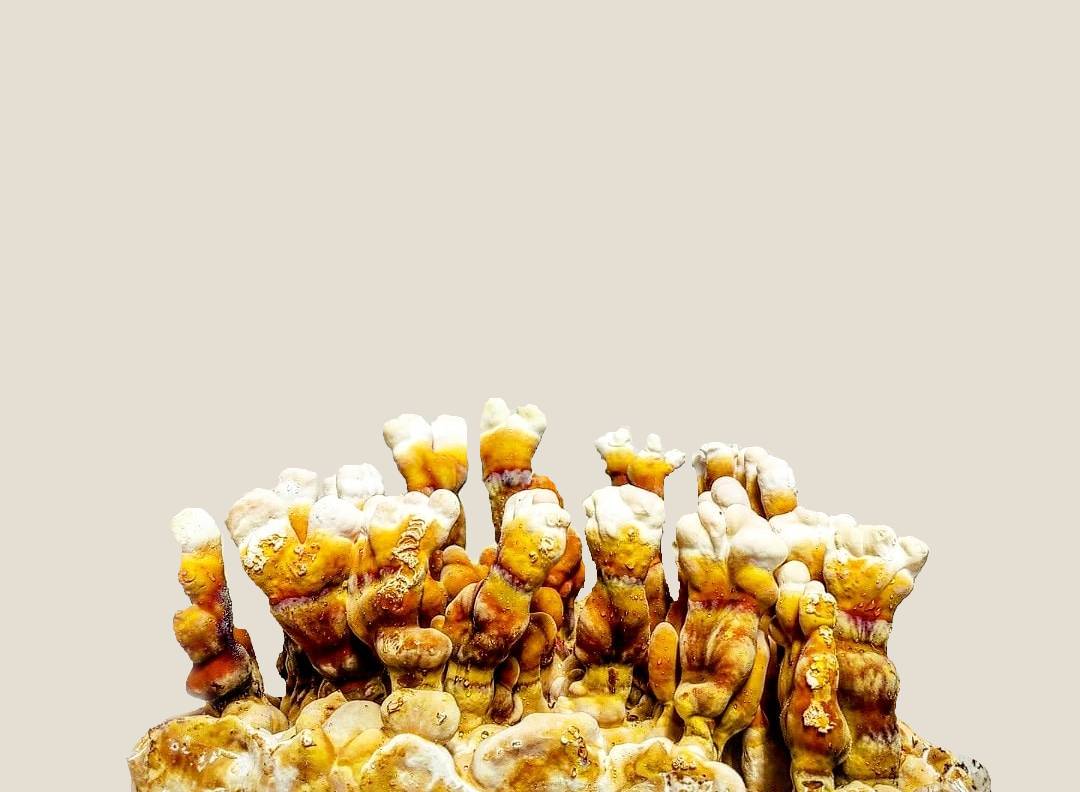
Beech Mushroom Strains

HT-1

Brown Beech belongs to a small genus known as Hypsizygus. It produces the highest yield on master’s mix, hydrated to 60-63% total moisture content.

Brown Beech is typically fully colonized at 3-4 weeks, however incubation ranges from 4-5 weeks as you should let them sit for a while after fully colonized. Brown Beech does not like disturbances once the mycelium is connecting, this may result in poor fruiting; so make sure once it is in incubation it stays there until pins form in bag before bringing to fruit room. This strain produces best when cold shocked, either overnight or up to a week in 34 F-40 F. This stresses the mycelium into production of fruit.

Brown Beech prefers a temperature of 60 F, relative humidity 85-92% with a dry fogging system to keep water droplets from setting on the mushroom pins or heads. Brown Beech is highly susceptible to rose comb so take care to not let water settle on the caps. A standard x-cut or slit in the bag, across the top just above the filter patch, is the recommended pinset initiation technique; alternatively, slit the sides down to the substrate to release more Co2.

Brown Beech has a a lightly sweet, savory and nutty flavor, and subtly crunchy texture. A typical yield for this strain is about 2 pounds.

HT-4780

White Beech HT-4786

Cauliflower Strains

SA-ET

SA-ET is a special order status strain. It is a wild clone from Texas and is purely experimental and can only be ordered as a culture at the moment.

SC-9641

SC-9641 is a special order status strain. It is a Mycelia clone from Europe and is purely experimental and can only be ordered as a culture at the moment.

Chicken of the Woods Strains

LS-FF

LS-FF is a special order status strain. It is a wild clone from Denmark and is purely experimental and can only be ordered as a culture at the moment.

Cordyceps Strains

CM-666

CM-777

Nameko Strains

PN-CNS

PN-CNS is a special order status strain. We have not done much production with this strain so a lot of variables are still unknown, here is what we do know: The Nameko has a slow growth rate, it is of the family Pholiota, same as the Chestnut, and therefor grows in a similar fashion.

This strain prefers cool temps and high humidity for pinning. We do not have any average yield data as we have not brought this strain into our regular rotation.

Nameko has a very viscous outer layer which makes it a great mushroom for thickening sauces and soups with that umami flavor.

If you would like to try this strain be sure to write *Special Order* at the bottom of your Spawn Form.

Purple Mukitake Strains

PS-MU

PS-MU is a special order status strain. It is purely experimental and is only available as a culture for the moment.

Turkey Tail Strains

TV-442

White Oyster Strains

PO-SNOW

PO-SNOW produces stark-white, beautiful clusters with average quality in a gourmet context. It is known for a tendency toward small cap size.

White Oysters, like most Pleurotus varieties, can thrive on a wide variety of substrate recipes. It is highest-yielding on master's mix, hydrated to 60-63% total moisture content. Calcium carbonate supplementation can help to slightly increase yield and fruit quality. It is best to have a tight contact between the block and the cultivation bag, which helps to prevent premature pinning inside the bag.

Incubation ranges from 8-14 days, depending on factors such as ambient incubation temp, spawn rate and substrate recipe.

Prefers cool fruiting temps between 50-60° F, though can be fruited in colder and warmer temps with mixed results. A standard x-cut or slit through the bag and into the substrate (no more than ½”) is the recommended initiation technique. A typical yield ranges between 2-2½ lbs over two flushes. 

PO-SS

PO-SS is a special order status strain. We do not have a lot of data on this strain as we have not brought it into our regular rotation. From the few tests we have done, we know that this strain can be unpredictable and displays variability in growth patterns. This strain prefers cool fruiting temps between 50-60° F, though can be fruited in colder and warmer temps with mixed results. 

PO-SS, if you can successfully fruit it, produces beautiful cream colored fruits with scalloped edges.

If you would like to try this strain be sure to write *Special Order* at the bottom of your Spawn Form.

PO-MOP

special order status

PO-ELM-A

more yellow caps